Japanese Prime Minister Shinzo Abe rolled the dice with a snap election and preliminary results suggest that it payed off well. The results indicate that Abe’s Liberal Democratic Party-Komeito bloc will win a two-thirds majority in the Lower House of the Japanese Parliament. The Japan Times assesses the significance of the victory:
“A solid showing for the ruling bloc will serve as a powerful public mandate for Abe, adding momentum to his widely rumored bid next year to run for a historic third term as LDP president. If re-elected, Abe, who briefly held office from 2006 to 2007, could remain in power until 2021, becoming the nation’s longest-serving prime minister.”
If that scenario plays out, it is highly likely that Abe will push for a reform of the Japanese Constitution which was written while Japan was under US occupation after World War II. The constitution forbids Japan from taking offensive military action and Abe wishes to change it. Abe cites concerns over North Korea and the growing military power of China as reasons for the change, but the pacifist constituency in Japan remains very strong.
Prime Minister Shinzo Abe
Scientists in China are concerned over the shrinking of China’s glaciers. The glaciers are the principal source of fresh water for the northwest region of China which receives very little rain. According to National Public Radio:
“Xinjiang, a land of mountains, forests and deserts, is four times the size of California and is home to 20,000 glaciers — nearly half of all the glaciers in China. Since the 1950s, all of Xinjiang’s glaciers have retreated by between 21 percent to 27 percent.”
The article describes how the melt from the glaciers is transported 200 miles through a remarkable system of wells, known as the Karez Wells, which were built almost 2,000 years ago. UNESCO describes the significance of this engineering feat. Unfortunately, because of the glaciers melting, many of these wells are now going dry.
On this day in 1962, US President John Kennedy delivered a televised speech in which he announced that the US would implement a quarantine around the island of Cuba to prevent the Soviet Union from sending nuclear missiles to the island. The speech triggered off what we now call the Cuban Missile Crisis, unquestionably one of the most dangerous episodes in the Cold War between the US and the USSR. The National Security Archive at George Washington University has compiled the most extensive collection of materials on the crisis for those who wish to delve further into the matter. The crisis marked the beginning of the end of the Cold War as both sides realized how dangerous their relationship had become. It would take years, however, before the Cold War finally eased up.
One of the Photographs of the Missile Facilities in Cuba
Some 450,000 Catalans protested today the decision by the central government of Spain to begin to take control of Catalonia’s regional government. That decision must be ratified by the Spanish Senate in order to become effective and that decision is expected in a few days. Catalan leader, Carles Puigdemont, indicated that Catalonia would not accept the decision, but it is unclear what that that stance would entail. Giles Tremlett of The Guardianindicates that Puigemont’s position is somewhat shaky:
“Yet a poll run by Barcelona’s El Periódico newspaper last week shows that, despite the outrage and sympathy provoked by the police charges, separatists have a long way to go before they can properly claim to represent the will of the Catalan people.
“According to that poll, 55% of Catalans do not think the referendum – where only 43% of people cast countable votes – is a valid basis for declaring independence. Carles Puigdemont, the Catalan president, has, nevertheless, threatened to ask the regional parliament to do exactly that in response to direct rule.”
The independence movement, however, is a dynamic situation. The hard line taken by the Spanish government may in fact increase sympathy for the independence movement.
The Czechs have given Andrej Babis, a billionaire who is under investigation for fraud, a convincing victory in the national elections. Babis’s party, ANO (the party is an outgrowth of a previous movement–Action of Dissatisfied Citizens (Czech: Akce nespokojených občanů, ANO)) (ANO means “yes” in Czech), gained nearly 30% of the votes so it will have to find a coalition partner to govern. The outcome follows the pattern we have seen in previous elections in Europe–a clear repudiation of the traditional parties. Babis had promised to resist any deepening of the European integration process and to refuse to accept any additional refugees into the Czech Republic. The Pirate Party and the far-right Freedom and Direct Democracy Party (SPD) came in third and fourth in the election. The Czechs are clearly fed up with the old political process.
Andrej Babis
It appears as if several Asian countries, led by China, are set to become strong supporters of globalization as the US moves sharply toward a mercantilist policy fostered by President Trump. The balance of economic power is now held by European countries which appear themselves to be divided as Great Britain and several East European countries become more insular even as Germany and France seem intent on deepening the process of globalization. Chinese President Xi has voiced strong support for the process of globalization, but it remains to be seen if China can maintain an open economy necessary for globalization to thrive while at the same time exercising greater control over the politics of the country through the dominance of the Communist Party. The future of the global economy remains highly contested and problematic.
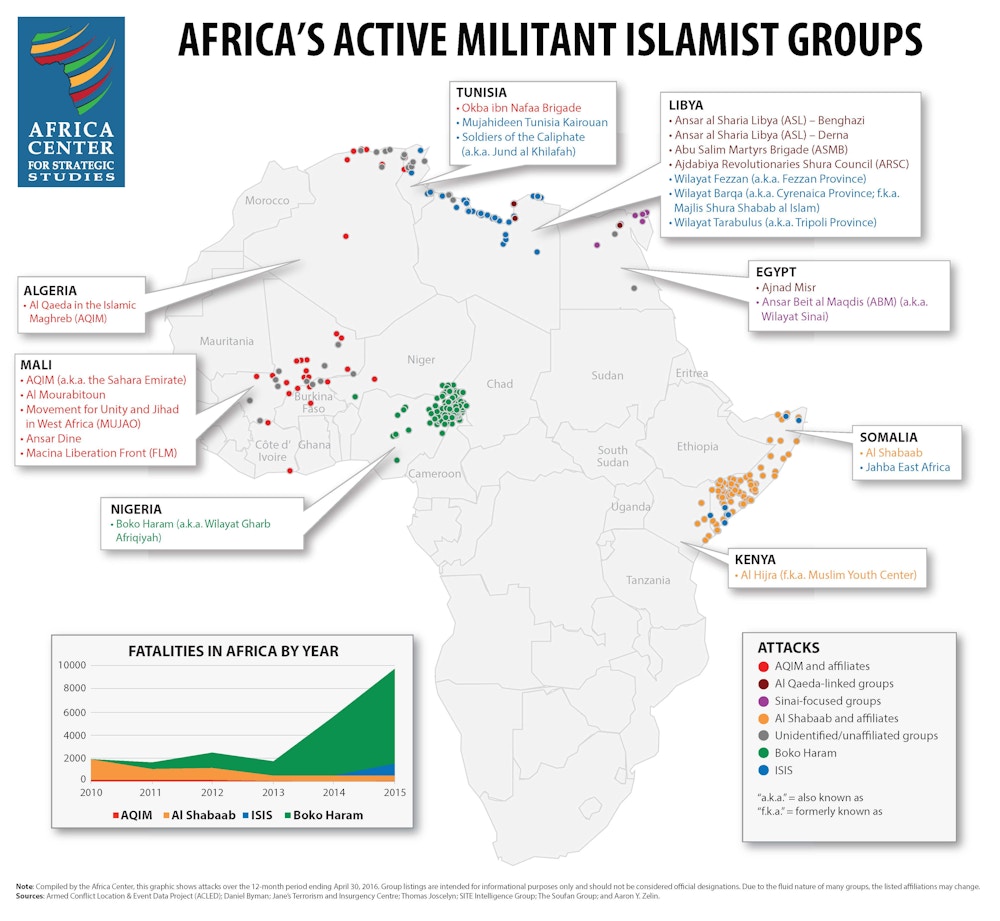
The deaths of 4 US soldiers in Niger in an ambush has shown a light on US military operations in Africa. It is not a topic that I have followed closely, and I must confess that I was surprised when I read that there are over 800 US soldiers and advisers in Niger. We also know very little about the mission in Niger, but as an investigation proceeds we may be able to find out more substantive information. After the horrific attack by al-Shabab in Mogadishu, Somalia, in which 358 people died and the ongoing attacks by Boko Haram in Nigeria, there is little question that there are significant security issues in some African countries. I have tried to find out how many US troops are in Africa right now, but I found huge discrepancies in the estimates offered by different experts. I did, however, find out that the US Defense Department has created an “Africa Center for Strategic Studies”. Interestingly, the web site address for the Center is .org and not .gov. I am not sure what kind of organization it truly is, but it is perhaps a small sign of how interested the US military is in Africa as an important strategic concern. The US already has a Central Command for its Africa operations.
The negotiations on the North American Free Trade Agreement (NAFTA) are reportedly not going well. US President Trump’s policy of “America First” has led to a number of anti-free trade acts, including the termination of the Trans-Pacific Partnership, tariffs on Canadian airplanes, and restrictions on the importation of solar panels. Te NAFTA, however, involves two of America’s most important trading partners, Mexico and Canada, and Mr. Trump’s willingness to terminate the Agreement would have serious repercussions. The most significant issue is on the production and importation rules for automobiles. According to ETAuto:
“Under NAFTA, at least 62.5 percent of the material in a car or light truck made in the region must be from North America to be able to enter the marketplace tariff-free.
“The administration of U.S. President Donald Trump has proposed raising the amount of NAFTA content in autos to 85 percent and securing 50 percent of the total for the United States.”
Mr. Trump’s proposed rule change would likely end the importation of autos produced in Mexico into the US. It is highly unlikely that those automobile factories would move into the US. If the NAFTA is terminated, the liberal economic order based on free trade would shift dramatically away from the US, and might perhaps even end.
The Spanish Government has invoked Article 155 of the Spanish constitution which allows the central government to take control of the regional governments in Spain in the event of a crisis. Catalonian authorities consider the act to be a “nuclear option” which signals the end of the autonomy of Catalonia. The move comes after the Spanish Prime Minister had demanded a clear-cut answer to the question as to whether Catalonia had in fact declared independence. Catalonia’s leader Carles Puigdemont had instead asked for talks with the central government, and that answer was not deemed sufficient or effective. Spain now faces a serious crisis which undoubtedly will defy an easy or painless resolution.
Carles Puigdemont
Asli U. Bâli and Aziz Rana have written a powerful critique of American foreign Policy for the Boston Review. Their critique focuses on how the shift from anti-Soviet policies in the Cold War to the counter-terrorism focus since 2001 has changed completely the justifications for the use of American power. The shift, they argue, has pulled the US sharply from its traditional support for a liberal, rules-based international order:
“As the logic of anti-communism has come to be replaced by the logic of counterterrorism, U.S. commitment to a liberal transnational project has waned. Where the promotion of democracy once served as the go-to rhetoric of U.S. policymakers, the War on Terror introduced new priorities that often clash with even an aspirational invocation of global democracy. For example, Cold War support for anti-communist dictatorships was presented as transitional, a regrettable compromise on the road to democratization. By contrast, support for authoritarian rulers in the age of the War on Terror is effectively disconnected from even cursory calls for democratic transition. Rather, in a region presented as an incubator of terrorism, U.S. actions consistently aim to consolidate executive power, banking on pliable elites regardless of the implications for the liberal order. In the face of expanding doubts in Washington about the capacity of Arab and Muslim states to reform themselves, the goal is simply a pro-American and largely authoritarian stability.”
The analysis is compelling and well-reasoned and should force us all to be more self-conscious about how a series of small decisions can ultimately culminate in an unanticipated result. While the essay does focus a great deal on the current administration, the argument extends through all the administrations since 2001.
Iran’s Supreme Leader, Ayatollah Ali Khamenei, has responded to US President Trump’s decision to not certify the Iran nuclear deal. He is quoted in the Tehran Times in this manner: ““I do not want to spend time to answer the foul-mouthed president of America. It is a waste of time that one wants to respond to him.” CNN characterized Khamenei’s comments in this way:
“Of Iran’s commitment to upholding the nuclear deal itself, Khamenei said that ‘so long as the other side has not torn up the JCPOA, we will not tear it up either,’ he said, referring to the accord, whose formal name is the Joint Comprehensive Plan of Action.
“‘However, if they tear up the JCPOA, we will shred it.'”
Madagascar is experiencing a serious outbreak of the plague, all three of the varieties: bubonic, pneumonic, and septicemic. The plague is not unknown in the country, but this outbreak has medical officials quite worried. There have been 680 cases recorded and there have been 57 deaths according to CNN, but the Daily Nation in Madagascar is reporting 805 cases and 74 deaths. The bubonic plague us carried by fleas, but the pneumonic strain can be transmitted by coughing. The Financial Times points out the many diseases that most in the richer countries consider “medieval” are rife in many parts of the world and are associated with societal and political breakdowns:
“It is no coincidence the disease has found fertile pickings in a troubled part of the country characterised by the lack of clean water, electricity, nutrition and basic health provision. History shows that natural disaster, poverty and war, along with the absence or destruction of protective infrastructure, threaten our ability to keep pathogens at bay.
“The world bears this out today: war-torn Yemen is in the grip of the worst cholera epidemic of modern times. More than 700,000 Yemeni, mostly children, are affected. Many of them are malnourished, complicating treatment.
“Meanwhile, drug-resistant forms of tuberculosis have emerged worldwide. Unvaccinated children, particularly in conflict zones and impoverished regions, are succumbing to conquerable diseases such as polio and rubella. The haunting truth is that future generations are still being struck down by diseases of the past.”
We should not forget that in a fully globalized world, such diseases have pre-established vectors of transmission that are incredibly rapid.
The Great Plague of London, 1665-1966
In 2015 Larry Diamond wrote a fascinating essay on what he believed was declining support for representative democracy, one of the fundamental pillars of liberal society. Diamond labeled it a “democratic recession”. There us a great deal of anecdotal evidence in the world today which tends to confirm Diamond’s argument. The Pew Research Center has conducted polls in a very wide variety of countries in the world and has found that there remains good support for representative democracy in the world, particularly within the rich countries. But it also found that many in the world were open to non-democratic systems, including rule by the military. The results of the poll are disturbing to those of us who support liberal societies.
On this day in 1973, there was a seismic shift in American power in the world. For most of the 20th century, the US had dominated the global economy because its supplies of, and its technical expertise, in the extraction and use of petroleum. Indeed, in many respects, petroleum was the fundamental underpinning of US hegemony. But in 1973, the Organization of Petroleum Exporting Countries (OPEC) announced an oil embargo against the US and other states who had supported Israel in the 1973 Yom Kippur War against Egypt and other Arab states. The reaction in the US was panic among consumers, but the broader signal was that the US no longer could control the commodity that essentially fueled the global economy. Moreover, the dominant industry in the US–the automotive industry–began to see major international competition leading to the entry of Japanese cars. That shift began to reshuffle the power of labor in the US economy as unions began to see a dramatic decline in membership, a decline that was amplified by President Reagan’s challenge to the air traffic controllers union (PATCO) in the 1980s. Since that time there has been a shift away from fossil fuels for economic and environmental reasons. The shift is far from complete, but control of alternative energies is likely the key to the country that ultimately will serve as global hegemon.
Lines for Gasoline, October 1973
We continue to wonder about the relationship between weather-related events in the world and climate change. One of the more recent questions is the extent to which climate change may have contributed to the horrific wild fires in California. There is little question that the destructiveness of wild fires has more to do with how humans use the land, but the broader question is whether climate change contributes to the conditions which aggravate the pattern of land use. It will be years before we have any close to a substantive answer to the question, but there are some intriguing aspects of climate change which undoubtedly plays a role. For example, spring seems to be arriving earlier in many parts of the year which means that there are longer periods of possible drying out of forests and plains. According to Scientific American:
“Last year, an analysis released by the USA-National Phenology Network pointed out that spring had arrived up to three weeks early throughout the southeastern United States. Another study in Ecosphere from last year concluded that three-quarters of the nation’s national parks have seen an advance in the timing of spring over the last century. Other recent research from Proceedings of the National Academy of Sciences has suggested that spring is coming about eight days earlier in the northern forests of North America and Eurasia than it did three decades ago.”
Earlier springs mean warmer temperatures, fewer opportunities for snowfall, and earlier times for snow melt. We shall see if this pattern continues.
China will convene its 19th Communist Party Conference on 18 October. We suspect that the Conference will focus mostly on domestic policy and we will be especially interested in whether the role of President Xi will change substantially. But foreign policy will also be an important topic. Michael Swaine has written an excellent view of the questions that will be explored at the conference for the Carnegie Endowment for International Peace. For those who are interested in how China views its future in East Asia and the world, Swaine’s summary provides a comprehensive overview. His conclusion is sober but not threatening:
“However, such realities do not preclude the possibility of greater tensions between China and the United States, its allies, and other Asian states over trade, investment, sovereignty rights, and a variety of activities involving Chinese and U.S. or Japanese military forces in the Western Pacific. There is no doubt that Xi and the Chinese leadership are seeking to more effectively use China’s growing international presence and influence to promote the nation’s interests in such sensitive areas. As a result, tensions with China will in fact likely increase, despite the many positive elements of the 19th Party Congress noted above.”
Steven Brams is a political scientist who has used game theory extensively in his work and has applied it to a variety of political circumstances. He has written an op-ed on how to apply a game theoretical perspective to the stand-off between the US and North Korea. He critiques the policies employed thus far by a variety of Administrations and proposes a policy of No First Use as a way to reduce the tension between the two states. His argument is straightforward: if the US were to make the declaration in a very clear and committed fashion, North Korea might feel less threatened and behave less provocatively. It is an intriguing proposal that deserves careful attention.
“A unit of U.S. special forces tasked with carrying out “decapitation” operations is aboard a nuclear-powered submarine in the group, according to a defense source.
“Among other assets mobilized are F-15K, FA-18 and A-10 fighter jets, as well as AH-64E Apache attack helicopters, Lynx and AW-159 Wild Cat naval choppers.
“The U.S. has also deployed a Joint Surveillance Target Attack Radar System (JSTARS) plane to closely monitor the North’s ground and naval forces.
“Meanwhile, the U.S. has sent a B-1B Lancer strategic bomber, F-22 Raptor stealth fighter jets and several other types of high-profile defense assets to the Seoul air show to open this week.
“‘Approximately 200 U.S. personnel are expected to participate in the Seoul International Aerospace and Defense Exhibition (ADEX) 2017, scheduled from Oct. 17-22 at the Seoul K-16 airport,'” the 7th Air Force said.
“Among the U.S. military aircraft to join the biennial event are the F-22 Raptor, B-1B Lancer, A-10 Thunderbolt II, C-17 Globemaster III, C-130J Hercules, KC-135 Stratotanker, E-3 Sentry, U-2 Dragon Lady and RQ-4 Global Hawk, it added.
“Also fielded will be the Air Force’s fifth-generation fighter, the F-35A Lightning II, U.S. Navy P-8A Poseidon and a U.S. Army CH-47F Chinook.”
It remains to be seen how the North Koreans will react the the exercise. But North Korea’s deputy U.N. ambassador, Kim In Ryong, warned that the situation “has reached the touch-and-go point and a nuclear war may break out any moment.” Further, according to the Associated Press:
“He pointed to large-scale military exercises every year using ‘nuclear assets’ and said what is more dangerous is what he called a U.S. plan to stage a ‘secret operation aimed at the removal of our supreme leadership.’
“This year, Kim said, North Korea completed its ‘state nuclear force and thus became the full-fledged nuclear power which possesses the delivery means of various ranges, including the atomic bomb, H-bomb and intercontinental ballistic rockets.’
“’The entire U.S. mainland is within our firing range and if the U.S. dares to invade our sacred territory even an inch it will not escape our severe punishment in any part of the globe’”.
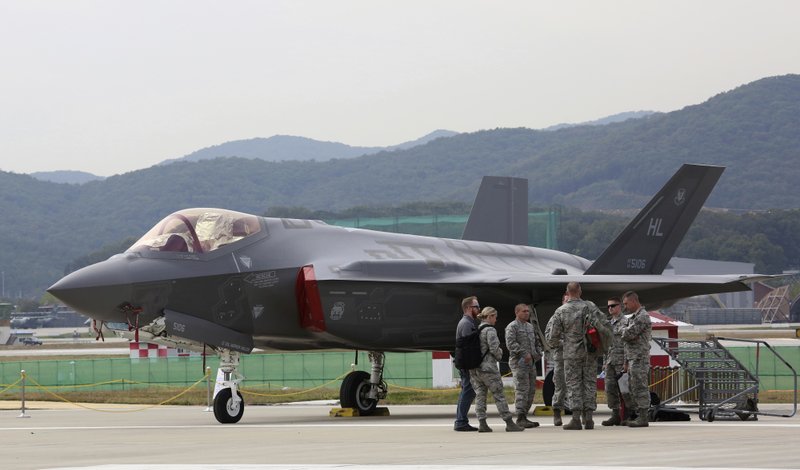
A US F-35 stealth fighter is seen during the press day of the 2017 Seoul International Aerospace and Defense Exhibition at Seoul Airport in Seongnam, South Korea, Monday, Oct. 16, 2017. South Korean and U.S. troops launched five days of naval drills on Monday, three days after North Korea renewed its threat to fire missiles near the American territory of Guam. (AP Photo/Ahn Young-joon)
The Spanish government has ramped up the pressure on the Catalan independence movement. According to The Spain Report:
“National High Court judge Carmen Lamela jailed the chairmen of the Catalan National Assembly (ANC), Jordi Sánchez, and Omnium Cultural, Jordi Cuixart, on remand on Monday night, several court reporters tweeted.
“The men are being investigated on charge of sedition for the events of September 20 in Barcelona, when several Civil Guard officers acting as judicial police, as well as a court secretary, were prevented by a crowd of up to 40,000 people from leaving a building they had been searching.”
The charges carry penalties of up to 10 years in prison and the trial will definitely stoke the passions of those Catalans who wish to see an independent Catalonia.
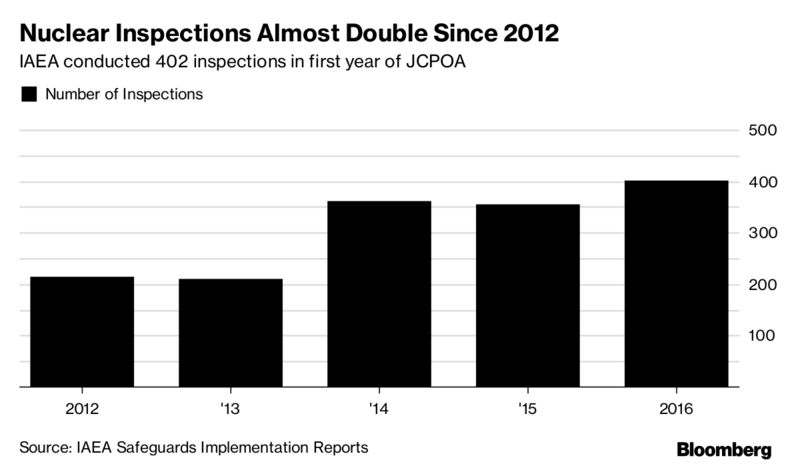
US President Trump’s decision to decertify the Iran nuclear agreement was based, in part, on his assertion that Iran had violated the agreement. His advisors, notably US Secretary of State Tillerson, had stated previously that Iran was in “technical compliance” with the agreement. We are left with the difficult question of who to believe, and the answer to that question can be partially found in assessing the rigor of the inspections by the International Atomic Energy Agency (IAEA). The IAEA has 400 inspectors assigned to monitoring the Iran agreement. It conducted 402 inspections since the agreement was signed, 25 of which were snap inspections (2 snap inspections a month). If the Trump Administration pulls out of the agreement and reimposes sanctions, there is little question that Iran would leave the agreement as well. And the world would go from 402 inspections a year to none. The world would hardly be a safer place under those circumstances.
One thing to keep in mind is that Mr. Trump’s animus toward the Iranian nuclear agreement reflects a broader concern with the growth of Iranian influence in Iraq and Syria. There are reports that Iran is interested in keeping military units in Syria and in building a seaport along the Mediterranean Sea. If Iran were to follow through on these reports the shift in the Middle Eastern strategic power would be consider highly threatening by both Israel and Saudi Arabia. One could hardly expect the Israelis to accept the institutionalization of Iranian military power so close to its borders.
Bright Line Watchheld a conferenceof political scientists on 6 October at Yale University to discuss the state of American democracy. Their discussion made some troubling observations, one of which was the declining belief that the future will be better:
“But fewer and fewer Americans believe this is true. Due to wage stagnation, growing inequalities, automation, and a shrinking labor market, millions of Americans are deeply pessimistic about the future: 64 percent of people in Europe believe their children will be worse off than they were; the number is 60 percent in America.
“That pessimism is grounded in economic reality. In 1970, 90 percent of 30-year-olds in America were better off than their parents at the same age. In 2010, only 50 percent were. Numbers like this cause people to lose faith in the system. What you get is a spike in extremism and a retreat from the political center. That leads to declines in voter turnout and, consequently, more opportunities for fringe parties and candidates.”
One of the reasons for the loss of faith in democracy is rooted in the economic reality of growing inequality. For years, workers had enjoyed wage growth that mirrored their productivity. In more recent years, as the chart below suggests, workers have not shared in the economic benefits of increased productivity.
How serious is this decline in the efficacy of democracy. One example of how much faith has been lost in democratic institutions is shown by the following:
“Another startling finding is that many Americans are open to “alternatives” to democracy. In 1995, for example, one in 16 Americans supported Army rule; in 2014, that number increased to one in six. According to another survey cited at the conference, 18 percent of Americans think a military-led government is a “fairly good” idea.”
Sebastian Kurz is likely to become Austria’s next Chancellor if the results of today’s national election stand. According to CNN: “The People’s Party (OVP), which Kurz has led since May, is widely expected to form an alliance with the Freedom Party (FPO), putting the far-right in an Austrian governing coalition.” Kurz ran on an anti-immigrant promise, not just in Austria but as official European Union policy. The Freedom Party is an extreme right-wing party similar to Germany’s Alternative for Germany, but the People’s Party has been active in Austrian politics for some time.
Fighting has reportedly broken out between Kurdish and Iraqi forces near the city of Kirkuk. The Kurdish press is reporting that 70 families were forced to leave their homes by Shiite militias near the city of Khurmatu. The report identifies the militia as the Asaib Ahl-haq group affiliated with the Hashd al-Shaabi. These groups are closely identified with Iran and their opposition to the Kurds reflects the Iranian strategic objective of containing the Kurds. If the reporting is accurate, this battle could be the beginning of the Iraq War, Part III (Part I, the US invasion in March, 2003 and Part II, ISIS takes Mosul, June 2014).
The South Korean newspaper, Dong-A Ilbo, is reporting that US satellites have photographed North Korean missiles being transported on mobile missile launchers. It may be the case that North Korea is preparing to launch missiles either in retaliation for planned US-South Korean military exercises or in celebration of the 18 October anniversary of the founding of the North Korean Communist Party. The US-South Korean military exercises include over 40 US naval vessels, including the nuclear submarine, the USS Michigan, and the USS Ronald Reagan, a advanced-class aircraft carrier.
USS Ronald Reagan
NASA’s Orbiting Carbon Observatory (OCO-2) is a new tool to record the emissions of carbon dioxide on earth. The satellite, launched in 2014, “takes about 100,000 direct and daily measurements of CO2 over the tropical forest regions of South America, the tropical forests of Africa and the tropical region of Asia surrounding Indonesia”. These regions have been under-reported in the past because of the difficulties in taking accurate measurements. But the satellite was able to measure the effects of droughts in these regions which led to the decomposition of many parts of the forests which in turn led to the release of large amounts of CO2. According to the report:
“NASA presented new research findings with a teleconference on Oct 12 that featured Liu alongside Michael Freilich, director of the Earth Science Division at NASA headquarters in Washington, D.C.; Annmarie Eldering, the OCO-2 deputy project scientist at JPL; and Scott Denning, professor of atmospheric science at Colorado State University.
“‘In both 2015 and 2016, OCO-2 and the National Oceanic and Atmospheric Administration (NOAA) measured the largest annual increases in atmospheric carbon dioxide in at least 2,000 years,’ Eldering said during the briefing. Using OCO-2 data, Liu quantified that ‘in total, the three tropical land regions released at least 2.5 gigatons more of carbon into the atmosphere than they did in 2011,’ or about a 50 percent increase.”
In the past, many have assumed that the tropical forest have acted as a major sink for CO2. These findings call that assumption into question.
“Iranian regime has committed multiple violations of the agreement. For example, on two separate occasions, they have exceeded the limit of 130 metric tons of heavy water. Until recently, the Iranian regime has also failed to meet our expectations in its operation of advanced centrifuges.
“The Iranian regime has also intimidated international inspectors into not using the full inspection authorities that the agreement calls for.”
“The IAEA’s verification and monitoring activities address all the nuclear-related elements under the JCPOA. They are undertaken in an impartial and objective manner and in accordance with the modalities defined by the JCPOA and standard safeguards practice.
“Iran is now provisionally implementing the Additional Protocol to its Comprehensive Safeguards Agreement with the IAEA, a powerful verification tool which gives our inspectors broader access to information and locations in Iran. So far, the IAEA has had access to all locations it needed to visit.
“At present, Iran is subject to the world’s most robust nuclear verification regime.
He stopped short, however, of abrogating US participation in the agreement. Instead, he has asked the US Congress to certify the agreement. It is unclear what the Congress will decide to do although Senators Cotton (R-AR) and Corker (R-TN) have introduced legislation to renegotiate the agreement and adding new constraints on Iranian behavior in its support for Hezbollah and its missile program. American allies were quick to denounce the move and the European Union’s foreign policy chief, Federica Mogherini, noted that the Joint Comprehensive Plan of Action is “not a bilateral agreement. It does not belong to any single country. And it is not up to any single country to terminate it.”
Unfortunately, we have no idea what Trump hopes to accomplish by this move. There are many possible alternatives, but President Trump gave no indication of what the next step may be.
The US is currently going through another phase of anti-immigrant sentiment, a paradoxical but endemic phenomenon for a country whose population was fundamentally built upon immigration from abroad. There have been many previous phases about which most of use are aware, such as the anti-Catholic sentiments of the Know Nothing Party in the 19th century. One phase of which I knew very little was anti-German sentiment during World War I, a curious phase since at the time German-Americans were the single largest population of immigrants. Indeed, German was the second most common language in the country after English. The treatment of Germans and German-Americans was documented by photographs maintained by the US Library of Congress.
German-Americans, after years of being forced to live in internment camps, are forcibly deported from the United States and sent to Germany.
Hoboken, New Jersey. September 25, 1919.
The International Monetary Fund (IMF) has released a new study that is certain to displease many in the world who believe that taxes on the rich are too high and should be lowered. In fact, the IMF argues that taxes on the rich should be increased in order to address the growing problem of economic inequality in the developed countries. The study identifies an important connection between tax rates and reductions in economic inequality–in the past higher taxes have increased redistributive measures that reduced inequality, but those measures have been reduced in recent years:
“Between 1985 and 1995, rising fiscal redistribution was able to offset about 60 percent of the increase in market income inequality. In contrast, average fiscal redistribution hardly changed between 1995 and 2010, while market income inequality continued to increase. As a result, average disposable income inequality increased broadly in line with market income inequality. The stability of average fiscal redistribution over this recent period is surprising since, in the absence of policy reforms, progressive tax and transfer systems should have automatically increased the magnitude of fiscal redistribution in response to the increased market income inequality. This suggests that tax and transfer policy reforms have, on net, decreased the progressivity of these redistributive instruments in some countries.
In other words, redistributive measures have been deliberately reduced. The IMF points out that the decline in corporate taxes all across the world has been a fundamental driver of the reduced ability to finance redistributive measures. The conclusion of the study is that “there would appear to be scope for increasing the progressivity of income taxation without significantly hurting growth for countries wishing to enhance income redistribution.”