Archive for the ‘World Politics’ Category
US President Trump delivered a speech to the meeting of the Asia-Pacific Economic Co-operation (Apec) group, outlining his vision of the US role in the region. Interestingly, he referred to the region as the “Indo-Pacific” rather than the more commonly used term “Asia-Pacific” ten times. The chosen term downplays the significance of China from the American perspective and emphasizes the role of India, the US’s preferred partner in the region. President Trump also identified several trade practices which have habitually been leveled against China without mentioning China by name:
“We will no longer tolerate the audacious theft of intellectual property. We will confront the destructive practices of forcing businesses to surrender their technology to the state, and forcing them into joint ventures in exchange for market access.
“We will address the massive subsidizing of industries through colossal state-owned enterprises that put private competitors out of business — happening all the time.
“We will not remain silent as American companies are targeted by state-affiliated actors for economic gain, whether through cyberattacks, corporate espionage, or other anti-competitive practices.
I am not sure what Chinese President Xi’s reaction to this rhetoric might have been, particularly since China had treated President Trump extravagantly just a few days earlier.
President Trump also singled out the World Trade Organization, one of the pillars of the liberal international system championed by the US since its earlier incarnation as te General Agreements on Tariffs and Trade, for harsh criticism:
“Countries were embraced by the World Trade Organization, even if they did not abide by its stated principles. Simply put, we have not been treated fairly by the World Trade Organization. Organizations like the WTO can only function properly when all members follow the rules and respect the sovereign rights of every member. We cannot achieve open markets if we do not ensure fair market access. In the end, unfair trade undermines us all.”
At this point, it does not appear as if there were any major decisions made at the summit, but we will wait to see if some were made secretly. Chinese President Xi offered a very different view of the global economy, declaring that globalization was “irreversible”.
There is a mystery in Europe. A cloud of radioactive material, ruthenium-106, has settled over the continent and the evidence suggests that it arose someplace in southern Russia. The levels of radioactivity in Europe does not pose an immediate threat to health, but the concentrations suggest that the levels would have been dangerous at the point of release. The Institut de Radioprotection et de Sûreté Nucléaire (ISNR) has issued a report on the contamination and it concluded that
“Because of the quantities released, the consequences of an accident of this magnitude in France would have required to implement locally measures of protection of the populations on a radius of the order of a few kilometres around the location of the release. Map identifying, on the basis of the model-measurement comparison, the most plausible release zone. For a simulated release at each point of the mesh, the comparison consists in estimating the percentage of modelled data which are within a factor of 2 compared to actual measurements. The area with the highest percentage is identified as the most plausible release zone. The exceeding of maximum permitted levels3 for foodstuffs (1250 Bq / kg for Ruthenium 106 for non-milk products) would be observed over distances of the order of a few tens of kilometres around the location of the release.”
So far neither Russia or Kazakhstan has admitted to a nuclear accident. But such matters cannot remain secret for long.
Map of the Ruthenium-106 over Europe

The publication of the “Paradise Papers” has rekindled interest in offshore banking and the institutional infrastructure devoted to the purpose of helping the extremely rich avoid paying taxes. We periodically re-acquaint ourselves with this legalized corruption but very little is ever done to prevent it. Spiegel has an article which explains why it has proven to be impossible to assure that everyone pays their fair share of taxes which inevitably leads to higher taxes on the poor and a reduction of services to people in desperate need of help.

Smile Time

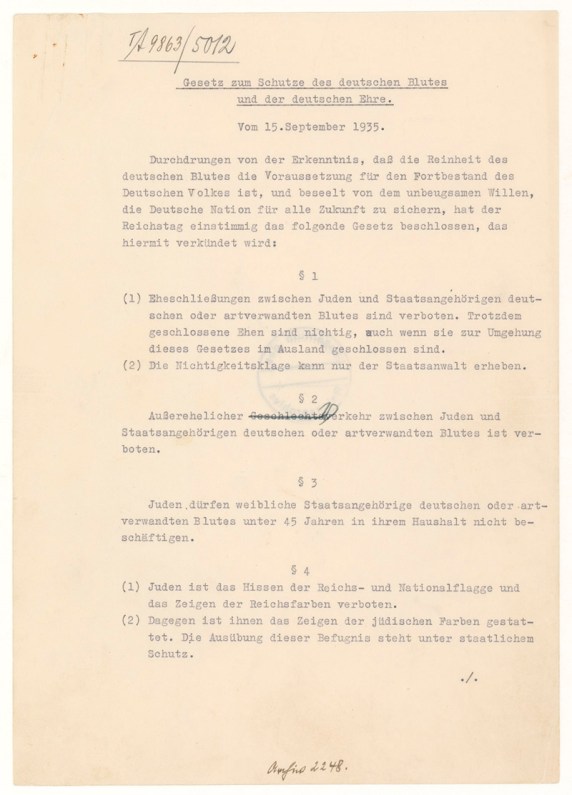
On 9 November 1938, the Jews of Germany and Austria endured a horrific night, as Nazi-thugs destroyed the windows of their shops and homes. That night came to be known as Kristallnacht in reference to the sound of broken glass falling to the sidewalks. That night was not the beginning of the persecution of Jews in Germany–that persecution had begun almost immediately after Hitler was elected Chancellor in 1933. Even before Kristallnacht, Jews had been deprived of citizenship by the Nuremberg Laws (passed in 1935 and officially known as “Law for the Safeguard of German Blood and German Honor”) and restricted from certain economic activities and participation in Parliamentary elections. I suspect that most Germans were uncomfortable with each step taken against the Jews, but likely believed that none of those steps would ever lead to the horror of the Holocaust. The lesson is clear: any step to discriminate on any basis, no matter how small it seems, must be vigorously opposed. Staying silent only assures that the powerful will interpret the silence as a license for even more stringent steps.
Nuremberg Laws (Originals Held by the US National Archives) The First Signature is by Adolf Hitler
Rediscovery #: 23039
Job A1 10-185 Nuremburg Laws
Kristallnacht

Rediscovery #: 23039
Job A1 10-185 Nuremburg Laws
Saudi Arabia, the United Arab Emirates, and Kuwait have urged their citizens to leave Lebanon, following Bahrain which issued the same warning on Sunday. The warning comes after the resignation of Lebanese Prime Minister Saad Hariri and his subsequent disappearance in Saudi Arabia. The Lebanese believe that Hariri is being held under house arrest in Saudi Arabia, as many believe that Saudi Crown Prince Salman holds Hariri responsible for the growth of Iranian influence in Lebanon through its ally Hezbollah. There is rising concern that Saudi Arabia may be preparing to go to war with Lebanon, but I find that possibility unlikely given that Saudi Arabia already has its hands full in Yemen–Lebanon would be a much more difficult conflict to manage. Nonetheless, the regional tensions are reaching a fever pitch.
The Asia-Pacific Economic Cooperation (Apec) conference begins on Friday in Da Nang, Vietnam. US President Trump will meet a number of foreign leaders, and each has a different set of issues with respect to the US. The Guardian has a nice summary of what to look for as President Trump meets with Russian President Vladimir Putin, Philippine President Rodrigo Duterte, New Zealand Prime Minister Jacinda Ardern, Australian Prime Minister Malcolm Turnbull (that meeting should be quite interesting given the hostile relations between the two), and Malaysian Prime Minister Najib Razak. One needs a scorecard for events as complicated as this one.
The confrontation between Saudi Arabia and Iran is one of the more complex conflicts in the world. The two states do not face each other directly, but are currently engaged through proxies in Syria, Iraq, Yemen, Qatar, and Lebanon. Simon Henderson gives a good account of why the recent missile attack on Riyadh, Saudi Arabia from Yemen represents a significant escalation in the dispute. Robert Malley offers a perspective from Lebanon which analyzes the fluidity of the alliances in the region and how Israel and the US, although not yet directly involved, create a destabilizing environment. For its part, Iran blames Saudi Arabia for the tensions and that the US is manipulating Saudi Arabia for its own purposes.

The US State Department has suffered tremendous personnel losses over the last year. Under the leadership of Secretary of State Rex Tillerson many career Foreign Service officers have simply left. According to Zack Beauchamp in Vox:
“The number of people in each of those posts has declined dramatically since President Trump took office in January. The number of minister counselors in the State Department has gone down by 15 percent, career ministers by 42 percent, and career ambassadors by a whopping 60 percent.”
Due to hiring freeze imposed by Tillerson, many positions are being left unfilled and there is not a younger cohort being groomed to step into positions of higher responsibility. According to Max Greenwood writing for The Hill the number of applicants to the Foreign Service has dropped by more than half in the last year.

Air pollution in New Delhi, India has reached such serious levels that schools there have been closed for a week. The smog is an annual event in Delhi as farmers in surrounding areas burn farm residues after the post-monsoon harvests. But modernity, in the form of cars and industrial activity, amplifies the problem and it is a serious health hazard to the residents of the city. The New York Times provides the metrics of the seriousness of the problem:
“In some parts of the city, the levels of PM 2.5 — insidiously small particles that can settle deep in the lungs — had climbed to more than 700 micrograms per cubic meter, which is considered hazardous to breathe, according to data provided by the Delhi Pollution Control Committee. Scientists estimate these particles have killed millions.”
That level of PM 2.5 is more than 10 times the level considered safe.
New Delhi on Tuesday


Saudi Arabia has asserted that Lebanon has “declared war” on the Kingdom, signaling its objective of removing Hezbollah from power in Lebanon. The statement follows the resignation of Lebanese prime minister Saad al-Hariri, a strong ally of Saudi Arabia. Saudi Arabia considers Hezbollah an Iranian ally and its fears of Iranian influence in Lebanon were accentuated when “Iranian official Ali Akbar Velayati trumpeted his regional alliance’s success from Beirut last Friday, declaring victories in Iraq, Syria and Lebanon.” It is not clear what Lebanon’s future looks like. Hariri was part of a coalition government with Hezbollah as its main partner and it is unclear whether Hezbollah can work with any other partners in forming a new government. Lebanese politics are some of the most complicated of any nation-state on the planet. It endured a brutal civil war from 1975-1990 and its governments can only form when all parties act in good faith. On Lebanon, Israel and Saudi Arabia share the same objectives which complicate the politics significantly. Israel’s Channel 10 has published a secret Israeli cable from the Foreign Ministry that outlines Israel’s support for the Saudi moves (the page is in Hebrew, but Google can translate it).

Today marks the 100-year anniversary of the Bolshevik Revolution in Russia. It was the second revolution in Russia in 1917. The first, in February, overthrew the Czar because of massive discontent with the war situation and widespread incompetence and misery. In the past days of the Union of Socialist Soviet Republics (USSR) the day was one of great celebration; today it is observed only by the few ardent communists left in Russia. The Russian President, Vladimir Putin, has said that he wished the Revolution had never occurred. The Bolshevik victory in 1917 is one of the most contested events in history with widely divergent interpretations of how Lenin and Trotsky were able to seize and consolidate power.
Communists March in Moscow on Tuesday

Saudi Arabia intercepted a missile launched from Yemen toward the Saudi city of Riyadh and claims that the remains of the missile indicate that the missile was manufactured in Iran. Saudi Foreign Minister Adel Al-Jubeir indicated that the coalition fighting the rebels in Yemen would “close all air, land and seaports to Yemen” in an effort to stop the flow of weapons from Iran to Yemen. The blockade could bring Saudi and Iranian forces face-to-face even as both sides continue to fight proxy wars in Syria and Yemen. There is increased concern that Saudi Arabia and Iran are edging closer to war, even as the situation in Saudi Arabia remains uncertain after the purge by the Crown Prince.

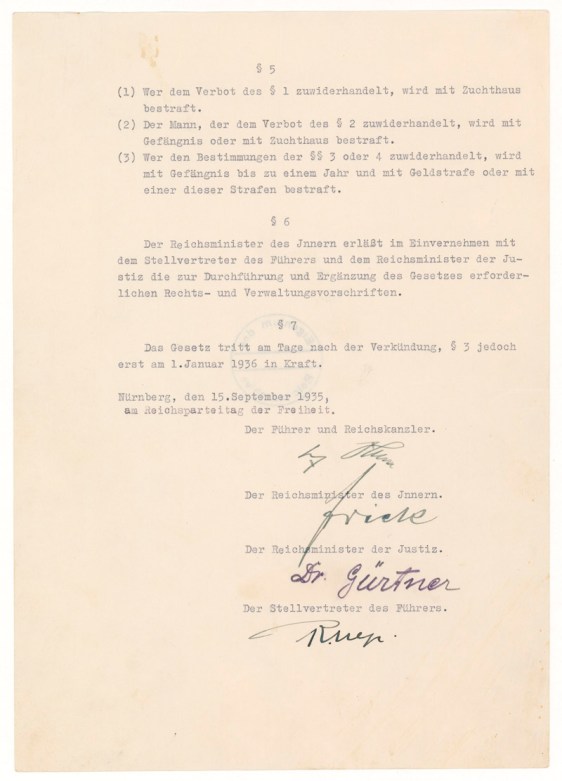
The massacre of the Rohingya continues: the Myanmar military continues to push them out of Rakhine Province and Bangladesh has indicated that it cannot take in any more refugees. Patrick Lawrence has written an excellent essay for Salon which places the crisis in the context of the failings of the nation-state. Lawrence compares the situation in Myanmar with other cases such as Sri Lanka and Catalonia and the analysis is both rich and sophisticated. The UN Security Council has issued a statement condemning the violence, but a proposed resolution, which would have been legally binding, was not supported by China, which has a close relationship to Myanmar. Many are beginning to use the terms “ethnic cleansing” and “genocide” to describe the situation, but the world refuses to take effective action. The Economist compares the flow of Rohingya refugees to other similar crises in the world.
Perhaps the country we should all keep our eyes on in the effort to avert climate change is India. The US has leveled off its carbon emissions even though the Trump Administration has decided to leave the Paris Agreement–states and localities are taking care of emissions as the Federal Government defaults on its responsibilities. China has made incredible strides in renewable energy and seems firmly committed to reducing its emissions although its task remains formidable. India is also committed to renewable energy, but its poverty rate remains significantly higher than in China and it has far fewer options in terms of making a transition to non-carbon based fuels. Given its rapidly growing population, India is likely the country that will determine whether climate change can be avoided.
Since 11 September 2001 the US has engaged in many conflicts in what was called a “war on terror”. It has been a very expensive war that has been paid for by increased government debt and not tax increases. The US Department of Defense has released a 74-page report entitled “Cost of War Update as of June 30, 2017.” The report focuses only on the actual costs incurred because of combat operations and does not include future costs of the wars which will include medical care and pensions and other benefits guaranteed to military veterans. So it is a very constrained estimate of the costs of the war on terror. Nonetheless, it is extraordinary to know that even with this limited definition of cost, the US has averaged $3.6 billion a month on combat operations. The report is quite detailed and for those who wish to examine the entire range of expenditures necessary to support war. There are other, higher estimates of the costs of these wars. One is by the Congressional Research Service. The highest estimate, by the Watson Institute on International and Public Affairs at Brown University puts the costs at $4.79 trillion. The entire Defense Department budget is significantly larger, amplified by the massive military footprint the US maintains in its more than 800-military bases abroad.

US Military Bases Abroad

Saudi Arabia’s Crown Prince Mohammed bin Salman, the likely next King of Saudi Arabia and often referred to as MbS, launched a corruption purge of Saudi officials which included some of the highest ranking members of the royal family. Among those arrested include Prince Alwaleed bin Talal, one of the world’s richest persons and a major investor in many global corporations including Twitter, Lyft, and Citigroup. It is highly likely that Alwaleed will ask many of his co-investors, which include many of the richest people in the US, to intervene on his behalf. If those interventions actually occur, it will complicate US relations with Saudi Arabia tremendously. But corruption is hardly the main concern of the Crown Prince. Patrick Wintour, the Diplomatic Editor of the Guardian, interprets the move in this way:
“The crown prince will say the arrests show his determination to root out corruption, a precondition of a more open economy. But few think the arrests, and related ministerial sackings, are the independent decision of a new corruption body, established just hours before to replace an existing one, rather than part of a wider reshuffle to centralise all security authority under MbS.”
The Crown Prince has shown that he is not afraid to take risks, initiating a brutal war against rebels in Yemen he believes to be agents of Iran and cutting Qatar off from normal economic and political ties from other Gulf States. Neither of those moves has proven to be particularly effective, and we will see what the repercussions of this purge will be to Saudi political stability.
Crown Prince Mohammed bin Salman

The has published an unbelievable number of offshore banking accounts which reveal the world of the very richest people in the world and how they use money that they were assured would be held secretly. The leaked documents, labelled the “Paradise Papers” reveal “the offshore ties of more than a dozen Trump advisers, Cabinet members and major donors”. For those with interest in pursuing some of the papers, the site offers the opportunity to search the 13.4 million records. The article lists some of the more prominent investors, and the activities are characterized in this way by the ICIJ:
“The offshore industry makes ‘the poor poorer’ and is ‘deepening wealth inequality,’ said Brooke Harrington, a certified wealth manager and Copenhagen Business School professor who is the author of ‘Capital without Borders: Wealth Managers and the One Percent.’
“’There is this small group of people who are not equally subject to the laws as the rest of us, and that’s on purpose,’ Harrington said. These people ‘live the dream’ of enjoying ‘the benefits of society without being subject to any of its constraints.’”
These loopholes are very expensive to create and therefore beyond the means of most people. But once created, they shelter trillions of dollars from taxation.
One of the fundamental tenets of the liberal ideology is that the state should not discriminate against any citizen on the basis of religion (as well as other attributes, such as race or ethnicity). But many nations strongly identify with a specific religion. Indeed, some have official religions. The tensions between liberal states and various interpretations of the nation can be intense. For example, the Republican candidate for the US Senate in Alabama, Ray Moore, has said on various occasions that God’s law is above man’s law (Moore is a devout Christian). The tensions are apparent in many eastern and central European states who have moved from the official Communist position of atheism toward the liberal democracies of western Europe. The Pew Research Centerreligion affects the policies of many of these states. has evidence on how

The Lebanese Prime Minister, Saad Hariri, has resigned citing the growth of Iranian influence over his nation and fears over being assassinated. Hariri has been in office for 11 months and has not been able to exercise effective control over the government which is strongly influence by the Iranian-backed Hezbollah. Hariri gave the speech in Saudi Arabia and he said that Iran” “has a desire to destroy the Arab world and has boasted of its control of the decisions in all the Arab capitals. Hezbollah imposed a reality in Lebanon through force of arms, and their intervention causes us big problems with all our Arab allies”. The position articulated by Hariri dovetails almost completely with the official views of Saudi Arabia and the US.
Saad Hariri

It is incredibly difficult to appreciate the economic power of China, but Visual Capitalist has published a graphic which is simply mind-blowing. There are 31 Chinese cities that produce as much as the GDPs of many highly developed countries.

The U.S. Global Change Research Program has released its mandated Fourth National Climate Assessment and its conclusions vary substantially from the policy positions stated by the Trump Administration. The findings are stark and unequivocal:
“Global annually averaged surface air temperature has increased by about 1.8°F (1.0°C) over the last 115 years (1901–2016). This period is now the warmest in the history of modern civilization. The last few years have also seen record-breaking, climate-related weather extremes, and the last three years have been the warmest years on record for the globe. These trends are expected to continue over climate timescales.
“This assessment concludes, based on extensive evidence, that it is extremely likely that human activities, especially emissions of greenhouse gases, are the dominant cause of the observed warming since the mid-20th century. For the warming over the last century, there is no convincing alternative explanation supported by the extent of the observational evidence.
“In addition to warming, many other aspects of global climate are changing, primarily in response to human activities. Thousands of studies conducted by researchers around the world have documented changes in surface, atmospheric, and oceanic temperatures; melting glaciers; diminishing snow cover; shrinking sea ice; rising sea levels; ocean acidification; and increasing atmospheric water vapor.”
Most importantly, the report concludes that “Many lines of evidence demonstrate that it is extremely likely that human influence has been the dominant cause of the observed warming since the mid-20th century. Over the last century, there are no convincing alternative explanations supported by the extent of the observational evidence”. In another report, The Guardian found that
“Data from the Climate Central group of scientists analysed by Guardian journalists shows that 3C of global warming would ultimately lock in irreversible sea-level rises of perhaps two metres. Cities from Shanghai to Alexandria, and Rio to Osaka are among the worst affected. Miami would be inundated – as would the entire bottom third of the US state of Florida.”
The Guardian article has graphics shown the devastating effects of sea level rise to several major metropolitan areas of the world. The graphics are truly shocking.
As US President Trump begins his 12-day, 5-nation tour of Asia, there is little question that North Korean nuclear intentions will be a central topic of discussion. Charles Lee has written an essay on the intelligence community in North Korea for 38North which places Mr. Trump’s comments about North Korea in an interesting light. Lee believes that
“On the contrary, North Korea appears to have dismissed the credibility of President Trump’s pronouncements of military action against North Korea, particularly in light of alternate and corroborative views. Secretary of Defense James Mattis and Secretary of State Rex Tillerson have both acknowledged a preference for diplomatic solutions, not military ones. For an intelligence analyst, whether North Korean or American, assessing the probability of military action rests on the sum credibility of such individuals. Additional factors, like the assurances of American interlocutors engaged in Track II diplomacy, can bolster such assessments when they are consistent with official statements.”
This conclusion is somewhat reassuring but difficult to assess with certainty. But it does suggest that a single inflammatory statement by Mr. Trump about North Korea does not necessarily mean that the North Koreans will act precipitously.
Venezuela’s economy is in free fall and holders of Venezuelan debt were told today that the debts will be “reformatted”. What the decision means in real terms is not yet known but the virtual bankruptcy of the Venezuelan government points to substantial losses for some bondholders (and incredible windfalls for those who purchased deeply discounted Venezuelan bonds in anticipation of a default, a risky transaction but highly lucrative if played correctly). According to VenezuelaAnalysis,
“Venezuela’s government and state enterprises like PDVSA (Petróleos de Venezuela, S.A.–the Venezuelan Oil Company) collectively owe around US$143 billion in foreign debt…. PDVSA alone has around US$1.6 billion in debt payments due by the end of the year, and another US$9 billion on bond servicing set to fall in 2018.”
Venezuela will try hard to not default on these loans, but outside financing has been scarce and the Venezuelan currency–the Bolivar–has depreciated by 99% on the black market since President Maduro took office in November 2013.
Smile Time
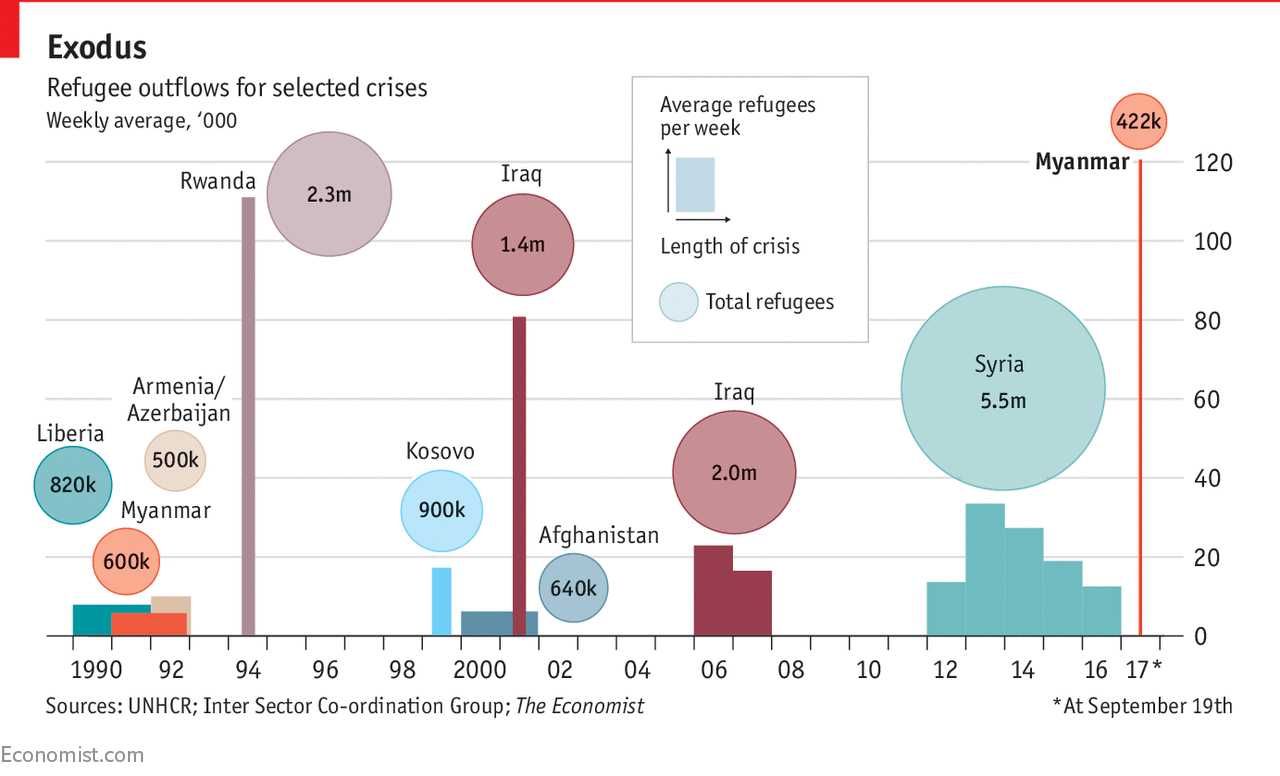
Mount Roraima (triple border point of Venezuela (85% of its territory), Guyana (10%) and Brazil (5%–5°12′08″N 60°44′07″W))
The Republican Party in the US has released its initial plan for tax reform and we can expect the debate on the plan to be contentious and deliberately obscure. One likely defense of the bill will be that US citizens are some of the highest taxed countries in the world. The Washington Post published some graphs to root this debate in evidence.

Another argument is that the US corporate tax rate is the highest in the world. This assertion is true in what we call nominal terms–the published rate is higher than many other countries. But most corporations also have tax deductions that reduce the corporate tax rate in effective terms to about half the published rate. According to the US Treasury:
“The average effective “actual” federal corporate tax rate (ATR) provides a comprehensive measure of the average tax rate actually paid by corporations…..the U.S. ATR on income earned by profitable corporations with over $10 million in assets was 22 percent (when averaged over all firms in all years), well below the top statutory rate of 35 percent.”
It is also clear that corporations are paying less over time as a source of revenue for the Federal Government. This decline persists even though all corporations benefit from government spending on roads, bridges, communications infrastructure, police and fire security, and having access to an educated population.

Today it the 100th anniversary of what is known as the Balfour Declaration, a document that asserts that the British Government supports the creation of a Jewish homeland in the British Mandate of Palestine. The document is used by both Israelis and Palestinians to assert certain rights in what ultimately becomes the state of Israel in 1948.
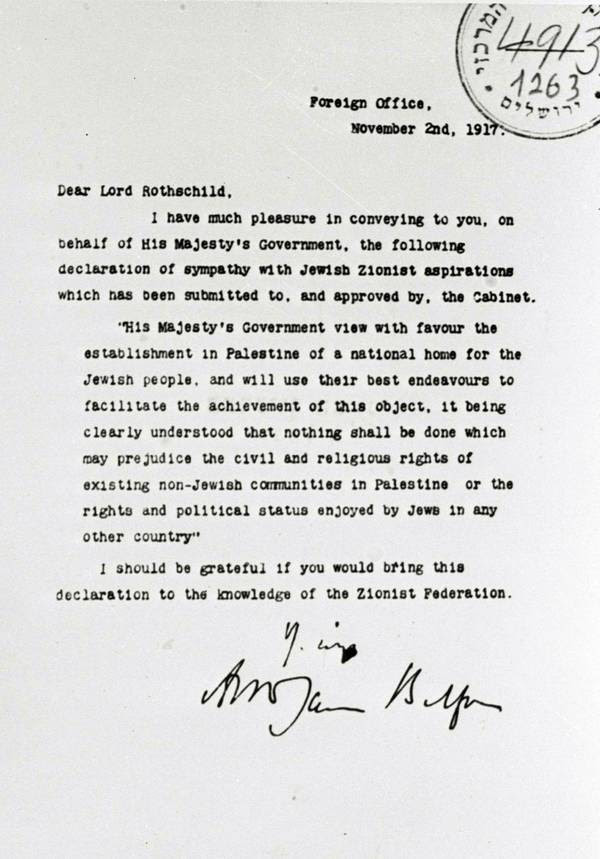
The actual meaning of the Declaration is quite muddy. Some regard the note as a simple ploy to secure support from Jews in the US and Russia to support Britain in World War I. According to The Washington Post:
“Balfour said at a cabinet meeting that appealing to Jewish nationalism would serve as ‘extremely useful propaganda both in Russia and in America’ — two countries with significant Jewish populations and whose contributions were necessary to winning World War I. After the declaration was announced, British leaflets were dropped over Jewish communities in German and Austrian territory pointing to the good deeds done for the ‘people of Israel.’”
Gilbert Achcar gives a good historical background to the politics of the Declaration.
Many Palestinians point to the last sentence of the Declaration which asserts that “nothing shall be done which may prejudice the civil and religious rights of existing non-Jewish communities in Palestine”. Further, Palestinians assert that British control over Palestine, secured secretly after the collapse of the Ottoman Empire in the Sykes-Picot Treaty in 1916 was itself illegitimate. Needless to say, while the Balfour Declaration is an important document in the history of Israeli-Palestinian relations, it is unlikely that it would ever serve to end that debate.
Smile Time
Indonesian Tarsier

The United Nations Environment Programme (UNEP) has published a new report on global emissions of greenhouse gases. The report is a cautious interpretation of the global effort to reduce these emissions. On the one hand, the report says that:
“Global greenhouse gas emissions in 2020 are likely to be at the high end of the range of the scenarios consistent with the 2°C and 1.5°C goals respectively, making it increasingly difficult to be on track to meet the 2030 emission goals.”
On the other hand, it also asserts that:
“Global CO2 emissions from energy and industry have remained stable since 2014, but overall greenhouse gas emissions continue to rise slowly.”
Interestingly, the media interprets the report in radically different ways. National Geographic ran an article on the report entitled “Current Climate Pledges Aren’t Enough to Stop Severe Warming”. On the other hand, Reuters suggests that the report indicates that “there are signs of a move away from fossil fuels that not even U.S. President Donald Trump can stop, the United Nations said on Tuesday.”

The Pew Research Center has released a report on income and wealth inequality in the US since the Great Recession of 2007-09. The overarching conclusion of the report is that “Wealth gaps between upper-income families and lower- and middle-income families are at the highest levels recorded.” The details are incredibly depressing:
“Although lower- and middle-income families overall experienced gains in wealth in recent years, they were not large enough to make up for the losses these families sustained during the recession. Thus, in 2016, the median wealth of lower-income families was 42% less than in 2007 and the median wealth of middle-income families was 33% lower. Indeed, the net worth of these families in 2016 – $10,800 for lower-income families and $110,100 for middle-income families – was comparable to 1989 levels.
“The experience of upper-income families is markedly different. Their losses in the recession were smaller and their recovery was stronger. By 2016, upper-income families had a median wealth of $810,800, 10% more than prior to the recession in 2007. Moreover, the median wealth of upper-income families is at the highest level since the Federal Reserve started collecting these data in 1983. Consequently, the recession drove wealth inequality between upper-income families and lower- and middle-income families to the highest levels recorded. In 2016, the median wealth of upper-income families was seven times that of middle-income families, a ratio that has doubled since 1983. Upper-income families also had 75 times the wealth of lower-income families in 2016, compared with 28 times the wealth in 1983.”
The report also breaks down the trends in terms of race and the results are similarly depressing, but consistent with the overall trends. The report is a very bleak picture of the economic health of American society.

Provocatively, another Pew report indicates that most Americans believe that the American Dream is still vibrant although achieving wealth does not seem to be critical to that aspiration.


Smile Time

 World Politics News