One of my favorite economists, Dani Rodrik of the Kennedy School of Government at Harvard, published a paper last year entitled “Populism and the Economics of Globalization” which makes the argument that populism arises for a variety of reasons, but that how it manifests itself politically (Rodrik uses the dichotomy of right- and left-wing politics which is suggestive but I suspect is quite misleading). As usual, he states the argument succinctly:
“It is easier for populist politicians to mobilize along ethno-national/cultural cleavages when the globalization shock becomes salient in the form of immigration and refugees. That is largely the story of advanced countries in Europe. On the other hand, it is easier to mobilize along income/social class lines when the globalization shock takes the form mainly of trade, finance, and foreign investment. That in turn is the case with southern Europe and Latin America. The United States, where arguably both types of shocks have become highly salient recently, has produced populists of both stripes (Bernie Sanders and Donald Trump).”
Rodrik also addresses the sources of the globalization “shock”. The usual suspects for the disaffection of labor toward globalization are trade (“jobs are being shipped overseas”) and automation (“the robots are taking over”). Rodrik suggests that the flight of jobs toward low wage areas may be winding down and the real source of labor displacement now is automation:
“Economists understand that trade causes job displacement and income losses for some groups. But they have a harder time making sense of why trade gets picked on so much by populists both on the right and the left. After all, imports are only one source of churn in labor markets, and typically not even the most important source. Demand shocks, technological changes, and the ordinary course of competition with other, domestic firms produce much greater labor displacement than increases in import penetration. While disentangling the effects of automation and globalization is difficult, most existing studies attribute the bulk of the decline in U.S. manufacturing employment to the former rather than the latter. Yet we do not see populists campaign against technology or automation. What is it that renders trade so much more salient politically?”
Note that trade focuses attention on “others” and is therefore more susceptible to “ethno-national/cultural cleavages”. If automation is truly the enemy of labor, then workers have to focus their attention on the real source of automation–the indifference of market capitalist politics toward the treatment of labor. Suzanne Berger offers a roadmap of how this indifference could be addressed looking at the historical record of populism and techniques from other societies which have faced the same issue.
There has been a welcome lull in the hostilities between the US and North Korea as the upcoming winter Olympics in South Korea has brought about a temporary detente between the two states. The respite is also due to the willingness of the US and South Korea not to hold any military exercises while the Olympics are going on. The US, however, has upset the lull by extending an invitation to defectors from North Korea to a visit to the Trump White House. The defectors gave harrowing tales of life in North Korea and of desperate escapes from the regime. It is important for the world to hear these stories, but there probably was no urgent reason for them to be aired at this particular time. The North Koreans probably viewed the meeting as a deeply hostile act by the US. The meeting also comes at a time when there are reports that some in the US Pentagon are concerned that Mr. Trump is moving too easily toward a military response to the US-North Korean impasse. It also seems as if the US believes that it is working against a very tight deadline before North Korea develops the capability to strike the US homeland. On 22 January, Norah O’Donnell of CBS News conducted an interview with the Director of the US CIA, Mike Pompeo. In that interview, Pompeo thought the timeline was very tight:
O’DONNELL: So to be clear, how close is Kim Jong Un to being able to deliver a nuclear attack to the territorial United States?
POMPEO: A handful of months.
O’DONNELL: But correct me if I’m wrong. I do believe you have used that phrase, more than six months ago, you said a handful of months.
POMPEO: It’s true. I hope to be able to say it a year from now as well. … The United States government is working diligently to extend that timeline.
Aggravating the North Koreans during a period of relative calm is not an astute diplomatic move.
And now we need to start getting ready for Sunday (with apologies to all the Patriots Haters)
The current edition of The Economist has an article on the North Korean nuclear issue which is substantive, very readable, and highly informative. The article goes through a variety of different ways to think about the issue, but there is one paragraph which summarizes the critical issue brilliantly:
“At root, however, debates about Korea strategy turn on two starkly straightforward questions, spelled out in interviews with serving and former defence and national-security officials, diplomats and spies, including several with personal experience of negotiating with North Korea. First, will China ever break decisively with North Korea, its infuriating neighbour but valued buffer against the world? Second, can Mr Kim be deterred? For if he cannot, then any responsible American president must contemplate a strike, risking what the Japanese expert summarises as “tens of thousands of casualties today to prevent millions tomorrow”.
I highly recommend the article for anyone who wants to understand the very complicated concerns of the crisis that is objective and sober.
A possible insight into the way the Trump Administration is thinking about North Korea might be found in its abrupt removal of Dr. Victor Cha from consideration as the next US Ambassador to South Korea. It is hard to believe that given the tensions in East Asia this very important position has remained unfilled for almost a full year. Professor Cha teaches at Georgetown University and heads the Korea Department at the Center for Strategic and International Studies in Washington, DC. On 30 January Cha wrote an op-ed piece for the Washington Post entitled “Giving North Korea a ‘bloody nose’ carries a huge risk to Americans” and his argument was that even a very limited use of force against North Korea would likely precipitate a serious violent conflict with many casualties:
“Some have argued the risks are still worth taking because it’s better that people die “over there” than “over here.” On any given day, there are 230,000 Americans in South Korea and 90,000 or so in Japan. Given that an evacuation of so many citizens would be virtually impossible under a rain of North Korean artillery and missiles (potentially laced with biochemical weapons), these Americans would most likely have to hunker down until the war was over.”
Cha was nominated by President Trump last August and had passed all the necessary security clearances for the position. He had also been approved for the position by South Korea. Despite this heavy investment in the nomination and more than enough time to vet his views by the Administration, Cha was unceremoniously and precipitously dropped for stating his views which are apparently anathema to the Administration.
Victor Cha
One of the major cities of the world, Cape Town, South Africa, may run completely out of water by 16 April. It is a city of over 4 million people, but three years of drought and overuse of water have left the water supply levels dangerously low. The city is currently scheduled to turn off all tap water unless there is significant rainfall soon. Residents of the city will be restricted to 13 gallons of water a day beginning later this week, and plans are set to supply water under heavy guard after 16 April. Unfortunately, Cape Town is not alone, and water scarcity is affecting several other major cities in the world: Sao Paulo, Brazil; Lima, Peru; Amman, Jordan; Mexico City; Melbourne, Australia; and Kabul, Afghanistan. According to the Thompson Reuters Foundation:
“Water scarcity already affects more than 40 percent of the world’s population and is expected to rise due to global warming, with one in four people projected to face chronic or recurring shortages by 2050, according to the United Nations.”
The problem of water scarcity is one of the most serious problems facing the world, but efforts to address the problem have been inadequate.
I apologize for bringing up the Russian sanctions issue yet again, but the seriousness of the matter explains much of my obsessiveness. Julia Ioffe has written a very insightful essay on the issue for The Atlantic. She summarizes the outcome of the decision of the Trump Administration very succinctly:
“The administration had all the tools and expertise at its disposal, and seemed to be on track to a sensible policy to which Congress had bound it: using a scalpel to go after the specific people who make Putin’s antagonism to the United States possible. Instead, it opted for a blow-up toy sledgehammer that is as blunt as it is comical. Congress had tasked the Trump administration with devising the framework for Russia sanctions, and on Tuesday, by seemingly copying Forbes and the Kremlin phonebook, the Trump administration essentially plagiarized its homework. In the process, the administration made a mess for itself at home. Democrats and Republicans in Congress were furious, and the list again raised another round of questions about why the Trump administration was being so lenient on a regime that stands accused of helping Trump get elected. The Russians, in the meantime, were both angry, mocking, and relieved, yet, according to two sources close to the Russian Foreign Ministry, left the option of retaliating through Iran and North Korea on the table.”
Again, interfering with normal democratic procedures by broadcasting stolen emails and infiltrating social media with false information are, in my opinion, acts of a hostile power that cannot be tolerated and must be addressed. If not, then faith in democracy cannot be sustained.
Ever since the Reagan Administration the US has been trying to develop anti-ballistic missile systems designed to shoot down enemy missiles before they can hit the US homeland. These efforts have cost about $190 billion between 1985 and 2017, and periodically there have been claims of great progress toward an effective system. There was yet another test of one of the systems yesterday over Hawaii and it failed. I suspect that there will never be an effective anti-ballistic missile system because there are too many variables involved in shooting a bullet to shoot down another bullet. The real objective of an anti-ballistic missile system is to create an politically plausible alternative to disarmament and thereby justify the continued existence and development of nuclear weaponry.
Minutes before midnight yesterday, the US Treasury Department released a list of “senior foreign political figures and oligarchs in the Russian Federation, as determined by their closeness to the Russian regime and their net worth”. It was required to do so by the US Congress which passed the “Countering America’s Adversaries Through Sanctions Act” (CAATSA). The law was passed to punish these individuals for their support of a government that interfered in the US Presidential election in 2016. Bizarrely, the list is “not a sanctions list, and the inclusion of individuals or entities in this report, its appendices, or its annex does not and in no way should be interpreted to impose sanctions on those individuals or entities”. We are left, therefore, to interpret what this list actually is since it apparently has nothing to do with sanctions.
The Russian response was pretty straightforward. Russian President Putin said simply: “The dogs bark, but the caravan moves on”. He also noted that he was “offended” that his name was not on the list.
The report is a triumph of what George Orwell called “doublespeak”. The message of the Trump Administration is clear: Russia will not be punished even though the evidence is incontrovertible that it endeavored to manipulate the most precious right of democracy–the right to vote. I call this treason.
Today was the deadline for the Trump Administration to announce the list of Russian individuals and institutions that will be sanctioned in accordance with a law the US Congress passed last year. The sanctions are in response to the Russian interference in the US 2016 elections and the law was passed 98-2 in the US Senate. The law is called the Countering America’s Adversaries through Sanctions Act. However, the Administration has dragged its feet on the sanctions, missing the first deadline of 1 October 2017. According to CNN:
“The administration missed its first deadline on October 1 to issue guidance on which Russian entities in the military and intelligence sectors should be subject to sanctions. The State Department was almost a month late on that — perhaps because Secretary of State Rex Tillerson had eliminated the office that oversees sanctions and moved all that work to the deputy director in his policy planning bureau — but they finally named names on October 26.”
The Administration has the authority to waive today’s deadline, but it would have to publicly certify the waiver. Tonight, the Washington Post is reporting that the sanctions will not be imposed “because the threat itself is acting as a ‘deterrent.'” The decision is a sniveling capitulation to the Russians and further evidence that the Trump Administration is serving the interests of the Kremlin. All Americans should be both alarmed and ashamed.
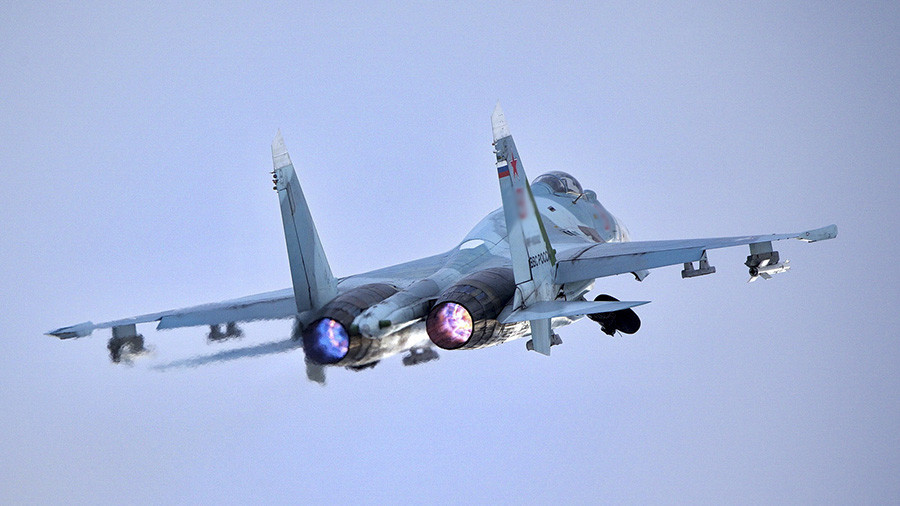
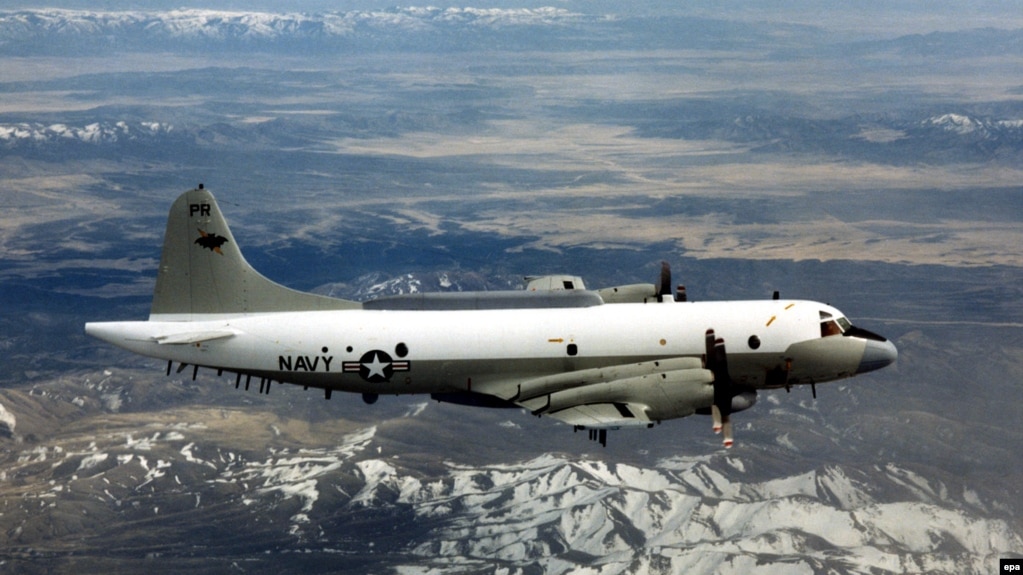
A Russian jet flew across an American spy plane’s path in international air space over the Black Sea. According to American sources, the Russian jet was just five feet away from the American EP-3, causing the spy plane to end its flight prematurely because of turbulence. As indicated by the photographs below, the two planes are not remotely comparable. There have been many such close encounters in the Black Sea, the Baltic region, and Syria recently. One of these days, the game of chicken will end badly.
“Damage from floods across Europe is projected to more than double, from a 113% average increase if warming is kept to 1.5°C, to 145% under the 3°C scenario.
“In terms of population affected, the projected increase ranges from 86% to 123%.”
Russia will be holding national elections on 18 March and there seems to be little doubt that current President Putin will win an unprecedented 4th term. But the opposition to Putin refuses to be silenced. His most prominent opponent, Alexei Navalny, has been in many protests against Putin even though he has been barred from running against Mr. Putin. Navalny was arrested yet again today, and the offices of his political party were raided by police. There were protests in more than 100 cities in support of Mr. Navalny, and all the protesters risked the chance of being arrested. Navalny has called for a boycott of the election, but Putin’s popularity in Russia hovers around 80% approval.
Alexei Navalny
US trade actions have begun to alter the trading patterns of its most significant partners. President Trump has made it clear that he wishes to renegotiate the North American Free Trade Agreement (NAFTA) which was put into place in 1994. The negotiations between the US, Canada, and Mexico have been very difficult and not particularly productive, but Mexico is not waiting for the negotiations to be over to protect its imports of agricultural products. According to Reuters:
“The United States remains the dominant grain supplier to Mexico. Yet Mexico imported 583,000 metric tonnes of corn from Brazil in 2017, a 980 percent jump from the previous year, according to Mexican government trade data.
“Mexican imports of U.S. soybean meal, used to feed chickens and livestock, fell 29 percent in the first 11 months of 2017, compared with the same period the previous year, according to the U.S. Department of Agriculture.”
The shifts will undoubtedly affect the income of farmers who were among President Trump’s strongest supporters in 2016.
One of the most difficult issues in world politics is the question of the extent to which human rights are universal. Liberal states assert that human rights are applicable everywhere; others assert that human rights are culturally defined. One such controversy centers around the practice of female genital mutilation. The practice has been condemned and outlawed in most countries, but it still occurs in many places. Kenya outlawed the practice in 2011, but Dr Tatu Kamau, who has held a number of high-level positions at the Ministry of Health, told a high court that Kenya’s 2011 ban on FGM was unconstitutional and discriminated against ‘national heritage’”. It is unlikely that Dr. Kamau’s petition will succeed, but it suggests how difficult it has been to abolish the practice.
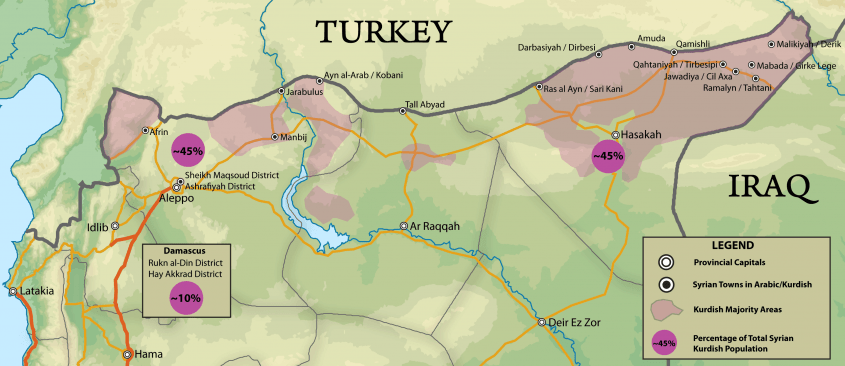
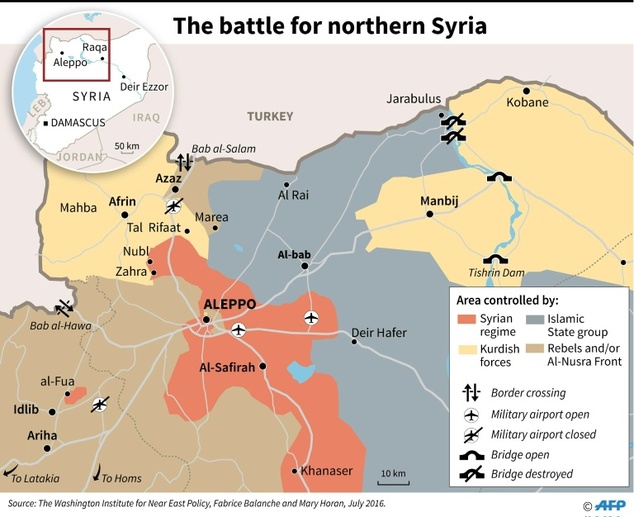
“Turkey’s presidency said in a statement that U. S. National Security Adviser H.R. McMaster spoke Friday with Ibrahim Kalin, a spokesman for Turkish President Recep Tayyip Erdogan. McMaster confirmed in the phone conversation that the U.S. would not give weapons to the YPG militia, the statement said. There has been no U.S. confirmation.”
The Turks have pushed into Afrin and if they move toward Manbij they will pretty much control the areas of Syria the Kurds wish to claim as their own. It appears as if the US has abandoned its allies, the Kurds.
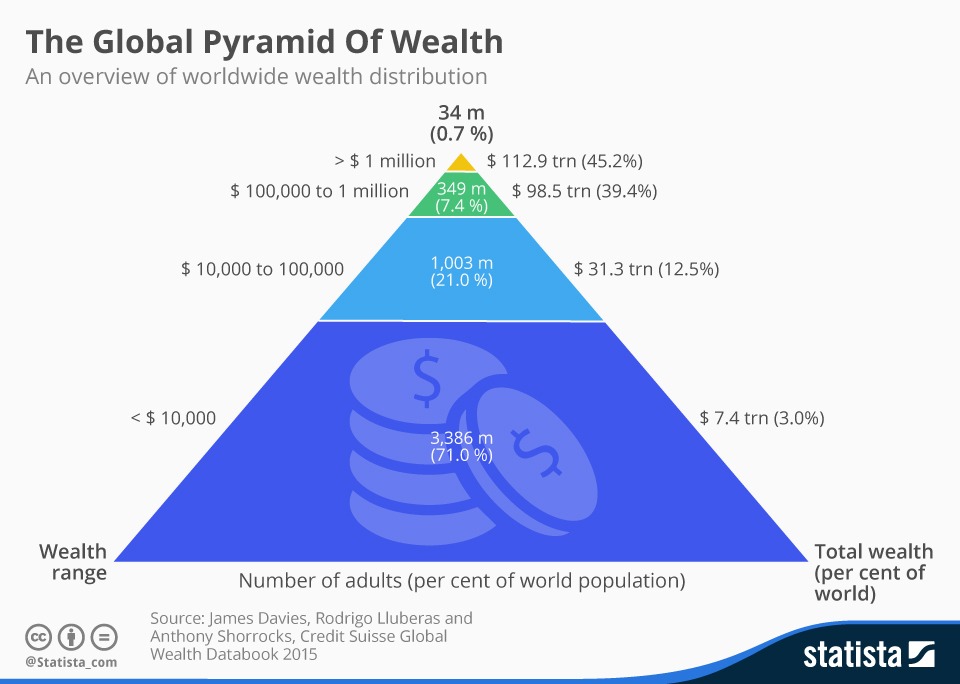
Spiegel has an article on wealth distribution in Germany and other European countries, and its results suggest that wealth inequality in Germany is a serious problem. Wealth inequality is difficult to measure–the easier metric is income since those statistics are usually collected by governments as part of its tax structure. Wealth, however, consists of assets that are difficult to track and to assess, such as art, fine wines, houses, cars, and yachts. But the data collected by Spiegel indicates that inequality is growing in Europe and that data is consistent with data form many other countries in the world such as Russia, China, India, and Brazil. According to the article:
“According to DIW (German Institute for Economic Research) calculations, the poorest half of the population in Spain owns just under 12 percent of the country’s total wealth while in France, that number is slightly above 6 percent. In Germany, meanwhile, it is just 2.3 percent. The richest 10 percent of households in France and Spain own less than half of their country’s wealth, respectively. In Germany, that bracket owns close to two-thirds of the nation’s wealth.”
The article has a number of tables and graphs which are quite revealing. Wealth inequality is a serious political problem over time.
Miloš Zeman has been re-elected President of the Czech Republic. Zeman is a strong supporter of Russian President Putin and a sharp critic of immigration and the European Union. Zeman defeated Jiri Drahos who ran as a newcomer, but a strong supporter of the EU. Zeman was also a strong supporter of Prime Minister Andrej Babis who lost a confidence vote in the Parliament which will give Babis a more powerful position in forming a new government. The lurch to the right seems complete in the Czech Republiv despite strong economic growth in recent years.
The US dollar has lost value over the last few weeks and the decline is beginning to worry some analysts. The effects of the decline is to make US exports less expensive and US imports more expensive (the price of oil, which is denominated in terms of the US dollar has been rising as a result–expect higher gasoline prices). The decline is something that one would not have expected given the evidence of sustained growth in the American economy, but it also puts the US economy at a competitive advantage over other countries and those countries are beginning to become quite concerned. When coupled with the recent rise in US tariffs on washing machines and solar panels, there is concern that the US is engaging in a trade war.
It is far to soon to begin to speculate about how US-Turkish relations will evolve given the clear conflicts between the two over the issue of Syria. The US, however, has not counterbalanced the loss of Turkey as an ally with new relationships in the region. The US relationships with Saudi Arabia and Israel are very strong, but the loss of Turkish support is significant. Turkey, however, has been deepening its relationship with Qatar, Iran, Russia, and China. Some of these new affiliations will be very difficult to sustain–the ties to Iran are very weak and the two states have many conflicting objectives. And after the US decision on Jerusalem, it has very little public support among most of the Arab states in the Middle East. It will take some time before the US recovers its strong position in the region.
The rift between the US and Turkey continues to widen. Turkey has disputed the US description of a telephone conversation between US President Trump and Turkish President Erdogan. The US claims that Mr. Trump asked Erdogan to ease up on the military offensive against the Syrian Kurds, who have been steadfast US allies in the fight against ISIS. The Turks insist that Mr. Trump did not make comments of that sort. The dispute is not merely rhetorical. The US has troops in the area of Syria where Turkey intends to broaden its offensive against the Kurds. It would be tragic if Turkish troops ended up firing on positions where US troops were stationed. Turkish-US relations are clearly at a crossroad.
US Ambassador Bill Richardson has resigned from an international advisory board examining the plight if the Royingha in Myanmar. The Royingha are a Muslim ethnic group who have lived in the Rakhine province of Myanmar for centuries. The population of Myanmar is primarily Buddhist and they regard the Royingha as invaders and as a threat. The Myanmar military has engaged in an offensive of murder, rape, and torture to force the Royingha into Muslim-majority Bangladesh. The Bangladeshis are no longer able to support the influx of refugees so the Royingha have no where to go. The international community has not been able to persuade the Myanmars to stop their policy of ethnic cleansing. The international advisory board was the only international attempt to offer hope to the Royngha but Richardson’s resignation suggests that even that feeble effort was stillborn.
The White House requested a landscape painting, “Landscape with Snow”, by Vincent Van Gogh from New York’s Guggenheim Museum to be hung on a lending basis in the private living quarters. The request was denied, but the Museum offered an alternative: an 18-karat, fully functioning, solid gold toilet entitled “America”. According to the Washington Post “the artist who created the toilet, Maurizio Cattelan, would like to offer it to the White House for a long-term loan.'” Someone has a sense of humor.
Business Insider has done an excellent job of summarizing the basics of a very arcane article in the journal, International Security, which outlines the feasibility of a “limited” nuclear strike against North Korean nuclear facilities which would minimize civilian casualties. I find the argument totally unpersuasive, but it apparently is the motivation behind a build-up of B-1, B-2, and B-52 bombers on the island of Guam. Of special interest are the B-2 bombers which can deliver a very small, precision-guided nuclear warhead (the B-61) of about 0.3 kilotons to a target with extraordinary accuracy. The accuracy assures the total destruction of the target even though the blast is quite small (by nuclear standards). The maps below show the different fallout rates from the explosions (the shaded areas). The danger is that a belief that such a “small” strike (called a “bloody nose” by those who support such a strike would not precipitate a massive retaliation is profoundly foolish and stupid.