Archive for the ‘World Politics’ Category
The McKinsey Global Institute has released a new report entitled “How will automation affect economies around the world?” It is a transcript of a podcast, so one can read or listen to it. There are three interviews, one on China, one on Europe, and one on India. Overall, the report is consistent with how automation will be accompanied by job displacement, but there are some very creative and interesting ideas on how to address job losses and adding new skills to the current workforce. For example, one possibility is to integrate job training into current jobs:
“Why not make sure that instead of working so many hours a week, ensure a portion of it—2 percent, 3 percent, 5 percent of that—is actually devoted for new learnings. And these learnings, if you do them right, will give you the rights basically to get points for your pension in the future. In this concept, instead of adjusting the number of hours to work, because there will likely be a bit less work in the future, you will still work. But you work for the future. Firms have an incentive to possibly even co-finance because firms are not bad guys. They’re not there to take people out. They want people that are good at doing their job and complementary with capital. And for them, they need these skills, and these skills come from job trainings most of the time.”
The description of the Chinese response to automation is particularly interesting given the large population and the rate of economic change in China. The Chinese seem to have thought long and hard about how to deal with unemployed workers. McKinsey also has a report entitled “What can history teach us about technology and jobs?” and one entitled “How do we create meaningful work in an age of automation?”
“So now we will also impose import tariffs. This is basically a stupid process, the fact that we have to do this. But we have to do it. We will now impose tariffs on motorcycles, Harley Davidson, on blue jeans, Levis, on Bourbon. We can also do stupid. We also have to be this stupid.”
“His attack on European automakers is mostly a direct threat at Germany, which exported $23 billion in cars to the United States in 2016, according to data aggregated by the Massachusetts Institute of Technology. But large German automakers also have a sizable presence in the United States, with BMW employing thousands of workers in South Carolina and Volkswagen employing thousands more in Tennessee. Those manufacturers produce hundreds of thousands of cars in the United States each year, many of which are later exported to buyers in Asia and Europe.”
New York magazine has published a very disturbing story about foreign policy decision-making in the US. Early in the Trump Administration, the US supported a Saudi-inspired boycott of Qatar ostensibly because Qatar supported terrorists. The evidence was thin and even the US State Department was not supportive of the move. The New York article indicates that President Trump’s son-in-law, Jared Kushner, had approached Qatar for a loan to help him make payments on a real estate holding that was losing a great deal of money. Qatar refused to make the loan to Kushner who was a senior aide to President Trump. There is no direct evidence between the Trump decision and the Qatari decision, but the possibility of private interests determining US foreign policy is unconscionable.
Much of the world was highly critical of US President Trump’s announcement that the US would impose tariffs on imported steel and aluminum. China was critical, but steel exports to the US account for only 2% of Chinese exports and China apparently wishes to hold its fire for a while. Europe was highly critical. According to The Washington Post:
“With this, the declaration of war has arrived,” said Bernd Lange, a German Social Democrat and head of the European Parliament’s trade committee, speaking on German public radio. “They have a mercantile trade model in their heads that dates back 200 years.”
The Europeans are threatening to impose tariffs on Harley-Davidson motorcycles, bourbon, and Levi jeans. The more immediate problem for the US is that the countries most seriously affected are Canada, Mexico, and South Korea. Damaging the Canadian and Mexican economies will definitely have a knock-on effect on the US economy. South Korea is a strategic problem as well. The US has been trying to stiffen South Korean resistance to North Korean overtures, but damaging the South Korean steel industry will make that task much more difficult. However, it is still not clear what Mr. Trump plans. His initial announcement was not cleared by his aides and may be changed. He claimed that trade wars are “good” and “easy to win”. History does not support that proposition. Analyst Stephen Roach sums up the historical record well:
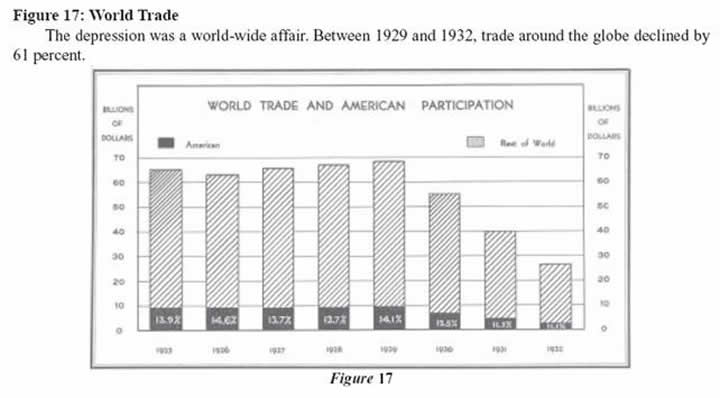
“Trade wars are for losers. Perhaps that is the ultimate irony for a president who promised America it would start “winning” again. Sen. Reed Smoot and Rep. Willis Hawley made the same empty promise in 1930, leading to protectionist tariffs that exacerbated the Great Depression and destabilized the international order. Sadly, one of the most painful lessons of modern history has been all but forgotten.”
The Italian general election is scheduled for Sunday and the polls suggest that Italians are deeply pessimistic about their future. Right now the anti-establishment 5-Star Movement led by the former comedian, Beppe Grillo, seems to be leading in the polls but even its strongest supporters are not enthusiastic about the party. The Pew Research Center ran a poll of Italian attitudes prior to the election and it suggests that the election will not likely resolve any of the major issues facing the third largest economy in the European Union.

Calamities ranging from drought to whitefly infestations have decimated farmers in the Punjab, the agricultural region of India. According to the Asia Times: “A door-to-door survey in the districts of Sangrur, Bathinda, Mansa, Barnala, Ludhiana and Moga found that a total of 14,667 agricultural labourers and farmers committed suicide between 2000 and 2015.” In response, Prime Minister Modi’s government is increasing prices to benefit the farmers, but the strategy will likely increase food prices in India dramatically. Inflation in India is already at very high levels and the government does not seem to be able to halt the increase in prices.
In advance of a national election scheduled for 18 March in which he is all but certain to win, Russian President Putin gave a speech in which he noted that Russia has developed new weapons systems he claimed make Russia “invincible” to nuclear attack. It is very difficult to assess how credible these claims may be, but US analysts believe that one of them, a nuclear-tipped torpedo, is close to being deployed. It is hard to imagine what such a weapon would be used for, but some analysts fear that it may be a cobalt bomb, popularly known as a “dirty” bomb, designed to make an area unlivable for many years. What was most interesting about the speech is that Putin seemed most interested in making the world “listen” to Russia, revealing his primary interest in restoring Russia’s status as a great power. The speech will undoubtedly be fodder for those who wish to increase military spending to counter the Russian moves.
US President Trump announced that he will levy tariffs of 25% on imported steel and 10% on aluminum. The announcement was apparently off-the-cuff since the Administration was unable to identify the types of steel and aluminum affected and the specific countries that will be affected. Nonetheless, the international response was almost immediate with US trading partners, Canada, Mexico, and the European Union, indicating that they would respond with tariffs on goods imported from the US. The response in the US to the announcement was negative. Steel and aluminum producers all hailed the move, but manufacturers who use steel and aluminum worried that the costs of their products would increase and might even lead to greater unemployment if demand does not meet the increased costs. Mr. Trump identified China as the source of the problem in the steel industry, but as the chart below indicates, the US does not import much steel from China. Raising tariffs only makes sense if one expects no other country to retaliate. If other countries do retaliate, then everyone is worse off.

Several Chinese dissidents have been placed under close surveillance and house arrest after they registered dissatisfaction with the decision of the Communist Party to allow the President and Vice-President to serve more than two consecutive terms. The constitution had prohibited more than two terms in order to avoid the emergence of another leader in the mold of Mao Tsetung. The change is viewed by many as a significant retreat from the development of strong democratic institutions in China.
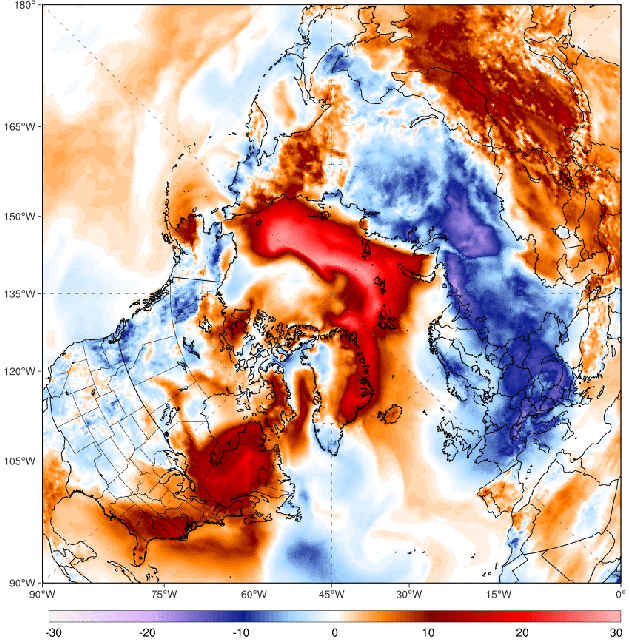
In what should be the coldest part of the Arctic winter (the sun is still below the horizon during the “day”), temperatures are almost 50ºF above normal and it some places in northern Greenland the temperatures are actually above freezing. The warm temperatures are an ill augur for sea ice this summer and problematic for weather patterns throughout the upcoming summer. At the same time, Europe is experiencing unusually cold temperatures due to a blast of Siberian air coming in from Siberia (dubbed the “Beast from the East” by those unfamiliar with cold weather). Rome has experienced its first snowfall in six years. Climate change brings unpredictable weather.
Northern Hemisphere Temperatures A Cold Front Coming into the City of London on Tuesday

I get press reports from the US Treasury on a daily basis and today I got a report that included a chart that is reproduced below. I find the data fascinating because it reveals how much money is being held in offshore accounts although not necessarily by American citizens (many non-Americans buy US assets and also wish to hide them). It is hard to believe that the people of the Cayman Islands (population 62,083), Luxembourg (population 537,039), Singapore (population 5,763,984), Bermuda (population 61,163), or the British Virgin Islands (population 31,543) are so phenomenally wealthy that they could own so much wealth on their own. One cannot stash their money in such places cheaply, but apparently, if one is rich enough, it is quite common.
| Foreign Holdings of US Securities, by country and type of security for the major investing countries into the US, as of June 30, 2017 |
|
|
|
|
|
|
|
|
Billion of Dollars |
|
|
|
|
|
|
|
|
|
|
|
Total |
Equities |
Long-Term Debt |
Short-Term Debt |
Other |
|
|
|
|
|
|
|
|
| Japan |
1,999 |
490 |
235 |
1,215 |
58 |
|
| Cayman Islands |
1,688 |
927 |
128 |
529 |
103 |
|
| United Kingdom |
1,562 |
844 |
31 |
644 |
43 |
|
| China, mainland |
1,541 |
194 |
180 |
1,163 |
3 |
|
| Luxembourg |
1,401 |
531 |
68 |
703 |
98 |
|
| Ireland |
1,077 |
296 |
78 |
563 |
141 |
|
| Canada |
1,065 |
810 |
29 |
213 |
14 |
|
| Switzerland |
825 |
413 |
22 |
356 |
34 |
|
| Belgium |
618 |
38 |
16 |
548 |
15 |
|
| Taiwan |
564 |
56 |
228 |
277 |
4 |
|
| Germany |
427 |
208 |
27 |
187 |
5 |
|
| Netherlands |
398 |
254 |
15 |
114 |
15 |
|
| Hong Kong |
350 |
96 |
10 |
181 |
64 |
|
| Singapore |
349 |
167 |
10 |
154 |
17 |
|
| Norway |
340 |
239 |
* |
100 |
1 |
|
| Bermuda |
318 |
95 |
45 |
154 |
24 |
|
| France |
292 |
154 |
9 |
113 |
16 |
|
| South Korea |
282 |
102 |
36 |
134 |
11 |
|
| Brazil |
277 |
5 |
* |
253 |
18 |
|
| Australia |
272 |
193 |
6 |
64 |
9 |
|
| Kuwait |
233 |
160 |
5 |
44 |
24 |
|
| Saudi Arabia |
202 |
46 |
6 |
108 |
42 |
|
| Sweden |
180 |
130 |
1 |
49 |
* |
|
| British Virgin Islands |
166 |
112 |
2 |
41 |
11 |
|
| United Arab Emirates |
147 |
80 |
1 |
57 |
9 |
|
|
|
|
|
|
|
|
| Rest of World |
1,863 |
549 |
73 |
1,065 |
175 |
|
| Total |
18,436 |
7,188 |
1,263 |
9,031 |
954 |
|
|
|
|
|
|
|
|
| Source: US, Department of the Treasury, “Preliminary Report on Foreign Holdings of US Securities At End-June 2017,”28 February 2018. Accessed at: https://home.treasury.gov/news/press-releases/sm0301 |
|
|
The RAND Corporation (a strategic think-tank that has been around for a very long time) has published a new book entitled “U.S. Presence and the Incidence of Conflict“. The book, however, is available for a free download for those who has a special interest in US foreign policy. The press release on the book summarizes its findings in this way:
“Troop presence and military assistance have different effects. Stationing U.S. troops abroad may help deter interstate war. A large U.S. regional troop presence may reduce the likelihood of interstate conflict in two ways: by deterring potential U.S. adversaries from initiating interstate wars or by restraining U.S. allies from initiating militarized behavior. However, U.S. military presence may increase interstate militarized activities short of war. U.S. adversaries may be more likely to initiate militarized disputes against states with a larger U.S. in-country troop presence. Troop presence and military assistance have different effects. Stationing U.S. troops abroad may help deter interstate war. A large U.S. regional troop presence may reduce the likelihood of interstate conflict in two ways: by deterring potential U.S. adversaries from initiating interstate wars or by restraining U.S. allies from initiating militarized behavior. However, U.S. military presence may increase interstate militarized activities short of war. U.S. adversaries may be more likely to initiate militarized disputes against states with a larger U.S. in-country troop presence. However, provision of U.S. military assistance may be associated with increased state repression and incidence of civil war. “
I will likely download the book and read it in the near future. Some of these conclusions conform to some of my own views on the US presence abroad. I find the idea that “U.S. troop presence does not appear to reduce the risk of intrastate conflict or affect the level of state repression” highly suspicious.
The Anti-Defamation League (ADL) is reporting a dramatic increase in anti-Semitic incidents in the US in 2017. According to its report:
“In its annual Audit of Anti-Semitic Incidents, ADL found that the number of anti-Semitic incidents in the U.S. rose 57 percent in 2017 – the largest single-year increase on record and the second highest number reported since ADL started tracking such data in 1979. The sharp rise was in part due to a significant increase in incidents in schools and on college campuses, which nearly doubled for the second year in a row.”
The last part of the paragraph is particularly troubling since it suggests (although does not prove) that anti-Semitism seems to be on the rise among younger people. The rise in anti-Semitism parallels the rise of nationalist sentiment based upon ideologies of exclusion, a phenomenon that seems to be global in scope. When Christians, Muslims, Jews, Hindus, and Buddhists engage in attacks against people who do not share their faith, it becomes virtually impossible to protect basic human rights for all.

The State Department’s top diplomat on Korean affairs has abruptly decided to retire, effective this Friday. Joseph Yun has been with the State Department for 30 years and in the absence of a US Ambassador to South Korea, his departure leaves a large hole in expertise on how to deal with North Korea. The Washington Post indicates that the resignation is due to frustration over the lack of influence over US policy toward the Korean issue. Yun had been the point man in all dealings with Korea over the last few years and it is difficult to imagine how he can be replaced at a time when his experience might be of incredible value. One would think that the Administration would have done everything possible to persuade Yun to stay on his post. Yun himself is probably aware of the damage his resignation will incur, signalling the depth of his frustration with US Korean policy.
US National Security Agency Director, Admiral Mike Rogers, testified before the Senate Armed Services Committee that President Trump has not authorized him to “take any action to counter Russian election meddling.” The testimony was unnerving since Special Counsel Mueller’s indictment of Russian individuals and institutions seems to prove quite clearly that there is “incontrovertible” (to use the word used by National Security Adviser McMaster) evidence that Russia intervened in the 2016 US election. In ordinary circumstances, one would expect the US President to take every measure possible to prevent such interference by a foreign power to recur. President Trump’s refusal to defend the country is remarkable. Think what would have happened if President Roosevelt had decided to ignore the Japanese attack on Pearl Harbor on 7 December 1941. Most observers would describe that lack of action as treason.
National Security Agency Director Admiral Mike Rogers

As the US begins what is certain to be a very contentious immigration and refugee debate, the Pew Research Center has compiled a fact sheet on the variety of programs to be discussed and the number of people who will ultimately be affected. Immigration has always been a difficult issue for Americans despite the clear fact that the US is in fact a “nation of immigrants”. But the surge of nationalist and anti-global sentiment in the world will make the upcoming debate unusually political. As the debate unfolds in Congress and the media, it is important to rely on solid information. Most specifically, we should all remember that there is no statistical correlation between immigration and crime or terrorism.

National Geographic has published an article on how some of the world’s most important lakes are drying up. The significance of these changes, attributable to climate change to as a yet unknown degree, has been dramatic, although not well-publicized since the process of drying up is viewed as “natural”.
“In sheer numbers those fleeing “natural” calamities have outnumbered those fleeing war and conflict for decades. Still, these figures do not include people forced to abandon their homelands because of drought or gradual environmental degradation; almost two and a half billion people live in areas where human demand for water exceeds the supply. Globally the likelihood of being uprooted from one’s home has increased 60 percent compared with 40 years ago because of the combination of rapid climate change and growing populations moving into more vulnerable areas.”
Cape Town, South Africa, is a city of over 3 million people and it is on the brink of running out of water. But Cape Town is only the first of the world’s major cities to face such a crisis. São Paulo, Brazil, Bangalore, India, Beijing, China, Mexico City, Cairo, Egypt, and Jakarta, Indonesia are also highly likely to suffer serious water issues in the near future.
US President Trump and Mexican President Enrique Peña Nieto apparently had a very difficult telephone conversation which ended with the Mexican President cancelling his planned visit to Washington, DC. There are serious trade issues being discussed between the two countries, but the main reason for the contention was President Trump’s insistence that he would not publicly affirm “Mexico’s repeated assertion that it will not pay for the construction of the wall.” Despite Trump’s repeated assertions during the Presidential campaign of 2016 that Mexico would pay for the construction of the wall, Mexico has always held that it would not pay for the construction of a wall that Mexico considers to be insulting and racist. It is very difficult to understand why such an unrealistic expectation would be allowed to jeopardize one of the most important relationships to the US society and economy.
The South Korean press is reporting that the North Korean delegation to the Winter Olympics indicated to South Korean officials that it was interested in discussions with the US. The level of detail in the report lends great credence but the terms for the discussion are not known. According to Reuters, the White House issued a statement that “We will see if Pyongyang’s message today, that it is willing to hold talks, represents the first steps along the path to denuclearization”. The statement could be interpreted as a slight change in the US position which had held that denuclearization was a precondition for negotiations. But US Secretary of State Tillerson has not held that hardline position despite the statements of other officials, so it may simply indicate a degree of disarray in the foreign policy decision making process.
The Syrian cease-fire, ordered by the UN Security Council, immediately failed. Syrian government troops kept up their attack on the eastern part of the city of Ghouta, apparently within minutes of the resolution being passed. The failure of the cease-fire suggests that Russia, which voted in favor of the resolution, does not have either the will or the capability to exert influence on its Syrian government ally. The UN failure reflects the inherent weakness of the UN as an international organization on issues that relate directly to the national interests of the Permanent Members of the Security Council.
The Chinese press is reporting that the Chinese constitution will remove the phrase that the President and Vice-President “shall serve no more than two consecutive terms”. The change will allow the current President, Xi Jinping, to go for a third term. If Xi decides to take a third term, he will solidify his place as the most dominant Chinese leader since Mao Tsetung. The change also signals a lessening of the commitment to restraints on authoritarian leadership, a deeply troubling sign for the state of Chinese democracy.
President Xi Jinping

Reuters is reporting that the US is developing a plan to interdict vessels on the high seas or in the territorial waters of cooperating countries suspected of carrying contraband cargo to and from North Korea. The US Treasury Department has photos of vessels that violate the UN and US sanctions by altering their identifications in order to avoid detection. Much of the trade conducted in this way is transferred on the high seas and not in ports which can be more easily monitored. Interdiction on the high seas comes close to the technical definition of a blockade which is an act of war and the UN Security Council has not authorized the interdiction (and, if proposed in the Security Council, the measure would certainly be vetoed by both China and Russia). In particular, the Chinese are furious about the most recent sanctions levied by the US on specific Chinese vessels. There is no question that North Korea would consider the interdiction of any of its vessels as an act of war. It remains to be seen if US allies will agree to participate in this plan.
Screenshot of intelligence photo of North Korea trading at sea.
/cdn.vox-cdn.com/uploads/chorus_asset/file/10285521/Screen_Shot_2018_02_23_at_11.55.40_AM.png)
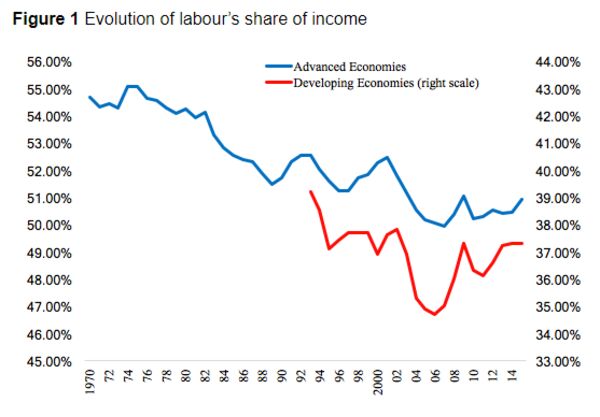
I have posted many articles on the growing income and wealth inequality in the world, the causes of which are globalization’s ability to facilitate the use of low wage labor any place in the world and the process of automation. The declining share of labor in the growing world economy is most evident in the US, but it is happening everywhere, even in low wage countries. It is this latter fact that is most troubling since it implied that there is no reason to believe that simple economic activity will reverse this process. The process can only be reversed by direct political action to redistribute the benefits of economic growth away from capital and back to labor.
The UN Security Council has voted for a 30 day cease-fire in Syria in order to allow the evacuation of civilians and to permit humanitarian supplies to reach the embattled civilians. Cease-fires have not worked in the past. The last proposed cease-fire collapsed on the day it was supposed to take effect. The need for a cease-fire is urgent–more than 500 people have died in the last week alone. Russia delayed the resolution for three days and the Syrian government indicated that it would continue to press the attack on what it considers to be terrorists and rebels. There does not appear to be any compelling reason to believe that this cease-fire will be effective, but there are indications that the Russians may be reconsidering its full-throated support of Syrian President Assad.
On 15 February I posted a short note on an attack on US and Syrian Democratic Forces (SDF) by Syrian government forces supported by what were suspected to be Russian mercenaries. The Washington Post has published an article which provides significantly more information about the attack. Apparently, the Russian mercenaries are under the control of a close friend of Russian President Putin, a fellow named Yevgeniy Prigozhin, who, according to intercepted communications with the Kremlin, received permission to attack the base on the eastern side of the Euphrates which is the agreed-upon dividing line between Russian-backed and American-backed forces. Russian and American military leaders are in daily communication about their operations in the area in order to avoid accidental contact.
If this information is accurate then it suggests a deliberate attack by Russian-controlled forces on American troops, something which actually never happened during the Cold War (that we know of). But the more accurate way to interpret this information is to assume that Prigozhin was acting on behalf of his own interests:
“According to the U.S. Treasury Department, Prigozhin owns a Russian company called Evro Polis, which, according to the Russian news site Fontanka, struck a deal in 2016 with the Syrian government to receive a 25 percent share of oil and natural gas produced on territory recaptured from the Islamic State. Most of those fields are on the eastern side of the Euphrates, where SDF fighters, accompanied by U.S. forces, have been advancing on the militants.
“The Prigozhin-linked mercenary company Wagner apparently provides the ground forces to help achieve that goal, working under contract with the Syrian government.”
Prigozhin is definitely a seedy character. He is also implicated in the Russian intervention in the US Presidential election in 2016:
“Prigozhin made front-page headlines last week when he was indicted by special counsel Robert S. Mueller III on charges of bankrolling and guiding a long-running Russian scheme to conduct “information warfare” during the 2016 U.S. presidential campaign.”
Yevgeniy Prigozhin

The US is considering a rather remarkable and unprecedented offer from Sheldon Adelson, a Republican donor, to pay for some of the costs of building the US Embassy in Jerusalem. Adelson is a long-time support of Israel and contributed $43,523,100 to primarily Republican candidates in 2016. The State Department is reviewing the legality of private funds to build an official governmental building, but the fact that the offer is being considered is astonishing to me. Moreover, that the offer is being made to support the highly controversial decision to move the US Embassy from Tel Aviv (where every other government has its diplomatic presence) to Jerusalem makes it even more troubling. We know that Ambassadorships are often granted as rewards to campaign contributors, but that the physical building–which would be present for years to come no matter who was President–should not be something up for sale.
The United States Citizenship and Immigration Services (USCIS) has changed its mission statement in a highly significant manner. It has decided to drop the phrase that characterizes the US as a “nation of immigrants”. The original mission statement read:
“USCIS secures America’s promise as a nation of immigrants by providing accurate and useful information to our customers, granting immigration and citizenship benefits, promoting an awareness and understanding of citizenship, and ensuring the integrity of our immigration system.”
The mission statement will now read:
“U.S. Citizenship and Immigration Services administers the nation’s lawful immigration system, safeguarding its integrity and promise by efficiently and fairly adjudicating requests for immigration benefits while protecting Americans, securing the homeland, and honoring our values.”
The change reflects the dramatically different attitude toward immigration and immigrants in the Trump Administration. In a cruel and inexplicable twist of irony, it turns out that the Director of USCIS, Lee Francis Cissna, is himself the son of an immigrant who apparently speaks only Spanish to his children at home. When Cissna’s nomination was submitted to the Congress for approval, ProPublica, published an article on his views about immigration which were quite negative.
A Republican Senator, Jim Risch of Idaho, made some very worrying statements about the prospects for war with North Korea at the Munich Security Conference. The Intercept has published a video of Risch’s comments, and here are some of the excerpts:
“There is no more dangerous place on the earth than the Korean peninsula right now. …
“The president of the United States has said, and he is committed to, seeing that Kim Jong-un is not able to marry together a delivery system with a nuclear weapon that he can deliver to the United States. …
“The consequences of that are breathtaking when you think about how this could happen. …
“If this thing starts, it’s going to be probably one of the one of the worst catastrophic events in the history of our civilization. It is going to be very, very brief. The end of it is going to see mass casualties the likes of which the planet has never seen. It will be of biblical proportions. …”
He went on to say:
“Anyone who doubts that this president isn’t committed to that, I would suggest that they step back, take a breath, listen to what he has said, review the facts on the ground. This president has at his fingertips the ability to dispense what he has said he’s going to dispense, if the North Korean regime, if Kim Jong-un, that he is, uh, the president can do this quickly, and as I said, it is at his fingertips.”
Senator Risch is on the Senate Foreign Relations Committee, but I am not sure how close he is to the President. We should watch carefully what happens after the Olympics end to see if North Korea conducts any missile tests or if the US and South Korea conduct provocative military exercises. The US has already announced the it intends to send highly sophisticated drones to South Korea when the Olympics are over. According to Newsweek:
“On Tuesday, South Korean newspaper Chosun Ilbo claimed the U.S. had scheduled the transfer of 12 MQ-1C Gray Eagle unmanned combat aerial vehicles to an air base in Gunsan, North Jeolla province in March and April. The report said the drones, which were upgraded versions of the MQ-1 Predator, would be used in military exercises that were to take place following the end of the 2018 Pyeongchang Winter Olympics and Paralympics. The article said the weapons could be used to strike not only North Korean sites designated as high-priority targets, but individuals as well.”
The North Korean Press Agency characterized the drone deployment in these terms:
“They are raising the issue that these UAVs equipped with precision-guided bombs and missiles are aiming at the top leaders and important objects of the DPRK in case of emergency.
“The continuation of the new war equipment in South Korea by the US and the US is an insidious goal to block the atmosphere of improvement in the North-South relationship and to push the situation of the Korean Peninsula to the extreme.”
The situation seems to be highly precarious.
12 MQ-1C Gray Eagle Drone

Politico is reporting that the US State Department has been ordered to pare back the sections in its annual human rights report that deal with women’s reproductive rights and the sections on rights that protect individuals against discrimination. For a copy of the 2015 Report, click here.
“State Department officials have been ordered to pare back passages in a soon-to-be-released annual report on global human rights that traditionally discuss women’s reproductive rights and discrimination, according to five former and current department officials.
“The directive calls for stripping passages that describe societal views on family planning, including how much access women have to contraceptives and abortion.
“A broader section that chronicles racial, ethnic and sexual discrimination has also been ordered pared down, the current and former officials said.
We will have to wait to see how the final 2017 report reads, but it seems as if the Trump Administration is deliberately trying to downplay the status of human rights in American foreign policy.
/cdn.vox-cdn.com/uploads/chorus_asset/file/8633023/qatar_locator_map.jpg)

 World Politics News