The US is deploying troops along the Syrian-Turkish border. The move comes a few days after a Turkish air strike killed about 20 Kurdish fighters in an attack that signals increasing Turkish concerns about the Kurdish interest in establishing a Kurdish state. The US troops will serve as a buffer between Turkish and Kurdish forces, but the deployment also suggests that the US is becoming more involved in the fighting against Daesh (the Islamic State).
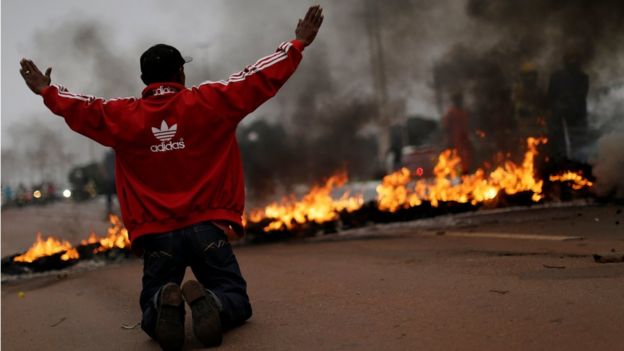
There was a general strike in Brazil as millions took to the streets to protest the austerity policies of the government of Michel Temer. The government, which has been wracked by corruption scandals since the impeachment of former President Rousseff, has tried to make changes in labor laws and pension plans that many Brazilians believe are unfair and unwarranted. The strike was the first general strike in Brazil since 1996 and affected 26 Brazilian states.
Scene in Brasilia on Friday morning
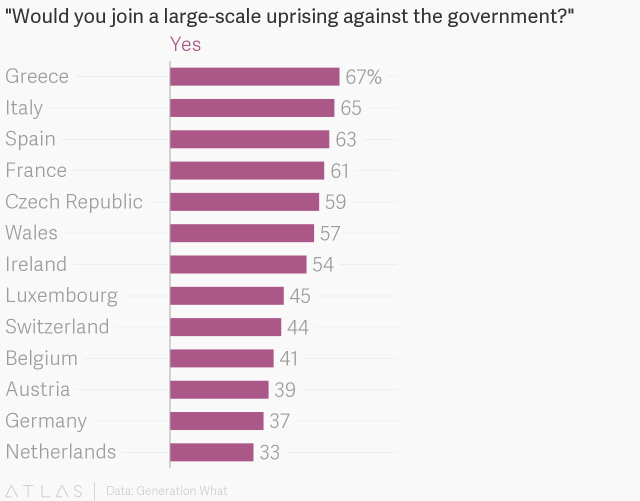
The European Union recently conducted a poll: “Around 580,000 respondents in 35 countries were asked the question: Would you actively participate in large-scale uprising against the generation in power if it happened in the next days or months? More than half of 18- to 34-year-olds said yes.” What is very interesting about the poll is that it was taken in the context of a clear decline in voting by that same age cohort. It appears as if democracy no longer seems viable to many young people.
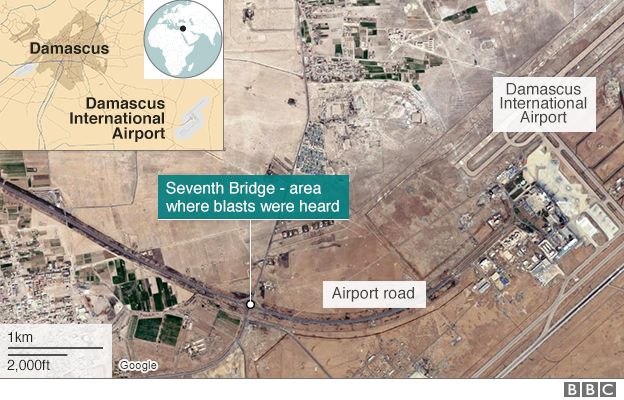
Much of the world’s attention has been fixated on US policy in Syria and North Korea. But there is also a very quiet war going on between Israel and Syria in the background. Israel has attacked several sites in Syria in recent months, targeting weaponry being sent to Hezbollah. Today Israel attacked what it termed a military site near the international airport at Damascus. Intriguingly, there are unconfirmed reports that Israeli pilots have flown F-35s, the US’s most advanced fighter aircraft, to bomb sites in Syria. What makes these reports significant is that, if true, it suggests that the F-35’s stealth capabilities were good enough to elude Russia’s advanced anti-aircraft system, the S-300. Unfortunately, Israel will never confirm these activities publicly so it will be difficult to assess the F-35’s capabilities. We should keep an eye on this situation since Israel is becoming quite concerned about the military strength of Hezbollah.
Macedonia has been without a government since last December. Prime Minister Nikola Gruevski’s party won the election in that month, but it failed to win enough seats in the Parliament to form a government. Yesterday, the Social Democrats and parties supporting the ethnic Albanian minority in Macedonia voted to name a new Speaker of the Parliament, Talat Xhaferi. Gruevski’s supporters stormed the Parliament and a melee broke out. Ethnic Albanians comprise about 25% of Macedonia’s population and they have been demanding that Albanian be recognized as the country’s second language.
Visual Capitalist has a nifty chart on the 50 largest companies by revenue. There are some surprises here, as well as some head-scratchers. I try to keep up to date, but I must admit that Exor and State Grid were mysteries to me. The US firms were far less dominant than I would have expected and the dearth of European companies is a little unexpected.
On Tuesday, Carbon Dioxide (CO2) readings at the Manua Loa Observatory in Hawaii reached 410 parts per million (ppm) a level last reached millions of years ago. When the measurements started in 1958, the levels were 280 ppm and it was only in 2013 that the levels passed 400 ppm. At best, we can only slow the rate of increase–these levels will persist for many years even if CO2 emissions are cut drastically. If unchecked, the levels will reach those of 50 million years ago by the end of the century.
China has launched its first domestically-made aircraft carrier. Its first aircraft carrier was a retrofitted Russian aircraft carrier, and the new one reflects China’s rapid development as a maritime power. The new vessel is designed primarily for coastal and close-shore combat: it is diesel-powered, not nuclear-powered, which limits how long it can stay at sea; it has a ski-lift jump for its aircraft which limits how much fuel and how many weapons each can carry; and it can hold only a relatively small number of aircraft. The Navy Times places the new vessel in context:
“China is believed to be planning to build at least two and possibly as many as four additional carriers, with one of them, the Type 002, reported to be already under construction at a shipyard outside Shanghai. They are expected to be closer in size to the U.S. Navy’s nuclear-powered 100,000-ton Nimitz class ships, with flat flight decks and catapults to allow planes to launch with more bombs and fuel aboard.”
“According to Chinese reports, the new, as yet unnamed, carrier will carry 24 Shenyang J-15 fighters, based on the Russian Sukhoi Su-33, along with 12 helicopters for anti-submarine warfare, airborne early warning and rescue operations. That compares to 85-90 fixed wing aircraft and helicopters carried by a Nimitz-class carrier.
“As China expands its navy, it is projected to have a total of 265-273 warships, submarines and logistics vessels by 2020, according to the Washington, D.C.-based Center for Naval Analysis. That compares with 275 deployable battle force ships presently in the U.S. Navy, China’s primary rival in the Asia Pacific.
“The U.S. operates 10 aircraft carriers, has 62 destroyers to China’s 32, and 75 submarines to China’s 68. The U.S. Navy has 323,000 personnel to China’s 235,000.”
The vessel represents a fairly constrained view of naval aspirations for China–it should not be viewed as a challenge to US naval power.
Buddhists have been involved in violent attacks against Muslims in Thailand, Myanmar, and Sri Lanka. The idea that Buddhists can engage in violent acts strikes many in the West as inconsistent with Buddhism. But Buddhists defend their ideas fiercely and Michael Jerryson, Associate Professor of religious studies in the Department of Philosophy and Religious Studies at Youngstown State University in Ohio, has written a fascinating essay on how many in the West misunderstand the fundamental tenets of this way of life. Jerryson writes:
“Each Buddhist tradition has transformed with the times – and the times are always changing. But there are persistent patterns that keep pace with these changes. Buddhist monks in the early sixth-century China led revolts to defend Buddhism. Today, monks in Thailand, Burma and Sri Lanka continue to fight – violently – for their religion and to call their followers to action. The cycle of violence continues in this final stage of the cycle of time: the Kali Yuga, the Age of Destruction.”
The Pew Research Center has done a study on middle class fortunes in Europe and has found a mixed bag. The US has sesen a steady decline in middle class households from 61% of the population in 1970 to 50% in 2015. The situation in Europe is less uniform:
“The fortunes of the middle classes in Western Europe’s largest economies are moving in opposite directions. From 1991 to 2010, the shares of adults living in middle-income households increased in France, the Netherlands and the United Kingdom, but shrank in Germany, Italy and Spain.”
Foreign Policy magazine has obtained documents which outline President Trump’s budget proposals for foreign assistance. The plans call for a merger of the Agency for International Development into the State Department and for some rather drastic cuts in the levels of foreign assistance to poor countries. The proposal would likely cripple the technical parts of AID. It is not clear that the Congress will go along with these proposals, but, according to the article,
“…..the agency still anticipates that the budget proposal will necessitate eliminating 30 to 35 of its field missions while cutting its regional bureaus by roughly 65 percent. USAID currently operates in about 100 countries.”
The health programs of the AID may be reduced by as much as 25 percent.
The US has slapped tariffs on imports of Canadian lumber. The US accuses of Canada of unfair trading practices because it believes that the price of timber in Canada is artificially low because forest lands are owned by the provinces whereas American timber is grown on privately owned land. The Canadian prices are in fact lower, but that is because Canadians have decided that their forests should not be part of a profit-making enterprise. Such is their sovereign right. Whether that decision should be interpreted as an “unfair” trading practice will likely be determined by the World Trade Organization.
Van Jackson is an analyst who has special expertise on North Korea and he has written an article on how the North Korean theory of deterrence maps onto the theory of deterrence held by US Secretary of Defense Mattis. Unfortunately, there is evidence that both theories rest heavily on demonstration effects which suggests that in a crisis both sides are inclined to use force to show resolve. Given that in the current situation, both the US and North Korea have amassed a lot of weaponry to shoe resolve, this tendency might be a dangerous way to proceed. We are getting conflicting information about China’s attitude toward the US actions. US President Trump has indicated that China is being very helpful. But the Global Times has an article which suggests that the Chinese are quite nervous about the US military build-up near North Korea. According to the article:
“China strongly opposes actions that violate United Nations Security Council resolutions, Xi said, adding that China hopes the parties concerned will exercise restraint and avoid actions that aggravate tensions on the peninsula, the Xinhua News Agency reported.”
The article also reports that North Korea has ordered an evacuation around the area of the Punggye-ri nuclear test site, suggesting that it fears an attack on the site. On another curious note, the Trump administration announced that it will hold a full briefing for the entire Senate on the North Korean situation on Wednesday. According to the Washington Post:
“A senior Trump administration official said the meeting with senators will take place in the auditorium at the Eisenhower Executive Office Building, the building next to the White House that houses most of the National Security Council. The auditorium will be temporarily turned into a “sensitive compartmented information facility,” or SCIF, which is the term for a room where sensitive national security information can be shared, the official said.”
Obviously, the Trump Administration wishes the briefing to be a “special” event.
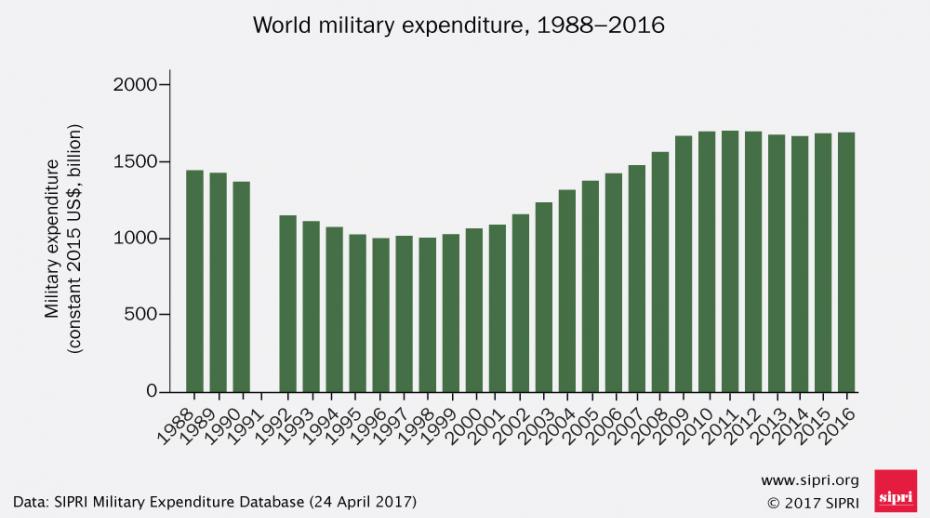
World military spending in 2016 accounted for 2.2 per cent of global GDP. Military spending as a share of GDP, was highest in the Middle East (for countries where data is available), with an average of 6.0 per cent of GDP in 2016, while the lowest was in the Americas, with an average of 1.3 per cent of GDP.
Spending in Africa fell by 1.3 per cent in 2016, a second year of decrease after 11 consecutive years of increases. This was mostly due to spending cuts in oil-exporting countries in sub-Saharan Africa (e.g. Angola and South Sudan).
In Asia and Oceania, military expenditure rose by 4.6 per cent in 2016. Spending levels are related to the many tensions in the region such as over territorial rights in the South China Sea.
Military expenditure in Central America and the Caribbean and South America combined decreased by 7.8 per cent to a level not seen since 2007. The fall is largely explained by spending reductions by oil-exporting countries such as Ecuador, Mexico, Peru and Venezuela. Brazil’s spending continued to decline as a result of a worsening economic crisis.
Le Pen and Macron have emerged as the top two vote-getters in the first round of the French election. The outcome marks the first time that none of the major French parties has emerged as a winner–the repudiation of politics as usual is obvious in the outcome. But the two are also quite different in their politics. Le Pen’s populism hardly accords with the pro-EU centrism of Macron. Most analysts believe that Macron will win the second round on 7 May and, if that is the case, the outcome will replicate the earlier elections in Austria and the Netherlands where the right-wing parties did not succeed in obtaining majorities.
Macron and Le Pen
Income inequality has important political consequences. In 1970, the US middle class (defined as those families of three with incomes between about $42,000 to $126,000 annually in 2014 dollars) shrank from about 61% in 1970 to about 50% in 2015. This loss of status and security leads to resentment and fear which then become the fodder for politicians. The rise in more authoritarian politics in the world, in the US, Europe, and in Asia) can be traced to this loss of societal position.
Visual Capitalist has a very interesting graphic showing which countries in the world most Americans regard as an “enemy”. The data for the graphic comes from a survey taken by YouGov between January 28 – February 1, 2017. According to that poll, no American regards Madagascar, Paraguay, or Australia as an enemy (1% consider Canada to be an enemy).
The Trump Administration claims to have sent “messages” to the world through the use of military strikes in Syria and Afghanistan. Max Fisher has gone through the research about whether such messages are effective in international relations and has found that there is little evidence to support the proposition that such messages are effective. Using military power to send signals of intend can be effective, but there are a number of conditions that need to be satisfied for the messages to be received effectively. While the claims of the Trump Administration seem to be intuitively persuasive, it is very difficult to tell whether they actually do deter behavior.
The US State Department has certified that Iran has complied with the nuclear agreement, but the day after it had done so, US President Trump repeated his campaign assessment that the agreement was “the worst deal ever” and that he would review the accord. The tension between these assessments is hard to resolve, but a good deal of it is due to adamant hostility to Iran on the part of the US. Paul Pillar worked for the CIA on Middle Eastern affairs and is now a Professor at Georgetown. His analysis of the Trump Administration’s policy toward Iran is enlightening and compelling.
“More notably, this March marks a whopping 627 months in a row of warmer than normal temperatures. If you were born after December 1964, you’ve never experienced a month cooler than average on this planet.”
The first round of the French national election begins this weekend and Vox has an article that outlines all the candidates running and what the issues are. While there are eleven candidates, the analysts believe that only four have a real shot at emerging as the two candidates for the second round of elections later on. The terrorist attack in Paris yesterday has given the election a jolt and it remains to be seen whether the attack favors the right wing candidate, Le Pen, or the left wing candidate, Mélenchon. The Pew Research Center has some very interesting information about where the support for the right-wing National Front comes from. This election is critically important for the future of Europe and should be watched carefully.
The world is facing catastrophes in three countries because of food shortages: South Sudan, Somalia, and Nigeria. We could also add Yemen to the list as well as several others who are just hovering at the brink of collapse. The world, however, is not doing very much to help the millions in these countries–indeed, the international organizations and non-governmental organizations which respond to these crises are critically short of money and resources at this point in time. Our colleague at Hampshire College, Michael Klare, makes the argument that these disasters are linked to climate change and should therefore be considered a form of genocide because of the lack of action.
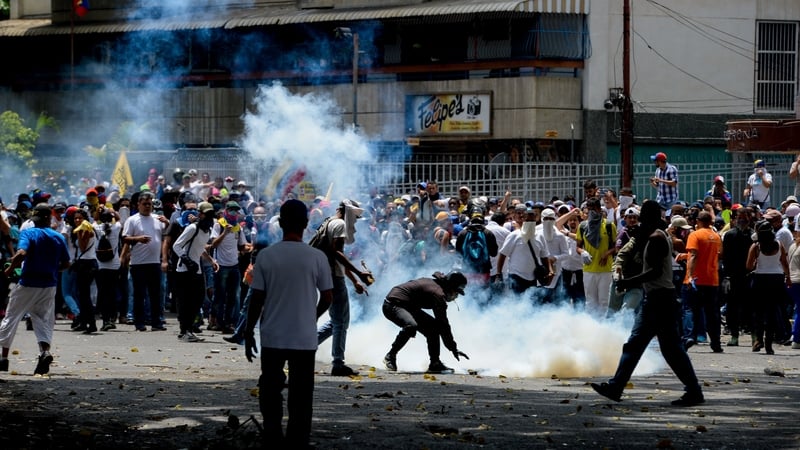
At least 12 people were killed in Venezuela as protests turned to rioting and looting. The situation continues to deteriorate as it becomes clearer that there is no likelihood of political concessions by the Maduro government. The desperation of the people is obvious and political violence is probably the only alternative left for the people to achieve a change. Venezuela is potentially the richest country in Latin America and its descent into chaos is a clear example of the singular importance of good governance. One should never underestimate the significance of a responsive government.
A new book on the Holocaust has been published, Human Rights After Hitler, by Dan Plesch. The book adds more evidence that the Allied Powers were well aware of the German plans to exterminate Jews as early as December 1942. This assertion has been made before, but Plesch provides documents that have been secret to make the case. According to The Independent:
“Newly accessed material from the United Nations – not seen for around 70 years – shows that as early as December 1942, the US, UK and Soviet governments were aware that at least two million Jews had been murdered and a further five million were at risk of being killed, and were preparing charges. Despite this, the Allied Powers did very little to try and rescue or provide sanctuary to those in mortal danger.”
The clear lesson is that when human rights are being threatened on such a massive scale, states should act on that information as quickly as possible and not wait for overwhelming evidence.
There are reports that China has placed bombers on high alert in anticipation of actions in North Korea. It is not at all clear what this higher stage implies, but it suggests that China is concerned about the possible influx of refugees from North Korea in case of instability. Russia has also rushed more equipment and soldiers to its border with North korea. In the mean time, we have learned that the USS Carl Vinson aircraft carrier group would take at least 30 days to get into position near North Korea. The confusion over the whereabouts of the aircraft carrier has led to much derision in Asia, and this comment from China’s China Times:
“The truth seems to be that the US military and president jointly created fake news and it is without doubt a rare scandal in US history, which will be bound to cripple Trump’s and US dignity.”
Let’s hope that the Chinese high alert is not due to an expectation that the US is going to attack North Korea. I have no doubts that that is exactly what the Chinese would do if they thought an attack was imminent. But let’s pretend that it’s not on their mind right now.
BBC published an article with the intriguing title, “How Western Civilisation Could Collapse“. The article analyzes several scholarly approaches to answering the question of why civilizations often degrade and comes up with two variables that seem to play an important role: growing inequality within the civilization and environmental stress caused by the resource demands of the civilization. The article is not particularly uplifting, but it does provoke a great deal of thought.
“The Trump administration is currently conducting across the entire government a review of our Iran policy … an unchecked Iran has the potential to follow the same path as North Korea and take the world along with it. The United States is keen to avoid a second piece of evidence that strategic patience is a failed approach”.
In other words, even though Iran has honored the nuclear agreement, the US is thinking about implementing policies to isolate Iran once again. If such policies are adopted, it is critically important that they be justified on grounds that are completely separate from the nuclear issue. The US needs to stick to the agreement it signed.
Protests in Venezuela against President Maduro have continued and two protesters were killed in the most recent demonstrations. The political process has completely collapsed in the country as Maduro continues to have many passionate supporters. Eleven Latin American countries has signed statements urging the Venezuelan government to schedule new elections to restore the legitimacy of the state, but all indications are that Maduro has no intention of relaxing his grip on the country.