Imperialism never dies, but it changes its clothes every so often. After World War II ended, the colonial empires created by European states slowly disintegrated, a process that is still ongoing. But at the end of the war, there was a sense that the idea of self-determination should override the impulse to dominate. That end never materialized, but the more ostentatious trappings of imperialism became difficult to maintain and the right to dominate was articulated in the language of democracy and liberation.
Imagine my surprise today when I saw the following post from the US Department of State:
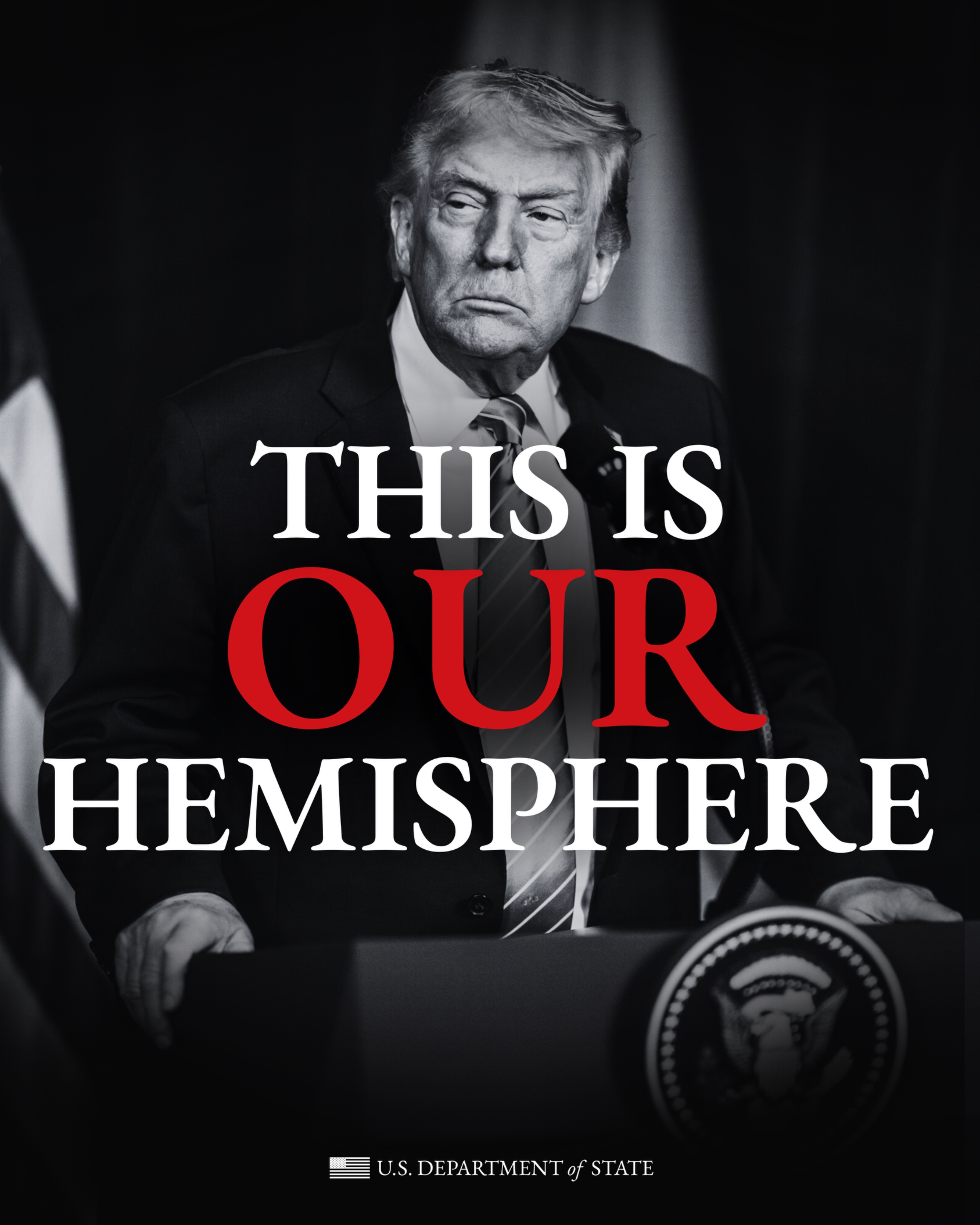
This particular perspective on mimics one of the founding acts of European imperialism, the Treaty of Tordesilla which divided up the entire world into two parts in 1494, one owned by Spain and the other by Portugal. It was a plan crafted by Pope Julius II, which was subsequently modified by the Treaty of Zaragoza, signed in 1529, to include the eastern hemisphere (by tracing out the antemeridian), which included the Spice Islands.
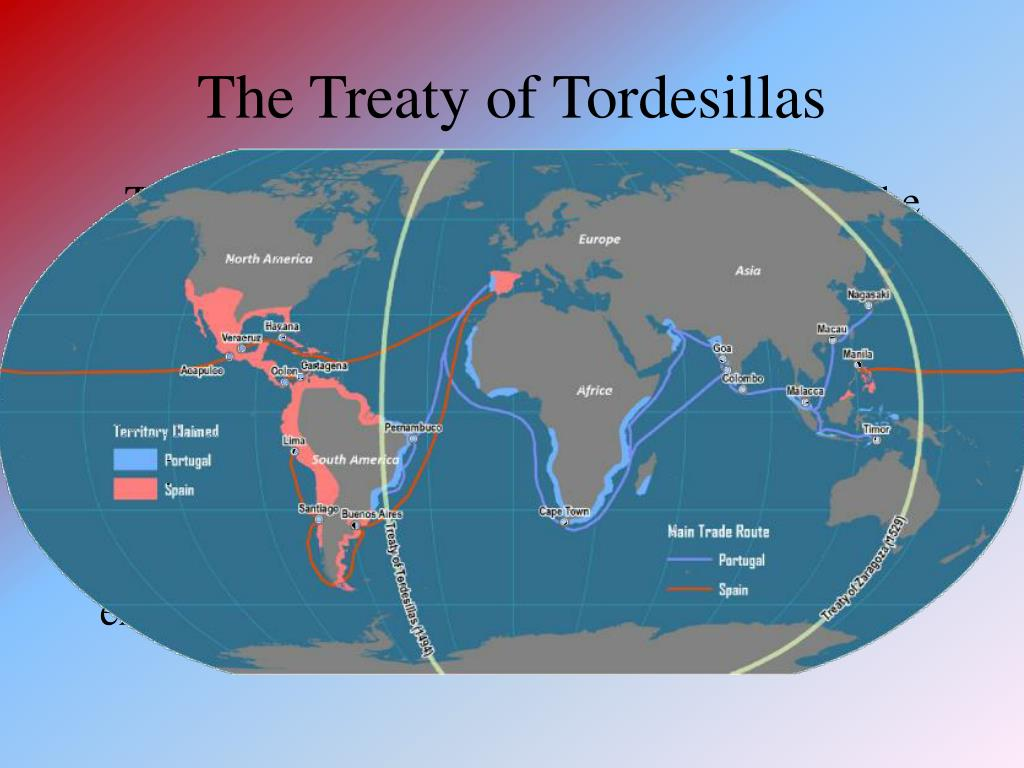
The settlement did not last long, as other European states (the Dutch, the French, the Belgians, and the British) did not want to miss out on the benefits (to them) of imperialism.
We will see how the Venezuelans feel about the US being in charge of domestic affairs once the dust settles. Undoubtedly, many of them are relieved that Maduro is no longer in power, and the Venezuelan economy is in a deep contraction. Right now, there is tremendous uncertainty about how the US will “run” the country. There is, however, not much the Venezuelans can do as long as US forces remain offshore. But there are countries that depend on Venezuelan oil (Cuba and China, in particular) which will probably contest US “ownership” of the oil fields. Moreover, the US will find that it is impossible to “run” a country at arms-length, and as US personnel begin to filter into Venezuela, they will unquestionably be targets of armed opposition.
Regime change is easy for a country as powerful as the US. What happens after the change, however, is extraordinarily difficult for an outside power. The US learned that lesson in Vietnam, Libya, and Iraq. It’s incredible how the US has forgotten those lessons wo quickly and emphatically.
 World Politics News
Leave a comment