Local elections in Turkey suggest a dramatic shift in politics. The ruling AK Party did not win the local elections in the two largest cities, Istanbul and Ankara. The results represent a setback for the President, Tayyip Erdogan, as the secularist Republican People’s Party (CHP) seems to have won in both contests. The AK party and its predecessor have ruled in Turkey for the last 25 years, so the elections signal a rather dramatic change in direction. The shift is likely due to the dire economic conditions in Turkey–the Turkish Lira lost 40% of its value against the US dollar. It is not likely, however, that Erdogan will change direction quickly. The AK Party is likely to challenge the election results.
“Canada’s Changing Climate Report concludes that, on average, Canada’s climate has been warming at double the rate of the world as a whole — a trend that scientists expect to continue. Since 1948, Canada’s average land temperature has increased by 1.7 degrees Celsius, or about 3 degrees Fahrenheit. Temperatures in northern Canada have increased even more. For comparison, scientists at NASA’s Goddard Institute for Space Studies estimate that the average global temperature has increased 1.4 degrees Fahrenheit (0.8 degrees Celsius) since 1880.
“Many of the effects of Canada’s warming are ‘effectively irreversible,’ the report states. And it affirms that “human influence” is more to blame for the observed temperature increases than natural causes.”
March 2019's total #Arctic sea ice extent was tied for the 7th lowest in the passive microwave satellite record. Note that there is large year-to-year variability in addition to a long-term trend. pic.twitter.com/Utxd2ZDgNb
The World Meteorological Organization has released its annual report on the State of the Global Climate for 2018. The report has a tremendous amount of information on climate change and much of the information is alarming. The report assesses the effects of climate change on amplifying natural hazards:
“In 2018, weather and climate events accounted for most of nearly 62 million people affected by natural hazards, according to an analysis of 281 events recorded by the Centre for Research on the Epidemiology of Disasters (CRED).9 Floods continued to affect the largest number, amounting to more than 35 million people in 2018. The CRED statistics also highlight that over 9 million people were affected by drought worldwide, including in Kenya, Afghanistan, and Central America, as well as migration hotspots El Salvador, Guatemala, Honduras and Nicaragua.”
“When Congress passed the Atomic Energy Act, it imposed stringent controls on the export of U.S. technology to a foreign country that could be used to create nuclear weapons. Under Section 123 of the Act, the U.S. may not transfer nuclear technology to a foreign country without the approval of Congress, in order to ensure that the agreement reached with the foreign government meets nine specific nonproliferation requirements.
“The whistleblowers who came forward have expressed significant concerns about the potential procedural and legal violations connected with rushing through a plan to transfer nuclear technology to Saudi Arabia. They have warned of conflicts of interest among top White House advisers that could implicate federal criminal statutes. They have also warned about a working environment inside the White House marked by chaos, dysfunction, and backbiting. And they have warned about political appointees ignoring directives from top ethics advisors at the White House who repeatedly and unsuccessfully ordered senior Trump Administration officials to halt their efforts.”
This plan is sheer madness. Saudi Arabia has not proven to be a reliable US ally nor a state governed by laws and norms consistent with US values. Moreover, if these plans were adopted, there is little question that Iran would regard them as a significant national security threat which would lead Iran to adopt nuclear weapons itself. But there is evidence that the plan is consistent with the private interests of members of the Trump Administration. According to the Washington Post:
“The report released Tuesday notes that one of the power plant manufacturers that could benefit from a nuclear deal, Westinghouse Electric, is a subsidiary of Brookfield Asset Management, the company that has provided financial relief to the family of Jared Kushner, the president’s son-in-law and a senior White House adviser. Brookfield Asset Management took a 99-year lease on the Kushner family’s deeply indebted New York City property at 666 Fifth Ave.”
“As in colonial times 200 years ago, the U.S. continues to regard Latin America as a zone for its exclusive interests, its own ‘backyard’ and they directly demand that it should obey the U.S. without a word and that other countries should steer clear of the region….[D]oes the U.S. think that people are waiting for it to bring democracy to them on the wings of its bombers? This question can be answered by Iraqis, Libyans and Serbs.”
The Parliament considered eight options in a series of “indicative votes” and rejected everyone of them. ABC News relates the options that came closest to passing: “In the end, none of the eight motions tabled by individual lawmakers setting out alternative Brexit plans found a majority. The closest run votes were for the U.K. to stay in a permanent customs union with the EU, which received 264 votes in favor and 272 against, and for a second referendum, which received 268 votes and 295 against.”
The Brexit saga has taken yet another strange turn. Conservative MP Oliver Letwin submitted an amendment which will allow Parliament to take a series of non-binding votes (called “indicative votes”) on a variety of options. British Prime Minister May opposed the amendment, but is passed 329-302 in a decisive repudiation of her authority. According to the BBC, these are some of the possible options:
Another binding vote on the deal May negotiated with the E.U.
Asking the government to renegotiate the deal toward a specific outcome in mind, such as further changes to the Irish border backstop
Scrapping May’s negotiated arrangement in favor of a softer Brexit involving a Canada- or Norway-style trade relationship with the E.U.
A second referendum allowing the British public to decide what kind of Brexit they want, or if they would prefer to cancel Brexit entirely
Revoking the U.K.’s withdrawal notice and canceling Brexit entirely
The use of indicative votes is unusual, but not unprecedented. Shepp provides some perspective:
“In the Westminster system, the government usually sets the agenda for Parliament, deciding what gets voted on and when. The opposition and backbench MPs are given opportunities to set the house’s business on certain days, but the government still gets to decide when those days are. Letwin’s motion is unusual because it involves taking that power away from the government on a specific day, and against the government’s explicit wishes at that. While it’s not strictly “unprecedented,” Parliament hasn’t made a move like this in a very long time: The closest analogue in the past century is the Norway Debate of 1940, which led to the downfall of Neville Chamberlain’s war cabinet and ushered in the prime ministry of Winston Churchill.
“In her futile attempts to maintain control of the Brexit debate, May has recently avoided scheduling days for nongovernment MPs to take control of the agenda, fearing precisely what is going to happen on Wednesday: votes on proposals her government didn’t have any hand in developing and can’t necessarily deliver. Some of Letwin’s backers argued on Monday that May’s attempts to tightly control the Brexit agenda had forced their hand; Conservative MP Dominic Grieve said the house had been ‘prevented from doing its ordinary job’ by the government’s ‘straitjacket.’”
“‘The Spanish government profoundly regrets the publication of the Mexican president’s letter to his majesty the king on 1 March and completely reject its content,’ a government statement read.
“’The arrival of the Spanish on Mexican soil 500 years ago cannot be judged in the light of contemporary considerations. Our closely related peoples have always known how to view our shared history without anger and from a shared perspective, as free peoples with a common heritage and an extraordinary future.’”
This debate is worth conducting. The sins of empire need always to be remembered.
Thailand has been ruled by a military junta since 2014 after the military ousted populist leader Yingluck Shinawatra. The first election since that time was held on Sunday, but the Election Commission, whose members were appointed by the military junta, halted the publication of the results. The election was contested by a pro-military party, Palang Pracharat, and an anti-military party, Pheu Thai. Both parties are challenging the election because of evidence of fraud and manipulation, and it could be that the outcome will not be known for some time. Unfortunately, the election, which was supposed to bring stability to the country, will apparently only bring confusion and distrust.
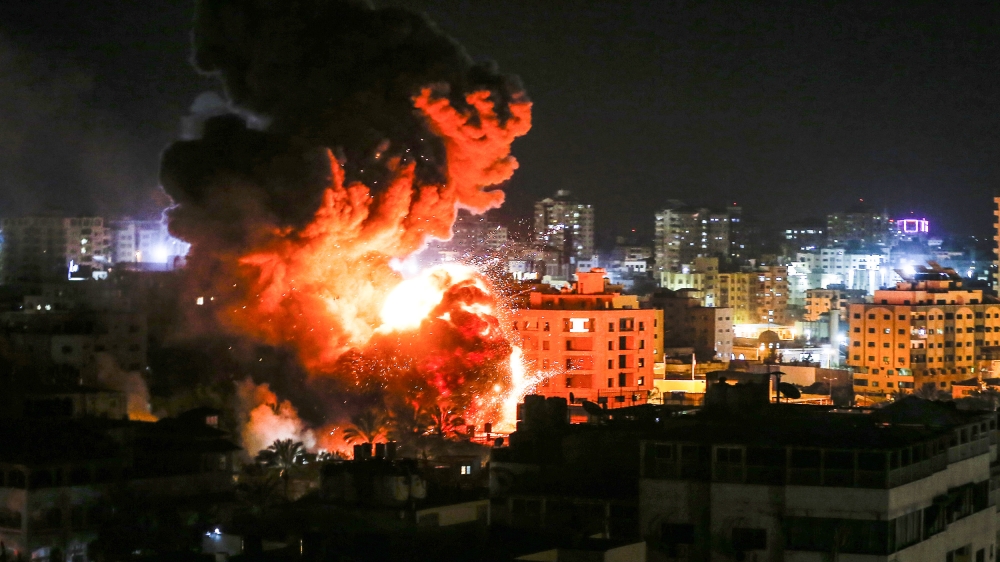
A rocket was fired from the Gaza Strip and it hit a house near Tel Aviv in Israel. As of the writing of this post, no group in the Gaza has claimed responsibility for the rocket, but Israel holds Hamas responsible for everything that happens in the Gaza. The Gaza Strip is about 25 miles long and six miles wide and is home to about 2 million Palestinians. There have been a number of conflicts between Israel and Hamas: in 2009-10, 2012, and an extended battle in 2014. Israel has responded with air strikes against Hamas-related buildings in Gaza, but the area is so densely populated, precision strikes are virtually impossible. There are reports that Egypt has brokered a cease-fire, but we will have to see if it holds. The elections scheduled for April place Israeli Prime Minister Netanyahu in a position where he may feel obliged to respond forcefully to the rocket attack.
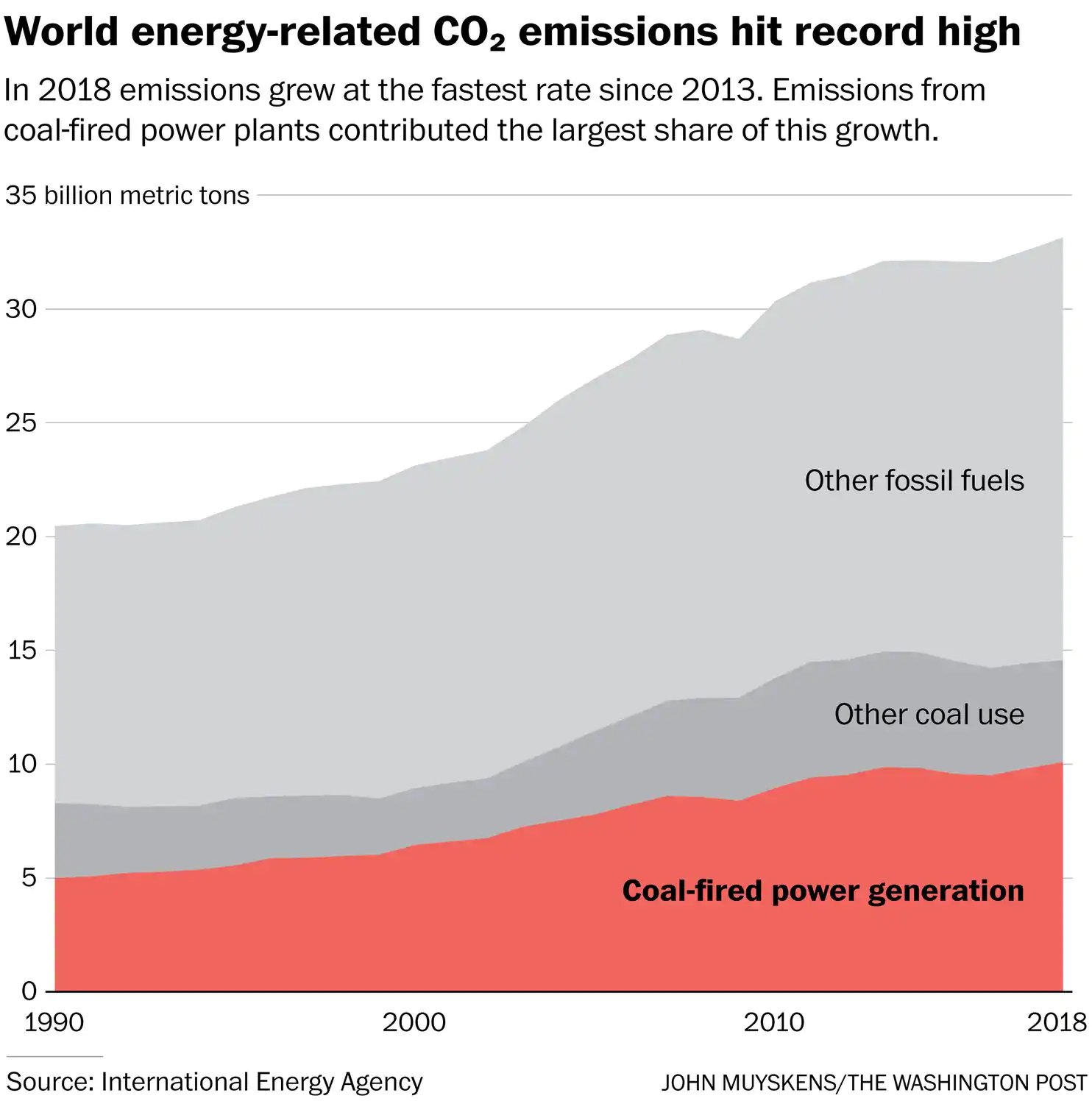
“Energy demand worldwide grew by 2.3% last year, its fastest pace this decade, an exceptional performance driven by a robust global economy and stronger heating and cooling needs in some regions. Natural gas emerged as the fuel of choice, posting the biggest gains and accounting for 45% of the rise in energy consumption. Gas demand growth was especially strong in the United States and China.
“Demand for all fuels increased, with fossil fuels meeting nearly 70% of the growth for the second year running. Solar and wind generation grew at double-digit pace, with solar alone increasing by 31%. Still, that was not fast enough to meet higher electricity demand around the world that also drove up coal use.
“As a result, global energy-related CO2 emissions rose by 1.7% to 33 Gigatonnes (Gt) in 2018. Coal use in power generation alone surpassed 10 Gt, accounting for a third of the total increase. Most of that came from a young fleet of coal power plants in developing Asia. The majority of coal-fired generation capacity today is found in Asia, with 12-year-old plants on average, decades short of average lifetimes of around 50 years.”
Unfortunately, demand for coal, the most serious source of greenhouse gas emissions, has grown substantially in Asia. Even though the world is using more renewable energy, the consumption of carbon-based energy continues to grow apace. The Washington Post quotes a climate researcher who gives a very pessimistic assessment of the current situation:
“Rob Jackson, a professor of Earth system science at Stanford University, said the substantial growth of wind and solar energy detailed in Monday’s report was overshadowed by the world’s ongoing reliance on fossil fuels.
“’The growth in fossils is still greater than all the increases in renewables,’ Jackson said, adding that few countries are living up to the pledges they made as part of the Paris climate accord. ‘What’s discouraging is that emissions in the U.S. and Europe are going up, too. Someone has to decrease their emissions significantly for us to have any hope of meeting the Paris commitments.’
“The new results dash prior hopes that global emissions might be flattening and starting to decline. From 2014 through 2016, they fell slightly, and coal emissions in particular dipped as well. But with a renewal of growth in 2017 and new record highs in 2018, turning the corner on emissions remains nowhere in sight.
“As a result, optimism from earlier this decade has largely faded. International efforts to combat climate change have struggled to maintain momentum and the U.S. government has undergone a reversal of priorities.
“’We are in deep trouble,’” Jackson said of Monday’s findings. ‘The climate consequences are catastrophic. I don’t use any word like that very often. But we are headed for disaster, and nobody seems to be able to slow things down.’”
It is becoming increasingly more difficult to think rationally about the wrong-headedness of the way we live out or lives at the expense of future generations. These years will go down in history as the most incomprehensible years in human history.
James Dorsey has written an essay entitled “Civilizationism Vs The Nation State – Analysis” which deserves a close read. The core idea is one developed by several authors in the last decade: that the civilizational state is one defined culturally and not territorially as is the case in most liberal societies. It is a difficult idea to parse, but the framework does explain the rise of authoritarian societies which use power to defend values and not interests. Dorsey is particularly engaging when he discusses the way the murderer at Christchurch, New Zealand interpreted the world.
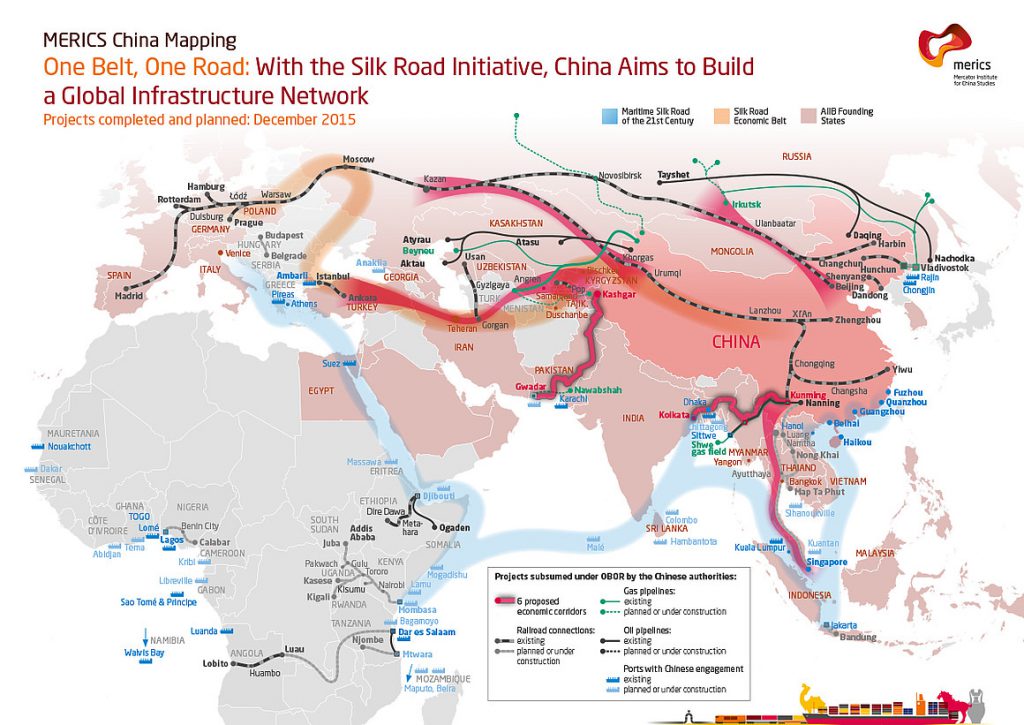
Italy has signed up to be a member of China’s Belt and Road Initiative, the Chinese effort to revive the old Silk Road. Italy and China signed a number of agreements, the most important of which were agreements on the management of the ports of Genoa and Trieste. Italy is the first member of the European Union to make such an agreement, and other European states are suspicious of the initiative. Other countries, such as Sri Lanka, have made similar agreements and the terms of the agreements meant that when the Sri Lankans could not make the debt payments on the agreement, the critical port of Hambantota came under Chinese control. Additionally, many European states are concerned that these ports may give China a strategic entry into European affairs. The US is also concerned about the expansion of Chinese influence in Europe. But the US has done little to reinforce US-European ties over the last two years.
China’s Belt and Road Initiative
Reuters is reporting that two Russian airplanes, carrying a high defense official and 100 troops, has landed in Caracas, Venezuela. Russia is a strong supporter of Nicolas Maduro, the erstwhile President of Venezuela, but the sending of troops represents a dramatic and perhaps dangerous escalation of the crisis in Venezuela. Previously, Russia has flown two nuclear-capable bombers to Venezuela in an unmistakable show of solidarity. The Russians have also said they will be sending humanitarian aid to the country, even as humanitarian aid from the US and other countries sympathetic to Juan Gauido has been blocked. Russia is clearly challenging the US in the Western Hemisphere.
Hans Maull has written an essay for the International Institute for Strategic Studies entitled “The Once and Future Liberal Order” which is both insightful and provocative. The essay gives a quick overview of what we mean when we talk about a “world order” and how the particular world order that we call “liberal” evolved. It then goes over the slow erosion of the liberal order since the end of the 20th century and the dynamics unleashed by its weakening.
“There has also been a turn to geopolitics and geo-economics, and a renewed emphasis on raw power in international relations. This began with the political disintegration and external interventions in Libya and Syria, and was exacerbated by the more assertive policies of China in the East and South China seas; by Russia’s annexation of Crimea and its support for the separatist forces in eastern Ukraine; and, most recently, by the war in Yemen. These developments imply a shift towards a more conflictual international system and a return to zero-sum logic among a number of important actors. For example, while open markets offer all participants opportunities to realise gains (although not necessarily equal ones), spheres of influence are exclusive. Any expansion of such a sphere will therefore come at the expense of others. Similarly, nationalist conceptions of sovereignty emphasise its indivisibility: anything less than complete sovereignty – which is, of course, a chimera – is anathema. This contrasts with a multilateralist conception of sovereignty, in which the shared exercise of sovereignty allows all participants to benefit.”
Maull also does a good job of pointing out the conflicting and shared US and Chinese interests in an evolving world order. The essay is long but well worth a close read.
British Prime Minister May asked the European Union (EU) for a delay on Brexit until 30 June, a request that the EU rejected immediately. Instead, the EU said that if the British Parliament accepted the earlier arrangement (which Parliament has rejected twice) by March, then Britain could have until 22 May. If the Parliament does not approve the arrangement, then Britain will have until 12 April “to indicate a way forward”. The pressure on Prime Minister May will be intense and it is likely that if she fails to get the Parliament to approve the Withdrawal Agreement, then she will be ousted as Prime Minister. It is also clear that the EU is losing patience as well. Unfortunately, as of right now, it does not appear as if a “no-deal” Brexit can be avoided.
On Thursday, the US Treasury announced that it was placing new sanctions on two Chinese shipping companies for evading the sanctions on North Korea. On Friday, US President Trump announced that he was lifting the sanctions. The inconsistencies in these actions are striking–obviously some people in the Administration are not communicating effectively. But it is also unclear why Trump lifted the sanctions. Was it to curry favor with North Korea or with China? North Korea has not taken any steps recently that deserve a reward so it does not appear as if Trump’s decision was part of a denuclearization strategy. We do not know much about how much progress has been made with China on trade issues, but there seems to be a resigned attitude that trade breakthroughs are not imminent. The US decision is difficult to understand.
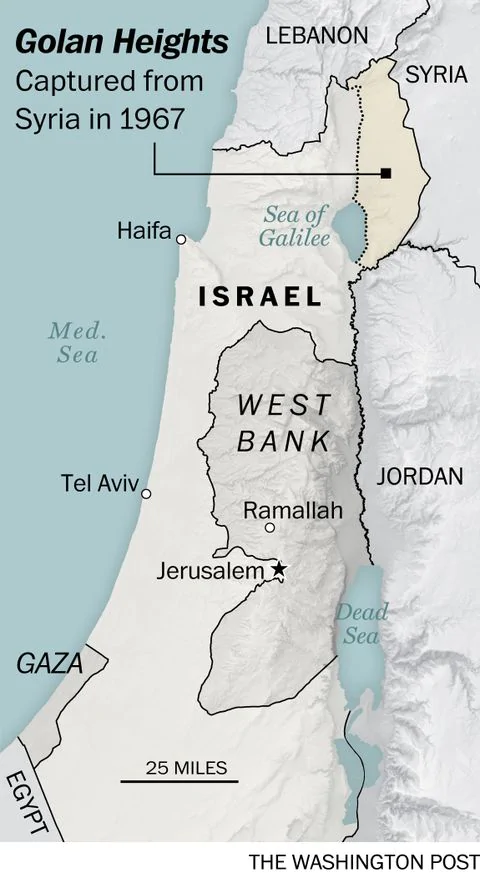
The Trump Administration has recognized Israeli control over the Golan Heights, territory Israel seized from Syria in the 1967 war. The formal recognition came via a Tweet from President Trump (it is hard for me to accept that such consequential decisions are communicated to the world through such informal channels): ““After 52 years it is time for the United States to fully recognize Israel’s Sovereignty over the Golan Heights, which is of critical strategic and security importance to the State of Israel and Regional Stability!” The Golan Heights was one of three territories seized by Israel in 1967: the West Bank from Jordan and the Gaza Strip from Egypt are the other two. The status of the three territories was decided by the UN Security Council on 22 November 1967 in Resolution 242:
“The Security Council,
Expressing its continuing concern with the grave situation in the Middle East,
Emphasizing the inadmissibility of the acquisition of territory by war and the need to work for a just and lasting peace in which every State in the area can live in security,
Emphasizing further that all Member States in their acceptance of the Charter of the United Nations have undertaken a commitment to act in accordance with Article 2 of the Charter,
1. Affirms that the fulfilment of Charter principles requires the establishment of a just and lasting peace in the Middle East which should include the application of both the following principles:
(i) Withdrawal of Israel armed forces from territories occupied in the recent conflict;
(ii) Termination of all claims or states of belligerency and respect for and acknowledgment of the sovereignty, territorial integrity and political independence of every State in the area and their right to live in peace within secure and recognized boundaries free from threats or acts of force;
2. Affirms further the necessity
(a) For guaranteeing freedom of navigation through international waterways in the area;
(b) For achieving a just settlement of the refugee problem;
(c) For guaranteeing the territorial inviolability and political independence of every State in the area, through measures including the establishment of demilitarized zones;
3. Requests the Secretary-General to designate a Special Representative to proceed to the Middle East to establish and maintain contacts with the States concerned in order to promote agreement and assist efforts to achieve a peaceful and accepted settlement in accordance with the provisions and principles in this resolution;
4. Requests the Secretary-General to report to the Security Council on the progress of the efforts of the Special Representative as soon as possible.
Since 1967, most of the world has interpreted 1 (1) [“Withdrawal of Israel armed forces from territories occupied in the recent conflict”] as meaning that the three territories were “Occupied Territories” in the meaning of the 4th Geneva Convention, Article 47:
” ART. 47. — Protected persons who are in occupied territory shall not be deprived, in any case or in any manner whatsoever, of the benefits of the present Convention by any change introduced, as the result of the occupation of a territory, into the institutions or government of the said territory, nor by any agreement concluded between the authorities of the occupied territories and the Occupying Power, nor by any annexation by the latter of the whole or part of the occupied territory.
Israel has never accepted the responsibilities as defined by the Geneva Convention and it now appears that the US does not accept Article 47 either, even though it is a signatory to the convention.
The United Nations made its position on the Occupied Territories even more explicit in 1981. Alex Ward describes the attitude toward territorial acquisition by conquest:
“UN Security Council Resolution 497, adopted in December 1981, which notes that ‘the acquisition of territory by force is inadmissible’ and, more to the point, ‘the Israeli decision to impose its laws, jurisdiction, and administration in the occupied Syrian Golan Heights is null and void.’”
The US decision will undoubtedly help Israeli Prime Minister Netanyahu in his bid for another term in the election scheduled for 9 April. But the decision diminishes the possibility of a peace agreement between Israel and the Palestinians. This decision is yet another one that makes peace in the Middle East less likely.
The Secretary-General of the Arab League Ahmed Aboul Gheit issued a statement that the League continues to support Syrian sovereignty over the Golan Heights. We will have to wait to see what the reactions of Syria, Russia, and Iran are to the US decision. From the Syrian perspective, the annexation is a sufficient justification for war.
The question is whether this decision emboldens parts of the Israeli citizenry that wishes to fully annex the West Bank as well. The US already moved its Embassy to Jerusalem, recognizing Israeli control over the entire city. And US Secretary of State Pompeo visited the Western Wall (the Kotel) accompanied by Israeli Prime Minister Netanyahu. Up to this point, US diplomats had approached the wall alone in order to avoid implicitly recognizing Israeli sovereignty over the wall. It appears as if the US is fully prepared to sanction Israeli sovereignty over the West Bank as well.
“Paul Spiegel, director of the Center for Humanitarian Health at Johns Hopkins Bloomberg School of Public Health, says he expects to see an increase in cases of dysentery and cholera, since clean water, soap, and functioning latrines are scarce. Especially for children under five, diarrhea can quickly turn life-threatening. Rain is still falling; the damp conditions are associated with a higher risk of contracting pneumonia and other respiratory diseases, which can then spread easily in crowded shelters, he says. At the same time, people who suffer from non-communicable diseases like epilepsy and diabetes may lose access to their medication, he says.
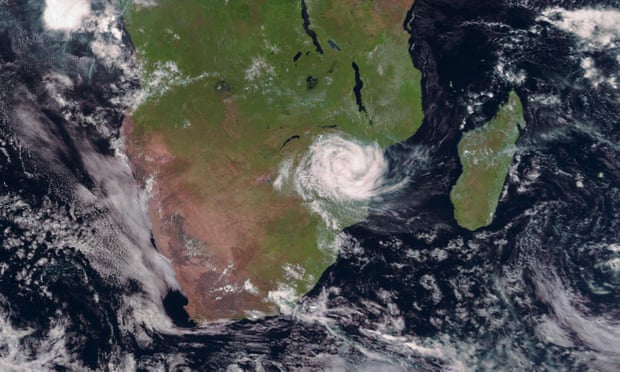
There is no way to tell at this time whether the destructiveness of Idai was associated with climate change, but many experts believe that further analysis will suggest a strong link.
Destruction in Beira, Mozambique
Satellite Image of Cyclone Idai
Philip H. Gordon of the Council on Foreign Relations has written an essay criticizing US President Trump’s moves toward the Palestinian Authority. The moves include moving the US Embassy to Jerusalem, cut off financial support for the Palestinian Authority, cutting off humanitarian aid to Palestinian hospitals, cutting off aid to the refugee program, UNRWA, and closing the Palestinian office in Washington, DC. Gordon describes current US policy in these terms:
“According to the Trump administration, these moves are designed to make clear to Palestinians that they need to accept new realities and agree to the U.S. peace plan. As the president’s top advisor on the issue, Jared Kushner, explains, ‘All we’re doing is dealing with things as we see them and not being scared out of doing the right thing. I think, as a result, you have a much higher chance of actually achieving a real peace.’ Kushner has also said that he believes the Palestinian leadership is refusing talks with the United States about the peace plan because ‘they are scared we will release our peace plan and that the Palestinian people will actually like it,’ apparently assuming that the Palestinian people are more ready for compromise with Israel than their leadership. Trump has himself been even blunter about using U.S. humanitarian aid as leverage, telling the Palestinians publicly that ‘we’re not paying until you make a deal. If you don’t make a deal we’re not paying.
Gordon then makes the case that this tougher line is likely to be ineffective and even counterproductive.
“Instead of compelling Palestinians to accept a deal, however, the new measures are having the opposite effect. With the end of U.S. assistance and with U.S. alignment with Israeli positions on crucial political issues, Palestinian leaders have cut off political contact with Trump officials. Two-thirds of Palestinians now oppose the resumption of contact with U.S. negotiators and 88 percent view the United States as biased toward Israel. The clearest product of the administration’s approach has not been Palestinians bowing to U.S. demands but seeking—and to a degree gaining—support for greater international recognition of Palestinian statehood and for diplomatic and economic pressure on Israel.”
Gordon then outlines some policies that he believes would be more conducive to a lasting peace between Israel and the Palestinians. The essay is worth a close read.

 World Politics News