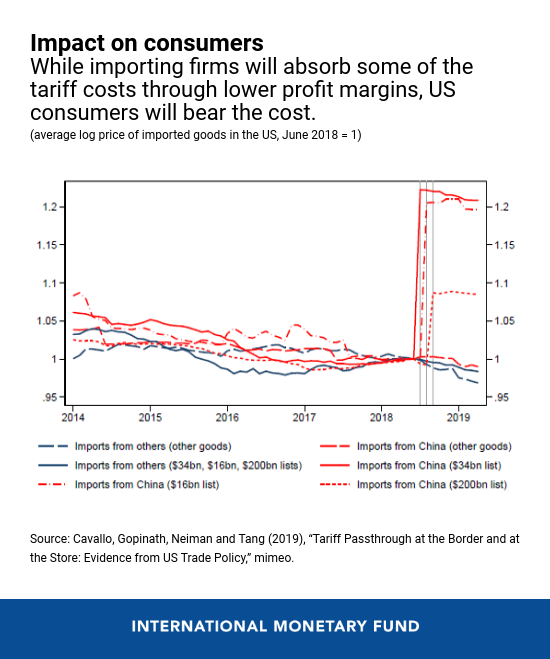
“Consumers in the US and China are unequivocally the losers from trade tensions. Research by Cavallo, Gopinath, Neiman and Tang, using price data from the Bureau of Labor Statistics on imports from China, finds that tariff revenue collected has been borne almost entirely by US importers. There was almost no change in the (ex-tariff) border prices of imports from China, and a sharp jump in the post-tariff import prices matching the magnitude of the tariff…
“Some of these tariffs have been passed on to US consumers, like those on washing machines, while others have been absorbed by importing firms through lower profit margins. A further increase in tariffs will likely be similarly passed through to consumers. While the direct effect on inflation may be small, it could lead to broader effects through an increase in the prices of domestic competitors.”
The effects were almost immediate as the graph below suggests:
The country that would be most seriously affected by a conflict between the US and Iran would be Iraq. Iranian militias and US troops are both stationed in the country and their close proximity makes the situation volatile. US troops and Iranian militias cooperated in the fight against the Taliban in Afghanistan and against ISIS in Syria. Writing for the Middle East Institute, Randa Slim points out the danger:
“Iraqi officials are seriously concerned about the prospects of a military escalation on Iraqi soil. Decisions by the U.S. administration and ExxonMobil to withdraw staff from Iraq exacerbated apprehensions among Iraqi officials and the Iraqi public that there is a looming conflict for which Iraq will pay a heavy price.
“While leaders of Iraqi pro-Iran militias publicly say they are interested in keeping Iraq outside the firing zone, privately they tell their interlocutors that if current tensions between the United States and Iran turn violent, they cannot guarantee they can stay out of the fight. During his May 7 visit to Baghdad, Secretary of State Mike Pompeo asked his Iraqi counterparts to convey warnings to Tehran about the consequences of targeting military assets in Iraq. Iraq’s foreign minister has now offered to act as a mediator between its two allies, the United States and Iran, with the aim of de-escalating the crisis.”
“The Pentagon calculates that Iranian-provided weapons killed at least 608 U.S. persons in Iraq between 2003 and 2011, including signature systems such as rockets, explosively formed penetrators (EFPs), improvised rocket-assisted munitions (IRAMs), rocket-propelled grenades, and large-caliber sniper rifles. These attacks abated after 2011, but Iranian-backed harassment later recommenced as tensions with Tehran increased under the Trump administration:
Lethal EFP attack on U.S. troops. On October 1, 2017, an American soldier was killed and another wounded by an EFP. A U.S. investigation concluded that the attack had been launched by an Iranian-backed militia after an American advise-and-assist mission expanded into Camp Speicher, a site that militia leaders wanted to exclude U.S. forces from.
Harassment of Basra consulate. The U.S. consulate in the energy hub of Basra closed on September 29, 2018, following two rounds of rocket fire on the complex that appeared to deliberately avoid causing damage or casualties. Previously, Iranian-backed militias threatened Iraqi locals who had been identified on social media as interacting with the consulate; fighters were also suspected of preparing to strike consulate vehicles as they drove around Basra.
Rocket attacks on Baghdad diplomatic facilities. In September 2018, the embassy complex suffered two rounds of apparent warning fire; as in Basra, the rockets seemed to miss deliberately.
Rocket attack after presidential visit. On December 27, 2018, two 107 mm rockets targeted the U.S. embassy complex a day after President Trump visited al-Asad Air Base in Anbar, causing no damage.
Foiled rocket attack on al-Asad. On February 2, 2019, Iraqi forces acting on U.S. intelligence foiled attackers who aimed to fire three 122 mm rockets at American facilities in Anbar.
Rocket attack on Qayyara Airfield West. On February 12, three 107 mm rockets were fired at U.S. facilities in Nineveh. Members of an unspecified Iranian-backed militia were arrested.
Rocket attack on Taji. On May 1, two 107 mm rockets were fired at the Taji military training complex, where U.S. personnel provide divisional headquarters-level training. Two members of the Iranian proxy group Asaib Ahl al-Haq (AAH) were arrested.
Rocket fire on the International Zone. The May 19 attack involved a single rocket fired from a highway median close to the University of Technology in Baghdad. It landed in an open parade ground 1 km north of the U.S. embassy, strongly suggesting that it was intended to miss. The attack came right after a meeting in which President Barham Salih asked Iraq’s top leaders to pledge that they will renounce foreign influence and support the government’s invitation to coalition advisors.
The situation is far more dangerous than we suspect. The pressures on both sides are intense and there does not seem to be any willingness on either side to dampen the anxieties.
The UN General Assembly has voted, 128-9, to declare the US decision to recognize Jerusalem as the capital of Israel “null and void”. Just a few days ago, the US vetoed a similar resolution in the UN Security Council. The resolution is not legally binding, but the vote represents a significant repudiation of the US position on Jerusalem. The vote also indicates the extent to which US policy deviates from world opinion on the Israeli-Palestinian dispute. Nevertheless, the vote will not affect US policy to any degree whatsoever.
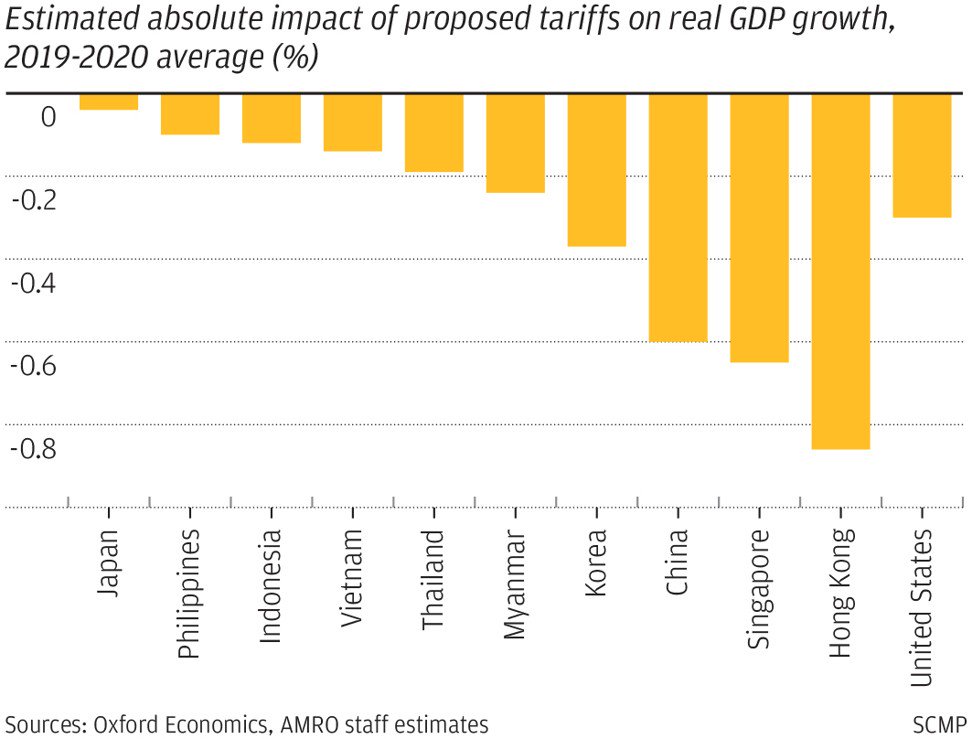
The trade war between the US and China shows little sign of abating soon. We tend to think about the trade war as a static situation and analyze the first-order effects of higher tariffs on both sides. But if producers and consumers suspect that the tariffs are not going to go down soon, they will make decisions that will change where goods are produced to avoid the higher fees. We are beginning to see these second-order effects as producers begin exploring places in Southeast Asia to make their goods, and these alternatives sites will enjoy higher growth rates. Countries such as Malaysia, Vietnam, Bangladesh, and Indonesia are enjoying this windfall. If these alternative sites work out, then the trade patterns will remain different and production will return to its previous levels. The two big losers in such a transition will be the US and China. Politico estimates some of the losses for the US:
“The numbers just keep rolling in showing there is no winning a full-scale trade war with China. Just lots and lots of losing. Via Gary Hufbauer, senior economist at the Peterson Institute for International Economics: ‘[T]he cost to an American family of three would be about $2,200 if Trump’s full package of 25% tariffs on $500 billion of merchandise imports from China is implemented.
“‘In the case of the latest 15% additional tariffs on $200 billion, from 10% to 25%, that go into effect by the end of May … the direct cost is $30 billion and the likely indirect cost, through higher US producer prices, will be another $30 billion. Together, that’s $60 billion … about $550 per family.’ China will absorb ‘no more than 5%’ of the tariffs.”
The Indian national election is a very long affair and the final round of voting ended on Sunday. Up to now, Indian law prohibits the publication of exit polls so that the final votes are not distorted. The exit polls after this final round, however, suggest that Prime Minister Narendra Modi and his National Democratic Alliance (NDA) will have a sizable majority in Parliament. According to Reuters:
“Modi’s National Democratic Alliance (NDA) is projected to win anything between 339-365 seats in the 545-member lower house of parliament with the Congress party-led opposition alliance at a distant 77 to 108, India Today Axis exit poll showed.
“To rule, a party needs to win 272 seats. Modi’s alliance won 336 seats in the 2014 election. The exit polls showed that he not only held to this base in the northern Hindi belt but also breached the east where regional groups traditionally held sway.
“Only the south largely resisted the Hindu nationalist surge, except for Karnataka, home to software capital Bengaluru.”
If these exit polls prove to be accurate, it is likely that Prime Minister Modi will believe that his interpretation of Hindu nationalism should guide his administration. Many of the non-Hindus in India fear this outcome.
I will confess that I am a fan of The Game of Thrones. I read the books many years ago (and am still waiting for Martin to finish the story) and have accepted the fact that the TV series is a very different–but still interesting–story. In the last episode, we watched one of the main characters commit what is easily identified as a war crime–the indiscriminate killing of innocents in the takeover of a major city. Spencer Kornhaben has written a piece for The Atlantic which analyzes the fictional account with historical examples of similar acts. It is a very interesting essay which is worth the read.
NBC News is reporting that the Trump Administration believes that the 2001 Authorization to Use Military Force (AUMF) gives it the legal authority to wage war against Iran. The 2001 AUMF was passed by Congress on 18 September 2001 in response to the attacks on 11 September 2001. The relevant part of the resolution reads as follows:
“That the President is authorized to use all necessary and appropriate force against those nations, organizations, or persons he determines planned, authorized, committed, or aided the terrorist attacks that occurred on September 11, 2001, or harbored such organizations or persons, in order to prevent any future acts of international terrorism against the United States by such nations, organizations or persons.”
The AUMF has been invoked in at least 30 circumstances since 2001, Business Insider recounted the circumstances as of 2013:
“As of 2013, the 2001 AUMF had been invoked more than 30 times to authorize troop deployments and other military measures, including detentions at Guantanamo Bay and military trials for terrorism suspects.
“Under Presidents George W. Bush and Barack Obama, the 2001 AUMF was used to justify the deployment of US forces to Afghanistan, the Philippines, Georgia, Yemen, Djibouti, Kenya, Ethiopia, Eritrea, Iraq, and Somalia.”
The idea that a resolution passed 18 years ago still authorizes war is preposterous–it assumes that nothing that was done or not done by both sides could possibly change the calculations of each side. Or that neither side could learn anything from 18 years of interaction. Or that 18 years of war is a solution to a dispute.
Moreover, the idea that a resolution that specifically mentions “nations, organizations, or persons” could link Iran to the events of 11 September is completely uninformed. Iran was an informal ally to the US in the war against the Islamic State in Syria. al Qaeda represents the interests of Sunni Muslims and Iran represents the interests of Shia Muslims. US Secretary of State Pompeo made this statement to the Senate Foreign Relations Committee:
“‘The factual question with respect to Iran’s connections to Al-Qaeda is very real. They have hosted al Qaeda, they have permitted al Qaeda to transit their country,’ he said at a Foreign Relations Committee hearing. ‘There is no doubt there is a connection between the Islamic Republic of Iran and al Qaeda. Period, full stop.’”
I would like to see that evidence in full. I find the assertion difficult to accept. It is a very thin reed on which to start a war.
There is considerable evidence that European states do not believe the US position that Iran is planning attacks against US forces in Iraq. Eldar Mamedov has written a blog post with a number of bits of evidence that demonstrate a profound lack of confidence in the US assessment:
“Not only are there profound differences between the EU and the United States on Iran, there is also a growing perception that U.S. policy is unpredictable. President Donald Trump seems to be counting on “maximum pressure” to get Iran to “call him,” while suggesting no off-ramp in case this call, as seems likely, doesn’t materialize. National Security Advisor John Bolton, meanwhile, consciously pushes for escalation with regime change (if not Iran´s disintegration) as the ultimate goal. And Pompeo seems to be echoing whatever Trump says but has a track record as an unreformed Iran hawk. Against this backdrop, Pompeo’s hastily organized trip to Brussels, which required cutting one day short his scheduled visit to Russia, creates an impression not of a Henry Kissinger-style shuttle diplomacy, but of a superpower cast adrift, with no direction, strategy, or skills to execute its foreign policy.”
“However, not everyone is willing to assume Iranian responsibility and many of those are unlikely to accept the word of the governments in Saudi Arabia, the UAE and, alas, even the United States. It is critical, therefore, that the Trump administration publicly present a clear case for Iranian culpability that withstands the expected scrutiny—especially if this ends up being a precursor for US military action down the road.
“Getting such a presentation wrong has longstanding negative implications for US national security policy. The Clinton administration’s counterterrorism efforts against Al Qaeda never recovered from the questions surrounding the CIA’s weak explanation of the intelligence used to target the Al-Shifa pharmaceutical factory in Sudan in 1998. As a result, there was insufficient political support for additional military actions against Bin Laden until after 9/11. And the Bush administration’s campaign in Iraq never recovered from its overstatements regarding the intelligence linking Saddam Hussein to Al Qaeda and to weapons of mass destruction. The United States has remained politically divided ever since on this issue, which has contributed to the serious mistakes made on US policy toward Iraq by the two administrations that followed.”
David Frum writes in The Atlantic about how he regrets believing the “weapons of mass destruction” argument justifying the US invasion of Iraq in 2003.
“The Iraq War of 2003 was undone by blithe assumptions, cultural ignorance, and careless planning. But compared with the accelerating drive to confront Iran, the Iraq War looks like a masterpiece of meticulous preparation.
“The project of a war with Iran is so crazy, it remains incredible that Donald Trump’s administration could truly be premeditating it. But on the off, off chance that it is, here’s a word of caution from a veteran of the George W. Bush administration: Don’t do it.”
It is unlikely that US President Trump would start a war with Iran on his own: he has shown no proclivity to back up his bellicose rhetoric with concrete military actions. But his National Security Adviser, John Bolton, has been arguing for the overthrow of the Iranian government for many years and his Secretary of State, Mike Pompeo, has also been fiercely opposed to the Iranian regime. The Congress has yet to be involved in any of the decision-making on Iran and it needs to assert its constitutional prerogatives in the making of war.
“But Trump vowed that Tehran would ‘suffer greatly’ were it to ‘do anything’ to threaten US interests.
“‘If they do anything, it would be a very bad mistake,’ Trump warned at the White House. ‘If they do anything they will suffer greatly.’
“Iranian President Hassan Rouhani hit back, saying the Islamic republic was ‘too great to be intimidated by anyone’.
“‘God willing we will pass this difficult period with glory and our heads held high, and defeat the enemy,’ Rouhani said at a late night meeting with clerics.”
The ramping up of tensions comes as there are press reports that the US has developed plans that would send about 120,000 additional troops to the region in case of a conflict. That number of troops is roughly the same number that were sent to Iraq prior to the US invasion of that country in 2003. There is concern that Iranian militias in Iraq could be involved in a conflict with US soldiers in Iraq. Writing in the Atlantic, Mike Giglio states that US and Iranian troops have already exchanged fire in Iraq:
“Another recently retired officer noted an instance in which he suspected that U.S. troops already had been targeted by militias: A roadside bomb killed a U.S. service member in October 2017, an incident for which the U.S. military has not assigned blame. Last year, the State Department evacuated the U.S. consulate in the Iraqi city of Basra, citing attacks by Iran-backed militias. ‘That’s always been there,’ he said. ‘When I hear [U.S. claims of new threats], I’m like, ‘Really, there’s a new threat from Iran-backed militia?’ I remember back in 2004 when we were fighting Iran-backed militias in Iraq. It’s an existing threat that’s been there for years, but it’s up to Iran to dial it up or dial it down depending on the political end state they want to achieve.’”
There are also concerns that Iran could station missiles in Iraq that could threaten US troops in the region. It does not appear as if the Trump Administration has a clear plan of action, but his foreign policy is undermined by his impatience and his desire for a decisive foreign policy coup.
US President Trump hosted Hungarian Prime Minister Viktor Orbán at the White House yesterday. Hungary is a member of NATO, but Orbán has presided over the systematic dismantling of democratic institutions while Prime Minister. He has limited the powers of the court, restricted the freedoms of the press, and has descried the immigration of non-Christians and non-whites into Europe. Orban is a pariah in many countries in the world and Axios lists the measures taken against him:
The European Parliament voted in September to trigger potentially punitive proceedings against Hungary, in response to policies of Orbán’s seen as contrary to EU values.
Orbán’s political party, Fidesz, was suspended in March by the European People’s Party (EPP) for being undemocratic and undercutting the rule of law, in addition to having mounted an anti–EU campaign that targeted EU Commission President Jean-Claude Juncker, a senior member of the EPP and George Soros.
U.S. lawmakers introduced a resolution in January condemning Orbán for “efforts to undermine democracy and violate human rights” that has support in the Senate Foreign Relations Committee.
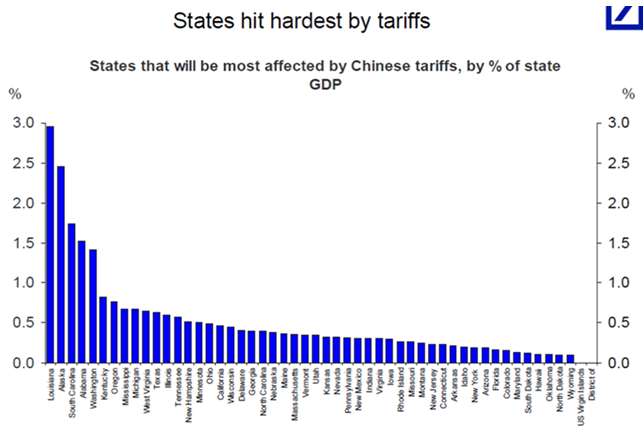
Even as the US and China continue to negotiate on their trading relationship, US President Trump imposed higher tariffs on many products imported from China. China has vowed to retaliate, but has yet to do so. Perhaps it is waiting for the outcome of the discussions today. I cannot determine whether the new tariffs are intended merely as a negotiating ploy or whether Mr. Trump intends to keep them in place until the China make substantive concession. China seems reluctant to make those concessions, largely because China does not wish to be seen as capitulating to US demands. And China has some ways to retaliate that will harm the US economy. In the meantime, the tariffs will negatively affect US citizens in rural areas disproportionately.
The tariffs affect over 5,000 products. If you want top see the complete list, click here. The uncertainty over the clash has erased about $2 trillion of global stocks.
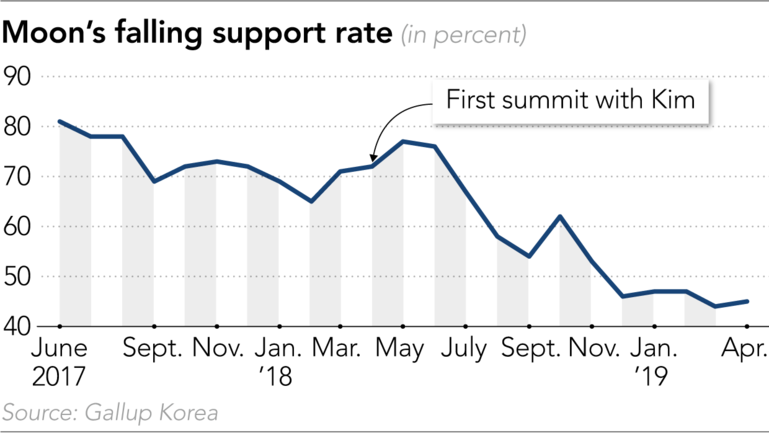
For the first time, the US has seized a North Korean cargo vessel that it claimed was violating sanctions by carrying coal. The seizure came just hours after North Korea tested two short-range missiles, as it rattles the US cage to speed up the nuclear negotiations. North Korea has also ceased to cooperate with the US on the return of military remains from the Korean War. These actions will undoubtedly make further negotiations between the US and North Korea more difficult. They also complicate the situation for South Korean President Moon who has been steadily losing favor among the South Korean population. The US has not gained much in its two-year pursuit of better relations with North Korea and it appears as if it is losing credibility with one of its main allies, South Korea.
As the US ratchets up its pressure on Iran, it also seems to be unaware that it is heavily dependent on states that have good relations with Iran. US Secretary of State Mike Pompeo went to Iraq to persuade it to reduce its relations with Iran. Iraq politely refused, hardly the outcome the US anticipated when it overthrew Saddam Hussein in 2003 (if Hussein were still in power, he would gladly acquiesce to Pompeo). The US also sent 4 B-52 bombers to the region to reinforce the aircraft carrier group it sent to the Persian Gulf. But those bombers are based in Qatar, another country with good relations with Iran (dictated by the fact that the two countries share a large natural gas reservoir in the Persian Gulf). The strong military presence of the US in the region rests upon two very tentative allies–not the strongest bargaining position.
Reuters has published an article describing the reasons why the Trump Administration has decided to impose new tariffs on Chinese products. The trade talks have been going on for some time, and there was a sense that an agreement was in the offing. But the Chinese apparently understood certain parts of the agreement in ways that differed profoundly from the US understanding. It is hard to determine whether the disagreements are substantive or whether they are part of a negotiating strategy. The Reuters report gives the impression that the disagreements are real:
“The administration said the latest tariff escalation would take effect at 12:01 a.m. Friday, hiking levees on Chinese products such as internet modems and routers, printed circuit boards, vacuum cleaners and furniture.
“The Chinese reversal may give China hawks in the Trump administration, including Lighthizer, an opening to take a harder stance.
“Mnuchin – who has been more open to a deal with improved market access, and at times clashed with Lighthizer – appeared in sync with Lighthizer in describing the changes to reporters on Monday, while still leaving open the possibility that new tariffs could be averted with a deal.
“Trump’s tweets left no room for backing down, and Lighthizer made it clear that, despite continuing talks, ‘come Friday, there will be tariffs in place.’”
“In a televised speech, [Iranian President] Rouhani said that Iran would hold on to stockpiles of excess uranium and heavy water used in its nuclear reactors. He set a 60-day deadline for new terms to the nuclear accord, after which Tehran would resume higher uranium enrichment.
“’We are ready to negotiate, within the boundaries of JCPOA,’ he said referring to the Joint Comprehensive Plan of Action nuclear deal. ‘It is not us who has left the negotiation table.’”
The International Atomic Energy Agency has reported that Iran has up to this point adhered to the agreement despite the US withdrawal from it. It seems as if Rouhani’s statement is an attempt to prod more negotiations on the deal, but there is no evidence that the US is interested in further discussion.
Dina Esfandiary, writing in the Bulletin of Atomic Scientists, raises an interesting take on the US actions: that the US policy of maximum pressure is designed to provoke a war:
“Reframing a routine deployment of the USS Abraham Lincoln strike force to the region only serves to unnecessarily heighten tensions and foster the potential for miscalculation. The only reason to do any of this is to push Iran into a corner, paving the way toward military confrontation—something few want because it will achieve little.”
Sending an aircraft carrier close to Iran is an unmistakable provocation. Sending an aircraft carrier into the Strait of Hormuz is also not a smart move. The aircraft carrier is designed for open waters, not the cramped space of the Strait.
 World Politics News