“Hoaxes and half-truths are huge problems during epidemics. The worried well can overwhelm health-care facilities, and make it harder for medical providers to find and treat actual cases. Confused citizens might forgo sensible measures such as hand washing in favor of inefficient ones like panicked mask buying. And misinformation tends to intensify the xenophobia that emerges during epidemics. As diseases spread, “individuals find people to blame based on their prejudices, or make themselves feel less at risk by finding points of discrimination between themselves and others,” says Alexandra Phelan, who studies legal and policy issues related to infectious diseases at Georgetown University.”
These fears make addressing the disease effectively difficult even under the best of circumstances. The matter is further complicated because of the current tensions between the US and China. As of tonight, “China says a total of 28,018 cases have been confirmed and 563 people have died in the country.”
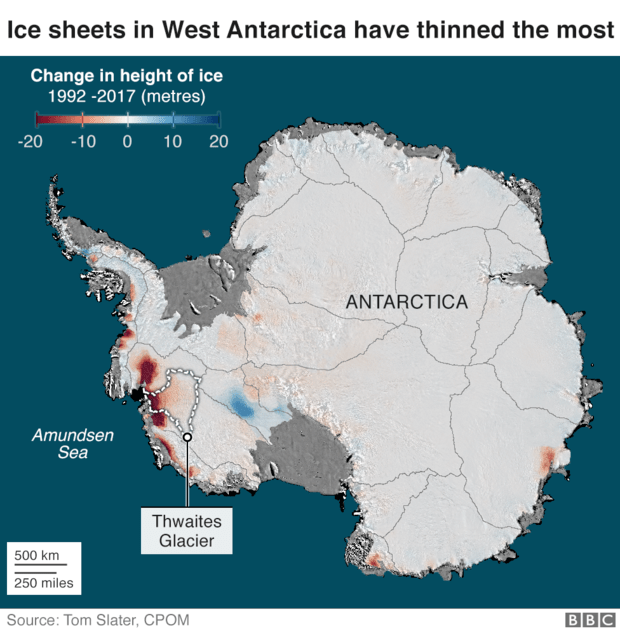
Scientists have bored a hole 2000 feet deep into the Thwaites glacier in Antarctica. The effort was an attempt to measure the water temperature at the grounding level which holds the glacier in place. The scientists found that the water temperature at that point was above freezing, indicating that the glacier may not be fully grounded in bedrock. If that temperature is distributed along the entire bedrock, then it is possible that the glacier may slip into the warmer ocean water, accelerating the melting process caused by solar radiation at the surface level. CBS News notes the significance of that possibility:
“The collapse of the 74,000-square-mile Thwaites — which some scientists see as the most vulnerable and significant glacier in the world when it comes to sea-level-rise — could release a mass of water roughly the size of Florida or Great Britain. Its melting would raise global sea levels by more than three feet, enough to potentially overwhelm vulnerable populations, the researchers said….
“According to the International Thwaites Glacier Collaboration, the amount of ice flowing out of the Thwaites and nearby glaciers has nearly doubled over the last 30 years. Melting ice from the Thwaites into the Amundsen Sea already accounts for approximately 4% of current global sea-level rise — a number that would significantly increase when the glacier crumbles.”
There is a sustained effort to find out what is affecting the Thwaites Glacier given its significance for possible sea levels in the future. We are grateful that these efforts are being supported and sustained despite the the lack of official actions on climate change.
“Russian warplanes have been supporting a recent Syrian military offensive in the border region, where opposition forces cling to a few final handholds after years of bloody civil war. Russia, a key ally of Syrian President Bashar Assad, has backed Assad’s push to quash those remaining forces in Idlib — much to the consternation of Turkey, which has troops stationed there as part of a 2018 de-escalation agreement with Russia meant to prevent accidental confrontations.
“‘Our brave soldiers are conducting security and humanitarian missions inside Syria in line with our agreements with Russia,’ Fahrettin Altun, Turkey’s communications director, tweeted in a thread posted Monday. ‘If Russia is unable to control the Assad regime from targeting us, we will not hesitate to take actions against any threat, just as we did today in Idlib.'”
“At any rate, developments in Syria are evolving in a way that further increases the economic, military and political pressure on Turkey. It is confronted with new waves of refugees and risks becoming a safe haven for fleeing anti-regime forces which might harbor fundamentalist terrorists among them. But more importantly, Turkish soldiers are surrounded by hostile forces, as two of its dozen of observation posts in Syria are already in regions captured by regime soldiers during the offensive they started in the summer.
“Ever since August, regime forces have increased their territorial gains around Idlib and these gains have no doubt taken place with the coordination and full-fledged military assistance of Russia.
“The blame of the loss of life of Turkish soldiers therefore cannot be put solely on regime forces. Moscow is also to blame.
“If Turkish soldiers are killed as a result of a policy that is being pursued by one of Turkey’s partners, that partner cannot be defined as a strategic one.”
The fighting also raises serious questions for the US, although very few media outlets in the US are paying attention. Turkey is a member of NATO and members are obliged to come to the defense of each other. If Turkey makes a territorial claim to the northwest part of Syria, then the US must defend that claim against attack. I seriously doubt that the US would take such actions in the current climate, but the obligations of the NATO Treaty would be sorely tested.
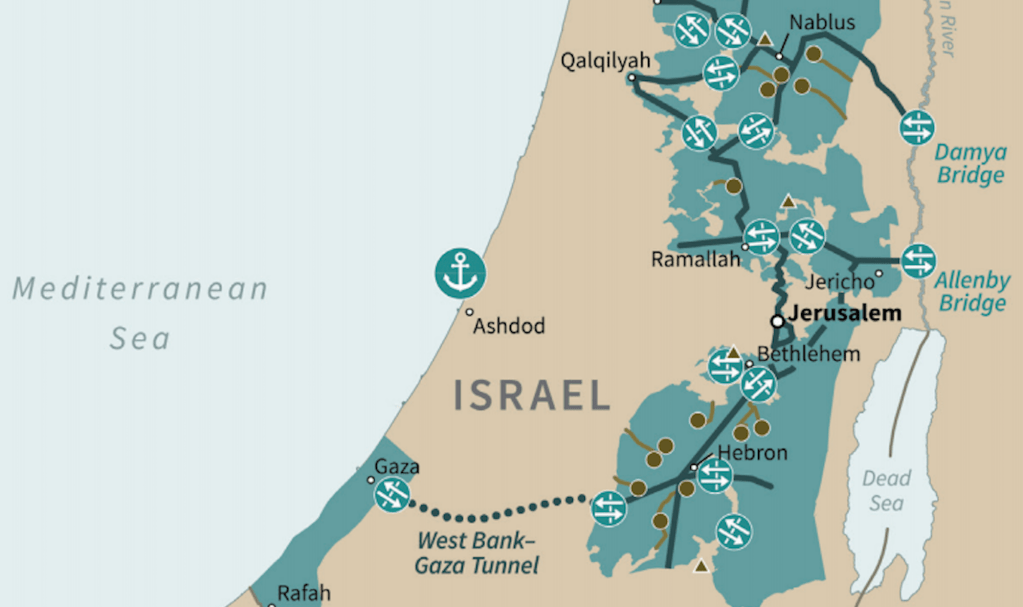
The Trump Administration has announced its Mideast Peace Plan. It should be more appropriately be termed the Terms of Surrender for the Palestinians. The plan allows Israel to annex large parts of the West Bank, including the Jordan River Valley, and in those small parts of the West Bank allocated to the Palestinians, it permits Israeli settlements. The parts of the West Bank given to the Palestinians is not wholly contiguous and the plan calls for a tunnel to be built between the West Bank and the Gaza Strip. The plan is a clear violation of international law:
“The annexation of territory is prohibited under international law. The UN Charter and UNSC Resolutions 242 and 338 explicitly forbid any country from expanding its territory by military force.
“Eliav Lieblich, an assistant professor at Tel Aviv University, told Al Jazeera that the repeated use of the term Israeli ‘sovereignty’ in the Trump plan in relation to areas of the West Bank indicates plans to annex parts of the territory.
“‘In the past, Israel used similar language to describe its application of jurisdiction to the Golan Heights and this was universally understood as annexation,’ he said.
“‘If Palestinians reject the plan, which they will, Israel will likely move to annex the territories unilaterally,’ he added.
“To Kevin Jon Heller, a professor of international law at the University of Amsterdam, the planned annexation of the Jordan Valley and all settlements in the West Bank would, if implemented, undoubtedly violate international law.
“‘What this amounts to is a land grab, plain and simple. And an unlawful one,’ he said.”
Furthermore, the plan only suggests a Palestinian state–it places a number of conditions that would have to be fulfilled before a Palestinian state could be created. In an interview with CNN’s Fareed Zakaria, Trump’s son-in-law, Jared Kushner, outlined those conditions: freedom of press, free and fair elections, respect for human rights for its citizens, and an independent judiciary,” in addition to “established transparent, independent, and credit-worthy financial institutions capable of engaging in international market transactions.” There is currently no Arab state that satisfies those conditions, including close US allies such as Saudi Arabia, Egypt, and Jordan. And, mirabile dictu, the plan gives the Palestinians 4 years to satisfy those conditions which suggests that the Trump Administration would not have to even think about the process, even if Mr. Trump is re-elected.
CBS News ran a video on wealth inequality in the US, demonstrating that many US citizens have no idea what the actual distribution of wealth in the US is. It is a sobering look into how insidious the problem of wealth inequality is to the US political system.
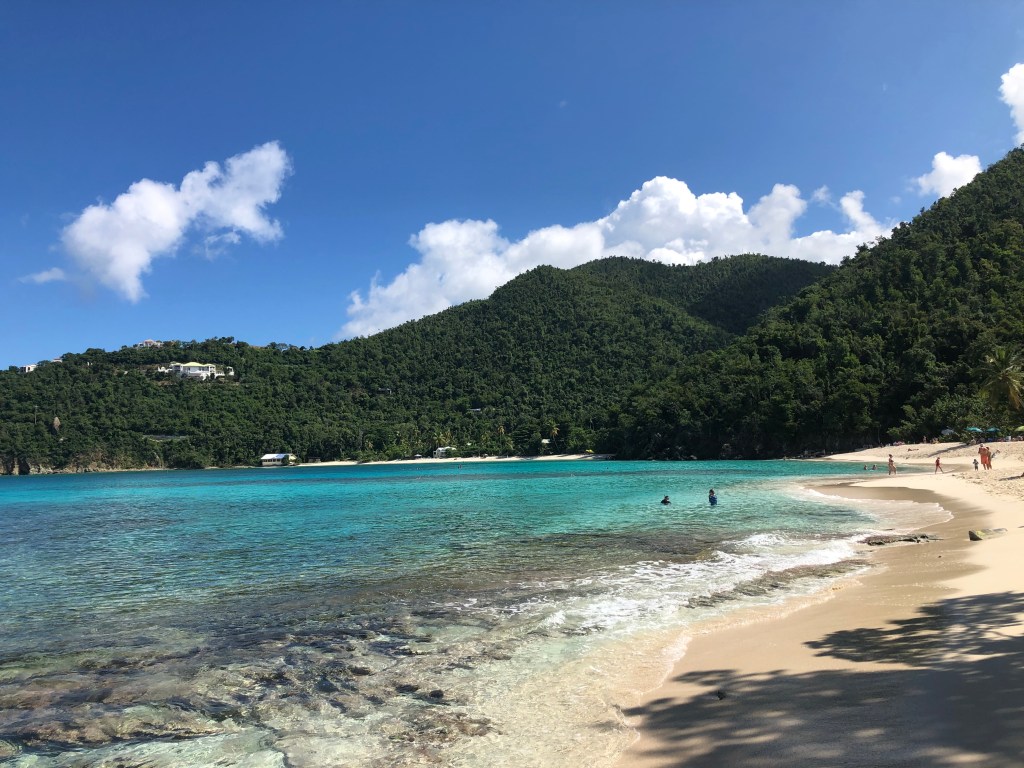
This will be my last post until 3 February. I am going on vacation and my fondest wish is to forget about domestic and international politics while I sit on a beautiful beach in the Caribbean, contemplating nothing more than the sound of waves and ice cubes clinking in a tall glass. We shall see how successful I can be.
Large protests demanding the removal of US troops in Iraq are occurring as groups sympathetic to Iran mobilize to that end. These protests accelerated after the US assassination of Iranian general, Qassem Soleimani. But the protests have also been supported by groups that are less inclined to support Iranian influence. For now, Iraq is dependent on the US for financial and military assistance and it is unlikely that the Iraqi government will demand the withdrawal of US troops. But the Iraqis are turning to other countries, such as Russia, to replace US support. The Arab Weekly reports:
“It is in that context that a new wave of Iraqi nationalism emerged that seeks to make Baghdad more independent from foreign influence and agendas, allowing it to chart its destiny and future by itself. It is a growing Iraqi sentiment that would appear to support deeper engagement with Moscow.
“Russia has demonstrated a growing intent to position itself in the Middle East. Its military intervention in Syria and work in Iraq are two examples.
“Iraq-Russia trade has grown rapidly to nearly $2 billion and Russian investments in Iraq total more than $10 billion, mainly in oil and gas, with major Russian players such as Lukoil, Gazprom Neft, Soyuzneftegaz and Rosneft all expanding their footprints.
“Russia has signed agreements to expand ties with Iraq in electricity generation, agriculture and transportation and, last year, inaugurated a command centre in Baghdad under an intelligence-sharing agreement that includes Iran and Syria.”
The US has about 5,000 troops remaining in Iraq. Their mission has changed from confronting ISIS to one of containing Iran. Without those troops in Iraq, that task would fall primarily to US air and naval power, a poor substitute for ground troops in such a task.
Francis Galvin has written a very provocative essay for the blog, War on the Rocks, entitled “Asking the Right Questions about the Past and Future of World Order“. It is an essay written for international relations scholars but its logic and language are easily accessible. Glavin goes through the debates about the current world order, punching some well-deserved holes in the prevailing debates about the demise of the rules-based order that many believe that the US created after World War II. He is careful about what he is talking about:
“First, we often think of world order as emerging from a long-term master plan and sober debate and consideration, based on deep reflection about the future. This is how things often look in retrospect, especially when described by political scientists and even historians, but that may be the product of outcome bias. In fact — as every decision-maker knows — ex ante, policymakers faced radical uncertainty about the future, and often stumbled towards ad hoc, reactive ways to create what now seems so impressive and pre-planned. We often forget the efforts and initiatives to build order that failed or were re-adapted for other purposes.
“Second, no singular world order emerged after World War II. The Cold War produced competing orders, such as the system imposed by the Soviet Union on its own country, its near periphery, and its global allies. There were some issues and areas where it would be hard to identify any order. More often than not, chaos and uncertainty, rather than order, marked decolonization and the rise of new states in Africa and parts of Asia. My focus will be on what some call the “Western” liberal world order that emerged after World War II (though that name is not without its own problems).”
Despite these very important caveats, we should keep in mind that there is almost always an “order” to world politics. We tend to think that the international system is completely anarchic. That assessment overlooks the very important sustained, peaceful interactions among peoples and states: trade, travel, migration, and culture. Even though the US world order was characterized by several violent wars and conflicts, it is also the case that there were tremendous economic and social changes, notably the dissolution of the formal controls of the European empires and the advancement of human rights.
Nonetheless, there is overwhelming evidence that some well-established patterns, such as steadily growing international trade and the influence of international institutions, are increasingly frayed. Galvin analyzes the reasons for the change:
“There are two great challenges to the contemporary world order — the dramatic rise of China and the consequences of the profound transformation of the global economy and international system, a revolutionary change on par with the Industrial Revolution. Most of the current debates on world order focus on the capabilities and intentions of a growing China. This is understandably important; in the past, rapidly-rising powers have challenged global arrangements, with calamitous military conflicts as the result. These two stories, however — the rise of China and the global dynamics of technology, demographics, and socio-economics — are intertwined and cannot be understood, or dealt with, separately. Furthermore, the second challenge — which has transformed everything from demographics to governance to how people live and work and self-identify to calculations about war and peace — is the key challenge, and the one that people aren’t focusing on enough. Beginning in the United States in 1960s, accelerating in the 1970s, and spreading and intensifying in recent decades, how the global system operates has been completely upended. It is, to a great extent, the reason for China’s rise. The consequences of this revolution are impossible to overstate and hard to fully accommodate under current arrangements.
“Much of this has to do with the digital revolution and the profound expansion of access to information, unmediated by traditional institutions. Part of it is an upending of how and where and at what cost things were manufactured, with world trade and prosperity build upon a complex and deeply integrated global supply chain. Part of it has to do with a financial revolution even larger and more profound than that which launched early modern Europe. Part of it has to do with a rights revolution that completely upended traditional categories of gender, race, ethnicity, and sexual orientation, with a focus on individual autonomy and the tolerance of difference. Part of this has to do with a complete reshaping of identity and how people live and relate to each other — individual, family, and communal — that upends historical relationships between personal autonomy and collective belonging.”
Galvin then discusses how he thinks the new world order will emerge, but the challenges of a new order are daunting. The essay demands a close read.
There are reports that the number of people infected by the new coronavirus in China is spreading and that human-to-human transmission appears possible. This event is one about which I am totally unqualified to understand fully. I do not know the dynamics of such a disease nor does it appear as if even the experts can yet do an accurate threat assessment. But we have had experience with the spread of disease in the past: the 1918 Spanish flu pandemic; the bubonic plague in the 14th century; the HIV epidemic beginning in the 1980s; the Ebola outbreak in West Africa in 2014-16; and the SARS outbreak in China in 2003. Those outbreaks were devastating and costly to contain.
The world has taken some steps to address the problem of infectious diseases in a world in which people move around at astonishing speed. Global leaders established the Global Preparedness Monitoring Board (GPMB) in conjunction with the World Health Organization (WHO) and the World Bank. The creation of the GPMB was necessary because of the very high costs of containing a pandemic after it had already taken hold. Laurie Garrett writes:
“An enormous number of previously unknown viruses, such as the one that caused the 2003 epidemic of severe acute respiratory syndrome (SARS), have claimed the lives of people and animals around the world. In just seven years (from 2011 to 2018), for example, the WHO did battle with 1,483 epidemics.
“And the costs of containment, coupled with the disruptions’ general economic impact, have worsened, according to a GPMB study commissioned by the World Bank. The 2003 SARS epidemic exacted a toll of about $40 billion on the global economy, the 2009 swine flu epidemic reached about $50 billion, and the 2014-16 West African Ebola epidemic cost nearly $53 billion. An influenza pandemic akin to the 1918 flu would today cost the world economy $3 trillion, or up to 4.8 percent of global gross domestic product (GDP).
“Economically, wealthy nations have proven the most resilient in recent outbreaks, and the GPMB predicts that countries such as the United States and Germany could get through a devastating epidemic with less than 0.5 percent loss of GDP. But poorer nations—from India and Russia down to the countries of Central Africa—could lose up to 2 percent of their GDPs from the same hypothetical pandemic. The West African Ebola epidemic directly cost the hardest-hit countries—Liberia, Sierra Leone, and Guinea—$2.8 billion, knocking Sierra Leone’s GDP down a whopping 20 percent in 2015.”
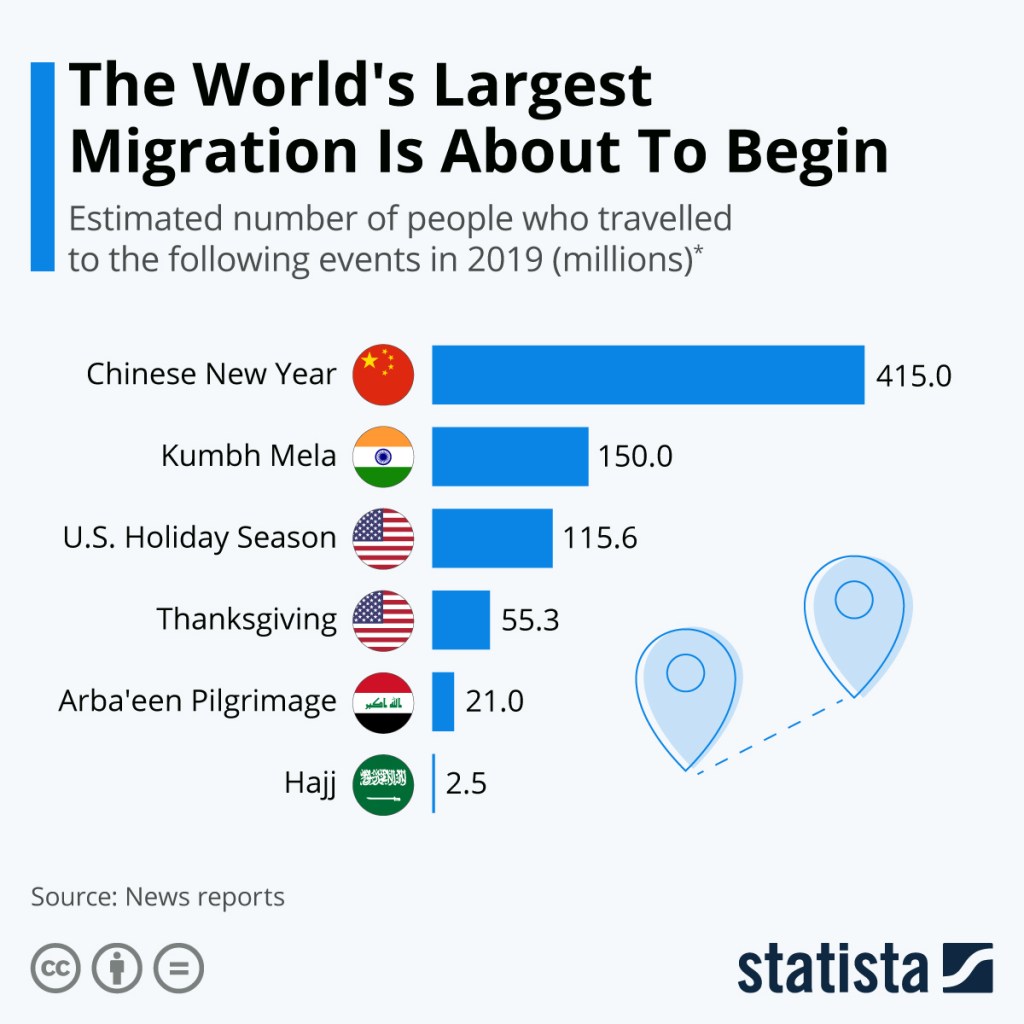
The spread of the Wuhan coronavirus seems to be accelerating. According to LiveScience: “There are now 440 confirmed cases and 17 deaths linked to the virus in China, according to the BBC. That’s up from around 300 cases and six deaths reported just yesterday (Jan. 21).” The virus has also been detected in a number of countries: Thailand, Japan, South Korea, the US, and Taiwan. The world’s financial markets have been rattled by the spread of the virus and its potential for economic damage because of the necessary containment measures. There are legitimate fears of the spread of the virus because the outbreak coincides with the celebrations for the Chinese New Year which is the largest voluntary migration in the world every year: “Chinese New Year is a holiday that inspires humankind’s largest annual migration. Hundreds of millions of travelers jammed into very proximity — planes, trains, automobiles, ships — provide an ideal breeding ground for hostile pathogens….The weeklong holiday is a pivotal period for traveling, shopping and banquet-style feasts that generate growth around the nation. If tens of millions of mainlanders stayed home over the next 10 days, first-quarter GDP might suffer markedly.”
In such circumstances, it is difficult to assess the threat posed by the coronavirus. There are some reports that the incubation period may be as long as several days which makes containment very difficult–someone can travel without any symptoms and get through the containment measures. But as it unfolds, we will get a better idea of serious it actually is. The important thing is to not panic, but to follow the news seriously. Globalization has always been behind the spread of pandemics. The spread was slow during the Black Death of the 14th century. Spanish flu spread rapidly because of the movements of people associated with World War I. Today, diseases spread in a matter of days making containment very difficult.
David Gioe has written a short essay on the failure of the publication of what has come to be known as the “Afghanistan Papers” to arouse public sentiment. Gioe notes that the publication of those papers by The Washington Post did not have the same effect as the publication of the Pentagon Papers on the Vietnam War in 1971. I wrote earlier about the publication of those documents and how they demonstrated that US policy makers had very little sense of any meaningful objectives in prosecuting the war in Afghanistan. Gioe makes three essential points about the differences between the Vietnam and Afghanistan Wars.
“First, there is little at stake for the overwhelming majority of the U.S. population with respect to the ongoing Afghan war. The war in Afghanistan is dragging on into its 19th year, but this would not be obvious from the media coverage, congressional hearings, Pentagon briefings or public activism. As one journalist put it, “From a political point of view, this war is about as important as storms on Saturn.” In contrast to the white-hot issue of the Vietnam War, especially on college campuses where widespread anti-war marches and protests were the norm, most Americans seem to have lost interest in what happens in Afghanistan.
“Unfortunately, apathy may be an entirely rational response. The American people have, broadly speaking, not been asked to serve in Afghanistan. They certainly have not been reluctantly drafted into service, nor asked to pay any sort of special or supplemental tax to cover the staggering cost of the war. The total bill of more than $2 trillion and the lives of more than 2,301 American service personnel seem ever more distant—although 16 U.S. service members died in Afghanistan in 2019. This is actually part of a larger trend that is marked by American uninterest in foreign policy more generally, with some studies revealing that at least 95 percent of Americans have little or no interest in foreign policy.”
Gioe’s second point was that the Afghanistan Papers did not reveal anything that an analyst who studied closely US actions in Afghanistan did not already know: “One need not read all of the SIGAR reports or other scholarship to plainly see that the Afghanistan mission was not going as military and civilian leaders were saying it was. As Jason Lyall noted in the Washington Post, ‘[N]one of these revelations are surprising. … In short, if you’re surprised by the Afghanistan Papers, you haven’t been paying attention.'” Gioe’s third point is that the Afghanistan Papers were released through a very mundane procedure known as the Freedom of Information Act. The release lacked the drama of Daniel Ellsberg’s heroic leaks which ultimately went to the Supreme Court.
Gioe is unquestionably correct in his analysis. But it is a sad commentary on the lack of public interest in a war that has lasted 19 years with little or not oversight or public input.
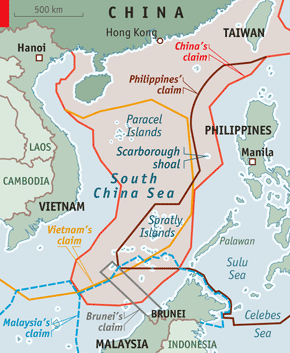
Marvin Ott has written a very good analysis of the current situation in the South China Sea and the Chinese efforts to claim sovereignty over a very large part of that sea. The Chinese claim (known as the “Nine Dash Line which is outlined in red in the map below) conflicts with virtually every other state that has claims on the Sea. Ott explains the significance of the “Nine Dash Line”:
“The South China Sea first becomes a factor in Chinese policy when a cartographer working for the Republic of China (ROC) government created a map with a broken line encompassing almost the entire South China Sea. The map was produced at a moment late in World War II when the allied powers were starting to position themselves for a postwar settlement – including new state boundaries. The line was never explained by the ROC (which had far greater concerns fighting for survival against Mao’s Peoples Liberation Army). When the PRC was established, it simply reproduced the same maps with the same dashed line, again with no explanation. In subsequent years, there were occasional attempts by journalists and scholars to obtain some clarification as to the line’s meaning – to little avail. As a result, the line was almost universally ignored. This was understandable, but a mistake, nevertheless. There were, in fact, a number of reasons to believe that the “nine-dash line” was intended to demarcate the maritime boundary of China. One of them – almost universally overlooked – was that the same line also encompassed Taiwan – which everyone knew China claimed as part of its sovereign territory. China’s official (and nonofficial) silence on this score was best understood in terms of a traditional, and very ancient, Chinese aphorism often cited by Deng: “Bide your time; conceal your capabilities; until you are ready to act.” China might intend to assert sovereign possession of the South China Sea, but in the thirty years following Deng’s accession, China lacked the power to enforce such an assertion. Until that changed, China best keep a low profile on the issue.”
The point is extremely important. There is no way to disentangle the issue of maritime sovereignty from the territorial issue of Taiwan. The US has taken a strong position on freedom of navigation in the South China Sea and has challenged the Chinese on the basis of international law. But that perspective ignores what is likely a more important issue for the Chinese–the status of what it regards as a rogue Chinese province.

 World Politics News