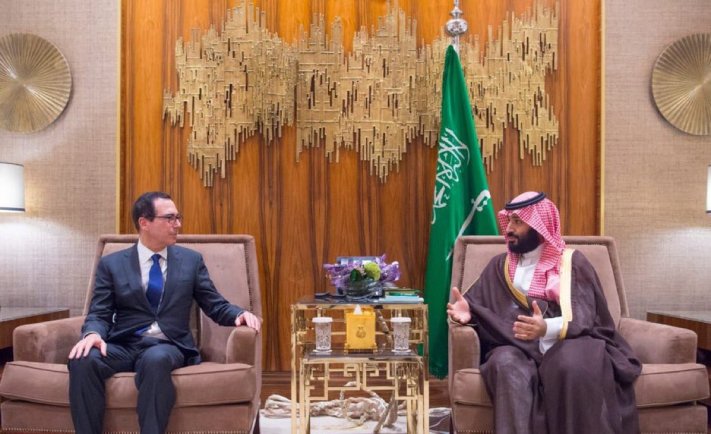
The stories surrounding the death of Jamal Khashoggi continue to swirl, but none of them coalesces into a credible one that exonerates the complicity of the Saudi government. The willingness of the US Administration to tolerate the dissembling of the Saudi government is disheartening. It appears as if nothing will change despite the horrific crime against Khashoggi and the incredible assault on the free press. For example, US Treasury Secretary Mnuchin met with Crown Prince Salman in Saudi Arabia, despite the earlier announcement that Mr. Mnuchin would not attend the investment conference starting tomorrow. There was no announcement of that meeting by the US, but the Saudi government publish a photograph of the meeting. US President Trump continued to stress the need to not jeopardize what he calls the $110 billion arms deal with Saudi Arabia, but the Washington Post has an excellent article on the actual terms of the alleged agreement which are considerably less significant.
“It’s $110 billion. I believe it’s the largest order ever made. It’s 450,000 jobs. It’s the best equipment in the world.”
— President Trump, in remarks to reporters, Oct. 13, 2018
“$110 billion in purchasing. It’s 500,000 jobs, American jobs. Everything’s made here.”
— Trump, in an interview with Trish Regan of Fox Business News, Oct. 16
“Who are we hurting? It’s 500,000 jobs. It’ll be ultimately $110 billion. It’s the biggest order in the history of our country from an outside military.”
— Trump, in an interview with Stuart Varney of Fox Business News, Oct. 17
“I would prefer that we don’t use, as retribution, canceling $110 billion worth of work, which means 600,000 jobs.
— Trump, during a defense roundtable at Luke Air Force Base, Oct. 19
“So now if you’re talking about — that was $110 billion — you know, you’re talking about over a million jobs. You know, I’d rather keep the million jobs, and I’d rather find another solution.”
— Trump, in additional remarks to reporters after the roundtable, Oct. 19
Canada and Germany have announced that they are going to freeze their pending arms deals with Saudi Arabia.
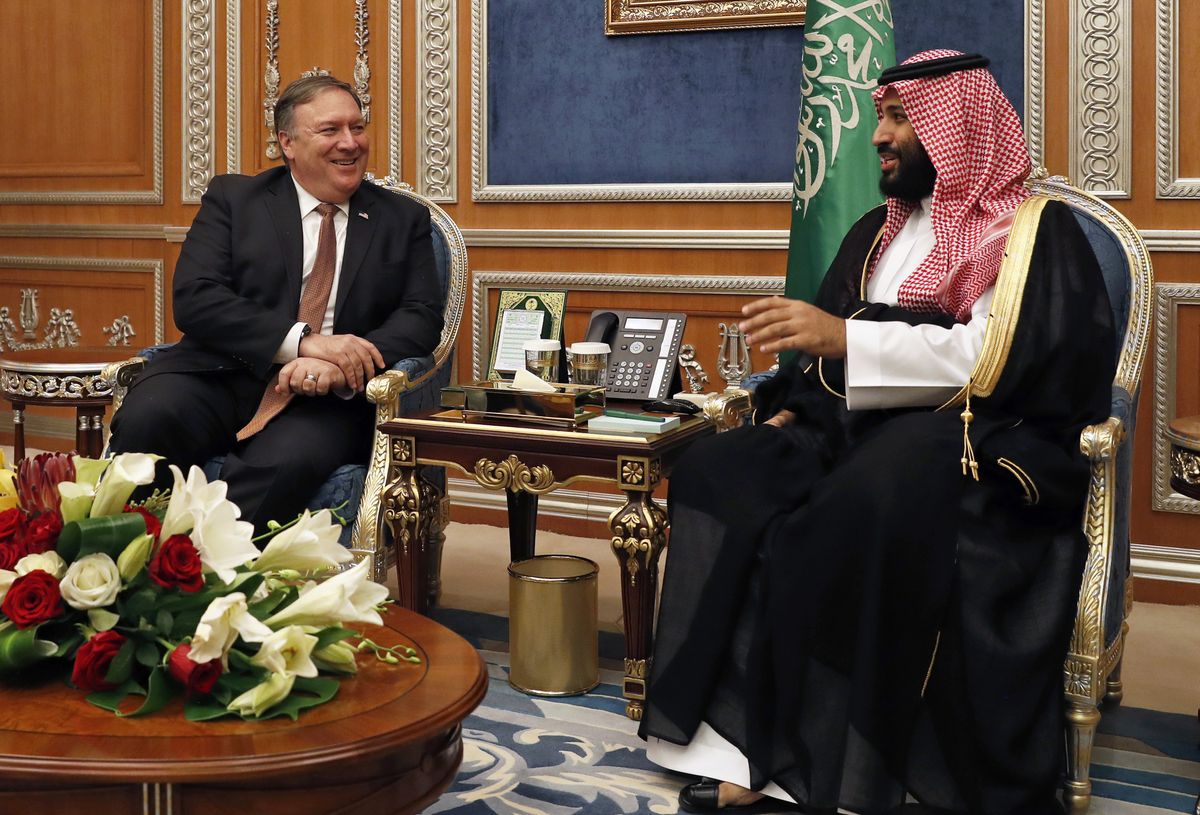
Secretary Mnuchin with Saudi Crown Prince Salman, 22 October 2018
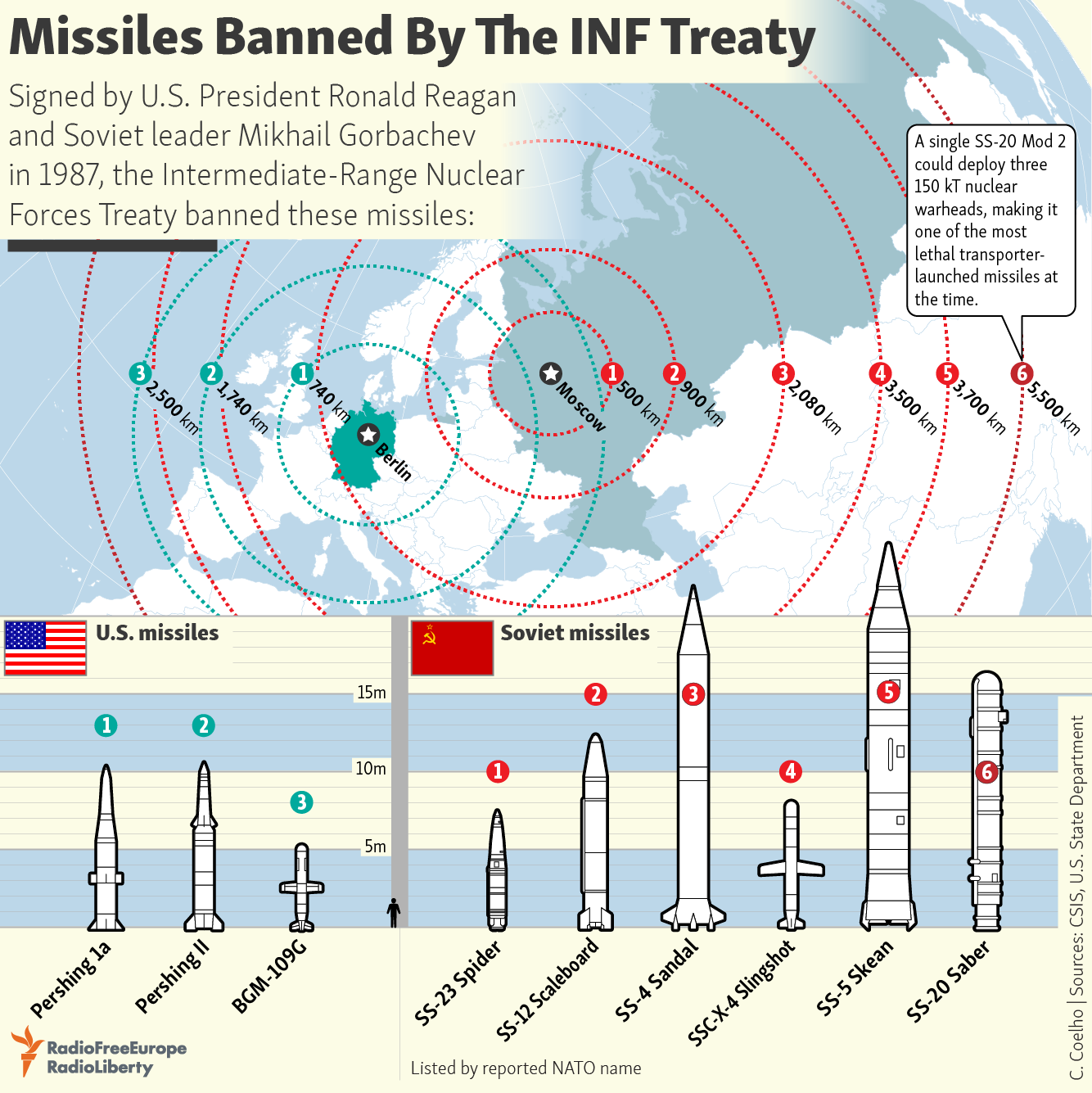
On this day in 1962, US President John F. Kennedy went on national television to accuse the Soviet Union (now Russia) of placing intermediate range nuclear missiles in Cuba, thus provoking the most serious crisis of the Cold War, The Cuban Missile Crisis. It is a crisis that has been analyzed to an incredible degree and remains one of the most complicated case studies in all of world politics. Today, the US made a strong threat to withdraw from one of the most important arms control agreements ever signed, the Intermediate-Range Nuclear Forces Treaty, signed by US President Reagan and Soviet Prime Minister Gorbachev. There is considerable debate over whether both the US and Russia have violated the treaty, but a far more productive approach would have been a decision by the US to put forward an alternative treaty, covering China’s intermediate range missiles as well, up for negotiation. Unilateralism in breaking a treaty very rarely leads to a productive outcome.
The media is reporting that President Trump’s National Security Advisor, John Bolton, is pushing for a US withdrawal from the the 1987 intermediate-range nuclear forces treaty (INF). The treaty prevented a dangerous arms race in Europe which threatened to destabilize nuclear deterrence by introducing smaller weapons with reduced flight time. The fear was that by introducing weapons with more “limited” destructive power and which reduced the time necessary to make strategic decisions, the introduction of these intermediate-range missiles made nuclear war more likely. The New York Times describes the role of the INF:
“The weapons ban — signed in Washington in December 1987 by both men — resulted in the destruction of 2,692 missiles. Washington demolished 846, and Moscow 1,846.
“The American side destroyed missiles it had sent to Western Europe in response to the SS-20, including Pershing II ballistic missiles and ground-launched cruise missiles. The low-flying weapons hug the ground to avoid enemy radars and air defenses.”
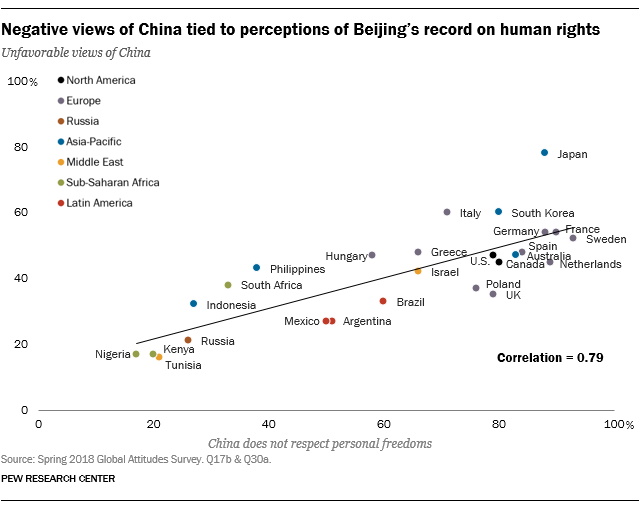
The Pew Research Center has published some interesting results from a poll it conducted on how the global publics view the role of China in world affairs. One of the more interesting findings is that a commitment to human rights is inversely correlated to unfavorable perceptions of increased Chinese participation in global affairs. Nevertheless, there is little disagreement over the fact that China has become a much more important actor in the international system. The US is indicating that it is considering sending one of its naval vessels through the Taiwan Strait, a move that the Chinese would regard as an intrusion in its internal affairs. There is a growing movement in Taiwan toward independence; the Chinese regard Taiwan as a rebel province.
Richard Haas has written a short article on the crisis in US-Saudi Arabian relations following the murder of Jamal Khashoggi. He draws a very important distinction between support for Saudi Arabia and support for Crown Prince Salman. That distinction may, in fact, make very little difference, but it is a distinction that must be recognized before any additional steps are taken. It seems unlikely, however, that neither Prince Salman or US President Trump will acknowledge that difference for a number of reasons that are matters of state concern. Personal diplomacy is a very risky business.
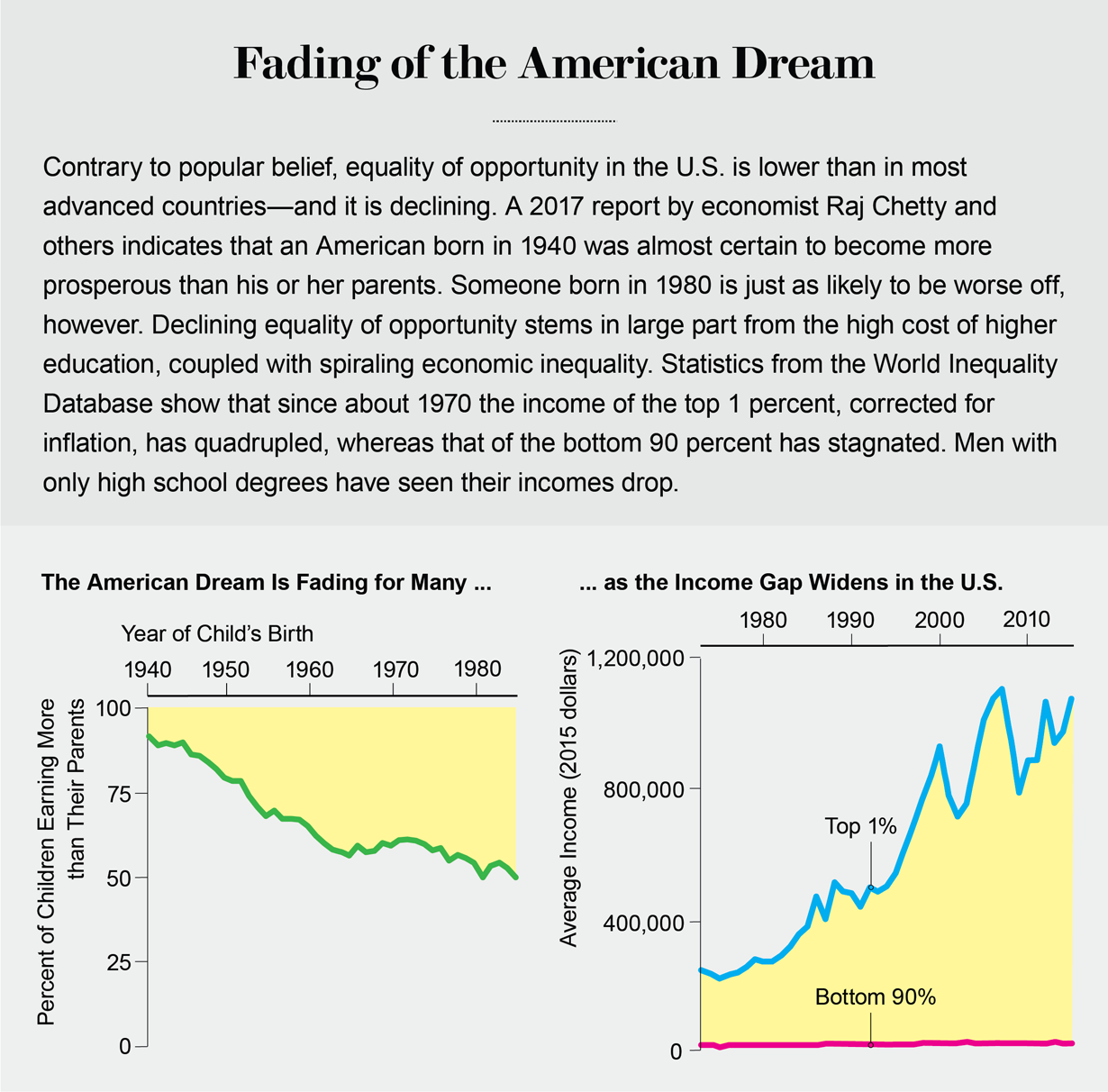
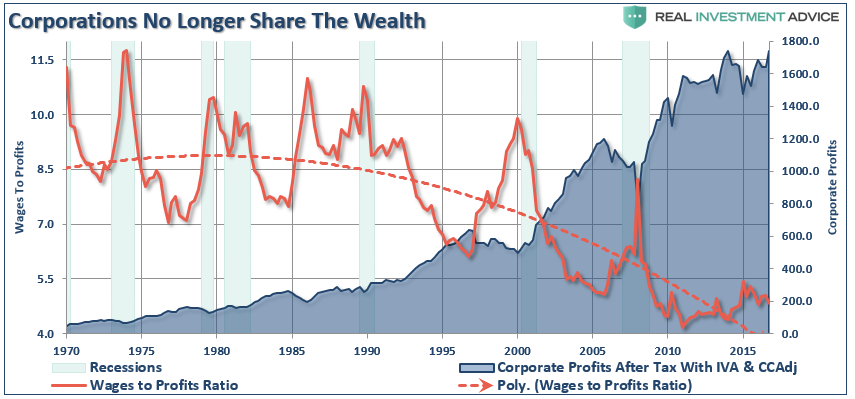
Joseph Stiglitz is a Nobel Prize-winning economist who has written extensively on economic inequality in the US and the world. He has just published a very succinct essay in Scientific American which explains the growing inequality in the world as a result of a system that has been shaped by the confluence of political and economic power to favor the rich.
“Since the mid-1970s the rules of the economic game have been rewritten, both globally and nationally, in ways that advantage the rich and disadvantage the rest. And they have been rewritten further in this perverse direction in the U.S. than in other developed countries—even though the rules in the U.S. were already less favorable to workers. From this perspective, increasing inequality is a matter of choice: a consequence of our policies, laws and regulations.
“In the U.S., the market power of large corporations, which was greater than in most other advanced countries to begin with, has increased even more than elsewhere. On the other hand, the market power of workers, which started out less than in most other advanced countries, has fallen further than elsewhere. This is not only because of the shift to a service-sector economy—it is because of the rigged rules of the game, rules set in a political system that is itself rigged through gerrymandering, voter suppression and the influence of money. A vicious spiral has formed: economic inequality translates into political inequality, which leads to rules that favor the wealthy, which in turn reinforces economic inequality.”
The critical question is whether this inequality will lead to underconsumption, a condition in which there is insufficient demand in an economy to sustain economic activity. We do not know where that tipping point is, but we have passed the tipping point for the Great Depression of the 1930s.
Hurriyet, a major Turkish newspaper is reporting that Mashal Saad al-Bostani, a 31-year-old lieutenant of the Saudi Royal Air Forces and one of the 15 Saudi Arabians who entered and left the Saudi Consulate in Istanbul on the day of Jamal Khoshoggi disappearance, has died in a “suspicious car accident” in Riyadh. US Secretary of State Pompeo said in a statement today that he had advised US President Trump to give the Saudi Arabians a few more days to conduct their investigation. It seems highly likely that the US and Saudi Arabia will come up with a plausible, but not credible, story about rogue agents botching an interrogation in hopes that the news cycle will simply move on in time. US Treasury Secretary Mnuchin has announced that he will not attend the financial conference being sponsored by the Saudi Arabians next week. We will see how the Saudis respond to this decision.
There is an increasingly surreal discussion going on about the death of journalist Jamal Khashoggi. He entered the Saudi Consulate in Istanbul 15 days ago and has not been seen since. There are widespread reports of a audio documenting Khashoggi’s torture, dismemberment, and death, but we have little direct confirmation of what the audio reveals. The closest direct description of the audio evidence that I have been able to find was revealed by Middle East Eye:
“It took seven minutes for Jamal Khashoggi to die, a Turkish source who has listened in full to an audio recording of the Saudi journalist’s last moments told Middle East Eye.
“Khashoggi was dragged from the consul-general’s office at the Saudi consulate in Istanbul and onto the table of his study next door, the Turkish source said.
“Horrendous screams were then heard by a witness downstairs, the source said.
“‘The consul himself was taken out of the room. There was no attempt to interrogate him. They had come to kill him,’ the source told MEE.
“The screaming stopped when Khashoggi – who was last seen entering the Saudi consulate on 2 October – was injected with an as yet unknown substance.
“Salah Muhammad al-Tubaigy, who has been identified as the head of forensic evidence in the Saudi general security department, was one of the 15-member squad who arrived in Ankara earlier that day on a private jet.
“Tubaigy began to cut Khashoggi’s body up on a table in the study while he was still alive, the Turkish source said.
“The killing took seven minutes, the source said.
“As he started to dismember the body, Tubaigy put on earphones and listened to music. He advised other members of the squad to do the same.
“’When I do this job, I listen to music. You should do [that] too,’ Tubaigy was recorded as saying, the source told MEE.
“A three-minute version of the audio tape has been given to Turkish newspaper Sabah, but they have yet to release it.”
This description may or may not be accurate. The Turks claim to have the audio evidence but they have yet to release it. That reluctance may be due to a desire by the Turks not to reveal their surveillance of the Saudi Consulate. Or it may be because the Turks are using the tape to force concessions from Saudi Arabia on matters concerning Syria, the Kurds, or the location of gas pipelines from Qatar.
What we do know is that US President Trump sent Secretary of State Mike Pompeo on a fact-finding mission. The photograph of the meeting between Pompeo and Saudi Crown Prince Salman is strikingly dissonant–the smiles belie the seriousness of the matter being discussed.
Moreover, when Pompeo left Turkey, he made this comment about his fact-finding mission to the press: “I don’t want to talk about any of the facts. They [the Saudis] didn’t want to either, in that they want to have the opportunity to complete this investigation in a thorough way.” Deferring to the Saudi self-interrogation of this crime is a pathetic position. Obviously, the US is not really interested at all in finding out the truth. It is also not clear how much financial interests are driving US policy toward Saudi Arabia.
More importantly, it appears as if Pompeo failed to negotiate some sort of rapprochement between Turkey and Saudi Arabia. Instead, it appears as if President Trump’s defense of the Crown Prince has angered Turkish President Erdogan. US-Turkish relations are already fragile, but if the charges against the Crown Prince are proven, Turkey will emerge as a more powerful actor in the Middle East.
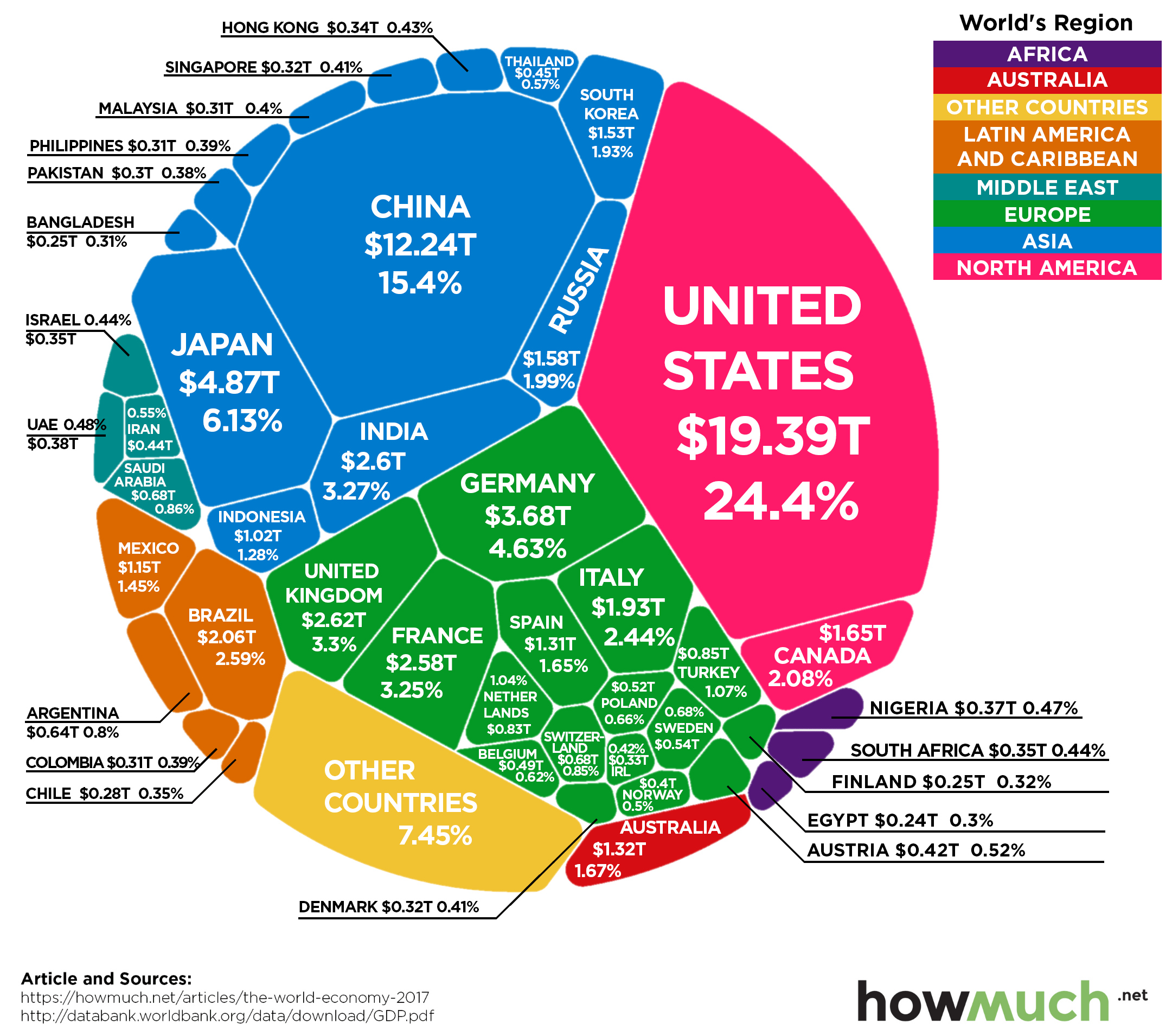
The global economy produces about $80 trillion worth of “stuff” every year. That figure measures what the global market counts as economically valuable as determined by the prices at which goods and services are sold. It is not necessarily what each one of us might regard as valuable (there are many things for sale in the market that many of us would never think of buying, and far more things that many of us would never consider selling). But it is a measure of what people are willing to buy and sell, and that economic activity is broken down by states.
The fiscal year just ended for the Federal government and it ended with a $779 billion deficit. That deficit is 17% more than it was last year and the increase is quite dramatic given that the country has a booming economy and is not fighting a major new war. Government spending last year only grew by 3% so the deficit is largely the consequence of much lower tax receipts because of the tax cuts passed by Congress last year. Most strikingly, corporate tax revenues declined by 31% despite large increases in the profitability of companies in the US because the corporate tax was reduced from 35 to 21%: “Corporate profits jumped 15.4% year-over year in the first half of 2018, compared with a rise of just 6.1% in the first half of 2017, before the tax cuts went into effect. That’s the biggest semi-annual jump in profits since 2012.” The tax cuts were passed on the assumption that they would increase economic growth substantially and therefore tax revenues. That assumption does not appear to be valid. At some point, the deficit will become unsustainable, at which point taxes will have to be raised or government spending has to be cut. How that pain will be distributed is a question of great political moment.
It is very difficult to determine US policy in Syria. President Trump made it very clear when he was a candidate that he favored a US pullout from the country. But US commitments to Israel and Saudi Arabia to contain Iran in the region make keeping that promise. President Trump’s National Security Adviser, John Bolton, has been quoted as saying: “We’re not going to leave as long as Iranian troops are outside Iranian borders and that includes Iranian proxies and militias.” Colin P. Clarke and Ariane Tabatabai have written an essay for The Atlantic which outlines the long-term difficulties of the inability to define precisely US goals in Syria.
US President Trump threatened Saudi Arabia with “severe punishment” if the allegations concerning the disappearance of Washington Post journalist, Jamal Khashoggi. National Public Radio relates the Saudi response:
“‘The Kingdom also affirms that if it receives any action, it will respond with greater action,’ Saudi Arabia’s state-run news agency said Sunday, ominously noting that the country plays ‘an influential and vital role in the global economy.’
“Citing an ‘official source,’ the Saudi Press Agency added that Riyadh ‘affirms its total rejection of any threats and attempts to undermine it.’ Rather, if Saudis face ‘political pressures’ such as accusations or sanctions, ‘the outcome of these weak endeavors, like their predecessors, is a demise.'”
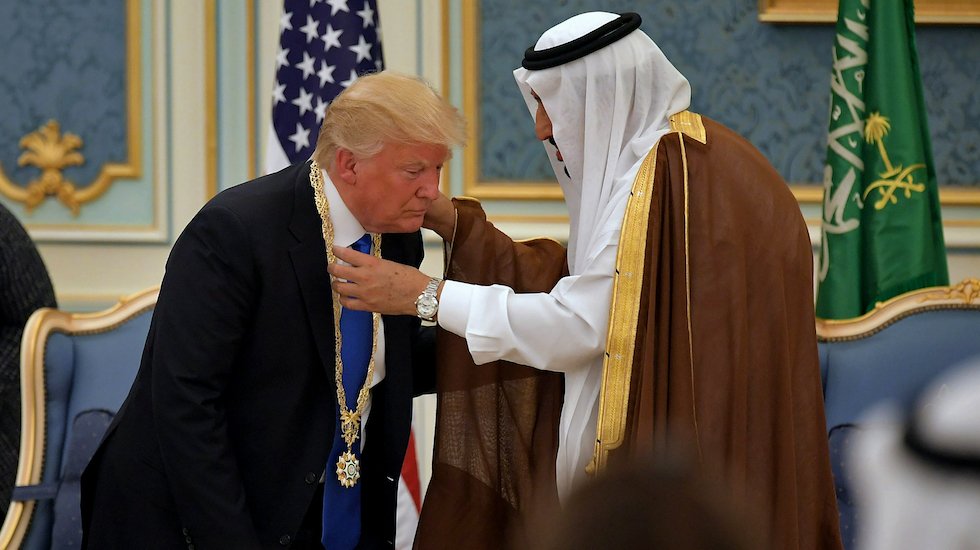
There is considerable confusion about the evidence which Turkey purports to have proving that Khashoggi was murdered and dismembered in the Saudi Embassy in Istanbul. That confusion most likely stems from the fact that Turkey does not wish to reveal how it has “bugged” the Saudi Embassy. But several media outlets report that the evidence has been shared with the US. The controversy has threatened a major conference sponsored by Saudi Arabia whose official title is the “Future Investment Initiative” but is often referred to as “Davos in the Desert” which is scheduled for 23-25 October. Many participants have dropped out of the conference and pressure is being applied to many more, including US Treasury Secretary Stephen Mnuchin, to cancel as a protest. The US-Saudi relationship is murky given the private financial interests President Trump has with Saudi citizens which have yet to be fully disclosed.
One of the most important parties in German Chancellor Angela Merkel’s ruling coalition is the Christian Social Union (CSU) which has ruled in the southern German state of Bavaria for many years. For the first time since the 1950s, the CSU appears to have lost its majority in the Bavarian Parliament. The CSU lost support on the issue of migration, and the pro-immigration party, the Greens, gained significant support. But the right-wing party, Alternative for Germany, earned 11% of the vote and will therefore have seats in the Bavarian Parliament. The loss raises serious questions about Merkel’s already fragile coalition, and an increasingly polarized German electorate with gains on both the right and the left. A weaker German government is not good news for the beleaguered European Union.
The US and the Taliban have been meeting face-to-face for several years in Qatar to discuss a possible end to the conflict in Afghanistan. The meetings have not yielded substantive results, but there are reports that the two sides are discussing a possible pull-out of the roughly 14,000 US troops in the country. The talks are only preliminary and it is difficult to see how they will move forward, but the mere fact that the topic is being entertained as a topic is a new position for the US. The Taliban controls more territory than it did at the time of the US invasion in 2001, but it cannot control any of the major cities for any period of time. But the people of Afghanistan have made it clear that they want the fighting to end.
Ben Rhodes is a former deputy national-security adviser to Barack Obama and he has written an excellent backgrounder on the US-Saudi Arabian relationship for The Atlantic. The Trump Administration has elevated Saudi Arabia as perhaps its second-most important ally in the Middle East–second only to Israel. Saudi Arabia has emerged as an important supporter of the still-yet-to-be-released Middle East peace program which will undoubtedly ask the Palestinians to make incredible concessions to Israel. The Trump Administration hopes that Saudi Arabia can help to dampen the Arab rage that would follow from such a deal. The US is also depending upon Saudi Arabia to serve as a bulwark against the expansion of Iranian influence in the region, even though Saudi Arabia and its Gulf allies are significantly weaker than Iran. The price of the US support, however, has been high. It has been forced to accept Saudi war crimes in the Yemeni civil war, to say nothing about the persecution of dissidents in Saudi Arabia, to back Saudi Arabia in its dispute with a far closer US ally, Canada, and to back a massively ineffective embargo against Qatar, which hosts one of the largest US naval bases in the world. The most recent outrage over the possible murder of a journalist, Jamal Khashoggi, suggests that Saudi Arabia believes that the US will do nothing to oppose whatever actions it conducts in the region. In short, the US appears to be the junior partner in this alliance.
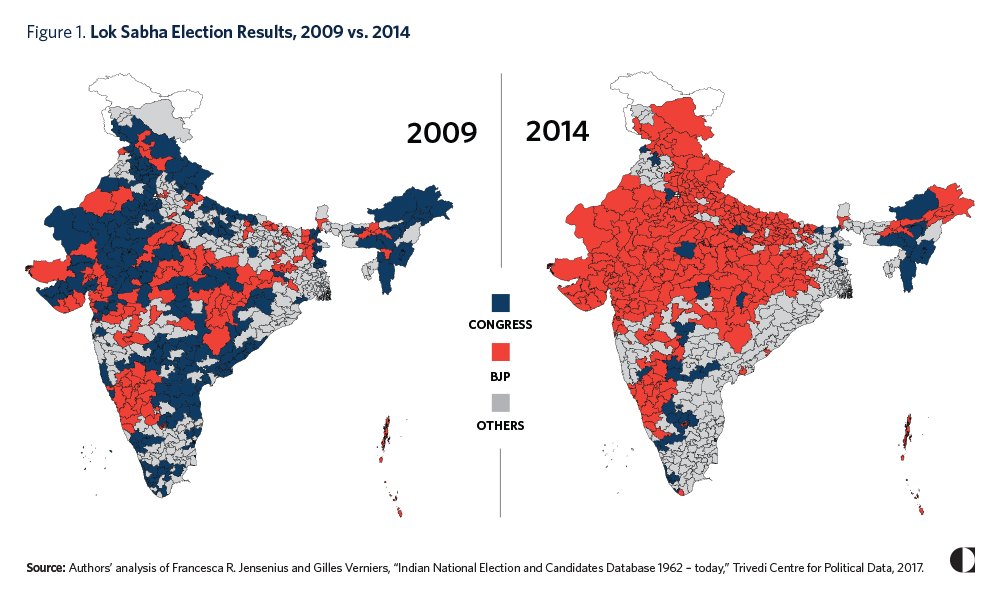
The Bharatiya Janata Party (BJP) came to power 4 years ago in India, and it has been consolidating its power very systemically. Its appeal is largely based on its emphasis on India as a Hindu nation, largely displacing the formerly dominant Indian Congress Party whose platform emphasized secular nationalism. Under the leadership of Prime Minister Narendra Modi the party has engineered a number of electoral victories, although it has also suffered some setbacks. Interestingly, however, it is beginning to appear as if Hindu nationalism has also set off other nationalisms within India, mitigating the power of a single idea of Hinduism. What has happened in India since 2014 mirrors much of what has been going on in the rest of the world. But the real question now is how nuanced the idea of nation can become–it can be a truly fragmenting ideology.
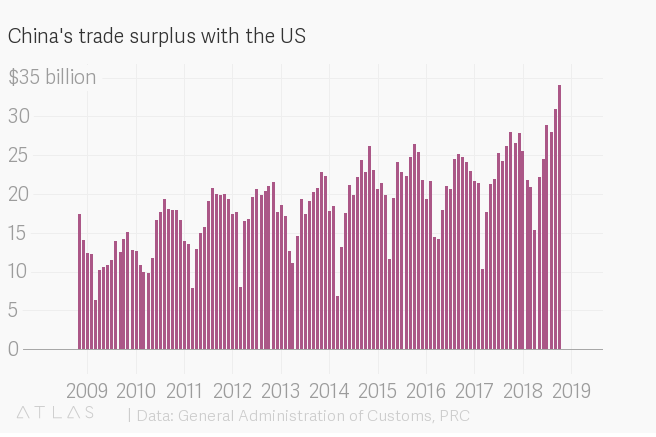
“For January-September, China’s trade surplus with the United States was $225.79 billion, compared with about $196.01 billion in the same period last year, Reuters calculations showed.
“Overall, China’s dollar-denominated September exports surged 14.5 percent from a year ago, beating a Reuters analyst poll forecasting 8.9 percent growth in the same period. In August, Chinese exports grew 9.8 percent from a year ago.
“In September, imports into China grew 14.3 percent from a year ago, missing analysts’ predictions of 15 percent growth and slowing from growth of 19.9 percent for the month of August.”
It is far too soon to think that the US moves have “failed” to change Chinese trade behavior, but it does seem to be clear that the fear of a trade war is beginning to affect economic growth globally. Alex Ward assesses the effects of a trade war on the world:
“On Tuesday, the IMF released a major report that projected the world’s economy will grow by 3.7 percent, which is 0.2 points lower than they had estimated in April. That’s the same rate of growth as 2017, signaling a slight slowdown — and Trump’s trade policies are a major reason why.
“'[T]he forecast for 2019 has been revised down due to recently announced trade measures, including the tariffs imposed on $200 billion of US imports from China,’ the IMF’s “World Economic Outlook” report concluded.”
“A three-day synod presided over by the Ecumenical Patriarch in Istanbul, seat of the global spiritual leader of roughly 300 million Orthodox Christians, endorsed Ukraine’s request for an “autocephalous” (independent) church.
“The synod will ‘proceed to the granting of Autocephaly to the Church of Ukraine,’ a statement said.
“The synod took several decisions to pave the way for Ukraine to set up its church, including rehabilitating a Ukrainian patriarch excommunicated by the Russian Orthodox Church for leading a breakaway church in the early 1990s.”
The move comes as Ukraine seeks to further the distance between it and Russia after the Russian invasion of Ukraine in 2014 but has been developing since the dissolution of the former Soviet Union: “The church known as the Moscow Patriarchate, which is aligned with the Russian Orthodox Church, earlier dominated in Ukraine but has been challenged by a rival known as the Kiev Patriarchate formed after the 1991 break-up of the Russian-dominated Soviet Union.” The independence of the Ukrainian Church is a clear indication that many believe that the Moscow Patriarchate is a tool of the Russian state.
Thomas Friedman is a columnist for the New York Times who often writes about world politics, sometimes insightfully and sometimes from a very parochial point of view. His op-ed in today’s paper is worth reading. I think he overestimates the power of the international liberal order since 1945 to contain bad behavior and certainly underestimates the strength of US allies to support that order. But the op-ed does offer a good way to think about the unwillingness of the current US administration to call out illiberal behavior and what the consequences of not having a strong voice for human rights are for the world as a whole. The position of the Trump Administration on the disappearance of a Washington Post journalist, Jamal Khashoggi, is illustrative. When pressed on whether the US should cancel a $110 billion arms deal with Saudi Arabia because of suspicions that the Saudi government had killed Khashoggi, the Post reports:
“During an interview Wednesday night on Fox News, Trump said he wanted to find out what happened to Khashoggi but balked when asked if he would support blocking further arms sales to Saudi Arabia, as some senators have suggested.
“‘Well, I think that would be hurting us,’ Trump said. ‘We have jobs. We have a lot of things happening in this country. We have a country that’s doing probably better economically than it’s ever done before. Part of that is what we are doing with our defense systems and everybody is wanting them and frankly, I think that would be a very, very tough pill to swallow for our country.’”
The recent Intergovernmental Panel on Climate Change (IPCC) report was very depressing, giving the world about 12 years to make the changes necessary to avoid a 2C degree increase in global temperatures. From that perspective, the possibilities for hopeful change seem remote. But there are possible leverage points that make change more possible. Even though most of us consume and emit greenhouse gases, very few of us actually produce the fuels that emit these gases. The number of entities that actually produce oil, coal, and natural gas responsible for greenhouse gases is actually very small. According to CDP Worldwide (CDP): ” Over half of global industrial emissions since human induced climate change was officially recognized can be traced to just 25 corporate and state producing entities.” These entities are:
1. China (Coal) 2. Saudi Aramco 3. Gazprom (Russia)
4. National Iranian Oil 5. ExxonMobil (US) 6. Coal India
7. Russia (Coal) 8. Pemex (Mexico) 9. Shell (Britain/The Netherlands)
10. CNPC (China National Petroleum) 11. BP (Great Britain) 12. Chevron (US)
13. PDVSA (Venezuela)
14. ADNOC (Abu Dhabi) 15. Poland Coal 16. Peabody (US)
17. Sonatrach (Algeria) 18. Kuwait Petroleum 19. Total (France)
23. Lukoil (Russia) 24. Rio Tinto (Australia) 25. Nigerian National Petroleum.
The problem is that these entities are also powerful politically so it will be difficult to get them to change course. But there is growing investor sentiment to move toward green energy, and that movement is only gaining strength. The Guardian notes:
“But for many the sums involved and pace of change are nowhere near enough. A research paper published last year by Paul Stevens, an academic at think tank Chatham House, said international oil companies were no longer fit for purpose and warned these multinationals that they faced a “nasty, brutish and short” end within the next 10 years if they did not completely change their business models.”
South And North Korea have apparently made progress in tamping down the hostility between the two states. Much of this progress is due to South Korean President Moon and his strong desire for reconciliation between the two. According to Reuters:
“The two Koreas agreed to halt military drills, set up a no-fly zone near the border and gradually remove landmines and guard posts within the Demilitarised Zone, among other steps.
“The deal was sealed by South Korean President Moon Jae-in and North Korean leader Kim Jong Un during their third summit in Pyongyang on Sept. 18-20.”
Apparently, the US is not pleased by these moves because they do not specifically relate to the issue of denuclearization which Washington defines as the central issue. In a rare display of disunity, US Secretary of State Mike Pompeo has expressed US displeasure with these moves.

 World Politics News