China has ambitiously funded a number of development projects in poorer countries. Initially, these investments were welcomed as an alternative to the funding that came from rich countries or international development agencies. But the distinctive feature of most Chinese investments is that they use the projects themselves as collateral in case the loans cannot be repayed. This strategy has netted China with some very valuable properties around the world. The most recent project to come under Chinese control is the Kenyan port of Mombasa. According to the Taiwan News (admittedly, not a China-friendly media outlet):
“When the Chinese lender granted the loan to the Kenyan government, somehow the KPA signed on as a borrower. Somehow Kenya’s government agreed that the port “would not be protected by sovereign immunity since the Government waived the immunity on the Kenya Ports Assets” by virtue of KPA signing on as a borrower, according to the Auditor General.
“It is becoming increasingly clear that China’s designs on the nations of Africa are anything but benevolent. Kenya appears to be lining up behind Zambia, which is slated to lose its international airport, as well as its national electricity grid because of defaults on Chinese loans.
“African nations must wake up to China’s new form of colonialism that is chipping away at their critical infrastructure one major asset at a time.”
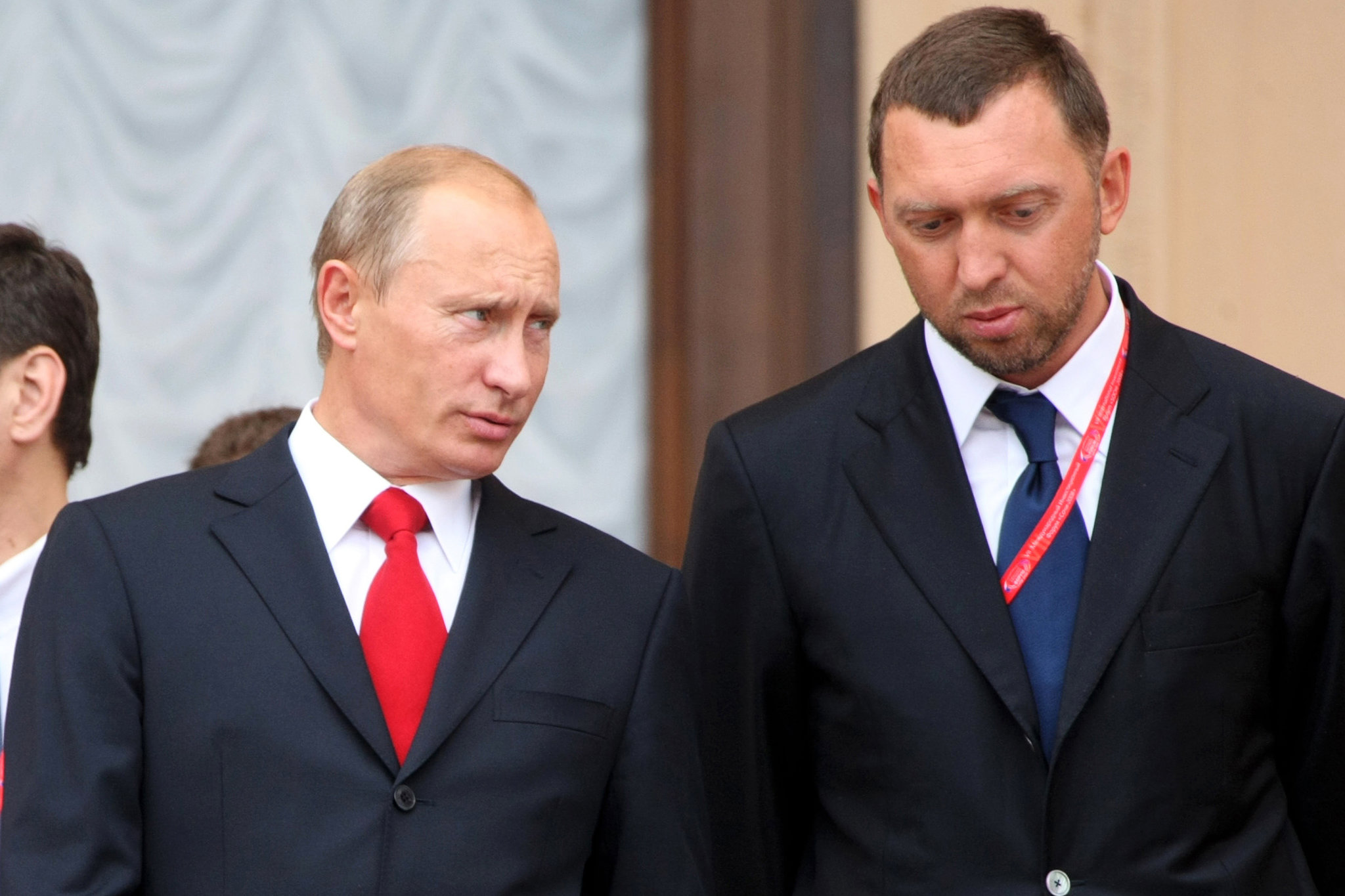
There is an interesting report by Time magazine concerning the relationship of former Trump campaign manager, Paul Manafort, and a Russian oligarch named Oleg Deripaska. According to the report:
“When he joined the campaign in the spring of 2016, Manafort was nearly broke. The veteran political consultant had racked up bills worth millions of dollars in luxury real estate, clothing, cars and antiques. According to allegations contained in court records filed in the U.S. and the Cayman Islands, he was also deeply in debt to Boyarkin’s boss, the Russian billionaire Oleg Deripaska, who was demanding money from Manafort over a failed business deal in Ukraine and other ventures.
Manafort was involved to an uncertain degree in the independence of Montenegro, which was once part of the former Yugoslavia. Russia was centrally involved in that movement, supporting a pro-Russian party because it feared that Montenegro might apply for membership in NATO. The Russian effort failed and Montenegro ultimately did join the alliance, leading US President Trump to make a snide remark last July. According to the Washington Post:
“Earlier this week, President Trump identified a seemingly unlikely threat to world security: Montenegro, a tiny Balkan country of just over 600,000 people.
“Trump was responding to a question from Fox host Tucker Carlson, who asked the president a hypothetical question: ‘Why should my son go to Montenegro to defend it from attack?’ Carlson was referring to Article 5 of the Washington Treaty, which requires NATO members to aid other member states if they are attacked. The article has been invoked only once, following the Sept. 11, 2001, terrorist attacks on the United States.”
The reason why the story is so interesting is that on 19 December, the US Treasury lifted the sanctions on Rusal, an aluminum company owned by Deripaskov, which had a serious dispute with Montenegro over aluminum. Treasury said the sanctions would be lifted because Rusal said that Deripaska’s interest in the firm had fallen below 50%. How the US Treasury verifies such matters in Russia is beyond me. An alternative explanation could be that the Treasury is offering relief to Deripaska in return for silence on some campaign-related matters. Let us hope that Special Counsel Mueller can shed some light on this matter.
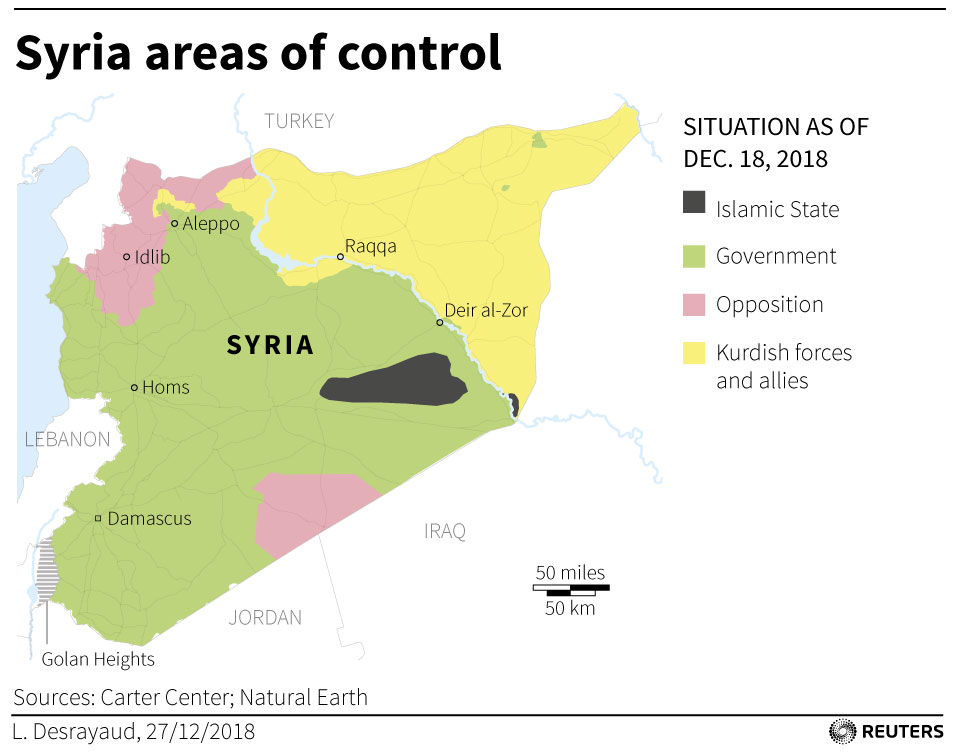
The Syrian Kurds have apparently reached an agreement with the Syrian government in order to forestall an attack by Turkey. Syrian government forces have entered the town of Manbij which was under Kurdish control and the Kurds, which once opposed the Assad government, have decided that life under Syrian control will be better than a Turkish assault. The decision most likely had the blessing of Russia which has a scheduled meeting with Turkey tomorrow to discuss the civil war in Syria. The fact that the Kurds, once a staunch ally of the US, now seek protection from Russia is a stunning reversal of the balance of power in the Middle East. The US clearly has moved to the sidelines. That shift has unnerved the Israelis. Daniel Shapiro notes the effect of the US betrayal of the Kurds on Israeli decision-making:
“Israelis see the Kurds—a moderate, pro-Western, Muslim community that eschews anti-Israel sentiment, and with whom Israel has worked quietly—as exactly the kind of element that the Middle East needs more of. They constantly press for more American support for the Kurds. Israel, against American wishes, encouraged the Kurds of northern Iraq in their ill-advised independence referendum of 2017. For Israel, the U.S. abandonment of the Kurds represents both a strategic and an emotional blow.”
It is very difficult to see how Israel can continue to rely as heavily as it has in the past on the US as it tries to contain Iranian influence in the region. I suspect that the Israelis will begin to take stronger measures to counter Iranian power.
The trade war between China and the US continues, but there seems to be some movement. For the first time, China is buying US rice, an odd transaction since the US is hardly a prime location for growing rice. But there are also reports that the Chinese have begun to buy soybeans from the US. These are likely overtures from the Chinese to find a way to break out of the trade impasse. It remains to be seen whether the Trump Administration will reciprocate with concessions. As it is, the trade war as been a very expensive proposition for both countries. Reuters has a good article on how the trade war has affected the US economy so far.
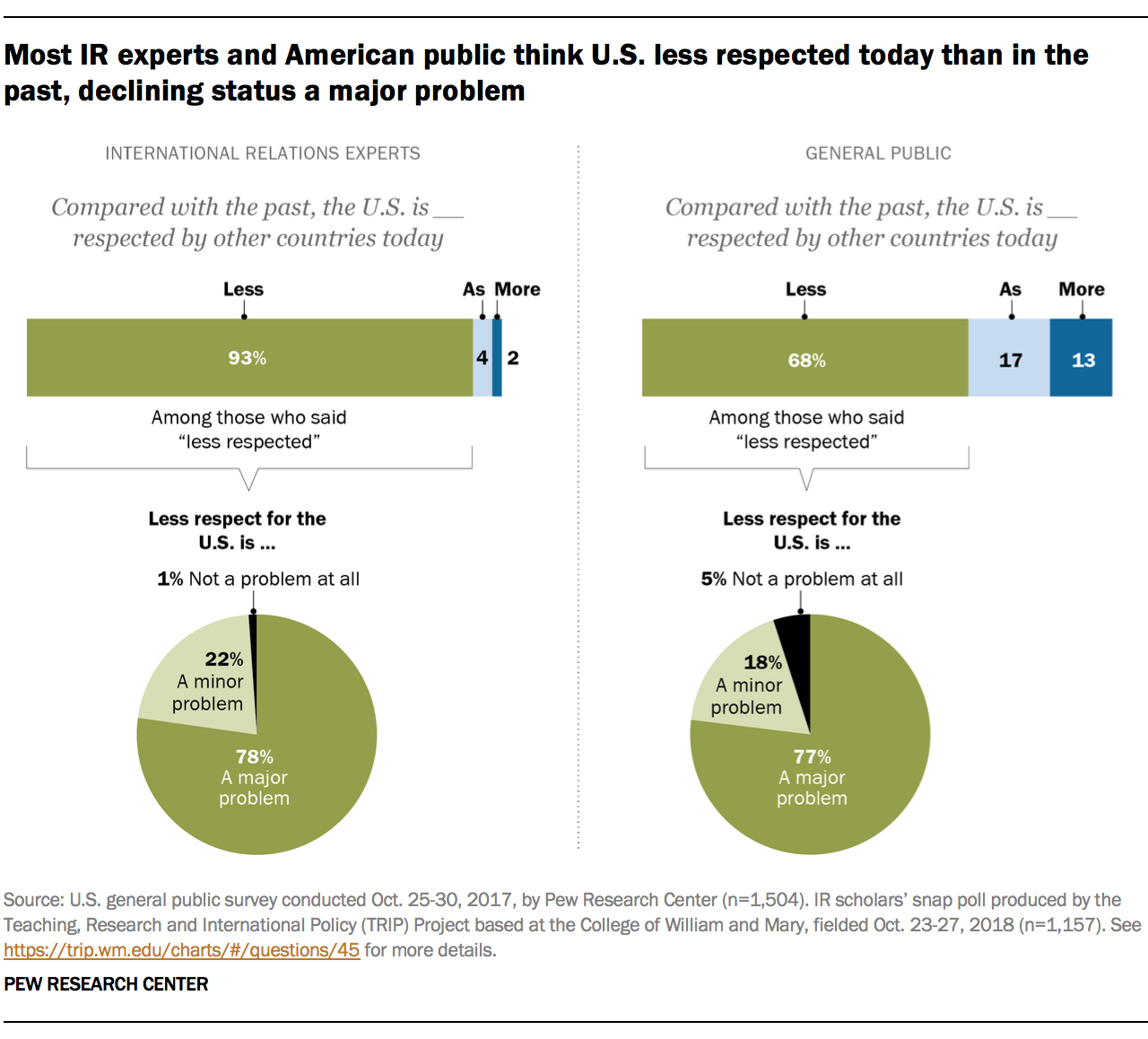
The Teaching, Research and International Policy (TRIP) Project at the College of William and Mary conducted a poll of 1,157 international relations scholars in October 2018 on their perception of how respected the United States is in the world. The poll indicates that “93% say the U.S. is less respected by other countries today compared with the past.”
Interestingly, the poll found no significant differences in the perception of respect between realist and non-realist scholars in IR:
“Among the IR experts, about eight-in-ten (82%) self-described adherents to the realist school of IR theory – which stresses constant competition between states in pursuit of power – believe the U.S. is less respected than in the past, compared with 18% of realists who say there is as much or more respect for America abroad. Meanwhile, about 95% or more of those who subscribe to constructivism or liberalism – which focus less on power politics in favor of shared ideas or mutual international cooperation – and those who identify with no particular school of IR thought think the U.S. is less respected. “
There were also differences between Republicans and Democrats on the level of respect, but that finding is not at all surprising.
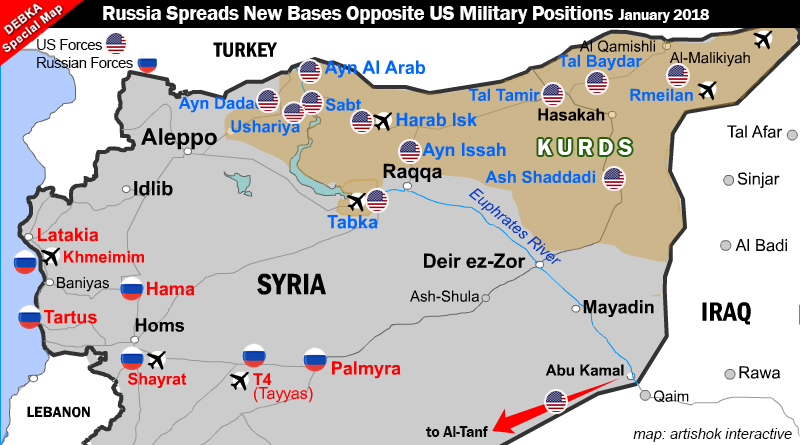
The Syrian Kurds, abandoned by the US, are turning to Russia and the Assad government of Syria for protection against a likely Turkish attack. The Kurds currently occupy much of Syria east of the Euphrates River and have been trying to establish Kurdish control over the region. US troops had been protecting the Kurds against both Russian and Turkish attacks, but their departure leaves them vulnerable. The Turks are more concerned about Kurdish control of the region since they fear that a Kurdish enclave in Syria would encourage Kurds in Turkey to demand greater autonomy. The Russians only care that Assad remain in power, and now that US troops have left, the Kurds lack the ability to overthrow Assad. The Kurds fear Assad less than they fear Turkey.
Russia is claiming that it has successfully developed a hypersonic missile that can fly 20 times the speed of sound. Russia also claims that the missile is maneuverable and can avoid an anti-ballistic missile system. The missile system, called Avangard, was developed in response to the US decision to leave the Anti-Ballistic Missile (ABM) Treaty in June 2002. Both the US and China are also developing hypersonic missiles, but their development is based on the assumption that ABM systems can be effective, an assumption that has never been proven to be true. But a hypersonic arms race is all but inevitable even if they are not necessary.
I hope that everyone is enjoying the holidays and all have the chance to reflect upon the people in our lives who keep us going and for whom we struggle to make a better world. Even though at times we do not feel it, peace is always within our hearts. We just need to set it free and embrace the ones we love. I am going to enjoy some time off and treasure the moments I can spend with my beautiful granddaughter, Emilia.
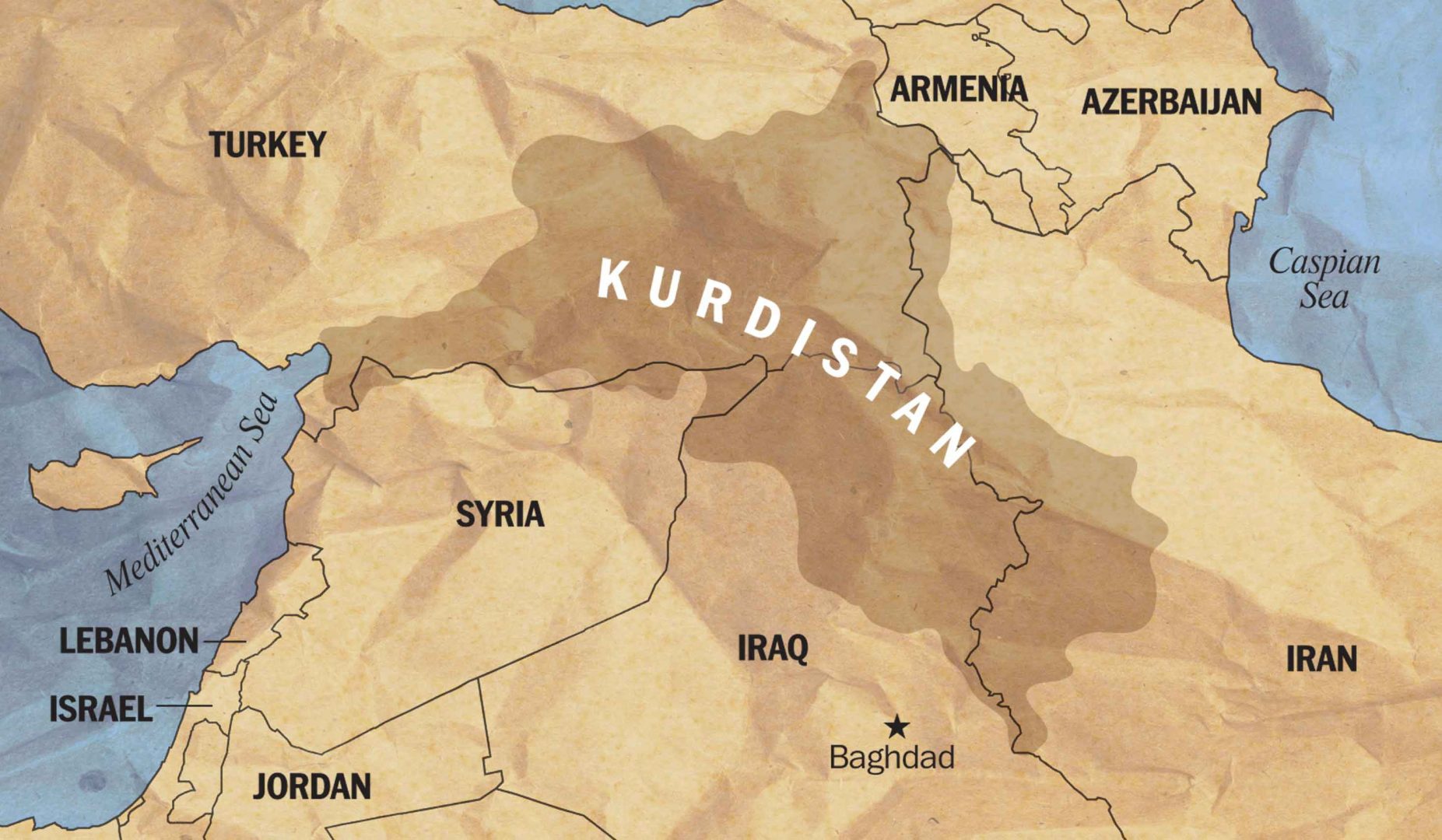
Now that the US has decided to pull its troops out of Syria, we need to keep watch on what Turkey decides to do about the impressive military strength of the Kurdish forces that have been fighting alongside the US against ISIS. Turkey has a long history of animosity toward the Kurds who comprise one of the largest non-Turkic ethnic groups in the country. The Kurds are perhaps the largest nation (estimated population is between 25 and 35 million) in the world that lacks a state–instead the Kurdish nation lives under control of four different states: Turkey, Iraq, Iran,and Syria. After World War II the Treaty of Sevres (1920) signed between the victorious allies (Britain and France) and the defeated Ottoman Empire promised the creation of an independent state called Kurdistan (as well as an independent Armenia), but that promise was rescinded in the Treaty of Lausanne (1923) which set the boundaries of modern Turkey.
As the Syrian civil war unfolded after it began in 2011, Syrian Kurds organized themselves into militias called People’s Protection Units (YPG) which constituted the armed wing of the Syrian Kurdish Democratic Union Party (PYD). The YPG constituted the largest element of what came to be known as the Syrian Democratic Force which was the main ground-fighting force supported by the US. The YPG is estimated to be comprised of between 30 and 60,000 troops, most of them now well battle-hardened. Turkey fears that this militia will now be used to create an independent Kurdistan which will attract Turkish Kurds to demand independence as well.
“Turkey’s defense minister said Thursday that Kurdish forces in Syria would be ‘buried’ in their trenches in any Turkish operation to rout the fighters from the border, just one day after President Trump announced a withdrawal of U.S. troops from the country.
“Speaking from the Qatari capital, Doha, Hulusi Akar said Turkey was preparing ‘intensely’ for a military offensive east of the Euphrates River in Syria, where Kurdish-led forces have battled the Islamic State militant group.
“The fighters have dug trenches and tunnels in the area in anticipation of the operation, Akar said, according to Turkey’s official Anadolu news agency.
“’But whatever they dig . . . when the time comes they will be buried in the trenches,’ he said. ‘Of this there should no doubt.’”
The US decision is an abject betrayal of the Kurds who had fought valiantly in support of US objectives. One thing to keep an eye on is the possibility that Israel might move in to serve as a more active supporter of the Kurds. Turkey and Israel have recently been trading diplomatic barbs, with Erdogan making anti-semitic comments after Israeli Prime Minister Netanyahu accused Turkey of committing “massacres” against the Kurds. An Israeli-Kurdish alliance would also serve Israeli concerns about the expansion of Iranian influence in Syria. That possibility places Russian President Vladimir Putin in the difficult situation of negotiating between the Iranian-Assad alliance and the Israeli-Kurdish alliance. But that possibility is also a signal of Russian pre-eminence in the Middle East.
US President Trump picked Patrick Shanahan, the Deputy Secretary of Defense to succeed General Mattis for Secretary of Defense. The appointment takes effect on 1 January, two months earlier than Mattis had scheduled. Mattis was going to resign on 28 February so that he could manage a smoother transition to the next Secretary. But it appears as if Mr. Trump wanted a change earlier. Shanahan comes with thirty years of experience with the Boeing Corporation but no military experience. In his 2017 confirmation, Shanahan described himself in these terms:
“‘I believe my skill set strongly complements that of Secretary Mattis,’ Shanahan said. ‘He is a master strategist with deep military and foreign policy experience. As deputy secretary of defense and Secretary Mattis’ chief operating officer, I bring strong execution skills with background in technology development and business management.'”
Mr Trump most likely prefers a business person in his Cabinet, but the times seem to demand someone with a broader strategic perspective, particularly in light of Mr Trump’s lack of experience in military matters. But the companies that produce military hardware are probably quite pleased with the choice.
Turkey and Iran have indicated that they are willing to work with each other in Syria despite having differences on the possible outcomes of an end to the civil war there. Turkey has indicated that it will not comply with the US-imposed sanctions on Iran which came about after the US unilaterally pulled out of the Iran nuclear deal. It appears as if both countries have recognized the dangers of conflict after the US decision to pull out of Syria. Both countries are jockeying for positions of influence in Syria–Turkey wishes to use the US departure as an opportunity to eliminate the Kurdish drive for autonomy in the region and Iran wishes to establish a corridor of influence that extends from Tehran through Iraq, Syria, and Lebanon. These objectives are not necessarily incompatible, but they require delicate diplomatic efforts to avoid conflict.
It also appears as if Turkey’s influence was decisive in President Trump’s decision to pull US troops out of Syria. The Washington Post has an extraordinary article recounting a telephone conversation between President Erdogan of Turkey and US President Trump. The Post paraphrases the conversation on accounts presumably given by officials in the White House who had access to the conversation:
“The Islamic State, according to Trump himself, had been defeated, Erdogan said. Turkey’s military was strong and could take on any remaining militant pockets. Why did some 2,000 U.S. troops still need to be there?
“’You know what? It’s yours,’ Trump said of Syria. ‘I’m leaving.’
“The call, shorthanded in more or less the same words by several senior administration officials, set off events that, even by the whirlwind standards of Washington in the Trump years, have been cataclysmic. They ended, for the moment at least, with Thursday’s resignation of Defense Secretary Jim Mattis.”
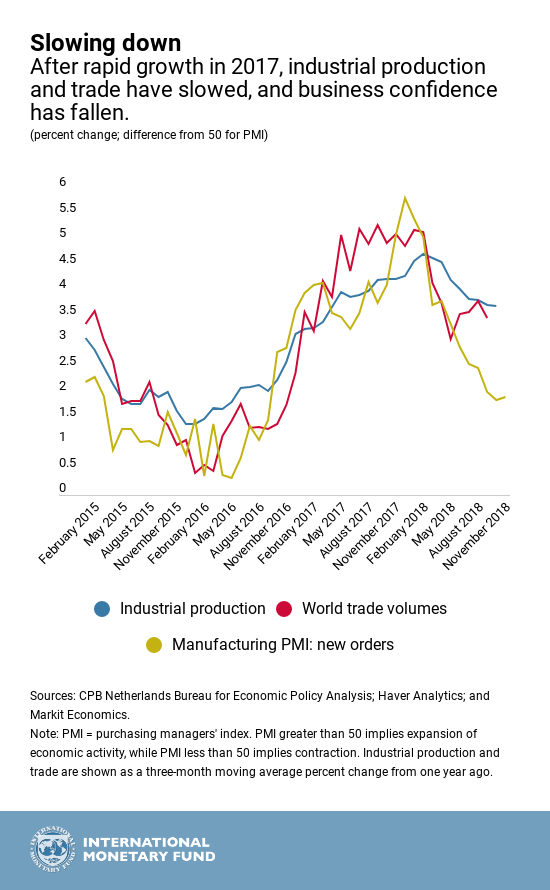
The global economy seems to be slowing down at a brisk pace. There are probably a number of factors behind this decline: the tariffs the US has imposed on important commodities and the reciprocal tariffs imposed by other states; the rise in the value of the US dollar brought about by increases in interest rates by the US Federal Reserve; and fears of credit excesses in China and several European states.
US Secretary of Defense, General Jim Mattis, submitted his letter of resignation to President Trump yesterday. The resignation does not come as a surprise as it has been obvious that Mr. Trump and General Mattis did not agree on much. The resignation letter, however, was a very sharp rebuke to President Trump’s foreign policy of “America First” and Mattis’s disdain for the President is obvious, starting with the salutation which does not refer to President Trump, but rather to the President. Nor is there a complimentary close such as “Sincerely”.
“Dear Mr. President: I have been privileged to serve as our country’s 26th Secretary of Defense which has allowed me to serve alongside our men and women of the Department in defense of our citizens and our ideals.
I am proud of the progress that has been made over the past two years on some of the key goals articulated in our National Defense Strategy: putting the Department on a more sound budgetary footing, improving readiness and lethality in our forces, and reforming the Department’s business practices for greater performance. Our troops continue to provide the capabilities needed to prevail in conflict and sustain strong U.S. global influence.
One core belief I have always held is that our strength as a nation is inextricably linked to the strength of our unique and comprehensive system of alliances and partnerships. While the US remains the indispensable nation in the free world, we cannot protect our interests or serve that role effectively without maintaining strong alliances and showing respect to those allies. Like you, I have said from the beginning that the armed forces of the United States should not be the policeman of the world. Instead, we must use all tools of American power to provide for the common defense, including providing effective leadership to our alliances. NATO’s 29 democracies demonstrated that strength in their commitment to fighting alongside us following the 9-11 attack on America. The Defeat-ISIS coalition of 74 nations is further proof.
Similarly, I believe we must be resolute and unambiguous in our approach to those countries whose strategic interests are increasingly in tension with ours. It is clear that China and Russia, for example, want to shape a world consistent with their authoritarian model — gaining veto authority over other nations’ economic, diplomatic, and security decisions — to promote their own interests at the expense of their neighbors, America and our allies. That is why we must use all the tools of American power to provide for the common defense.
My views on treating allies with respect and also being clear-eyed about both malign actors and strategic competitors are strongly held and informed by over four decades of immersion in these issues. We must do everything possible to advance an international order that is most conducive to our security, prosperity and values, and we are strengthened in this effort by the solidarity of our alliances.
Because you have the right to have a Secretary of Defense whose views are better aligned with yours on these and other subjects, I believe it is right for me to step down from my position. The end date for my tenure is February 28, 2019, a date that should allow sufficient time for a successor to be nominated and confirmed as well as to make sure the Department’s interests are properly articulated and protected at upcoming events to include Congressional posture hearings and the NATO Defense Ministerial meeting in February. Further, that a full transition to a new Secretary of Defense occurs well in advance of the transition of Chairman of the Joint Chiefs of Staff in September in order to ensure stability within the Department.
I pledge my full effort to a smooth transition that ensures the needs and interests of the 2.15 million Service Members and 732,079 DoD civilians receive undistracted attention of the Department at all times so that they can fulfill their critical, round-the-clock mission to protect the American people.
I very much appreciate this opportunity to serve the nation and our men and women in uniform.
“‘The 17-year-long struggle and sacrifices of thousands of our people finally yielded fruit,’ said a senior Taliban commander from Afghanistan’s Helmand province. ‘We proved it to the entire world that we defeated the self-proclaimed world’s lone super power.’
“’We are close to our destination,’ added the commander, who spoke on condition of anonymity because the group’s leadership had prohibited members from talking to the media about current events. He added that all field commanders had also been told to intensify training efforts to capture four strategic provinces in the run up to the next round of talks, which are expected in January.
“A Taliban leader in eastern Kunar province, Maulvi Sher Mohammad, said news of withdrawals should serve as a lesson to Americans.
“‘The U.S. people and particularly its rulers should think about what they achieved by invading Afghanistan and by causing so many losses to the citizens of Afghanistan and wasting their own resources on this long war,’ he said.”
The quotations are, no doubt, bravado. But they are also words that will give the soldiers supporting the Taliban greater will to continue their struggle. That outcome is hardly in the US interest, or in the interest of the current Afghani government.
US President Trump’s decision to pull US troops out of Syria has been greeted with shock by many members of his own party. All the evidence suggests that Mr. Trump did not consult with party members, members of his Administration, or with his advisors about the decision. Senator Corker (R-TN) said: “I’ve never seen a decision like this since I’ve been here in 12 years where nothing is communicated in advance, and all of a sudden this type of massive decision takes place.” Senator Sasse (R-NB) said: “The President’s generals have no idea where this weak decision came from: They believe the high-fiving winners today are Iran, ISIS, and Hezbollah. The losers are Israel, humanitarian victims, and U.S. intelligence gathering. A lot of American allies will be slaughtered if this retreat is implemented.” On the other hand, Russian President Putin praised the move as “correct.” More worryingly, Turkey threatened to “bury” Kurdish forces, the most effective and loyal US ally in Syria. One interesting fact is that Mr. Trump’s decision came a day after a telephone conversation with Turkish President Erdogan. The timing makes me suspect that a deal was made to persuade Turkey not to make further evidence available concerning the murder of Jamal Kashoggi, an incident that threatens Mr. Trump’s aspirations for a Saudi role in a Middle East peace process. But the decision also boosts Iran’s influence in the Middle East, an outcome that likely frightens Saudi Arabia. Finally, Mr. Trump’s rationale for pulling the troops out–that ISIS has been defeated–is likely not true.
North Korea issued a statement which suggests that the process of denuclearization pushed by the Trump Administration will never occur:
“When we talk about the Korean peninsula, it includes the territory of our republic and also the entire region of [South Korea] where the United States has placed its invasive force, including nuclear weapons. When we talk about the denuclearization of the Korean peninsula, it means the removal of all sources of nuclear threat, not only from the South and North but also from areas neighboring the Korean peninsula.”
The statement calls into question the whole process of negotiations between the US and North Korea since it is highly unlikely that the US would ever agree to remove its troops from South Korea. Nor is it likely that South Korea and Japan would ever push for such a settlement. The Asia Times considers the statement to be the end of the process:
“Make no mistake: This is serious. It is not a simple disagreement over nomenclature. It makes starkly clear a divergence of opinion not only over what denuclearization is, but to whom it applies.”
It is difficult for me to imagine any move that the US could make to restart the negotiations under these terms. Perhaps South Korea can persuade the North to alter its stance, but the price for that change would be very high.
There is an effort in the US Senate to include language in the must-pass spending bills that would penalize individuals or corporations that support the boycott, divestment, and sanctions (BDS) movement against Israel. In 2016 the United Nations passed a resolution which would identify companies that were operating in what the UN calls “Occupied Territories” (the West Bank, the Golan Heights, and the Gaza Strip). Israel does not consider these territories to be “occupied” (instead using the phrase “disputed” territories) and the US changed its long-standing (since 1967) policy of identifying those territories as “occupied” in 2017 when it dropped the phrase “Occupied Territories” from its State Department Human Rights Report on Israel.
But the international community disagrees with this position. The International Court of Justice articulated the international law on occupied territories in 2004:
“…under customary international law as reflected (…) in Article 42 of the Regulations Respecting the Laws and Customs of War on Land annexed to the Fourth Hague Convention of 18 October 1907 (hereinafter “the Hague Regulations of 1907”), territory is considered occupied when it is actually placed under the authority of the hostile army, and the occupation extends only to the territory where such authority has been established and can be exercised. The territories situated between the Green Line (see paragraph 72 above) and the former eastern boundary of Palestine under the Mandate were occupied by Israel in 1967 during the armed conflict between Israel and Jordan. Under customary international law, these were therefore occupied territories in which Israel had the status of occupying Power. Subsequent events in these territories, as described in paragraphs 75 to 77 above, have done nothing to alter this situation. All these territories (including East Jerusalem) remain occupied territories and Israel has continued to have the status of occupying Power.
The BDS movement is an attempt to persuade businesses not to invest in the Occupied Territories as a way of establishing the rights of Palestinians in those territories.
Everyone should decide whether or not to support the BDS movement. What I find very troubling is the attempt to make support for the movement illegal. According to Igor Derysh:
“The Intercept reported that 26 states, including New York, California and Texas, have legislation in place barring state contractors from supporting a boycott of Israel, while 13 other states have similar bills pending. Texas’ recently-passed law led to residents affected by Hurricane Harvey being forced to sign a pro-Israel pledge in order to get disaster relief funds. Earlier this year, Bahia Amawi, a speech pathologist for an Austin school district, lost her job for refusing to sign a pro-Israel oath as part of her new contract.
The oath required her to pledge that she “does not currently boycott Israel,” that she “will not boycott Israel during the term of the contract,” and that she shall refrain from any action “that is intended to penalize, inflict economic harm on, or limit commercial relations with Israel, or with a person or entity doing business in Israeli or in an Israel-controlled territory.”
Peaceful political action should never be made illegal. I am certain that the Alabama state legislature would have loved to have made the boycott of the Montgomery bus system illegal and Rosa Parks would have defied the segregation laws in vain. Making peaceful political action illegal only legitimates the status quo.
US President Trump has ordered the immediate withdrawal of US troops from Syria after tweeting “We have defeated ISIS in Syria, my only reason for being there.” Unfortunately, the decision was announced with very little detail so we do not know the pace of the withdrawal, what arrangements have been made with other partners in Syria, such as the Kurds and Israel, and whether residual, non-combat troops, will remain in the country. Reuters is reporting that:
“One U.S. official said Washington aimed to withdraw troops within 60 to 100 days and said the U.S. State Department was evacuating all its personnel in Syria within 24 hours.
“A second U.S. official, also speaking on condition of anonymity, said the U.S. military was planning for a full withdrawal but said the timing could be quicker than 60-100 days.”
The troops withdrawal does not necessarily imply a vacuum in the country since there are 5,200 US troops in neighboring Iraq and all air missions over Syria are conducted from the US military base in Qatar. But the political and psychological dimensions of the withdrawal are hard to measure. Certainly Russia, Turkey, and Iran will have significantly greater freedom of movement in Syria without having to worry about engaging US troops. Josh Rogin, a writer for the Washington Post, argues that the move undermines previous US statements on Syria:
“….there’s no doubt that as of Monday, James Jeffrey, the U.S. special representative for Syria engagement, was advertising a diametrically opposed strategy. In a presentation at the Atlantic Council in Washington, Jeffrey said the United States would stay in Syria until three goals are met: ensuring the lasting defeat of the Islamic State, rolling back Iranian influence and achieving a political solution to the crisis.
“’The strategy is to use these various levers, the lever of all these military forces running around … the fact that much of the territory and many of the more valuable resources such as oil and gas are not in the hands of the regime,’ to prevent the Assad regime, Russia and Iran from achieving total victory on their own terms, Jeffrey said.”
Indeed, at the end of his speech, Jeffrey said “I am confident the president is on board with this.” We will need to wait to assess how firm the President’s decision may be. Apparently President Trump consulted with virtually no one about the decision. When Republican Senators were informed of the decision, many of them, including Senators Cornyn and Graham, were outraged.
I have always opposed US troops in Syria and think that this decision may be a very good one. But everything really depends upon how the decision is implemented. If the withdrawal suggests indecision and incoherence, it could be a disaster.
The New York Times has published a story about 1,100 hacked emails from European diplomats which assess foreign policy issues in frank and undiplomatic language. The hacked emails were discovered by a computer security service, Area 1, which has published the details of how it discovered the emails (for those of you with computer expertise, the Area 1 report is filled with technical details ). According to the Times:
“Hackers infiltrated the European Union’s diplomatic communications network for years, downloading thousands of cables that reveal concerns about an unpredictable Trump administration and struggles to deal with Russia and China and the risk that Iran would revive its nuclear program.
“In one cable, European diplomats described a meeting between President Trump and President Vladimir V. Putin of Russia in Helsinki, Finland, as ‘successful (at least for Putin).’”
“No graduate-level comprehension of history or politics is necessary to perceive that these unfolding events in the three most important Western democracies, while unquestionably local or national in character, are not separate or disconnected. Throw in the slow-motion downward trajectory of Germany, with Angela Merkel on her way out and nationalism on the rise, and this process of decay clearly afflicts the four most important Western democracies.
“These disparate political crises are all manifestations of the same deeper phenomenon, which is amorphous and threatening and admittedly difficult to talk about. This could be called the crisis of democratic legitimacy, which has been creeping towards us from the periphery of the Western world for some time and just accelerated abruptly. We see it right now, playing out in the state capitols of Wisconsin and Michigan, in the streets of Paris, and in the pseudo-medieval rituals of the House of Commons.”
O’Hehir intimates that the deepening income inequality in these countries is responsible for this transformation. I think it is unquestionably the cause of it.
Simon Tisdall is an editorial writer for the Guardian and I especially like his analyses of world politics. He has an interesting take on the dispute between the US and China over the arrest of the CFO of Huawei, Meng Wanzhou. The US has managed to persuade other countries, notably Germany, to be suspicious of Huawei products, specifically its new 5G telephone. Tisdall considers the extra-territorial reach of US law on this matter to be out of date and inappropriate in today’s world, and China’s challenge to the US claims to be actually a challenge to US hegemony. More importantly, Tisdall considers both the US and China to be pursuing a fool’s game in this matter:
“There can be little doubt Meng is a highly symbolic victim of this global rivalry. Typically clueless, Trump gave the game away when he explicitly linked the possible dropping of the case against her to resolving the US-China trade war. Trump’s clumsy intervention – rapidly disavowed by his own justice department – left the US looking no better than Beijing. Both sides appear guilty of what amounts, in effect, to hostage-taking – not what the world expects from superpowers.”
Humility, however, has never been a strong point for world powers.

 World Politics News