I will be on vacation for the next two weeks, so posting will be sporadic during that time. But I will be back, I hope refreshed.
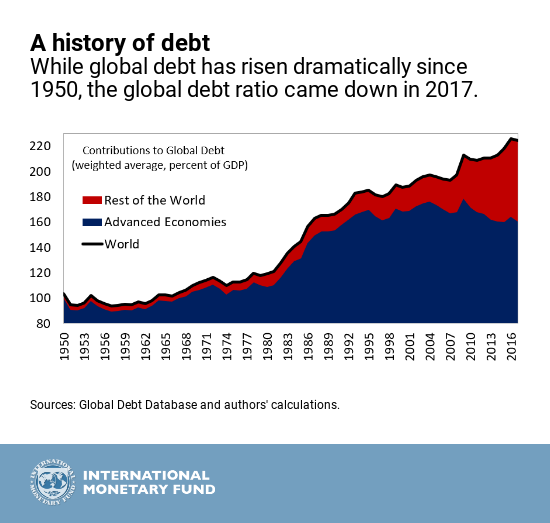
Global debt has always been difficult to measure. Many states do not publish data on the issue since it is embarrassing; some do not because they simply do not know; and many states use different metrics to measure debt. The International Monetary Fund (IMF) has just published its Global Debt Database to address some of these issues. Some of its insights include:
“Global debt has reached an all-time high of $184 trillion in nominal terms, the equivalent of 225 percent of GDP in 2017. On average, the world’s debt now exceeds $86,000 in per capita terms, which is more than 2½ times the average income per-capita.
“The most indebted economies in the world are also the richer ones…. The top three borrowers in the world—the United States, China, and Japan—account for more than half of global debt, exceeding their share of global output.”
“The private sector’s debt has tripled since 1950. This makes it the driving force behind global debt. Another change since the global financial crisis has been the rise in private debt in emerging markets, led by China, overtaking advanced economies. At the other end of the spectrum, private debt has remained very low in low-income developing countries.
“Global public debt, on the other hand, has experienced a reversal of sorts. After a steady decline up to the mid-1970s, public debt has gone up since, with advanced economies at the helm and, of late, followed by emerging and low-income developing countries.”
These rising levels of debt are worrisome since interest rates seem to be rising across the globe, making the debt more expensive to service, and global economic growth seems to be slowing. We will have to keep our eyes on this issue.
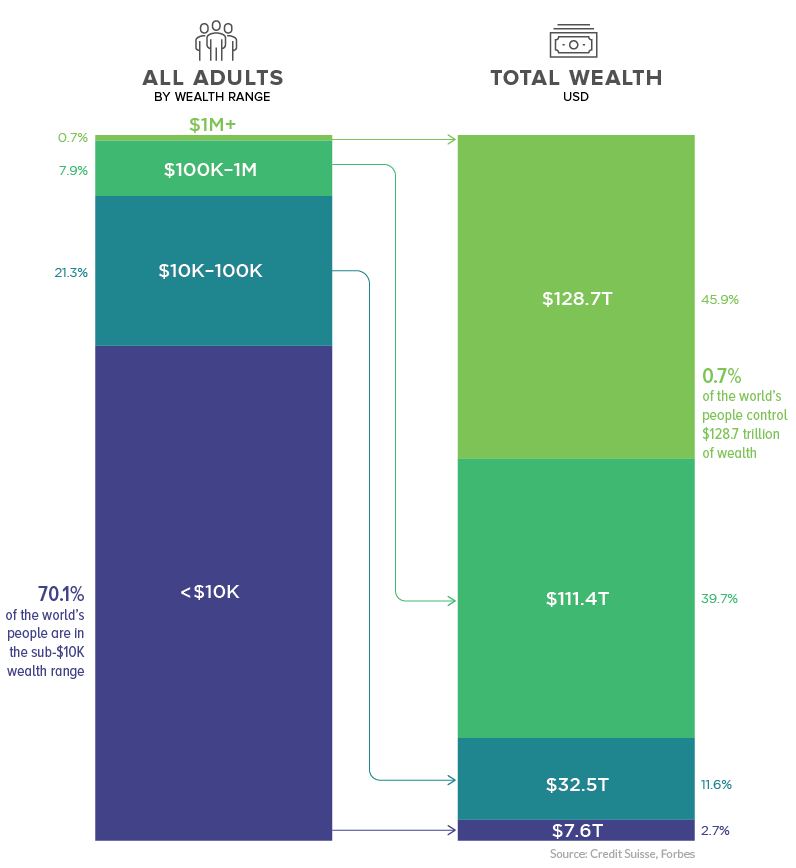
As global debt increases, the distribution of wealth in the world continues to become more concentrated. Visual Capitalist characterizes the situation in these terms: “Today, slightly less than 1% of the world’s adult population occupies the $1M+ wealth range. Despite their small numbers, this elite group collectively controls 46% of the world’s wealth, valued at approximately $129 trillion.” The visual representation of this skewed distribution is striking.
“An alarming projection produced by the House of Commons library suggests that if trends seen since the 2008 financial crash were to continue, then the top 1% will hold 64% of the world’s wealth by 2030. Even taking the financial crash into account, and measuring their assets over a longer period, they would still hold more than half of all wealth.”
Inequality has serious social and political consequences, many of which are separate from the equally urgent issue of poverty. Inequality is more destabilizing to society than poverty and often leads to depressed demand in an expensive economy.
Eric Levitz has written a very good essay for the New Yorker on the dangers of thinking about the United States as an “exceptional” country. The word “exceptional” is used by many in the US to describe a distinctive role for the US in world affairs. It is an interesting term since there are some aspects of the US that do, in fact, make the US different from many other countries: its relative isolation from other countries (the Atlantic and the Pacific are impressive moats) as well as the extraordinary abundance of resources available within the territorial limits of the state (think about how resource-poor countries like Great Britain and Japan are). But the ideological aspects of “exceptionalism” are highly problematic since they are often used to justify both moral and pragmatic superiority. Levitz catalogs a number of ways the term is abused, and one of this insights is quite revealing:
“The exceptionalist narrative is most dangerous for the way it implies that assertions of American power on the world stage should be presumed well-intentioned, until proven otherwise. If the consensus view among liberal elites circa 2003 had been that American foreign policy is typically shaped by the mercenary interests of corporations (not least, arms manufacturers), they would likely have treated George W. Bush’s plans for Iraq with less credulity. Instead, in that instance (and many others), liberals championed a just, humanitarian intervention — only to find, to their shock and awe, that those prosecuting the war did not, in fact, have the purest of hearts. So long as progressive forces do not have a firm grip on the national security state, progressives mustn’t presume that the worst thing that state can do in the face of injustice overseas is nothing.”
US foreign policy in the Trump Administration is a strange combination of the varieties of American exceptionalism. President Trump’s desire to pull troops out of Syria and Afghanistan suggests limits to military power which sit uneasily with his desire to spend significantly greater sums on the military budget.
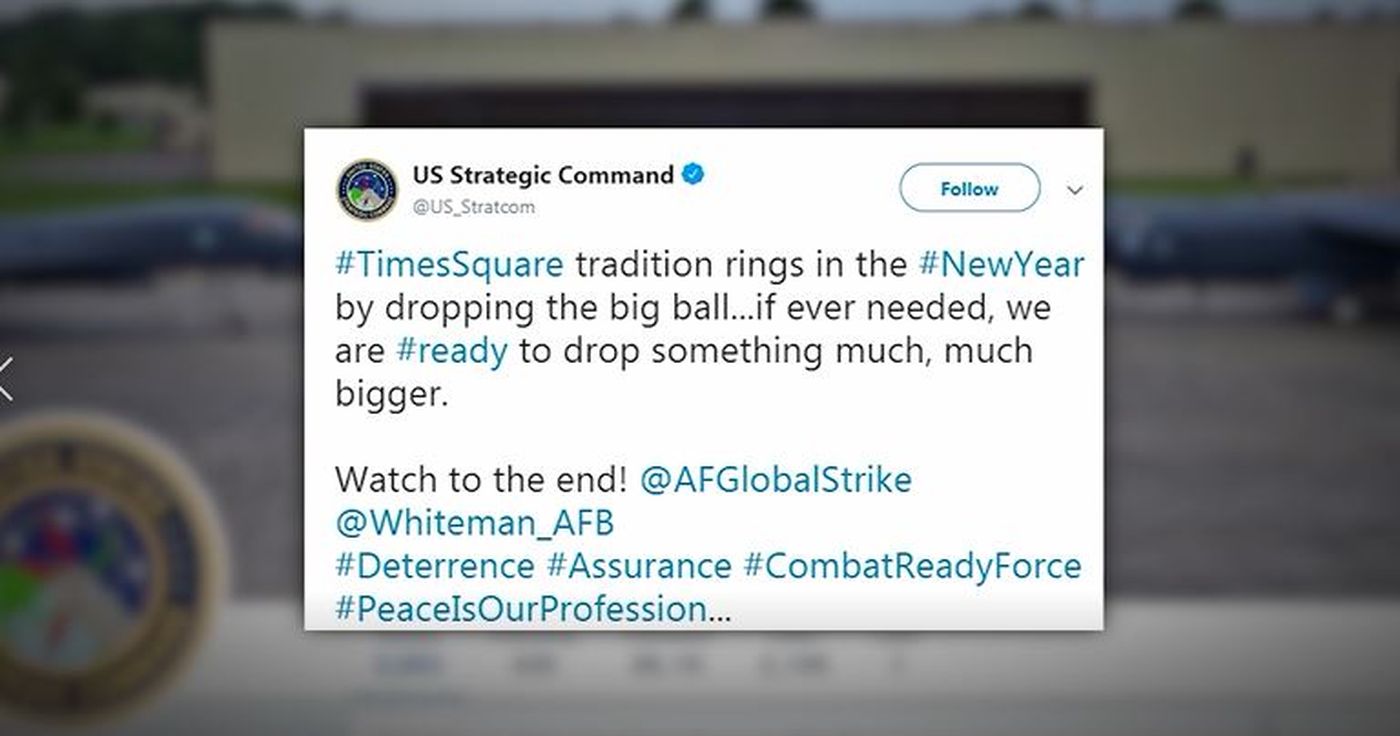
The US Strategic Air Command sent out a New Year’s Tweet which it then deleted. Fortunately, nothing on the internet ever dies and WAFB in Louisiana posted a copy of the video. The tweet was unbelievably inappropriate and read, in part,
The tweet included a video of B-2 bombers dropping 30,000 “bunker buster” bombs on a test site. The Strategic Air Command subsequently apologized, but it is very difficult for me to understand why anyone would have though the first message was something that anyone wished to see on a day on which most hope for a better year.
North Korean leader Kim Jong-un delivered a New Year’s address outlining his visions for the upcoming year. He was dressed in a business suit, not his usual garb, and delivered his address from what looked like a library or business office. He signaled a desire to meet with South Korean President Moon as well as US President Trump and the message emphasized his desire to better economic conditions in North Korea. But he also indicated that he believed that the current direction of the denuclearization negotiations is not productive. Reuters summarizes that part of the speech:
“Kim sees nuclear weapons as a valuable deterrent to a U.S. military strike. Unless that threat is eliminated, he won’t give them up. He also believes his weapons put him in a position of strength from which he can make demands and extract concessions.
“The North has been pretty clear about these points. But Kim spelled them out once again.
“His message to Trump: Start addressing his concerns about security and sanctions relief soon or he will have no choice but to try a different, less friendly approach. And he is warning that he will be able to make a case to China, Russia and possibly even Seoul that if things fall Washington will be the one to blame.”
There was no response by US President Trump and it is not clear what the next steps will be.
Chinese Rear Admiral Lou Yuan gave a speech in Shenzhen in which he outlined US weaknesses in the ongoing dispute over the East and South China Seas. According to the Australian News Service:
“His speech, delivered on December 20 to the 2018 Military Industry List summit, declared that China’s new and highly capable anti-ship ballistic and cruise missiles were more than capable of hitting US carriers, despite them being at the centre of a ‘bubble’ of defensive escorts.
“’What the United States fears the most is taking casualties,’ Admiral Lou declared.
“He said the loss of one super carrier would cost the US the lives of 5000 service men and women. Sinking two would double that toll. ‘We’ll see how frightened America is.’”
The US has heavily invested in aircraft carriers to maintain military superiority, but both China and Russia have been working hard to offset them by exploiting their weaknesses. The number of naval confrontations between the US and China in the South China Sea has been steadily rising, and there are increased tensions between the two states on the issue of Taiwan.
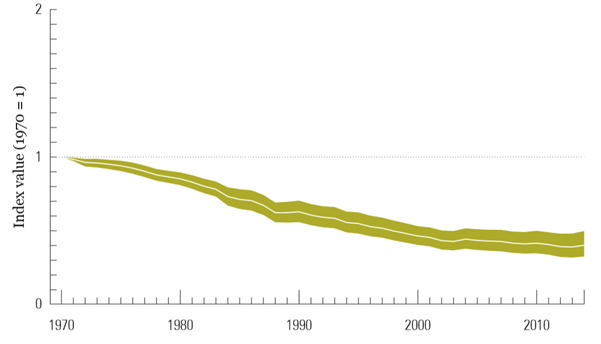
The World Wildlife Fund, in collaboration with the Zoological Society of London, has issued its Living Planet Index for 2018 and its conclusions are deeply troubling. Between 1970 and 2014, more than 60% of the earth’s living species lost 50% of their populations. According to the Report:
“The biggest drivers of biodiversity decline in the LPI remain habitat loss and degradation, and overexploitation. Together, they account for at least two-thirds of all threats to populations in each taxonomic group (birds, mammals, fish, and amphibians and reptiles) Beyond this, invasive species and disease, pollution and climate change are additional sources of pressure.”
EcoWatch summarizes the significance of the report:
“Many scientists believe that studies like that of the WWF demonstrate that a sixth mass extinction is now underway—a theory that would mean the Earth could experience its first mass extinction event caused by a single species inhabiting the planet. The loss of all life on Earth could come about due to a combination of human-caused effects, including a rapidly warming planet as well as the loss of biodiversity.
“‘The Great Acceleration, and the rapid and immense social, economic and ecological changes it has spurred, show us that we are in a period of great upheaval,’ reads the study. ‘Some of these changes have been positive, some negative, and all of them are interconnected. What is increasingly clear is that human development and wellbeing are reliant on healthy natural systems, and we cannot continue to enjoy the former without the latter.'”
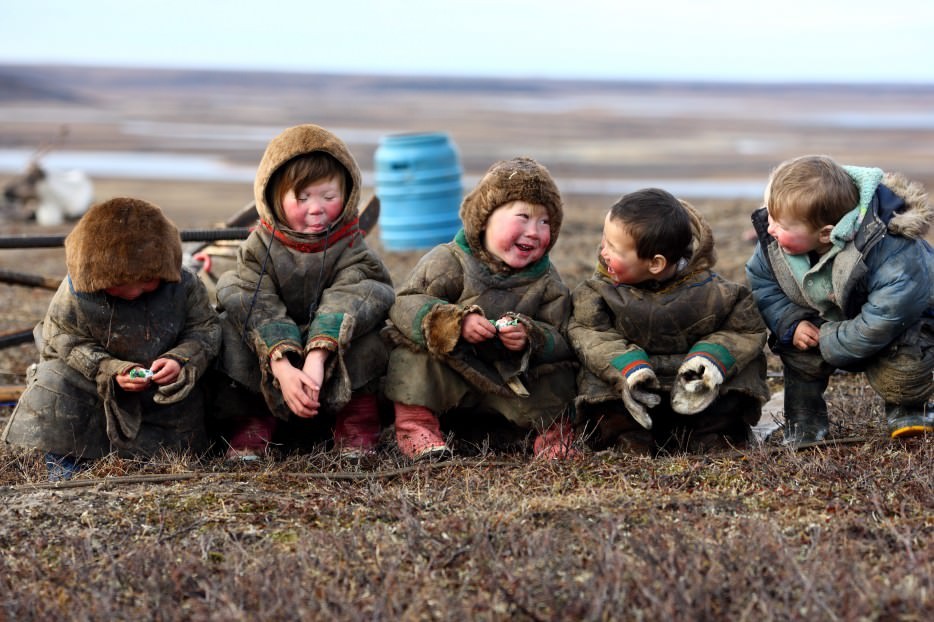
Number of species that lost 50% or more of their populations
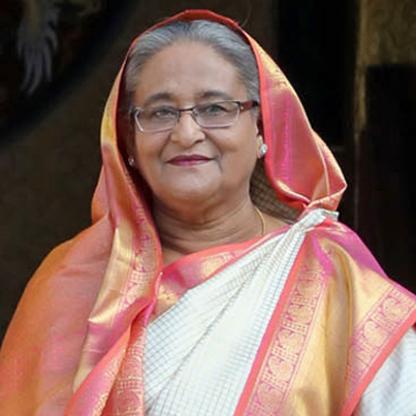
Bangladeshi Prime Minister Sheikh Hasina seems to be headed for a fourth term in office although the opposition claims that the election was a farce. Sheikh Hasina’s Awami League has ruled in Bangladesh since 2009. The leader of the opposition Bangladesh National Party (BNP), Khaleda Zia, is in jail on corruption charges which she claims were politically motivated. At least 15 people were killed in election violence and human rights groups have raised questions about the conduct of the elections. Hasina’s son, Sajeeb Wajed, told the media that he considers the Western charges of authoritarianism to be a “badge of honor.”
Sheikh Hasina Wajed
Two years after they were scheduled, elections are being held in Democratic Republic of Congo to find a replacement for President Joseph Kabila. Kabila came to power in 2001 when his father was assassinated and has delayed the elections which were required by the constitution. The elections are being held in a very tense atmosphere as many citizens fear that the vote will be manipulated. In addition, the outbreak of the Ebola virus in the eastern parts of the country have made the movements of voters highly problematic. The voters in three provinces which have affected by Ebola are not being allowed to vote until later in the month, but all three provinces are strongholds of the opposition to Kabila’s party. Emmanuel Ramazani Shadary is Kabila’s anointed successor and we will have to wait until mid-January to find out the results of the election.
There have been four weeks of protests against Aleksandar Vučić, the President of Serbia. Vučić is a nationalist leader and the protesters believe that he is moving toward authoritarian rule. Protests have been rare in Serbia since the ouster of President Milosevic, a convicted war criminal, in 2000. But Reuters suggests that Vučić enjoys strong support in the country and that the opposition to him is quite divided.
“According to a poll by the Belgrade-based CESID election watchdog in October, Vučić’s SNS (Serbian Progressive Party) enjoys the backing of 53.3 percent of electorate while other parties are trailing far behind.
“If the opposition ran as an alliance, rather than individual parties, they could count on around 15 percent of the vote. Their joint participation in a vote has yet to be agreed and so far they are only united in their animosity to Vučić and his party.”
Vučić has kept open relations with the European Union, Russia, and China as his top foreign policy priorities.
China has ambitiously funded a number of development projects in poorer countries. Initially, these investments were welcomed as an alternative to the funding that came from rich countries or international development agencies. But the distinctive feature of most Chinese investments is that they use the projects themselves as collateral in case the loans cannot be repayed. This strategy has netted China with some very valuable properties around the world. The most recent project to come under Chinese control is the Kenyan port of Mombasa. According to the Taiwan News (admittedly, not a China-friendly media outlet):
“When the Chinese lender granted the loan to the Kenyan government, somehow the KPA signed on as a borrower. Somehow Kenya’s government agreed that the port “would not be protected by sovereign immunity since the Government waived the immunity on the Kenya Ports Assets” by virtue of KPA signing on as a borrower, according to the Auditor General.
“It is becoming increasingly clear that China’s designs on the nations of Africa are anything but benevolent. Kenya appears to be lining up behind Zambia, which is slated to lose its international airport, as well as its national electricity grid because of defaults on Chinese loans.
“African nations must wake up to China’s new form of colonialism that is chipping away at their critical infrastructure one major asset at a time.”
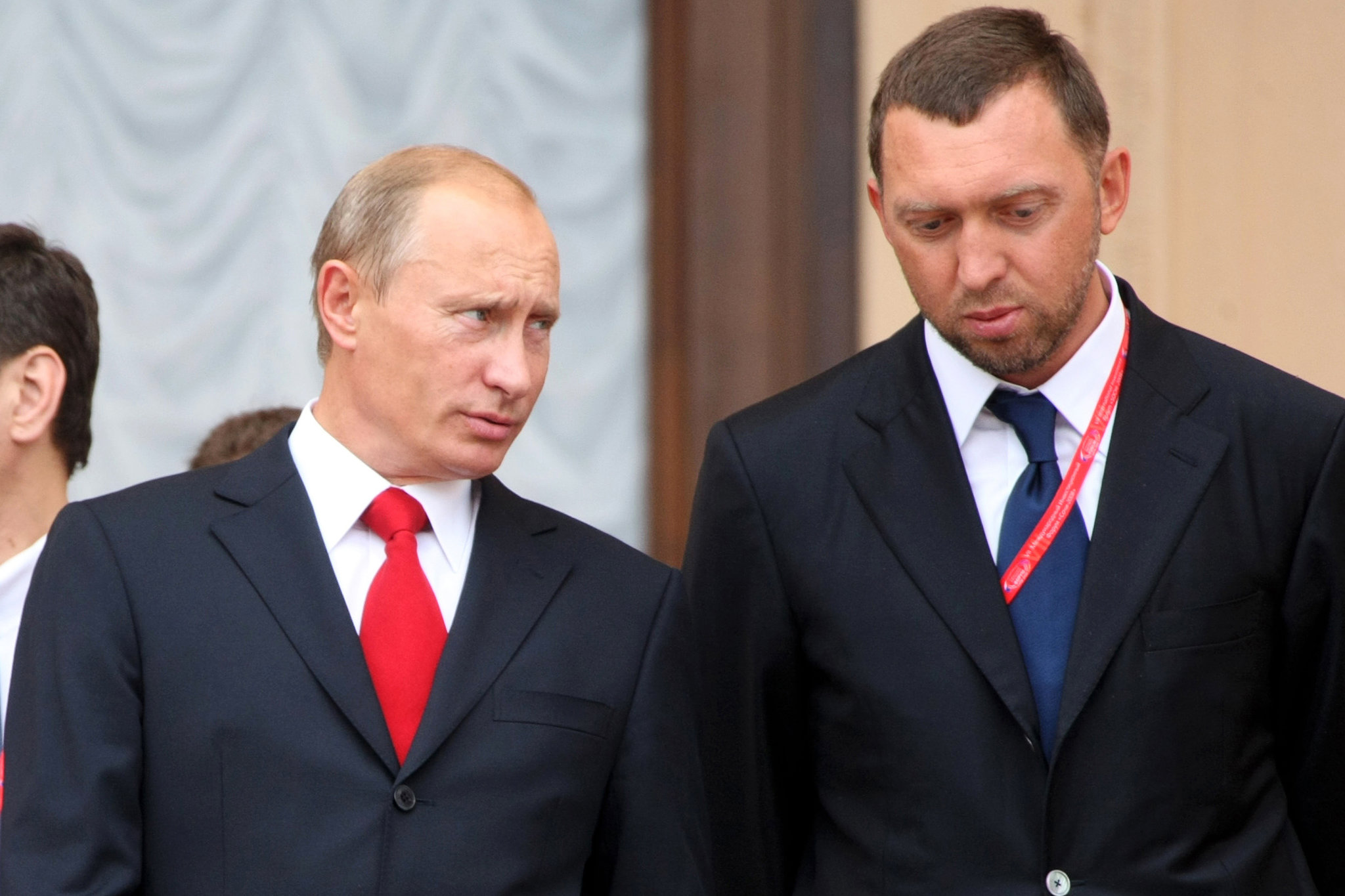
There is an interesting report by Time magazine concerning the relationship of former Trump campaign manager, Paul Manafort, and a Russian oligarch named Oleg Deripaska. According to the report:
“When he joined the campaign in the spring of 2016, Manafort was nearly broke. The veteran political consultant had racked up bills worth millions of dollars in luxury real estate, clothing, cars and antiques. According to allegations contained in court records filed in the U.S. and the Cayman Islands, he was also deeply in debt to Boyarkin’s boss, the Russian billionaire Oleg Deripaska, who was demanding money from Manafort over a failed business deal in Ukraine and other ventures.
Manafort was involved to an uncertain degree in the independence of Montenegro, which was once part of the former Yugoslavia. Russia was centrally involved in that movement, supporting a pro-Russian party because it feared that Montenegro might apply for membership in NATO. The Russian effort failed and Montenegro ultimately did join the alliance, leading US President Trump to make a snide remark last July. According to the Washington Post:
“Earlier this week, President Trump identified a seemingly unlikely threat to world security: Montenegro, a tiny Balkan country of just over 600,000 people.
“Trump was responding to a question from Fox host Tucker Carlson, who asked the president a hypothetical question: ‘Why should my son go to Montenegro to defend it from attack?’ Carlson was referring to Article 5 of the Washington Treaty, which requires NATO members to aid other member states if they are attacked. The article has been invoked only once, following the Sept. 11, 2001, terrorist attacks on the United States.”
The reason why the story is so interesting is that on 19 December, the US Treasury lifted the sanctions on Rusal, an aluminum company owned by Deripaskov, which had a serious dispute with Montenegro over aluminum. Treasury said the sanctions would be lifted because Rusal said that Deripaska’s interest in the firm had fallen below 50%. How the US Treasury verifies such matters in Russia is beyond me. An alternative explanation could be that the Treasury is offering relief to Deripaska in return for silence on some campaign-related matters. Let us hope that Special Counsel Mueller can shed some light on this matter.
The Syrian Kurds have apparently reached an agreement with the Syrian government in order to forestall an attack by Turkey. Syrian government forces have entered the town of Manbij which was under Kurdish control and the Kurds, which once opposed the Assad government, have decided that life under Syrian control will be better than a Turkish assault. The decision most likely had the blessing of Russia which has a scheduled meeting with Turkey tomorrow to discuss the civil war in Syria. The fact that the Kurds, once a staunch ally of the US, now seek protection from Russia is a stunning reversal of the balance of power in the Middle East. The US clearly has moved to the sidelines. That shift has unnerved the Israelis. Daniel Shapiro notes the effect of the US betrayal of the Kurds on Israeli decision-making:
“Israelis see the Kurds—a moderate, pro-Western, Muslim community that eschews anti-Israel sentiment, and with whom Israel has worked quietly—as exactly the kind of element that the Middle East needs more of. They constantly press for more American support for the Kurds. Israel, against American wishes, encouraged the Kurds of northern Iraq in their ill-advised independence referendum of 2017. For Israel, the U.S. abandonment of the Kurds represents both a strategic and an emotional blow.”
It is very difficult to see how Israel can continue to rely as heavily as it has in the past on the US as it tries to contain Iranian influence in the region. I suspect that the Israelis will begin to take stronger measures to counter Iranian power.
The trade war between China and the US continues, but there seems to be some movement. For the first time, China is buying US rice, an odd transaction since the US is hardly a prime location for growing rice. But there are also reports that the Chinese have begun to buy soybeans from the US. These are likely overtures from the Chinese to find a way to break out of the trade impasse. It remains to be seen whether the Trump Administration will reciprocate with concessions. As it is, the trade war as been a very expensive proposition for both countries. Reuters has a good article on how the trade war has affected the US economy so far.
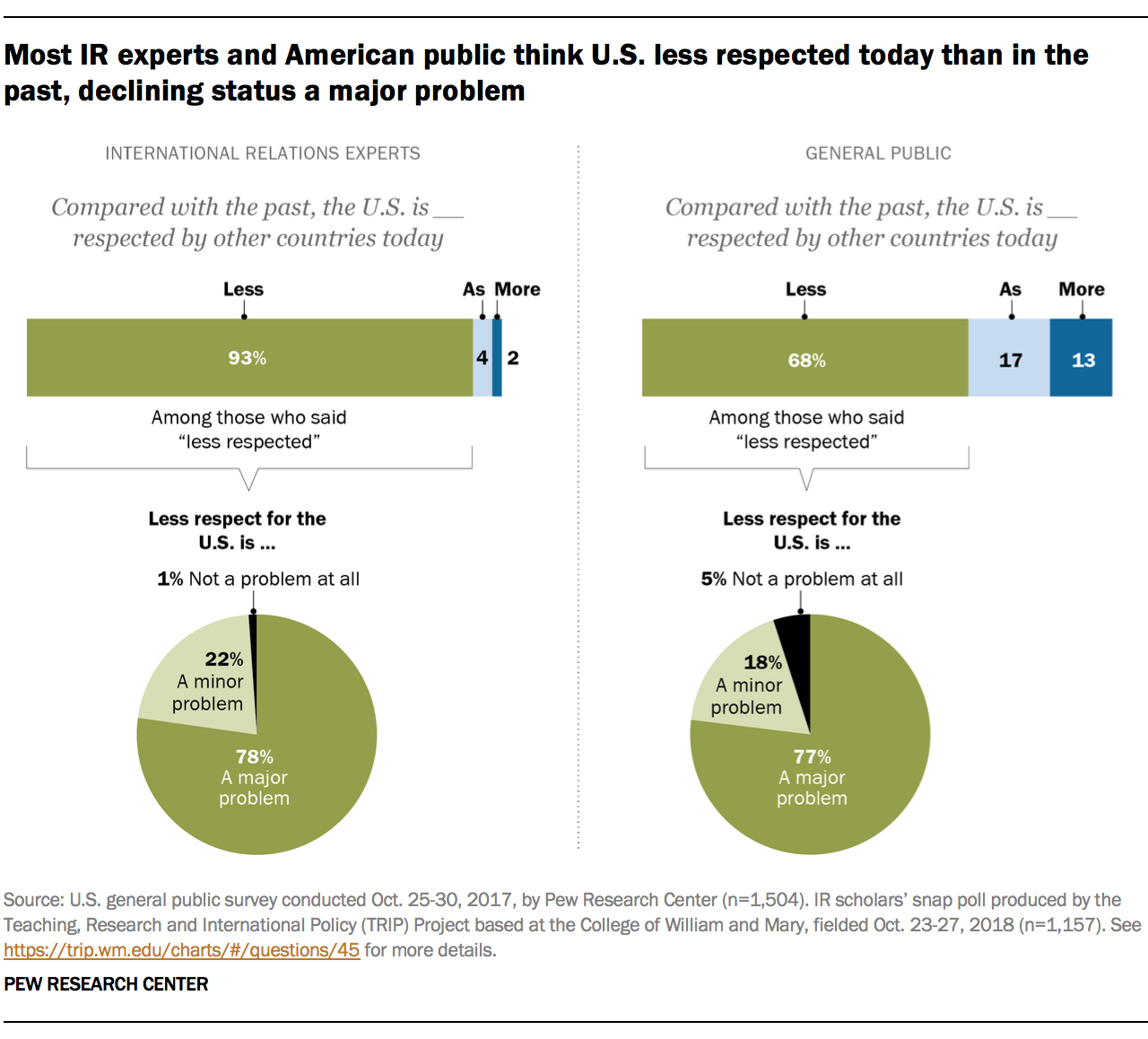
The Teaching, Research and International Policy (TRIP) Project at the College of William and Mary conducted a poll of 1,157 international relations scholars in October 2018 on their perception of how respected the United States is in the world. The poll indicates that “93% say the U.S. is less respected by other countries today compared with the past.”
Interestingly, the poll found no significant differences in the perception of respect between realist and non-realist scholars in IR:
“Among the IR experts, about eight-in-ten (82%) self-described adherents to the realist school of IR theory – which stresses constant competition between states in pursuit of power – believe the U.S. is less respected than in the past, compared with 18% of realists who say there is as much or more respect for America abroad. Meanwhile, about 95% or more of those who subscribe to constructivism or liberalism – which focus less on power politics in favor of shared ideas or mutual international cooperation – and those who identify with no particular school of IR thought think the U.S. is less respected. “
There were also differences between Republicans and Democrats on the level of respect, but that finding is not at all surprising.
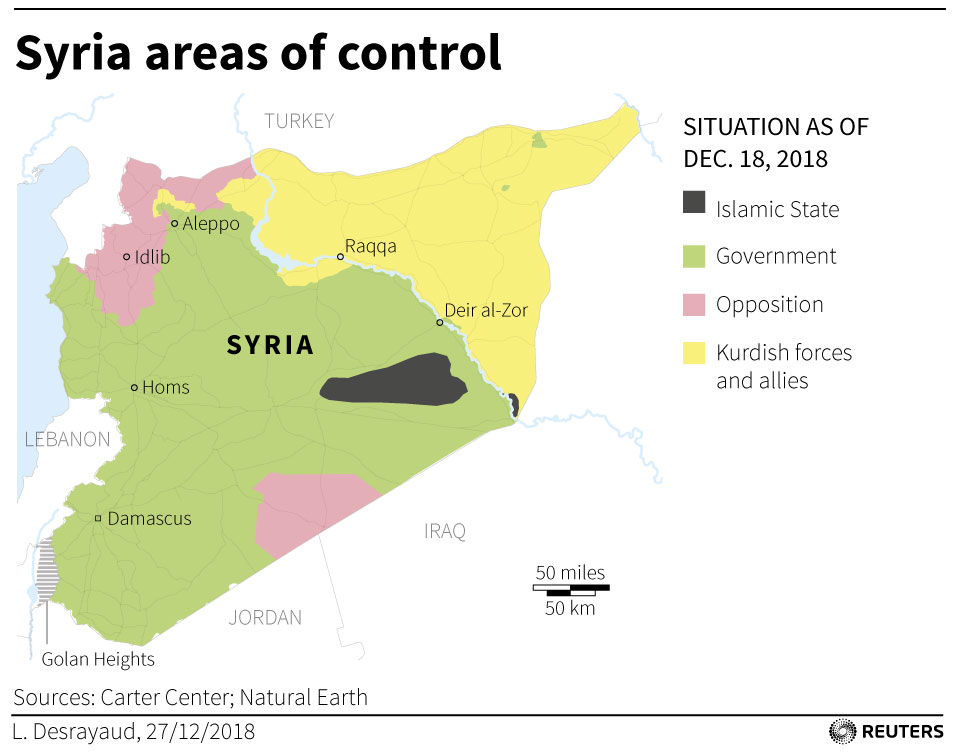
The Syrian Kurds, abandoned by the US, are turning to Russia and the Assad government of Syria for protection against a likely Turkish attack. The Kurds currently occupy much of Syria east of the Euphrates River and have been trying to establish Kurdish control over the region. US troops had been protecting the Kurds against both Russian and Turkish attacks, but their departure leaves them vulnerable. The Turks are more concerned about Kurdish control of the region since they fear that a Kurdish enclave in Syria would encourage Kurds in Turkey to demand greater autonomy. The Russians only care that Assad remain in power, and now that US troops have left, the Kurds lack the ability to overthrow Assad. The Kurds fear Assad less than they fear Turkey.
Russia is claiming that it has successfully developed a hypersonic missile that can fly 20 times the speed of sound. Russia also claims that the missile is maneuverable and can avoid an anti-ballistic missile system. The missile system, called Avangard, was developed in response to the US decision to leave the Anti-Ballistic Missile (ABM) Treaty in June 2002. Both the US and China are also developing hypersonic missiles, but their development is based on the assumption that ABM systems can be effective, an assumption that has never been proven to be true. But a hypersonic arms race is all but inevitable even if they are not necessary.
I hope that everyone is enjoying the holidays and all have the chance to reflect upon the people in our lives who keep us going and for whom we struggle to make a better world. Even though at times we do not feel it, peace is always within our hearts. We just need to set it free and embrace the ones we love. I am going to enjoy some time off and treasure the moments I can spend with my beautiful granddaughter, Emilia.
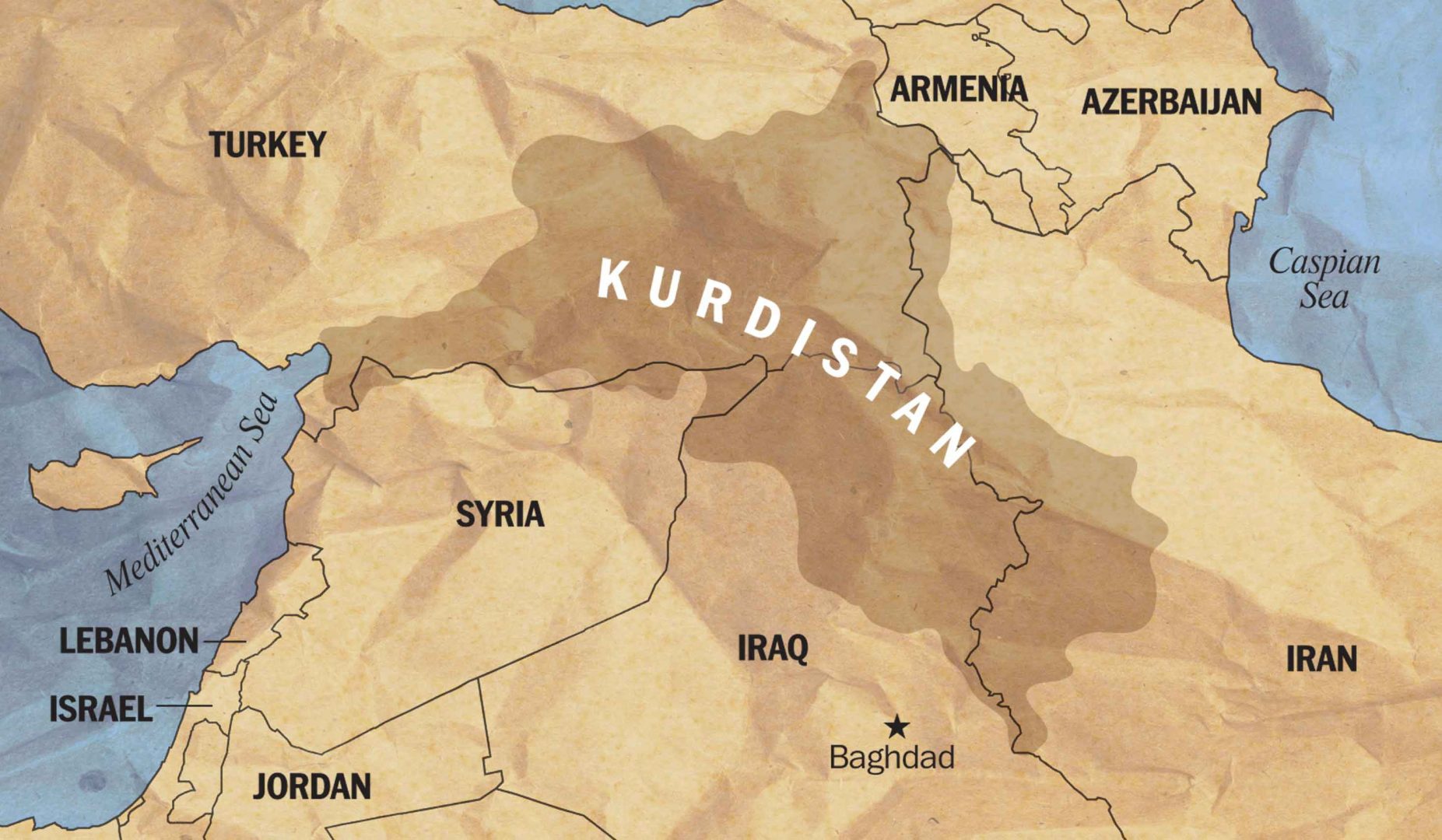
Now that the US has decided to pull its troops out of Syria, we need to keep watch on what Turkey decides to do about the impressive military strength of the Kurdish forces that have been fighting alongside the US against ISIS. Turkey has a long history of animosity toward the Kurds who comprise one of the largest non-Turkic ethnic groups in the country. The Kurds are perhaps the largest nation (estimated population is between 25 and 35 million) in the world that lacks a state–instead the Kurdish nation lives under control of four different states: Turkey, Iraq, Iran,and Syria. After World War II the Treaty of Sevres (1920) signed between the victorious allies (Britain and France) and the defeated Ottoman Empire promised the creation of an independent state called Kurdistan (as well as an independent Armenia), but that promise was rescinded in the Treaty of Lausanne (1923) which set the boundaries of modern Turkey.
As the Syrian civil war unfolded after it began in 2011, Syrian Kurds organized themselves into militias called People’s Protection Units (YPG) which constituted the armed wing of the Syrian Kurdish Democratic Union Party (PYD). The YPG constituted the largest element of what came to be known as the Syrian Democratic Force which was the main ground-fighting force supported by the US. The YPG is estimated to be comprised of between 30 and 60,000 troops, most of them now well battle-hardened. Turkey fears that this militia will now be used to create an independent Kurdistan which will attract Turkish Kurds to demand independence as well.
“Turkey’s defense minister said Thursday that Kurdish forces in Syria would be ‘buried’ in their trenches in any Turkish operation to rout the fighters from the border, just one day after President Trump announced a withdrawal of U.S. troops from the country.
“Speaking from the Qatari capital, Doha, Hulusi Akar said Turkey was preparing ‘intensely’ for a military offensive east of the Euphrates River in Syria, where Kurdish-led forces have battled the Islamic State militant group.
“The fighters have dug trenches and tunnels in the area in anticipation of the operation, Akar said, according to Turkey’s official Anadolu news agency.
“’But whatever they dig . . . when the time comes they will be buried in the trenches,’ he said. ‘Of this there should no doubt.’”
The US decision is an abject betrayal of the Kurds who had fought valiantly in support of US objectives. One thing to keep an eye on is the possibility that Israel might move in to serve as a more active supporter of the Kurds. Turkey and Israel have recently been trading diplomatic barbs, with Erdogan making anti-semitic comments after Israeli Prime Minister Netanyahu accused Turkey of committing “massacres” against the Kurds. An Israeli-Kurdish alliance would also serve Israeli concerns about the expansion of Iranian influence in Syria. That possibility places Russian President Vladimir Putin in the difficult situation of negotiating between the Iranian-Assad alliance and the Israeli-Kurdish alliance. But that possibility is also a signal of Russian pre-eminence in the Middle East.
US President Trump picked Patrick Shanahan, the Deputy Secretary of Defense to succeed General Mattis for Secretary of Defense. The appointment takes effect on 1 January, two months earlier than Mattis had scheduled. Mattis was going to resign on 28 February so that he could manage a smoother transition to the next Secretary. But it appears as if Mr. Trump wanted a change earlier. Shanahan comes with thirty years of experience with the Boeing Corporation but no military experience. In his 2017 confirmation, Shanahan described himself in these terms:
“‘I believe my skill set strongly complements that of Secretary Mattis,’ Shanahan said. ‘He is a master strategist with deep military and foreign policy experience. As deputy secretary of defense and Secretary Mattis’ chief operating officer, I bring strong execution skills with background in technology development and business management.'”
Mr Trump most likely prefers a business person in his Cabinet, but the times seem to demand someone with a broader strategic perspective, particularly in light of Mr Trump’s lack of experience in military matters. But the companies that produce military hardware are probably quite pleased with the choice.
Turkey and Iran have indicated that they are willing to work with each other in Syria despite having differences on the possible outcomes of an end to the civil war there. Turkey has indicated that it will not comply with the US-imposed sanctions on Iran which came about after the US unilaterally pulled out of the Iran nuclear deal. It appears as if both countries have recognized the dangers of conflict after the US decision to pull out of Syria. Both countries are jockeying for positions of influence in Syria–Turkey wishes to use the US departure as an opportunity to eliminate the Kurdish drive for autonomy in the region and Iran wishes to establish a corridor of influence that extends from Tehran through Iraq, Syria, and Lebanon. These objectives are not necessarily incompatible, but they require delicate diplomatic efforts to avoid conflict.
It also appears as if Turkey’s influence was decisive in President Trump’s decision to pull US troops out of Syria. The Washington Post has an extraordinary article recounting a telephone conversation between President Erdogan of Turkey and US President Trump. The Post paraphrases the conversation on accounts presumably given by officials in the White House who had access to the conversation:
“The Islamic State, according to Trump himself, had been defeated, Erdogan said. Turkey’s military was strong and could take on any remaining militant pockets. Why did some 2,000 U.S. troops still need to be there?
“’You know what? It’s yours,’ Trump said of Syria. ‘I’m leaving.’
“The call, shorthanded in more or less the same words by several senior administration officials, set off events that, even by the whirlwind standards of Washington in the Trump years, have been cataclysmic. They ended, for the moment at least, with Thursday’s resignation of Defense Secretary Jim Mattis.”
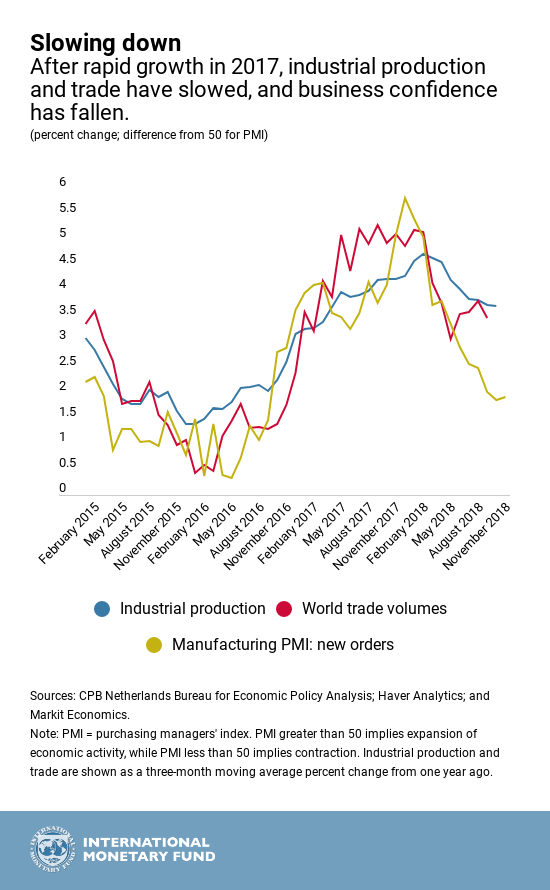
The global economy seems to be slowing down at a brisk pace. There are probably a number of factors behind this decline: the tariffs the US has imposed on important commodities and the reciprocal tariffs imposed by other states; the rise in the value of the US dollar brought about by increases in interest rates by the US Federal Reserve; and fears of credit excesses in China and several European states.

 World Politics News