The debate in the US over the “Build Back Better” proposals of the Biden Administration which are designed to bolster the social safety net in the US. The proposal was scored by the Congressional Budget Office as of 3 November 2021. Spending was estimated as follows over the ten-year program as follows, in millions of dollars:
Year
2022
2023
2024
2025
2026
2027
2028
2029
2030
2031
22-26
27-31
Total Changes in Direct Spending
860,106
89,542
87,339
174,313
129,600
117,917
43,092
55,044
57,406
63,564
1,340,900
1,677,924
Budget Authority
117,474
143,968
193,539
252,667
233,285
206,122
176,256
133,421
91,957
87,298
940,933
1,635,988
Estimated Outlays
117,464
143,930
193,395
252,298
232,573
204,982
174,619
131,184
89,027
83,571
939,660
1,623,044
The media consistently report the ten-year cost of the proposal which is $2,562,704,000, averaging about $256 billion a year. To put this figure in context, the US Defense Department budget for proposed FY2022 defense budget is $753 billion, a figure which does not include a number of budgets, such as the Central Intelligence Agency, which also should count toward national security expenditures. Fareed Zakaria notes: “U.S. military spending remains larger than the defense budgets of the next 10 countries put together, most of which are Washington’s close allies. The United States’ intelligence budget alone — around $85 billion — is larger than Russia’s total defense spending.” If Defense Department spending were reported in the same manner as the social spending proposals, the we would be talking about $7.5 trillion over 10 years.
“It spends money on a scale that is almost unimaginable — and the waste is, too. Every government agency is required to audit its accounts, but for decades, the Pentagon simply flouted this law. In 2018, it finally obeyed, paying $400 million for 1,200 auditors to examine its books, yet it still could not get a clean bill of health. As writer Matt Taibbi noted in a brilliant 2019 exposé of Pentagon accounting, the auditors ‘were unable to pass the Pentagon or flunk it. They could only offer no opinion, explaining the military’s empire of hundreds of acronymic accounting silos was too illogical to penetrate.’ The Defense Department has failed to pass two more audits since then.
It is also misleading to talk about the Defense Department budget as necessary to support the troops in the field. Most of the money is spent on military hardware and the specialists required to maintain the high-end technologies. The ordinary soldier gets very little of this money:
“About 14% of enlisted active-duty families reported “low” or “very low” food security in an annual 2020 survey, according to Denise Hollywood, the chief community and programs officer for Blue Star Families.
“Enlisted troops appear to be suffering the most. A total of 29% of the most junior enlisted ranks of E1-E4, a segment that includes more than 570,000 people and more than half of all enlisted in the military, reported facing hunger over the past year, according to the advocacy group Feeding America, the largest hunger relief organization in the U.S.
“In all, 160,000 service members struggled to provide food for themselves or their families, the group recently reported. A pair of Army studies found the problem was made worse by the COVID-19 pandemic. One of those studies found that on one Army base, one in three reported being food insecure in 2019. The second study, done at a different Army base, saw that out of a sample of nearly 5,000 soldiers, the COVID-19 pandemic caused the percentage of food-insecure troops to almost double from 16% to 31%.”
The criticisms levelled against the “Build Back Better” proposals are incredibly distorted. At the same time that some in Congress argue that the money is not well spent, those same voices lament the US withdrawal from Afghanistan. And yet, after 20 years in Afghanistan, the loss of thousands of US soldiers and many, many civilians, as well as the expenditure of $3 trillion, the US did not realize its objectives in the country. Would those voices think that the money and lives in Afghanistan were well spent? Would they use the same criteria for success that makes them think that spending more in Afghanistan was a good investment as they do for a family leave program? Or pre-K education for our children? Or money spent to avert a climate crisis?
We tend to believe that social media is responsible for the wave of misinformation and disinformation that plagues discourse about politics in the US and about the COVID pandemic and vaccinations. Nothing could be further from the truth. We are well aware of the publicity campaigns launched by tobacco companies downplaying the dangers of cigarette smoking. In fact there is a website completely devoted to documents that provide evidence of the duplicity of the tobacco companies.
Geoffrey Supran and Naomi Oreskes have written an article for The Guardian which documents, in considerable detail, the efforts of the fossil fuel industry to confuse and misdirect the debates about global warming. This campaign of disinformation started long before awareness of climate change became widespread in recent years. The authors summarize the article as follows:
“The fossil fuel industry has perpetrated a multi-decade, multibillion dollar disinformation, propaganda and lobbying campaign to delay climate action by confusing the public and policymakers about the climate crisis and its solutions. This has involved a remarkable array of advertisements – with headlines ranging from “Lies they tell our children” to “Oil pumps life” – seeking to convince the public that the climate crisis is not real, not human-made, not serious and not solvable. The campaign continues to this day.
“As recently as last month, six big oil CEOs were summoned to US Congress to answer for the industry’s history of discrediting climate science – yet they lied under oath about it. In other words, the fossil fuel industry is now misleading the public about its history of misleading the public.
“We are experts in the history of climate disinformation, and we want to set the record straight. So here, in black and white (and color), is a selection of big oil’s thousands of deceptive climate ads from 1984 to 2021. This isn’t an exhaustive analysis, of which we have publishedseveral, but a brief, illustrated history – like the “sizzle reels” that creatives use to highlight their best work – of the 30-plus year evolution of fossil fuel industry propaganda. This is big oil’s PR sizzle reel.”
Robert Proctor, a science historian from Stanford University, has studied this process of disinformation and has developed a field of study which he calls agnotology. The BBC reports:
“Proctor had found that the cigarette industry did not want consumers to know the harms of its product, and it spent billions obscuring the facts of the health effects of smoking. This search led him to create a word for the study of deliberate propagation of ignorance: agnotology.
“It comes from agnosis, the neoclassical Greek word for ignorance or ‘not knowing’, and ontology, the branch of metaphysics which deals with the nature of being. Agnotology is the study of wilful acts to spread confusion and deceit, usually to sell a product or win favour.”
Agnotology is an awkward term and I doubt that it will achieve widespread usage. But it deserves greater attention given the ways publics have been manipulated by the tobacco, fossil fuel, and anti-science The efforts of the fossil fuel industry has not abated. In President Biden’s recent proposals on social infrastructure there was an important measure, called the “Clean Electricity Performance Program” (CEPP), which was designed to create incentives for cleaner alternatives to the production of electricity. But, as of now, that program has been excised from Biden’s agenda, dues largely to the success of the fossil fuel industry in getting Senators to block it. According to National Public Radio:
“But despite months of negotiation with the White House, Manchin, a Democrat from West Virginia, a coal and natural gas state, said he was against the program. Manchin told CNN recently that energy companies already invested in clean energy and asked why the federal government should be the one paying for it.
“Utilities, in fact, are making the transition to carbon-free energy, but far too slowly to stave off the worst effects of climate change. The CEPP’s carrot-and-stick approach is aimed at hastening the transition so that emissions levels get closer to what climate science says we need right now.
It is difficult to address these tactics. Freedom of speech is a protected right in the US and I believe firmly in that right. But those who support disinformation often have access to large sums of money to spread obfuscation and outright lies since the industries involved are well-established and highly profitable. Agnotology is a destructive and corrosive process and incompatible with a thriving and functioning democracy.
The COP26 in Glasgow ended on Saturday and it is difficult for me to now assess its level of success. There was clearly a strong effort by major parties (including the US, which was a relief) to reach an agreement, but in the end it came down to a last minute compromise which fell short of a dramatic success. Both the US and China finally agreed to submit a resolution that called for a “phase-out” of coal-fired power. The US has moved clearly in that direction, (no thanks to Senator Joe Manchin (D-WV)), but the Chinese, despite their rhetoric, still rely heavily on coal: “About half of the world’s coal plants operate within China, and it has plans to add around 100 gigawatts of new capacity. Last year, it built over three times as much new coal power capacity as all other countries in the world combined, according to the Center for Research on Energy and Clean Air.” Nonetheless, the Chinese seem sincere in their desire to move away from coal.
But the Indians blocked the resolution. According to Reuters:
“After a huddle between the envoys from China, India, the United States and European Union, the clause was hurriedly amended to ask countries to ‘phase down’ their coal use.
“India’s environment and climate minister, Bhupender Yadav, said the revision reflected the ‘national circumstances of emerging economies.’
“‘We are becoming the voice of the developing countries,’ he told Reuters, saying the pact had ‘singled out’ coal but kept quiet about oil and natural gas.
“‘We made our effort to make a consensus that is reasonable for developing countries and reasonable for climate justice,’ he said, alluding to the fact that rich nations historically have emitted the largest share of greenhouse gases.
“The single-word change was met with dismay by both rich countries in Europe and small island nations along with others still developing.”
Coal currently supplies 70% of India’s electricity and the country is currently in the midst of a serious energy crunch which makes political concessions difficult. But its appeal to climate justice needs to be scrutinized more carefully.
The Yale University climate program called “Climate Connections” defines climate justice in these terms: “‘Climate justice’ is a term, and more than that a movement, that acknowledges climate change can have differing social, economic, public health, and other adverse impacts on underprivileged populations. Advocates for climate justice are striving to have these inequities addressed head-on through long-term mitigation and adaptation strategies.”
It is hard to disagree with the Indian position: rich countries polluted heavily in earlier times and poor countries should have the ability to follow similar paths in order to achieve higher levels of economic development. But the level of greenhouse gases in the earlier period was much lower then than it is now, so the comparison misses an important dimension. It all depends on whether one looks at the climate crisis as a national issue rather than an international issue. It also depends on how one values the future over the present. The perspective of a citizen living on an island in an era of rising seas is quite different from the perspective of a citizen living in territories far from the ocean.
The Democratic Party needs to make a change in its strategy to pass the social services spending bill. The strategy has been to link that bill with the infrastructure bill and was dictated by the fear that the Democrats will lose control on Congress in the 2022 elections. The fear is legitimate since the party in power usually loses congressional seats in off-year elections. But the disarray of the Democrats has been palpable and the losses in 2022 appear to be a self-fulfilling prophecy because of the conflict in the party between “progressives” and moderates”. The decision to put everything in one bucket was deemed necessary to pass the entire bill in a process called “reconciliation” which avoided the possibility that the Republicans would filibuster the bill. Reconciliation only requires 51 votes; to overturn a filibuster requires 60 votes.
The difficulty is that the social spending bill is filled with proposals that appear to be very popular with the American public. National Public Radio listed the different parts of the “Build Back Better” plan which was estimated to cost about $3.5 trillion as originally proposed.
Education: $726 billion toward universal pre-k for 3 and 4-year-olds, child care for working families, tuition-free community college, investments in historically Black colleges and universities, and investments in primary care. (Details drafted by the Health, Education, Labor and Pensions Committee)
Immigration: $107 billion toward lawful permanent status for qualified immigrants, border security measures. (Judiciary Committee)
Health care: At least $1 billion in deficit reduction, with investments in paid family and medical leave, ACA expansion extension, expanding Medicare to include dental, vision and hearing benefits along with lowering the eligibility age. Also included are investments to address health care provider shortages, the expansion of the child tax credit, long-term care for seniors and people with disabilities, clean energy, manufacturing, and transportation tax incentives, housing incentives.
The following offsets are listed for these initiatives: corporate and international tax reform, taxes from high-income individuals, IRS tax enforcement, health care savings and the carbon polluter import fee. (Finance Committee)
Agriculture: $135 billion to go toward agriculture conservation, drought and forestry programs to reduce carbon emissions and prevent wildfires, climate research, debt relief, child nutrition, and funding for a Civilian Climate Corps. The budget outline aims to meet Biden’s goal of 80% clean electricity and 50% carbon emissions by 2030. (Agriculture Committee)
Housing: $332 billion for housing affordability, rental assistance, homeownership initiatives, revitalization projects, zoning, transit improvements and public housing investments. (Banking and Housing Committee)
Clean energy: $198 billion toward clean electricity payment program, financing for domestic manufacturing of clean energy and auto supply chain technologies, federal procurement of energy efficient materials, and climate research. (Energy and Natural Resources Committee)
Climate initiatives: $67 billion toward funding low-income solar technologies, environmental justice investments in clean water affordability and access, EPA climate and research programs, federal investments in energy efficient buildings and green materials, and investments in clean vehicles. (Environment and Public Works Committee)
Homeland security: $37 billion toward improving cybersecurity infrastructure, border management investments, federal investments in green materials procurement. (Homeland Security Committee)
Investments in Native communities: $20.5 billion toward Native health programs and facilities, education, housing, energy, and language programs. (Indian Affairs Committee)
Small businesses: $25 billion toward small business access to credit, investment and markets. (Small Business and Entrepreneurship Committee)
Veterans: $18 billion toward upgrading VA facilities. (Veterans Affairs Committee)
The problem with the Democratic strategy is that all these details get lost and the Republicans and the “moderate” Democrats all focus on the total bill with cries of “fiscal responsibility” (monumental hypocrisy given past budgets and the ease with which massive defense budgets are passed that do little to enhance national security).
The Democrats should break down the bill and propose single bills for each issue. It is a risky strategy but one which may yield long-term benefits. Senator Joe Manchin may vote against the climate initiative bill but he would likely vote for the health care bill. And the Republicans would have to vote unanimously against every single one of the bills which would make them incredibly vulnerable in future elections. How would a Senator from Iowa (like Senator Grassley) vote against an agricultural bill?
It is time for the Democrats to stop running scared from the 2022 election. Bring the bills to the table and let the American people decide what is important to them. I suspect that the people would overwhelmingly favor the Democratic proposals.
Over the last few months I have had the sense that I do not really understand what’s going on in the world anymore. I have never been good at making predictions about how political developments might unfold, but I always had good reasons for being wrong. Lately, however, nothing really makes sense to me. The complete capitulation of the Republican Party in the US to a political figure with no accomplishments at all and a flawed understanding of the US Constitution remains a complete mystery to me. But on a deeper level, the collapse of traditional political parties throughout the world and the rise of new parties with no clearly articulated principles since the Great Recession of 2007-08 defies my comprehension.
“As citizens around the world continue to grapple with a global pandemic and the changes it has brought to their everyday lives, many are also expressing a desire for political change. Across 17 advanced economies surveyed this spring by Pew Research Center, a median of 56% believe their political system needs major changes or needs to be completely reformed. Roughly two-thirds or more hold this view in Italy, Spain, the United States, South Korea, Greece, France, Belgium and Japan….
“But while many want change, many are also skeptical about the prospects for change. In eight of the 17 publics, roughly half or more of those polled say the political system needs major changes or a complete overhaul and say they have little or no confidence the system can be changed effectively.”
It seems that the whole idea of self-governance no longer holds sway within major polities as the following chart suggests.
An earlier Pew study indicates that in many countries, people are increasingly unable to agree upon some basic facts about society. That study found that
“In some places, this acrimony has risen to the level that people think their fellow citizens no longer disagree simply over policies, but also over basic facts. In France, the U.S., Italy, Spain and Belgium, half or more think that most people in their country disagree on basic facts more than they agree. Across most societies surveyed, those who see conflict among partisans are more likely to say people disagree on the basic facts than those who do not see such conflicts.”
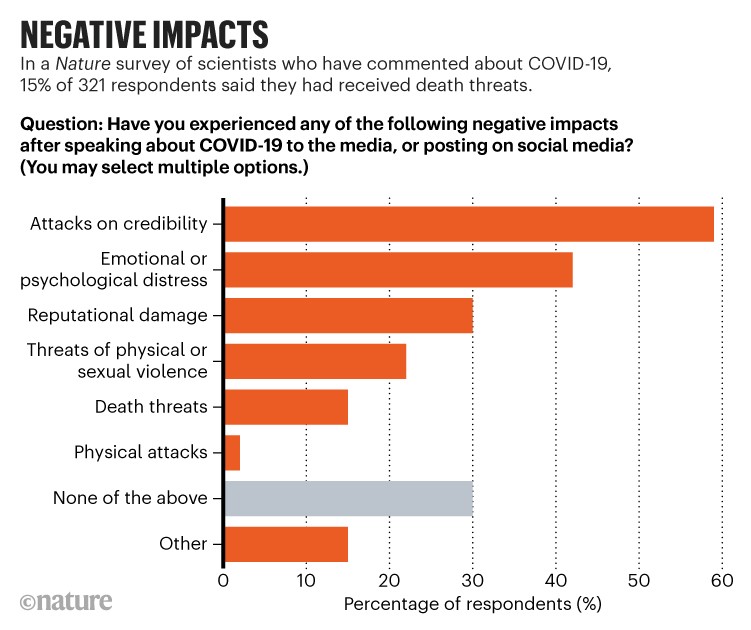
The wide discrepancies about the COVID pandemic–even disagreements about whether there is indeed a pandemic–are clear indicators of how profound these disagreements are. Nature recently published an article on how researchers on COVID are treated by those who disagree with their findings:
“Some aspects of COVID-19 science have become so politicized that it is hard to mention them without attracting a storm of abuse. Epidemiologist Gideon Meyerowitz-Katz at the University of Wollongong in Australia, who has gained a following on Twitter for his detailed dissection of research papers, says that two major triggers are vaccines and the anti-parasite drug ivermectin — controversially promoted as a potential COVID-19 treatment without evidence it was effective. ‘Any time you write about vaccines — anyone in the vaccine world can tell you the same story — you get vague death threats, or even sometimes more specific death threats and endless hatred,’ he says. But he’s found the passionate defence of ivermectin surprising. ‘I think I’ve received more death threats due to ivermectin, in fact, than anything I’ve done before,’ he says. ‘It’s anonymous people e-mailing me from weird accounts saying ‘I hope you die’ or ‘if you were near me I would shoot you’.”
Under these conditions, there is no such thing as politics since citizens cannot even agree about how to disagree nor do they grant citizenship (or even humanity) to those with whom they disagree. Governments cannot even function under such conditions since many within the society do not grant legitimacy to the authority of the governments.
“Maybe,’ he said hesitantly, ‘maybe there is a beast.’ The assembly cried out savagely and Ralph stood up in amazement. ‘You, Simon? You believe in this?’ ‘I don’t know,’ said Simon. ‘But . . .’ His heartbeats were choking him. The storm broke. ‘Sit down!’ ‘Shut up!’ ‘Take the conch!’ ‘Sod you!’ ‘Shut up!’ Ralph shouted. ‘Hear him! He’s got the conch!’ ‘What I mean is. Maybe . . . it’s only us.’ ‘Nuts!’ That was Piggy, shocked out of decorum. ‘We could be sort of . . .’ Simon became inarticulate in his effort to express mankind’s essential illness.” ― William Golding
The United Nations has released its annual “Emissions Gap Report” which updates the world on how well member states have adhered to the reduction of greenhouse gases promised in the Paris Agreement. The report is issued on the eve of the COP26 (UN Climate Change Conference of the Parties) conference scheduled for Glasgow, Scotland. The 2021 report does not mince any words:
“The report shows that new or updated NDCs [nationally determined contributions] and announced pledges for 2030 have only limited impact on global emissions and the emissions gap in 2030, reducing projected 2030 emissions by only 7.5 per cent, compared with previous unconditional NDCs, whereas 30 per cent is needed to limit warming to 2°C and 55 per cent is needed for 1.5°C. If continued throughout this century, they would result in warming of 2.7°C. The achievement of the net-zero pledges that an increasing number of countries are committing to would improve the situation, limiting warming to about 2.2°C by the end of the century. However, the 2030 commitments do not yet set G20 members (accounting for close to 80 per cent of GHG emissions) on a clear path towards net zero.
“Moreover, G20 members as a group do not have policies in place to achieve even the NDCs, much less net zero.”
It is hard to read the report without thinking that the situation is increasingly untenable, particularly since the more stringent measures proposed by the Biden Administration to reduce greenhouse gases have been gutted. The Los Angeles Times reports:
“Biden has set a goal to reduce greenhouse gas pollution by 50% within a decade, a potentially insurmountable task without major changes in the way the country generates electricity.
“Democrats had hoped Biden’s ‘Build Back Better’ program would serve as a once-in-a-generation opportunity to combat climate change at a time when their party controls the White House and both chambers of Congress.
“But as negotiations enter their most serious stage, the top climate provision is running into significant political opposition.
“The plan’s Clean Electricity Performance Program, which would encourage utilities to increase their use of renewable energy through a combination of payments and fines, is opposed by Sen. Joe Manchin III of West Virginia, a key Democrat from a coal- and gas-producing state. Last year, he reported about $492,000 in dividends on stock from his family’s coal brokerage business, according to his latest financial disclosure.
“….populations in countries with low and medium levels of UN-defined human development index (HDI) have had the biggest increase in heat vulnerability during the past 30 years, with risks to their health further exacerbated by the low availability of cooling mechanisms and urban green space (indicators 1.1.1, 2.3.2, and 2.3.3).
“Agricultural workers in countries with low and medium HDI were among the worst affected by exposure to extreme temperatures, bearing almost half of the 295 billion potential work hours lost due to heat in 2020 (indicator 1.1.4). These lost work hours could have devastating economic consequences to these already vulnerable workers—data in this year’s report shows that the average potential earnings lost in countries in the low HDI group were equivalent to 4–8% of the national gross domestic product (indicator 4.1.3).
“Through these effects, rising average temperatures, and altered rainfall patterns, climate change is beginning to reverse years of progress in tackling the food and water insecurity that still affects the most underserved populations around the world, denying them an essential aspect of good health. During any given month in 2020, up to 19% of the global land surface was affected by extreme drought; a value that had not exceeded 13% between 1950 and 1999 (indicator 1.2.2). In parallel with drought, warm temperatures are affecting the yield potential of the world’s major staple crops—a 6·0% reduction for maize; 3·0% for winter wheat; 5·4% for soybean; and 1·8% for rice in 2020, relative to 1981–2010 (indicator 1.4.1)—exposing the rising risk of food insecurity.
“Adding to these health hazards, the changing environmental conditions are also increasing the suitability for the transmission of many water-borne, air-borne, food-borne, and vector-borne pathogens. Although socioeconomic development, public health interventions, and advances in medicine have reduced the global burden of infectious disease transmission, climate change could undermine eradication efforts.”
Inaction on climate change is a crime against humanity, and a crime that will devastate the poorer citizens of the world. That one US Senator, with a clear personal conflict of interest, can prevent effective action to avoid the catastrophe is a pathetic statement on the current politics in the United States. To be fair, however, there are few other countries that have behaved more responsibly. It will be interesting to see who writes the history on this era and what the conclusions will be.
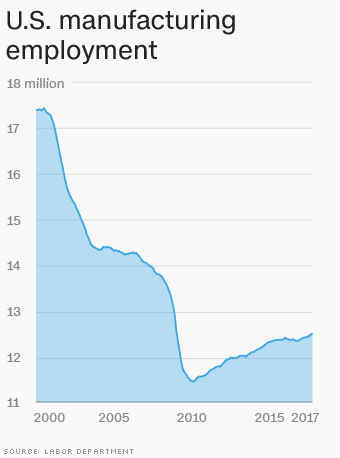
Globalization has enriched some people to an incredible degree as many products once produced in high wage countries were shifted to low wage countries. The winners in this transition were those who owned the production process and the workers in the newly built factories; the losers were those who once worked in the factories that were outsourced to the low wage areas. The loss of jobs in some countries such as the US was considerable and amplified by the process of automation, as the graph below indicates.
The winners were the owners of capital and the transition in the US was replicated globally. The effect of the transition was to create extraordinary wealth for the owners but little wealth for those who could only sell their labor. In many respects the process seems to be replicating the distribution of wealth in the period of feudalism.
The COVID pandemic aggravated the disparities as low wage workers were laid off or quit their jobs while those who owned stocks and houses benefited tremendously. Credit Suisse reports:
“Regarding what happened in 2020, the verdict is unanimous. The indices all agree that global wealth inequality rose in 2020 by a substantial amount: the share of the top 10% increased by 0.9 percentage points, the share of the top 1% by 1.1 percentage points, and the Gini by 0.6 points. Furthermore, with a single exception – the share of the top 1% in 2014 – the inequality rise in 2020 was significantly greater than that recorded in any year this century”
It may be the case, however, that workers are asserting their power and demanding more of the profits generated by the owners of capital. There are several labor strikes going on in the US as reported by The Economist:
“THE PANDEMIC has been very good for cornflakes, and very busy for those who make them. With so many people spending so much time at home, cereal consumption has boomed. Kerry Williams, an instrument technician, says this has translated into almost constant overtime shifts at his Kellogg’s plant in Pennsylvania, sometimes as long as 16 hours a day. That would be hard enough. But what makes it that much harder, he says, is seeing Kellogg’s, one of the world’s biggest producers of ready-to-eat cereals, pull in giant profits even as his pay has barely increased. ‘We feel it’s time that this money trickles down to us because without the workers on the floor there would be no Kellogg,’ he says. Mr Williams and about 1,400 colleagues at Kellogg’s factories around the country, from Tennessee to Michigan, have been on strike for two weeks.
“They are far from alone. On October 14th about 10,000 employees of John Deere, a manufacturer of agricultural machinery, walked off the job in five states. More than 20,000 nurses and workers in California and Oregon with Kaiser Permanente, a health-care company, have voted to strike. Some 60,000 behind-the-scenes film and television workers were also set to head to picket lines, having voted 99% in favour of a strike, but a last-minute deal on October 16th averted that.”
And many people are simply leaving their jobs in large numbers, a movement that has been dubbed “The Great Resignation“. The Economist continues:
“Even without the strikes, there is no doubt that American workers are getting pickier. Nearly 4.3m quit their jobs in August, the most in the two decades or so that the Labour Department has monitored this data. Celine McNicholas of the Economic Policy Institute, a left-leaning think-tank, notes the exodus has been most pronounced in restaurants and retail operations, service sectors with few unions, low wages and little sick pay. ‘Folks are saying, ‘This is not a job worth it to me right now’, she says. ‘They’re being asked to take it or leave it, and they’re leaving it.'”
We will have to see whether workers continue to demand a higher share of the profits they help generate. There is evidence that this labor discontent is spreading globally.
Two left-leaning think tanks have published a very important study of the US electorate. We are familiar with the traditional breakdown of voting blocs into urban, suburban, and rural. This study looks at a different way to identify voters: residents in “manufacturing-heavy working-class towns that are not part of huge urban areas, but are not farming-dominated rural counties either. These “factory town” counties can be split into two types — midsized ones with cities more than 35,000 in population that are not attached to the big urban areas, and smaller ones that are just as reliant on manufacturing, but do not have any cities with at least 35,000 people. These counties contain 40% of voters.” The breakdown resonates with the socio-economic make-up of the area in which South Hadley resides–the cities of Chicopee, Holyoke, and Springfield.
The study reveals that residents in these areas voted overwhelmingly for President Trump in the 2016 and 2020 national elections. The report asserts:
“The bottom line is that while the Democratic margin in big cities and big city suburbs grew by a little over a million and a half votes in these ten states since 2012 (about 1,550,000) — more than enough to overcome the 557,000 losses in farm dominated rural counties — our losses in small and midsized manufacturing counties overwhelmed those gains, with combined losses of about 2,635,000 votes.
“The reasons Donald Trump made these kinds of gains in these factory towns are varied and complex, and should no doubt be heavily debated within the Democratic Party for years to come. This report points to the key places we should be looking.”
The report digs down deeper–it was not simply that these areas lost jobs in the process of globalization in the 1990s and early 2000s although that trauma explains much of Trump’s attractiveness to the voters. The report identifies three ancillary factors that suggest policy options other than simply creating more manufacturing jobs:
“The report goes on to examine the ways health declined once the jobs went. Using metrics from the County Health Rankings and Roadmaps that track a variety of health outcomes, not just access to affordable care, researchers found that the midsized factory towns saw their health outcomes decline by 5.7% in the last decade, and the larger the decline, the larger the shift to the GOP in the voting booth. Interestingly, they report that health outcomes in the small factory towns actually improved by 0.3%.
“A third section shows the drop-off in unionization in the factory towns, which is part of the explanation for the decline in Democratic voting. Unions have long been the engine of progressive politics in the Midwest, and the region surveyed accounted for 93% of the nationwide decline in union jobs in the past decade.
“The final section of the report examines race, and the results are not pretty. More diverse factory towns were less likely to see a vote shift away from the Democrats than those that were disproportionately white. The racist dog whistles worked.
“The report does not seek to answer the more difficult and troubling question: Did the economic uncertainty make the appeal to racism more likely to succeed, or was the racism there all the time?”
The benefit of this analysis is that it suggests more strategies to address the needs of workers than simply to argue that the US needs to beef up its manufacturing capabilities. The truth is that the US still produces a lot of manufactured products, but that it does so with fewer workers. This chart identifies the discrepancy:
The impact of losing a job is amplified by the loss of health insurance associated with employment. Health insurance not tied to a job would alleviate some of this anxiety. Similarly, unions can prevent the loss of jobs associated with ruthless job cutting to beef up corporate profits. Finally, addressing the reality of race hatred, which spills over into a desire to restrict immigration, can diminish the attractiveness of using race to magnify the trauma of a loss of jobs.
Farmers in India have been protesting against changes in agricultural laws for over a year. The changes were passed by the government of Narendra Modi and the Bharatiya Janata Party (BJP) in in September 2021. The changes are described by Lawfare:
“Modi’s government passed the three farming laws in September to dramatically change the decades-old system of selling agricultural goods in India in an effort to resolve India’s long-standing agricultural crisis: Nearly half of India’s workforce is employed in agriculture, but farming makes up only around 15 percent of the country’s gross domestic product—a portion that is declining steadily. More than half of farming households are in debt, which has contributed to a crisis of suicide among farmers….
“The current agriculture system dates back to the decades after India’s independence. In the 1960s, with food shortages plaguing the country, the Indian government intervened in what is known as the ‘Green Revolution’ by introducing new technologies to increase the production of rice and wheat. At that time, the government also created a new food marketing system. The system is complicated and varies across states, but, essentially, it involves farmers bringing crops to wholesale markets known as mandis and selling the crops to traders in an open auction. The mandis are run by a marketing board established by the state to prevent farmers from being exploited by large retailers. Prices can be informed by minimum support prices (MSPs)—prices set by the government and at which it buys crops in certain states.
“The three new laws each deregulate a different aspect of the agricultural system: the sale, pricing and storage of goods. They allow farmers to sell their goods to private buyers outside the state-run markets and create a system for contract farming. Taken together, the laws reduce the government’s role in agriculture and open up spaces for private investors.
“The government argues that the deregulations increase efficiency, allow farmers greater freedom and let farmers negotiate better prices for their crops. But farmers say these reforms will devastate their earnings. Many worry that by allowing farmers to bypass the state-sanctioned marketplaces and sell directly to private buyers without paying the taxes or fees required by state-run markets, the laws will gradually make the mandi system obsolete. Protesting farmers’ biggest fear is that this dismantling of the mandis will end the MSPs—a safety net that assures farmers that they will be paid a certain price without regard to market conditions. Without MSPs, farmers would be at the mercy of private companies that have no obligation to pay them the guaranteed minimum price. The bills say nothing about the MSPs, and Modi has promised that they will remain. Still, protesters are skeptical and have demanded that the government make its promise in writing.
The protests have continued and have been violent at times. Yesterday, nine people were killed in the protests. The Guardian reports:
“Nine people have been killed in violent clashes during a protest by hundreds of farmers in the north Indian state of Uttar Pradesh, in a deadly escalation of year-long demonstrations against contentious agriculture laws.
“The farmers had gathered for a demonstration on Sunday in Lakhimpur Kheri district, where the junior home affairs minister Ajay Mishra and the state’s deputy chief minister, Keshav Prasad Maurya, were due to visit.
“There are conflicting reports of how four farmers, three BJP party workers, a driver and a journalist died as chaotic scenes broke out around vehicles that were part of Mishra’s convoy.
“Farmers at the scene alleged that a car thought to be owned by Mishra’s son ran over four protesters, killing them.”
The farmers will likely step up their protests and there is evidence that there is significant support for the farmers. The popularity of the Modi government has declined in recent months, largely because of the COVID pandemic. Whether these protests signal significant trouble for Modi remains to be seen.
The International Consortium of Investigative Journalists (ICIJ) has released a large number of confidential documents on how many public figures have used the offshore banking system to disguise how much money they possess and how that money was spent. The documents, which the ICIJ calls the “Pandora Papers“, build upon a previously released collection of similar papers dubbed the “Panama Papers” and document conclusively how many of the public figures shield their wealth from tax authorities. According to the ICIJ:
“Millions of leaked documents and the biggest journalism partnership in history have uncovered financial secrets of 35 current and former world leaders, more than 330 politicians and public officials in 91 countries and territories, and a global lineup of fugitives, con artists and murderers.
“The secret documents expose offshore dealings of the King of Jordan, the presidents of Ukraine, Kenya and Ecuador, the prime minister of the Czech Republic and former British Prime Minister Tony Blair. The files also detail financial activities of Russian President Vladimir Putin’s ‘unofficial minister of propaganda’ and more than 130 billionaires from Russia, the United States, Turkey and other nations.
“The leaked records reveal that many of the power players who could help bring an end to the offshore system instead benefit from it – stashing assets in covert companies and trusts while their governments do little to slow a global stream of illicit money that enriches criminals and impoverishes nations.”
What is especially disturbing about this system is that the very people who use the offshore banking system to hide money from tax authorities are the same people who write the laws that make such duplicity possible. The Washington Post points out the harms done by the system:
““The offshore financial system is a problem that should concern every law-abiding person around the world,” said Sherine Ebadi, a former FBI officer who served as lead agent on dozens of financial-crimes cases.
“Ebadi pointed to the role that offshore accounts and asset-shielding trusts play in drug trafficking, ransomware attacks, arms trading and other crimes. ‘These systems don’t just allow tax cheats to avoid paying their fair share. They undermine the fabric of a good society,’ said Ebadi, now an associate managing director at Kroll, a corporate investigations and consulting firm.
National Public Radio lists some of the people exploiting the offshore banking system for their personal benefit and it includes Ukrainian President Zelenskiy, Kenyan President Kenyatta, Pakistani Prime Minister Khan, former British Prime Minister Blair, Azerbaijani President Aliyev, the Russian confidante to President Putin, Svetlana Krivonogikh, and Jordan’s King Abdullah II. The report also notes that many of these banks are not, for Americans, “offshore” since states such as Nevada and South Dakota have changed their laws providing banking secrecy. The BBC also provides additional details on some of the people identified in the documents.
The fact that these offshore banking sites are legal exposes the corruption sometimes involved in writing tax laws. Few ordinary individuals have assess to these legal loopholes and are thus consigned to pay for the freedom of powerful individuals to avoid paying their fair share. The Guardian explains why it has published some of the papers: “Tax havens are estimated to cost governments anywhere between $400bn and $800bn (£293bn to £586bn) every year in lost tax revenues from corporations and individuals. That may be an unfathomable sum, but it is real money that is not being spent on schools, hospitals or the transition to a low-carbon economy.”



 World Politics News