The Israeli newspaper, Haaretz, has published a study on the effects so far of the Israeli air campaign against Hamas in the Gaza Strip done by by Yagil Levy, a sociology professor at the Open University of Israel. Unfortunately, the newspaper is behind a subscription lock, so I am relying on the coverage of the study offered by The Guardian. The conclusions of the study are sobering:
“The aerial bombing campaign by Israel in Gaza is the most indiscriminate in terms of civilian casualties in recent years, a study published by an Israeli newspaper has found….
“In the first three weeks of the current operation, Swords of Iron, the civilian proportion of total deaths rose to 61%, in what Levy described as ‘unprecedented killing’ for Israeli forces in Gaza. The ratio is significantly higher than the average civilian toll in all the conflicts around the world during the 20th century, in which civilians accounted for about half the dead, according to Levy.
“’The broad conclusion is that extensive killing of civilians not only contributes nothing to Israel’s security, but that it also contains the foundations for further undermining it,’ Levy concluded. ‘The Gazans who will emerge from the ruins of their homes and the loss of their families will seek revenge that no security arrangements will be able to withstand.’”
Unfortunately, calls for a cease-fire were thwarted by a US veto at the UN Security Council. The US was the only dissenting vote against the resolution, much to the chagrin of important US allies as reported by the Washington Post:
“Washington’s allies, including from the Western and Arab worlds, largely reaffirmed their support for an immediate humanitarian cease-fire in the Gaza Strip — distancing themselves from the Biden administration’s decision Friday to block a U.N. Security Council resolution calling for a cease-fire.
“The U.S.’s veto of the resolution, which also would have called for the release of hostages and for humanitarian access to Gaza, drew condemnation from some world leaders Saturday.
“Palestinian Authority President Mahmoud Abbas said the veto made the United States responsible for the bloodshed of Palestinians and complicit in ‘genocide, ethnic cleansing and war crimes committed by the Israeli occupation forces.’ Others, including Human Rights Watch and Doctors Without Borders, echoed the idea that U.S. has become complicit in the deaths in Gaza.
“U.S. allies, including France and Japan, also expressed disappointment that the resolution had not passed.”
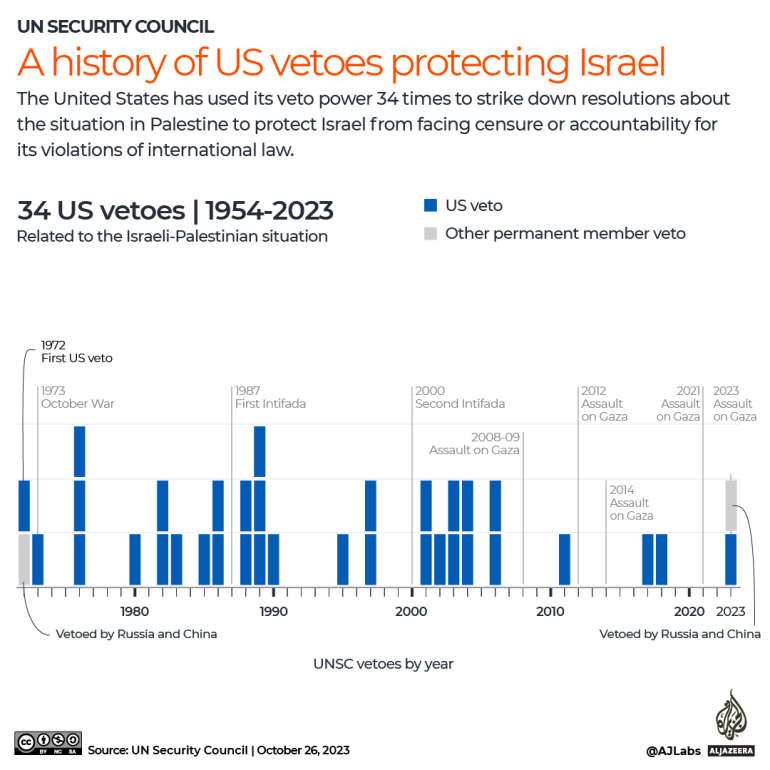
The US has cast a veto on many occasions since 1954 and 34 of those vetoes were to support the Israeli position in the Israel-Arab dispute. According to the Associated Press. “U.S. deputy ambassador Robert Wood called the resolution ‘imbalanced’ and criticized the council after the vote for its failure to condemn Hamas’ Oct. 7 attack on Israel in which the militants killed about 1,200 people, mostly civilians, or to acknowledge Israel’s right to defend itself. He declared that halting military action would allow Hamas to continue to rule Gaza and ‘only plant the seeds for the next war.’”
The US veto is indefensible. The Gaza Health Ministry only counts bodies and thus far it has collected over 17,000. The number of bodies buried in the rubble remains unknown and will likely never be known. The vast majority of the dead are women and children. And the Israeli objective of “eliminating” Hamas remains unattainable.
The New York Times has published an extraordinary article which indicates that information about the 7 October attack on Israel by Hamas was available to the Israeli government more than a year ago. According to the article:
“Then, in July, just three months before the attacks, a veteran analyst with Unit 8200, Israel’s signals intelligence agency, warned that Hamas had conducted an intense, daylong training exercise that appeared similar to what was outlined in the blueprint.
“But a colonel in the Gaza division brushed off her concerns, according to encrypted emails viewed by The Times.
“’I utterly refute that the scenario is imaginary,’ the analyst wrote in the email exchanges. The Hamas training exercise, she said, fully matched ‘the content of Jericho Wall.’
“’It is a plan designed to start a war,’ she added. ‘It’s not just a raid on a village.’
“Officials privately concede that, had the military taken these warnings seriously and redirected significant reinforcements to the south, where Hamas attacked, Israel could have blunted the attacks or possibly even prevented them.”
If this report is true, it is distressing to know that the atrocities of 7 October could have been avoided by the simple placement of Israeli troops along the Gaza border. It likely would have been easy to target the bulldozers that tore down the fences, thereby preventing the invasion of the 2,000 odd members of Hamas that entered Israel. As of today, the Gaza Health Ministry is reporting that over 15,000 people have been killed so far and most experts regard the Ministry as a credible course. The numbers are unusually high according to the New York Times:
“Israel has cast the deaths of civilians in the Gaza Strip as a regrettable but unavoidable part of modern conflict, pointing to the heavy human toll from military campaigns the United States itself once waged in Iraq and Syria.
“But a review of past conflicts and interviews with casualty and weapons experts suggest that Israel’s assault is different.
“While wartime death tolls will never be exact, experts say that even a conservative reading of the casualty figures reported from Gaza shows that the pace of death during Israel’s campaign has few precedents in this century.
“People are being killed in Gaza more quickly, they say, than in even the deadliest moments of U.S.-led attacks in Iraq, Syria and Afghanistan, which were themselves widely criticized by human rights groups.
“Precise comparisons of war dead are impossible, but conflict-casualty experts have been taken aback at just how many people have been reported killed in Gaza — most of them women and children — and how rapidly.”
It may be the case that the Netanyahu government believes that it is “eliminating” Hamas. It is more likely that Hamas will emerge stronger and more powerful over the long run. This conflict is rapidly becoming one of the worst atrocities in the 21st century.
The discourse over the conflict is tortured because analysts are not being careful about how the conflict is defined. I personally think about the conflict as one between the Netanyahu government and Hamas, not as a conflict between the Palestinians and Israel. I also encourage people to read more than just Western media. I recommend that those who wish to have a more complete understanding of the conflict read some alternative sources (just remember–there are no unbiased media sources):
The US media is focusing on the fighting near hospitals in the Gaza Strip. The Netanyahu government has decided that it is justified in conducting military operations near or against these hospitals because Hamas terrorists are using the hospitals as refuges. The US media has decided not to question this tactic; instead, the media seems to indicate that the attacks on hospitals are simply unfortunate acts of war. The acceptance of this definition of collateral damage is morally reprehnsible.
Collateral damage is defined as injuries suffered inadvertently by noncombatants in an attack on a legitimate military target. The idea of collateral damage was adopted in the 20th Century as violence in war became anonymous with the advent of missiles and bombs which are difficult to target precisely. The doctrine admits the legitimacy of that violence if the intention is only to attack clearly identified military targets.
The phrase should more properly be understood as a euphemism that gives priority to military necessity over the lives of the innocent.
I have no doubts that Hamas deliberately uses civilian facilities to find protection against attacks and that tactic is an abomination. The question is whether that technique automatically vitiates the protections against killing noncombatants. And that question is paramount when we are talking about the use of hospitals as refuges.
To its credit, the Netanyahu government has encouraged patients in hospitals to evacuate, but this exhortation is hollow. Patients go to a hospital to be cured of an injury or disease and it is difficult for people under those circumstances to flee through a war zone. Patients are hostages to their conditions and hospitals are special places designated to provide comfort and therapy. Actions which have the effect of denying that care–including the provision of food, water, medical supplies, and fuel–can never be acceptable. It is also important to remember that none of the patients had any control over how their vulnerability could be exploited by an immoral military tactic.
I also am not sure how much of a military advantage hiding in a hospital provides to a combatant. There are no military targets to attack in a hospital and a combatant would have to leave the hospital to join the fight. Weapons can be stored in a hospital, but, again, they must leave the hospital to be used. I understand that Hamas uses mines to shuttle from a hospital to other areas, but closing off those mines is a better military option since it addresses the tactical vulnerability without the loss of innocent lives. The option is more dangerous for the Israeli military, but it can be attained without noncombatant losses.
There are few actions that diminish the moral authority to wage war more than attacks on helpless people. Such attacks must be condemned in the strongest possible terms.
“Scipio, beholding this city, which had flourished 700 years from its foundation and had ruled over so many lands, islands, and seas, rich with arms and fleets, elephants and money, equal to the mightiest monarchies but far surpassing them in bravery and high spirit (since without ships or arms, and in the face of famine, it had sustained continuous war for three years), now come to its end in total destruction – Scipio, beholding this spectacle, is said to have shed tears and publicly lamented the fortune of the enemy.
“After meditating by himself a long time and reflecting on the rise and fall of cities, nations, and empires, as well as of individuals, upon the fate of Troy, that once proud city, upon that of the Assyrians, the Medes, and the Persians, greatest of all, and later the splendid Macedonian empire, either voluntarily or otherwise the words of the poet escaped his lips:
The day shall come in which our sacred Troy And Priam, and the people over whom Spear-bearing Priam rules, shall perish all. [Homer, Iliad, 6.448-449]
“Being asked by Polybius in familiar conversation (for Polybius had been his tutor) what he meant by using these words, he said that he did not hesitate frankly to name his own country, for whose fate he feared when he considered the mutability of human affairs. And Polybius wrote this down just as he heard it.”
“The Decline of the Carthaginian Empire” Joseph Mallord William Turner, 1817
Over the weekend, Israeli Prime Minister Netanyahu sat for an interview with ABC News. In that interview, he indicated that Israel would maintain a security presence in the Gaza Strip after the conflict dies down (presumably after Hamas is “eliminated”):
“I think Israel for an indefinite period will have the overall security responsibility because we’ve seen what happens when we don’t have it. When we don’t have that security responsibility, what we have is the eruption of Hamas terror on a scale that we couldn’t imagine.”
The United States has indicated that it does not support an indefinite occupation of the territory, although it has waffled on whether it would support a temporary reoccupation. From the US State Department press briefing on 7 November:
QUESTION: Okay. And then if I could ask about some comments that Netanyahu made yesterday —
MR PATEL: Sure.
QUESTION: — about who should govern Gaza when fighting is over, he said he thinks Israel for an indefinite period will have overall security responsibility. What’s your take on those comments? Have you sought any clarification from the Israeli Government about what they meant by that? Do you have any concerns?
MR PATEL: So we, of course, engage with our partners in the Israeli Government about a numerous number of things, especially currently as this situation continues to be ongoing. I would refer you to the prime minister’s office for further elaboration on that particular quote. Our viewpoint is that Palestinians must be at the forefront of these decisions, and Gaza is Palestinian land and it will remain Palestinian land. And generally speaking, we do not support reoccupation of Gaza, and neither does Israel. Secretary Blinken was fairly clear about that during his travels as well.
But it’s important to note that, at the same time, we agree with Israel that there is no returning to the October 6th status quo. Israel and the region must be secure, and Gaza should and can no longer be a base from which to launch terror attacks against the people of Israel or anyone else. And so we’re working with partners on various scenarios – on interim governance, on security parameters, on security situations in Gaza – for once this crisis recedes. But I’m not going to get ahead of that process or get into it from here.
Netanyahu’s statement gives no inkling on whether Israel will honor international law which requires an occupying power to provide for the well-being of people held in the occupation. The United Nations Office of the High Commissioner on Human RIghts issued a summary of the obligations of an occupying power in 2017:
“The duties of an occupying power are spelled out primarily in the 1907 Hague Regulations (articles 42-56), the Fourth Geneva Convention, and Additional Protocol I to the Four Geneva Conventions. The overarching principle is that an occupant does not acquire sovereignty over an occupied territory and therefore any occupation must only be a temporary situation. The occupant has an obligation to ensure the well-being of the population, and is prohibited from making permanent changes to the territory in the judicial, economic, or social spheres. The main duties of the occupying power under international law can be summarised as follows:
The occupying power must respect the laws in force in the occupied territory, unless they constitute a threat to its security or an obstacle to the application of the international law of occupation. The occupying power must take measures to restore and ensure, as far as possible, civil life and public order and safety.
To the fullest extent of the means available to it, the occupying power must ensure sufficient hygiene and public health standards, as well as the provision of food and medical care to the population under occupation. The population in occupied territory cannot be forced to enlist in the occupier’s armed forces. Collective or individual forcible transfers of population from and within the occupied territory are prohibited. Transfers of the civilian population of the occupying power into the occupied territory, regardless whether forcible or voluntary, are prohibited. Collective punishment and measures of intimidation are prohibited.
The taking of hostages is prohibited. Reprisals against protected persons or their property are prohibited. The confiscation of private property by the occupant is prohibited.
The destruction or seizure of enemy property is prohibited, unless absolutely required by military necessity during the conduct of hostilities. Cultural property must be respected. People accused of criminal offences shall be provided with proceedings respecting internationally recognised judicial guarantees (for example, they must be informed of the reason for their arrest, charged with a specific offence and given a fair trial as quickly as possible). Food and medical supplies may be requisitioned exclusively for the use of the occupation forces and administration personnel themselves (i.e., not for purposes of export outside of the occupied territory and not for the benefit of anyone beyond the occupying personnel, unless necessary for the benefit of the population under occupation itself) and only if the needs of the civilian population have been taken into account.
These are heavy responsibilities, particularly the requirement that “the occupying power must ensure sufficient hygiene and public health standards, as well as the provision of food and medical care to the population under occupation.” It is not clear that the Israeli population will be willing to pay for the needs of the 2.1 million people who lived in the Gaza prior to the war. Indeed, it is not clear that those who fled the war and fled to the southern part of the Gaza will be allowed to return to the northern part of the Strip.
Option A: The population remaining in Gaza and the import of Palestinian Authority (PA) rule.
Option B: The population remaining in Gaza along with the emergence of a local Arab authority.
Option C: The evacuation of the civilian population from Gaza to Sinai
The memo recommends Option C: “The option that will yield positive, long-term strategicoutcomes for Israel, and is an executable option. It requiresdetermination from the political echelon in the face of internationalpressure, with an emphasis on harnessing the support of the United Statesand additional pro-Israeli countries for the endeavor’
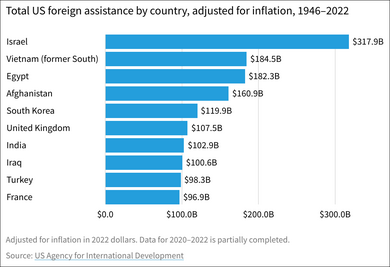
I sincerely doubt that the rest of the world will support Option C, but the critical determinant is whether the US will approve the option. The Biden Administration should make clear to Israel that it will not support Option C under any circumstances. If pressed on the matter, the US should end its support for Israel’s military operations. The Netanyahu government will then have to decide whether it accepts the end of the annual support the US gives Israel (around $3.5 billion a year).
The news is certainly dispiriting, and I don’t have any insights to share. My thoughts are with the people in the Gaza Strip who are desperately trying to seek shelter. I often turn to music when I’ve run out of ideas. The need to provide shelter to the innocent civilians, both Palestinian and Israeli, is overwhelming, and, curiously, the idea of shelter reminded me of an old Rolling Stones song, “Gimme Shelter” which was released in 1969. The Stones had a gift for hiding very good ideas within their raunchy songs and “Gimme Shelter” is a good example of how the group tried to send messages to those who listened carefully.
Wikipedia provides the context of the song which explains why I thought of it as the war in Gaza continues unabated:
“As released, the song begins with Richards performing a guitar intro, soon joined by Jagger’s lead vocal. Of Let It Bleed‘s bleak world view, Jagger said in a 1995 interview with Rolling Stone magazine:
‘Well, it’s a very rough, very violent era. The Vietnam War. Violence on the screens, pillage and burning. And Vietnam was not war as we knew it in the conventional sense. The thing about Vietnam was that it wasn’t like World War II, and it wasn’t like Korea, and it wasn’t like the Gulf War. It was a real nasty war, and people didn’t like it. People objected, and people didn’t want to fight it … That’s a kind of end-of-the-world song, really. It’s apocalypse; the whole record’s like that.’
‘It was a very moody piece about the world closing in on you a bit … When it was recorded, early ’69 or something, it was a time of war and tension, so that’s reflected in this tune. It’s still wheeled out when big storms happen, as they did the other week [during Hurricane Sandy]. It’s been used a lot to evoke natural disaster.'”
The lyrics are profoundly simple (not unusual for Rock and Roll), but the words match perfectly with the music (which is also primitive). The combination is, for me, powerful. But at around 2:39 minutes into the song there is a very dramatic vocal event which conveys intensity, desperation, and commitment and makes the song significantly more dramatic and human.
The backup vocal is performed by a woman named Merry Clayton (her name is misspelled “Mary” on the original album cover). Radio station KSAT in south Texas describes how she came to record with the Rolling Stones:
“One day, Merry Clayton was in her bed, pregnant, with hair curlers in and silk pajamas on, when she received a phone call at her Los Angeles home about midnight in the autumn of 1969, according to Far Out.
“At the time, Clayton was a 20-year-old with extensive singing experience, having sung at her father’s church as a child. She had started her recording career at age 14….
On the other line was producer Jack Nitzchke, who said there were some musicians in town from England who wanted a female vocalist to help with a song.
Those musicians happened to be the Rolling Stones, and the song was “Gimme Shelter,” but Clayton had no clue who the Rolling Stones were and initially resisted.
After all, she was pregnant, tired and almost in bed with her husband.
But after being convinced by her husband to go help out, Clayton put on a coat and went outside to a car waiting to take her to the studio.
Clayton was still in her hair rollers and her pajamas when she arrived to meet the band.”
Unfortunately, Clayton suffered a miscarriage after the recording. But her voice made an otherwise good song into one which stands as one of the most powerful antiwar songs ever recorded.
My heart breaks when I hear Clayton’s voice crack. We all seek shelter at times but the idea of shepherding children and elderly people through a war zone is impossible to comprehend except through experience. The same is true for all refugees who endure horrific travails as they seek some place which offers safety.
Today, Israeli Prime Minister Netanyahu, when asked about a cease-fire in the conflict in Gaza, said: ““That will not happen. The Bible says that there is a time for peace and a time for war. This is a time for war.”
It is not war; it is slaughter.
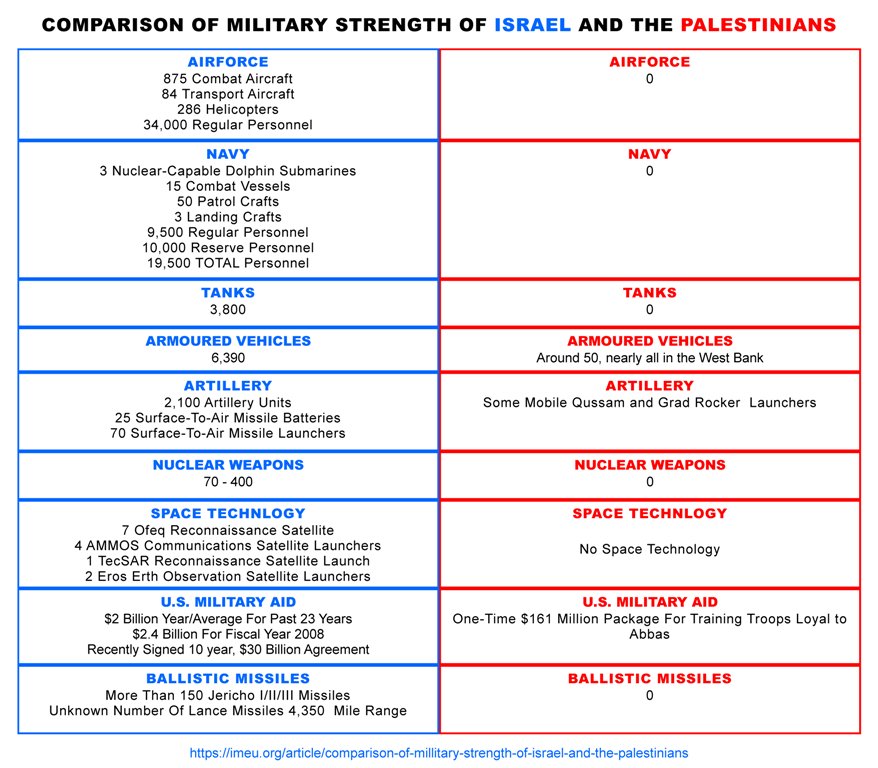
There really is no comparison between the military arsenals of Israel and Hamas. The chart below is from 2009, but the military balance now is even more heavily weighted toward Israel.
In addition, Israel has the Iron Dome air defense system to defend itself against rocket attacks. Hamas has no similar defense.
The overwhelming military superiority of Israel allows it to conduct its operations at arms-length. Nonetheless, Israel has mounted a ground invasion of Gaza which will require even more attacks from the air to protect Israeli soldiers on the ground. The Palestinians have no place to go to avoid these attacks–Egypt has kept the southern crossing closed and the Israeli army and navy keeps the other possible exits closed.
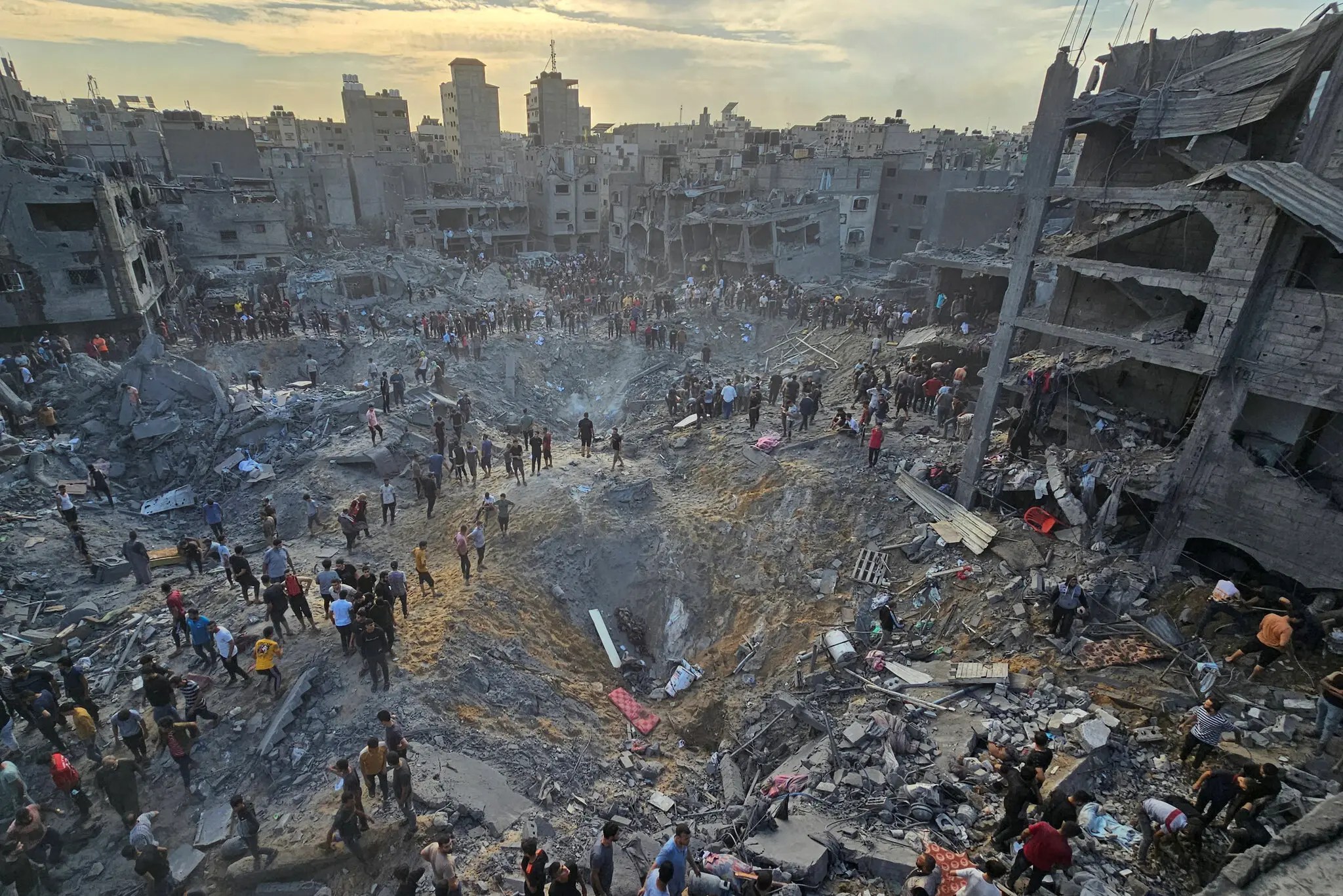
Today, the asymmetry was obvious as the Israelis bombed the Jabaliya refugee camp to kill Ibrahim Biari, a Hamas commander who the Israelis called one of the ringleaders to the 7 October attack.
Jabaliya Refugee Camp after the Bombing
We do not know how many innocents were killed by the air strike. The calculation made by Israel that the death of one commander justified the deaths of these innocents is depraved. I am certain that Israel takes every necessary step to avoid civilian deaths, but Hamas is not using civilians as shields. The Gaza Strip has a population of over 2 million people and spans only 140 square miles. There is probably no way to conduct large-scale aerial attacks against Hamas without jeopardizing civilian lives.
Israel unquestionably has the right of self-defense but the ground invasion does not offer any defense unless the Gaza Strip is depopulated. Depopulation may be an unstated objective of the Netanyahu government because if any Palestinians remain in Gaza, they will be implacably opposed to the state of Israel after this conflict. The Netanyahu government is simply sowing the seeds of another war.
The international community should demand an immediate cease-fire. The UN General Assembly approved such a resolution on 27 October:
“The U.N. General Assembly approved a nonbinding resolution Friday calling for a “humanitarian truce” in Gaza leading to a cessation of hostilities between Israel and Gaza’s Hamas rulers, the first United Nations response to the war.
“The 193-member world body adopted the resolution by a vote of 120-14 with 45 abstentions after rejecting a Canadian amendment backed by the United States. It would have unequivocally condemned the Oct. 7 ‘terrorist attacks’ by Hamas and demanded the immediate release of hostages taken by Hamas, which is not mentioned in the Arab-drafted resolution.”
But the General Assembly does not have the authority to order a cease-fire, only the UN Security Council can compel action on sovereign signatories. The Russian Federation introduced a cease-fire resolution which ” would have strongly condemned all violence and hostilities directed against civilians and all acts of terrorism. By its further terms, it would also have called for the secure release of all hostages and unimpeded provision and distribution of humanitarian assistance, including of food, fuel and medical treatment.” Of the five members of the Security Council with the power of veto, only Russia and China voted for the resolution. The US, France, and Great Britain voted against the resolution.
The United States should itself introduce another resolution to the Security Council calling for an immediate cease-fire–not some bootless “humanitarian pause”. And the US should announce that it would not offer Israel any further assistance except for defensive weaponry such as missiles for the Iron Dome until hostilities have subsided. That decision would have enormous implications for US-Israeli relations, but the US should not be an accomplice to violence against civilians.
The proposed action is unquestionably drastic and unfortunate. Israel has been a good ally of the US, but the Netanyahu government has been pursuing policies that do not serve US interests. Indeed, the continued slaughter of civilians will only force Hezbollah in Lebanon to join the battle, likely bringing Iran into the conflict. The last thing we would want is for an Israeli attack on Iran–long an objective of the Netanyahu government–because that escalation would be very difficult to control.
Israel is conducting a very intense military campaign on what it regards as places where terrorists can be found. The emphasis of the Israeli attacks is on the Gaza Strip, but it has also conducted attacks on southern Lebanon, Syria, and Iraq. The Israeli government justifies these actions as acts of legitimate self-defense against those who conducted the brutal raid on Israeli kibbutzim on 7 October. I firmly believe in the right of states to self-defense, but believe that current Israeli actions do not fall under that exception for the legitimate use of violence.
The 7 October attack was unquestionably a war crime and an abomination, and the grievous state of the Palestinian population in the Gaza Strip does not in any way justify the acts committed against Israeli and foreign citizens. Israel is justified in trying to prevent a repeat of those horrific actions.
The relevant question is what does it mean to eliminate Hamas? And will military action eliminate Hamas? I think there is a great deal of ambiguity about what that objective means. The Israeli Defense Minister, Yoav Gallant, said that “We will eliminate everything”:
Giora Eiland is a senior research associate at the Institute for National Security Studies and former head of the Israeli National Security Council and he made this comment: “Gaza will become a place where no human being can exist, and I say this as a means rather than an end. I say this because there is no other option for ensuring the security of the State of Israel. We are fighting an existential war.” Revital “Tally” Gotliv, a member of the Knesset for Israel PM Benjamin Netanyahu’s Likud party, said this: “‘I urge you to do everything and use Doomsday weapons fearlessly against our enemies,’ adding that Israel ‘must use everything in its arsenal,’ she said, adding, ‘Only an explosion that shakes the Middle East will restore this country’s dignity, strength and security! It’s time to kiss doomsday. Shooting powerful missiles without limit. Not flattening a neighbourhood. Crushing and flattening Gaza. … without mercy! without mercy!’” Finally, Finance Minister Bezalel Smotrich declared, “It’s time to be cruel,” and Knesset member Ariel Kallner called for a “Nakba that will overshadow the Nakba of 48,” a reference to the massacre and expulsion of more than 750,000 Palestinians upon Israel’s founding. These are the opinions of individuals and not necessarily that of the Israeli government, but some of these statements come from officials within that government.
These are not calls for self-defense. These statements reflect the accurate assessment that Hamas exists in the context of a population of 2.1 million people, half of which are children. Under such circumstances, it is unquestionably difficult to separate civilians from combatants. Using Mao’s fish/water metaphor for the relationship between guerilla forces and the civilian population, one can ask the question: is it morally acceptable to drain the water to eliminate one particularly noxious species of fish even if that course of action means that all the other fish will die?
At this point, it is impossible to tell how much of Gaza needs to be destroyed in order to eliminate Hamas. We do know that Israel has encouraged the people of Gazan to leave, and its embargo on much food, water, and fuel coming into the war zone will accomplish what Israeli military action fails to accomplish. But the critical question is where will the people of Gaza go?
The people of Gaza live in limbo and their political status is uncertain. It has been a permanent refugee camp since 2005 (when the Israelis withdrew). The refugee population has been maintained through the efforts of the United Nations and private groups who have maintained a steady flow of life’s necessities into the territory. But Israel has controlled the borders of the Gaza Strip and no one who lives in Gaza has the right to move freely in and out of the zone or to have access to food, water, or fuel without the consent of the Israeli government. Thus, there is a powerful argument to make that Israel has a moral obligation to assure the security and well-being of those whose lives they control.
However, many argue that other states, such as Egypt, have an obligation to give sanctuary to Gazan refugees. There is merit to this argument, but it permits the Israelis to slough off their obligation to the people whose lives they have controlled. And it begs the question of who will be responsible for reconstructing the infrastructure of the Gaza that has been destroyed by the military actions of the Israeli government. Writing for The Atlantic, Grame Wood explains:
“The fear that the worst-case scenario will happen is not something Israel is trying its hardest to dispel. It is a promise of permanent demographic change. When Israeli forces left Gaza 18 years ago, Israeli settlements had been established, chiefly in the southern portion of Gaza, and it took the authority of Prime Minister Ariel Sharon to order their forcible removal. Pangs of conscience over Palestinian dispossession were not, shall we say, his principal motivation. The Jewish state could most easily maintain its Jewish character when it was not mixed up with non-Jews. And Gaza, particularly Gaza City, is so packed with Muslims that no amount of Israeli-settlement construction could tip the balance toward Jews. That would take ethnic cleansing.
“One can see why residents of Gaza City might, in this context, be reluctant to leave just because Israel tells them to. Gazans know that if they leave, they will have to rely on the goodwill of Israel to let them back in and not use this moment to remake the region’s demography. Even if Israel cannot empty the city and replace the population, the government could render the area uninhabitable and nudge some portion of its Arab inhabitants into permanent exile.”
So, the most important question now is what does Israel plan for the Gaza if the military objective of eliminating Hamas is attained? Will it aid in the reconstruction of the territory? Will it occupy the territory with military force? Will it allow the refugees to return? Will Israel open up parts of Gaza to the settlers?
It is only by the answers to these questions that we can assess the extent to which the Israelis are exercising their right of self-defense or whether the Israelis intend to permanently remove the threats by eliminating a people hostile to its control over them.
Israel is preparing for a ground invasion of the Gaza Strip and it has encouraged the Palestinians in the north of the Gaza to move to the southern part of the territory so that civilians will not be subjected to what will likely be a very intense campaign.
It is difficult to move 1.1 million people in such a short period of time given that much of the Gazan infrastructure has been destroyed by bombing. Many people in Gaza have no place to go in the bleak southern part of the Strip and Egypt has not opened the Rafah crossing into Egyptian territory. I suspect that Egypt does not want to be responsible for such a huge influx of refugees. And many Palestinians do not want to leave their homes or familiar neighborhoods. Hamas has encouraged the people not to move to the south, which has been interpreted by some as an attempt to use the civilians as a shield from Israeli bombardment.
The more likely explanation for the number of Palestinians who chose not to evacuate is the fear that they could never return to their homes. While Israel has a “right of return” for any Jew who wishes to emigrate to Israel, it has not allowed the more than 750,000 Palestinians who left their homes in 1948 upon the creation of the state of Israel to return. Many Palestinians refer to that episode as theNabka (“the Catastrophe”). That refusal is a violation of international law as described by the Institute for Middle East Understanding:
All refugees have a right to return to areas from which they have fled or were forced, to receive compensation for damages, and to either regain their properties or receive compensation and support for voluntary resettlement. This right derives from a number of legal sources, including customary international law, international humanitarian law governing rights of civilians during war, and human rights law. The United Nations’ Universal Declaration of Human Rights states in Article 13(2) that “[e]veryone has the right to leave any country, including his own, and return to his own country.” This is an individual right and cannot be unilaterally abrogated by third parties.
In December 1948, following Israel’s establishment and the attendant displacement of approximately 750,000 Palestinians from areas that fell within its control, the UN General Assembly passed Resolution 194, which states, “refugees wishing to return to their homes and live at peace with their neighbours should be permitted to do so at the earliest practicable date, and that compensation should be paid for the property of those choosing not to return and for loss of or damage to property which, under principles of international law or in equity, should be made good by the Governments or authorities responsible.”
The Palestinian right of return has been confirmed repeatedly by the UN General Assembly, including through Resolution 3236, which “Reaffirms also the inalienable right of the Palestinians to return to their homes and property from which they have been displaced and uprooted, and calls for their return.”
There were Israeli settlers who lived in the Gaza Strip after the 1967 war but all 21 Israeli settlements in the Gaza Strip were unilaterally evacuated in 2005. I suspect that many Palestinians fear that depopulating the Gaza will offer an opportunity for Israel to assert renewed territorial control in the Gaza. I doubt that Israel is thinking about such a radical move and most Americans do not seem to be aware of that historical episode. But the Palestinian fear is not far-fetched to a people who suffered displacement. It remains unclear, however, what the Israeli plans for the Gaza are. Given the level of destruction that has already occurred in the Gaza, it is unlikely that anyone will be living comfortably there for an extraordinarily long time.

 World Politics News