Israel is tweaking the US, apparently trying to embarrass it into taking a more aggressive role in the Syrian conflict. Michael Oren, Israel’s former ambassador to Washington, made a rather pointed comment about the US “inaction” in Syria in Bloomberg:
“The American part of the equation is to back us up,” but the U.S. currently “has almost no leverage on the ground,” Michael Oren, Netanyahu’s deputy minister for public diplomacy and a former ambassador to Washington, said in a phone interview Sunday. “America did not ante up in Syria. It’s not in the game.”
The comment comes after Israel launched serious attacks on Iranian targets in Syria. Israel has made several overtures to Russia to persuade it to temper the Iranian role in Syria, but its efforts thus far have not succeeded. But it seems clear that Israel is playing a “Russia” card in the balance of power game in Syria.
“Jahangir co-founded the Human Rights Commission of Pakistan in 1987 and in 2010 she became the first woman to serve as President of Pakistan’s Supreme Court Bar Association. She also served as U.N. special rapporteur for freedom of religion from 2004 to 2010.”
German Chancellor Angela Merkel has slowly worked out an arrangement with the Social Democratic Party (SPD) that has preserved a governing coalition to assure her a fourth Chancellorship. But the price of that coalition was to cede the Finance Ministry to the SPD which does not share her party’s views on fiscal discipline. That concession has angered some in the Christian Democratic Party and could lead to serious problems in the future. But the SPD membership had clearly soured on continuing the relationship with Merkel believing that the SPD had lost its political soul. So a high price was demanded and expected. The concession has undoubtedly weakened Merkel and governing Germany and its relations with the EU will be very difficult for the coalition.
Kim Jong-un’s younger sister, Kim Yo Jong, is representing North Korea at the Winter Olympics, the first official representative from North Korea to set foot on South Korean territory (that we know of). She is scheduled to meet with South Korean President Moon. The planned meeting has raised apprehensions among some that South Korea will not maintain the hard-line against North Korea that is favored by the US and Japan. US Vice-President Pence is representing the US and he has called for the denuclearization of North Korea, a position that is unlikely to ever be embraced by North Korea under any conceivable circumstances. It would be great if a stronger dialogue between North and South Korea could begin and tensions could be ratcheted down. It would also be interesting to see if there are any US-North Korean contacts during the Olympics, although it is unlikely that Pence would be involved in such contacts.
Right now, the US does not have an Ambassador to South Korea, and it is unlikely that one will be found any time soon. Victor Cha, a highly regarded analyst of Korean affairs, was dropped from consideration even after he passed all the security checks becuase he wrote an op-ed that suggested he did not favor a preventive war with North Korea. Ralph Cossa, a respected analyst of East Asian affairs, wrote an op-ed for the South China Morning Post indicating that finding a decent Ambassador will likely be impossible for the Trump Administration:
“But if a candidate meets the qualifications that have thus far seemingly been put forth by the White House – a belief that preventive war is a good idea, as distinguished from a pre-emptive strike in the face of imminent danger; that North Korea cannot be otherwise deterred (despite deterrence having worked for decades); that the Korea-US Free Trade Agreement is a bad one that should be scrapped (despite the potential harm it will do to the US economy, not to mention US credibility as a trade partner); and that a non-combatant evacuation during peacetime would not cause mass panic and disruption and potentially undermine the South Korea-US alliance – he or she is probably not qualified to take the job in the first place”.
Meanwhile, the North Korean attempt to restore better relations with South Korea proceeds apace, Much to the chagrin of US officials. North Korea has invited the South Korean President to visit North Korea for the first such meeting in 10 years. That possibility delays any possible US action against North Korea far beyond the current lull brought about by the Olympics. US Vice-President Pence skipped a formal dinner hosted by the South Koreans in order to avoid being seen with North Korean officials, a show of pique that was considered highly rude by South Korean officials. The decision to send Mr. Pence to the Olympics due to the absence of a US Ambassador to South Korea is unquestionably harming US-South Korean relations.
There has been a dramatic escalation in another conflict area in the world: an Israeli fighter jet was shot down while conducting an attack against targets in Syrian. The Israeli jet attacked a military base in Syria which also was manned by Russian troops and the Russians reacted angrily to the risk to its soldiers. Israel has conducted hundreds of such raids over the last few months, but the jet was apparently shot down by Syrian anti-aircraft fire, raising the prospect of a new vulnerability to Israeli security. Israel did not act kindly to the incident and responded to it by conducting a “large scale” aerial assault on Syrian targets. The Israelis were targeting suspected Iranian positions in Syria which will undoubtedly initiate a response from both Iran and its ally, Hezbollah.
Perhaps the most serious problem humanity faces in the near future is the likely transformation of work. Robots and developments in artificial intelligence are taking on new roles and, in that process, are displacing large numbers of workers. That number of displaced workers will only increase, According to Subhash Kak:
“A November 2017 report from global management consulting firm McKinsey on the effects of automation on jobs, skills and wages for the period ending in 2030 estimates that fully 50% of current work activities are automatable by technologies that have already been tested and found effective. The report predicts that in 60 percent of occupations, at least one-third of activities could be automated. The report expects 400 million to 800 million people could be displaced by automation in the next 12 years, creating a challenge potentially greater than past historic shifts, at least in the modern era.”
In previous transformations, such as the Industrial Revolution, there were many displaced workers but the new technologies also generated large numbers of jobs that ultimately brought many of those workers back into the workforce. For example, the introduction of the internal combustion engine displaced many workers who serviced animals for transportation, but those workers were able (if they could move) to find new jobs in the automobile factories. The current transformation will also generate many jobs, but most of those jobs will not soak up many unskilled or semi-skilled workers. This transformation will affect both high- and low-wage countries: no human can compete with machines that require no wages at all. For example, self-driving cars are being developed rapidly in China where many work as truckers and haulers.
“The recent incident once again shows that the United States’ illegal military presence in Syria is actually aimed at taking control of the country’s economic assets and not at fighting against the ISIL international terror group.”
The US claims that the attack was in response to an earlier attack on the SDF forces in what was defined as a “de-conflict” zone. That claim may indeed be accurate but attacking government forces in a civil war is a more problematic act than a government attacking what it considers to be a rebel force. We will wait to see what the Russian response to the escalation might be.
The Director of the US Environmental Protection Agency (EPA), Scott Pruitt, made the following comment in an interview:
“We know humans have most flourished during times of what, warming trends. So I think there’s assumptions made that because the climate is warming, that that necessarily is a bad thing. Do we really know what the ideal surface temperature should be in the year 2100, in the year 2018? That’s fairly arrogant for us to think that we know exactly what it should be in 2100. There are very important questions around the climate issue that folks really don’t get to. And that’s one of the reasons why I’ve talked about having an honest, open, transparent debate about what do we know, what don’t we know, so the American people can be informed and they can make decisions on their own with respect to these issues.”
There’s been much less attention this year on the Chinese build-up of various reefs in the South China Sea for military purposes. The lack of attention, however, does not mean that the Chinese have throttled back the enterprise. The Asia Maritime Transparency Initiative at the Center for Strategic and International Studies has published some very striking photographs of the installations and they are seemingly quite robust and extensive. Now the Philippine Daily Inquirer has published some even more detailed photographs and they suggest that the Chinese have strong military ambitions. The Philippines won a legal victory over the Chinese claims to the South China Sea from a tribunal at The Hague, but it never followed up on that success and it may be too late to stop the Chinese. According to the Inquirer:
“If the Philippines does not assert its legal victory, it stands to lose 80 percent of its EEZ (Exclusive Economic Zone) in the South China Sea, covering 381,000 square kilometers of maritime space, including the entire Recto Bank, or Reed Bank, and part of the Malampaya gas field off Palawan, as well as all of the fishery, oil and gas and mineral resources there.”
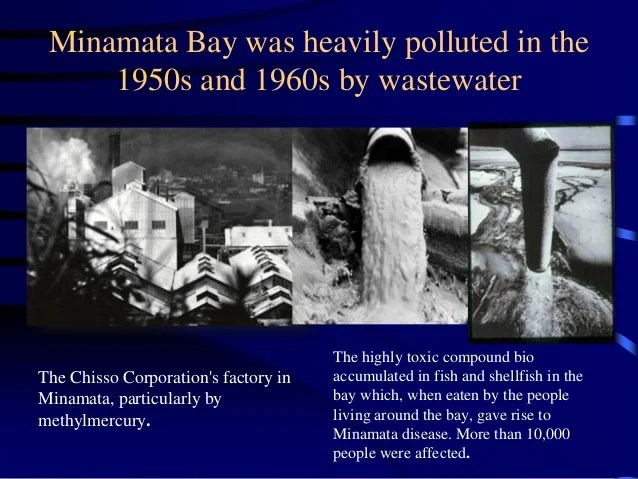
New research has found yet another anticipated consequence of climate change. Researchers have determined that there are huge deposits of mercury in the Arctic permafrost that might be released if the permafrost melts because of global warming. According to the report:
“The study found approximately 793 gigagrams, or more than 15 million gallons, of mercury is frozen in northern permafrost soil. That is roughly 10 times the amount of all human-caused mercury emissions over the last 30 years, based on emissions estimates from 2016.
“The study also found all frozen and unfrozen soil in northern permafrost regions contains a combined 1,656 gigagrams of mercury, making it the largest known reservoir of mercury on the planet. This pool houses nearly twice as much mercury as soils outside of the northern permafrost region, the ocean and the atmosphere combined.”
Visual Capitalist has a stunning video on the growth of human population over time. The video quite dramatically demonstrates how unusual the growth rate over the last 200 years has been. And also how unsustainable that rate is.
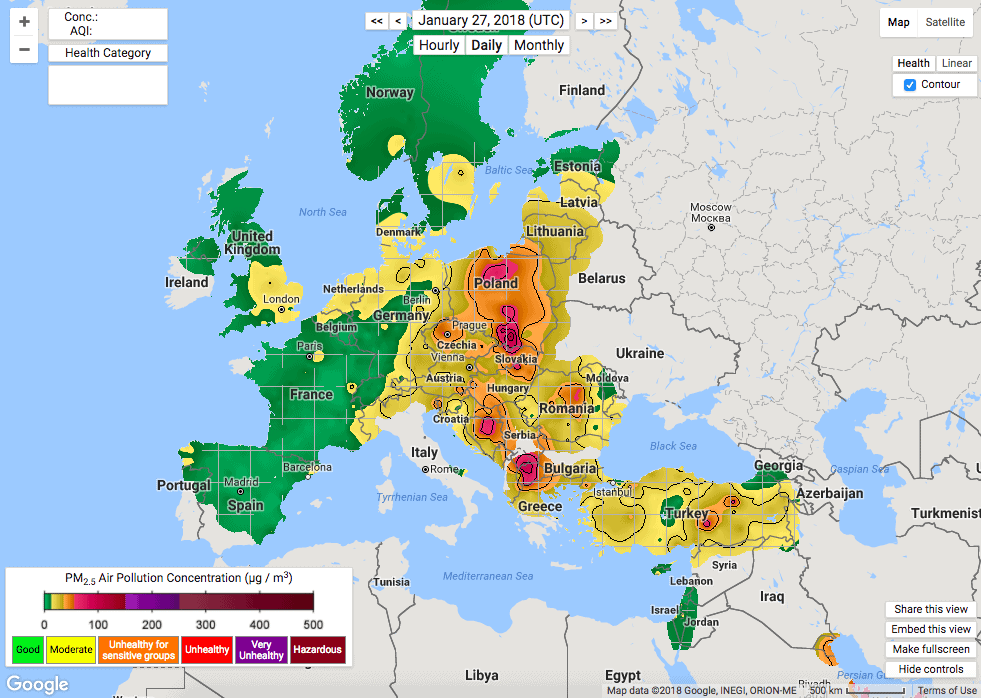
Coal is one of the dirtiest fossil fuels we use in the world. Its primary use right now is to produce electricity and it is both cheap and reliable as a source of energy. Many countries are choosing to phase out their coal-fueled sources and to replace them with either renewable sources of energy such as wind and solar, nuclear energy, or natural gas. But many countries continue to use coal and the pattern of usage is quite striking in Europe. Many of the countries that used to be behind what we once called the “Iron Curtain” because they were allied with the former Soviet Union. Some of these countries, such as Poland, have made it clear that they have no ambitious intentions to phase out coal and the effects of these decisions are apparent in the air quality of Europe as the map below indicates.
“Once in effect, it will essentially ban accusations that some Poles were complicit in Nazi crimes committed on Polish soil, including in the Auschwitz-Birkenau extermination camp, where more than 1.1 million people died. Germany operated six camps in Poland where Jews and others whom the Nazis considered enemies were killed. Once the legislation is enacted, anyone convicted under the law will face fines or up to three years in jail.”
The law is truly extraordinary. Not only does it violate the right of free speech guaranteed by Polish membership in the European Union, it also engages in historical denial of basic facts. Poland did not, in fact, have a collaborationist government that worked with the Nazis and there was an active resistance to the German occupation of Poland. But there are numerous documented cases of Poles rounding up Jews and working with the Nazis.
US President Trump accused Democrats of “treason” and being “un-American” for not clapping during his recent State of the Union address. Aides insisted that Mr. Trump was “joking”, but after watching the video of his comments in Cincinnati I really cannot tell. Treason, however, is not a joking matter–the penalty for the crime is death–and un-American has the odious stench of Senator Joseph McCarthy in the 1950s. There actually was a House Un-American Activities Committee (HUAC) from 1938 to 1975 in Congress (renamed the Internal Security Committee in 1969). The description of the Committee is ugly:
“Individuals who refused to answer the committee’s questions or to provide names could be indicted for contempt of Congress and sent to prison. Subjects of HUAC investigations had the option of invoking their right to avoid self-incrimination under the Fifth Amendment, but “pleading the Fifth” created the impression that they were guilty of a crime. In addition, those who refused to cooperate were often blacklisted by their employers. They lost their jobs and were effectively prevented from working in their chosen industry.”
But perhaps the most chilling aspect of Mr. Trump’s charge was the parallel to his current bête noire, Kim Jong-un. In December on 2013, Kim had his uncle, Jang Song Thaek, the second most powerful person in the North Korean regime at the time, executed for “clapping half-heartedly” during one of his speeches. As Nietzsche pointed out: “Battle not with monsters, lest ye become a monster, and if you gaze into the abyss, the abyss gazes also into you.”
The Winter Olympics has provided an opportunity for a pause in the contretemps over the North Korean nuclear program, but it appears as if both sides are testing the lull as much as possible. North Korea has just finished a military parade and apparently intends to hold another displaying its missiles. US Vice-President Pence is going to attend the opening ceremony with the father of Otto Warmbier who died after brutal treatment in a North Korean prison. South Korea is rightfully concerned that Pence may complicate the tenuous relationship that South Korea is trying to nurture with the North.
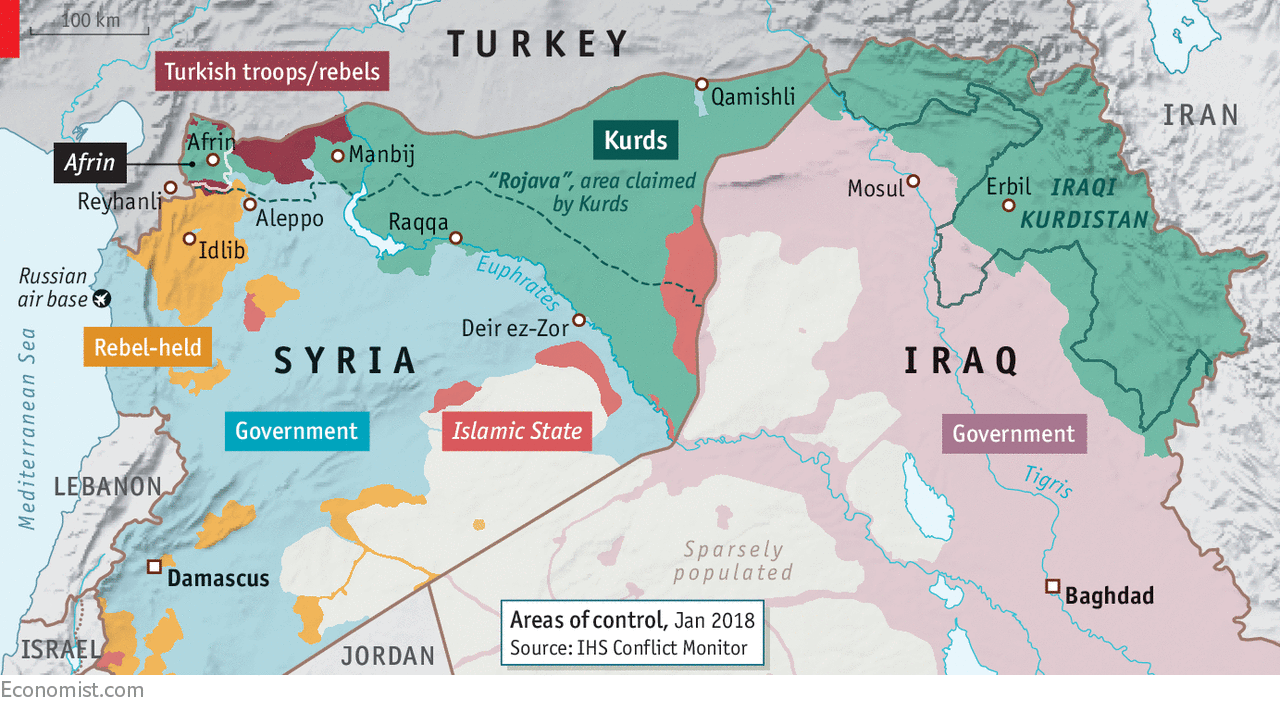
The Turkish invasion of Syrian territory to prevent Syrian Kurds from holding land that they regard as a possible autonomous region of Syria or perhaps even as the basis for an independent Kurdish state does no seem to be going well. The invasion pits two American allies–Turkey and the Kurds–against each other and places the US in an impossible position. For the moment, Russia is supporting the Turkish move, but ultimately Russia will support Syrian control over the region no matter who holds it. Iran, another member of the alliance to support Assad in Syria, also demanded that Turkey halt its offensive, placing Iran and the US in support of the same position. There is, however, a more overarching issue in the current Syrian offensive against the Kurds and that is that Kurds control great swathes of Syrian territory other than the northwestern areas currently being battled over. The Kurds are calling this huge area in eastern Syria “Rojava” and are intent on holding it for the Kurdish people in Syria. Right now, that control is not being contested actively by any of the interested parties, including the Syrian government.
The New York Times is reporting that Israel has been conducting air strikes against militants on Egyptian territory with the active consent of the Egyptian government. Israeli-Egyptian relations have steadily improved since the Camp David Accords in 1978 and signed a permanent peace treaty in 1979. The air strikes, however, have been carried out with extraordinary secrecy because, despite the good diplomatic relations, a substantial percentage of the Egyptian population has serious disagreement with the Israeli treatment of the Palestinians. The Egyptians also work closely with Israel to prevent the flow of goods across the Egyptian border into the Gaza Strip in order to prevent material and strategic support for Hamas, a Palestinian militant group adamantly opposed to Israeli control in the Gaza.
The Republic of Macedonia (known provisionally in the UN as the former Yugoslav Republic of Macedonia) became independent in 1991 and was admitted to the UN in 1993. Since that time there has been an ongoing dispute between Greece and Macedonia over the name of the republic. Historically, Macedonia has always been considered part of Greece and is the birthplace of Alexander the Great. Greeks believe that the use of the name Macedonia in non-Greek territory is misleading and that it potentially implies a claim on Greek territory that is not currently part of the republic. Perhaps more importantly, the name insults Greek history that most Greeks regard as intolerable. National Public Radio characterizes some of the issues involved:
“Greece has a northern province called Macedonia, also the cradle of ancient Macedonia and its most famous leader, Alexander the Great. Greece considers it a non-negotiable part of its history. Its neighbor, meanwhile, considers Alexander — who incorporated its land into an empire that extended to India — part of local identity. Macedonia’s flag is emblazoned with the Sun of Vergina — a symbol associated with the dynasty of Alexander and his father Philip.”
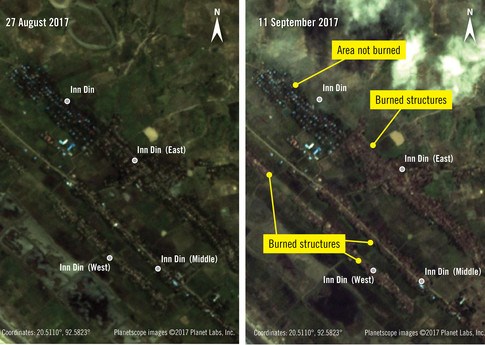
There are reports that 5 mass graves of Royingha refugees, allegedly killed by the Myanmar military, have been found in Myanmar. Myanmar denies the allegations, but the reports are consistent with verbal accounts of human rights violations against the Muslim Royingha by a military controlled by the primarily Buddhist Myanmar military. Since August 2017, about 650,000 Royingha have fled into neighboring Bangladesh to escape the persecution. Satellite images from the Rakhine Province where most of the Royingha lived provide graphic evidence of the attacks on the minority. The international community’s response to these atrocities has been tepid and ineffective.
The US Department of Defense has released its “Nuclear Posture Review” which was requested by President Trump on 27 January 2017. The last Review was done in 2010. The Review defines the US nuclear policy and strategy in these terms:
“The highest U.S. nuclear policy and strategy priority is to deter potential adversaries from nuclear attack of any scale. However, deterring nuclear attack is not the sole purpose of nuclear weapons. Given the diverse threats and profound uncertainties of the current and future threat environment, U.S. nuclear forces play the following critical roles in U.S. national security strategy. They contribute to the:
Deterrence of nuclear and non-nuclear attack;
Assurance of allies and partners;
Achievement of U.S. objectives if deterrence fails; and
Capacity to hedge against an uncertain future.
These roles are complementary and interrelated, and the adequacy of U.S. nuclear forces must be assessed against each role and the strategy designed to fulfill it. Preventing proliferation and denying terrorists access to finished weapons, material, or expertise are also key considerations in the elaboration of U.S. nuclear policy and requirements.”
The scope of these objectives is breathtaking and suggests a belief that nuclear weapons can do more than simply dig deep holes and kill a lot of people. Moreover, the list of additional or upgraded components to the existing nuclear force is incredibly ambitious (pp. 10-11) which suggests that there are even more nuanced objectives for nuclear weapons. It also discusses developments in the arsenals of Russia and China which have been the source of speculation (a nuclear torpedo, for example) but of no direct evidence. The Review is even more troubling given the very deliberate and dramatic downsizing of the US Department of State. Indeed, the recent announcement that State Department Undersecretary for Political Affairs Thomas Shannon, Jr is leaving the State Department after 35 years in the Department and serving 6 Presidents is testimony to how depleted the US diplomatic corps has become.
Independent UN monitors have submitted a confidential report to the Security Council which alleges that North Korea have been able to avoid some of the sanctions imposed on it for its nuclear weapons program. The report, which was seen by Reuters, but not published, said that “North Korea had shipped coal to ports, including those in Russia, China, South Korea, Malaysia and Vietnam, mainly using false paperwork that showed countries such as Russia and China as the source of coal, instead of North Korea”. The report suggests that North Korea had earned more than $200 million from its illicit exports. The report also purportedly documents more than 40 shipments of ballistic missile components to Syria as well as weapons to Syria. International sanctions are incredibly difficult to enforce, but violations do not warrant their abandonment.
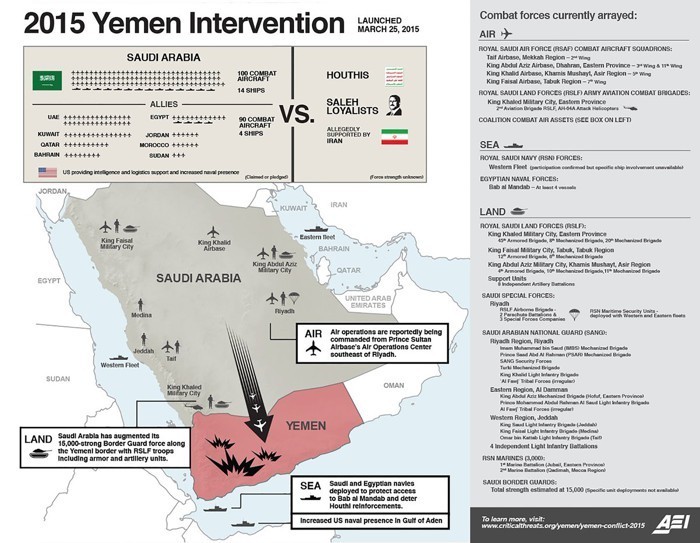
Yemen has been ripped apart by civil and international war since 2014. The roots of the conflict, however, are complex. They stretch back to colonial rule, the strategic importance of Yemen to the flow of Middle Eastern oil, and the interventions of outside powers like Saudi Arabia, Iran, the US, and other Persian Gulf states. Ben Watson has written an article for The Atlanticthat gives an excellent summary of how the conflict unfolded and how the people of Yemen have been used as pawns for the strategic interests of others. According to The Washington Post: “Eight million people, or a third of Yemen’s population, are facing famine. A cholera outbreak that has affected roughly a million people is one of the largest ever recorded. More than 10,000 people have been killed since the war began”. The destruction of Yemeni society will endure for many years even after the conflict dies down.
One of my favorite economists, Dani Rodrik of the Kennedy School of Government at Harvard, published a paper last year entitled “Populism and the Economics of Globalization” which makes the argument that populism arises for a variety of reasons, but that how it manifests itself politically (Rodrik uses the dichotomy of right- and left-wing politics which is suggestive but I suspect is quite misleading). As usual, he states the argument succinctly:
“It is easier for populist politicians to mobilize along ethno-national/cultural cleavages when the globalization shock becomes salient in the form of immigration and refugees. That is largely the story of advanced countries in Europe. On the other hand, it is easier to mobilize along income/social class lines when the globalization shock takes the form mainly of trade, finance, and foreign investment. That in turn is the case with southern Europe and Latin America. The United States, where arguably both types of shocks have become highly salient recently, has produced populists of both stripes (Bernie Sanders and Donald Trump).”
Rodrik also addresses the sources of the globalization “shock”. The usual suspects for the disaffection of labor toward globalization are trade (“jobs are being shipped overseas”) and automation (“the robots are taking over”). Rodrik suggests that the flight of jobs toward low wage areas may be winding down and the real source of labor displacement now is automation:
“Economists understand that trade causes job displacement and income losses for some groups. But they have a harder time making sense of why trade gets picked on so much by populists both on the right and the left. After all, imports are only one source of churn in labor markets, and typically not even the most important source. Demand shocks, technological changes, and the ordinary course of competition with other, domestic firms produce much greater labor displacement than increases in import penetration. While disentangling the effects of automation and globalization is difficult, most existing studies attribute the bulk of the decline in U.S. manufacturing employment to the former rather than the latter. Yet we do not see populists campaign against technology or automation. What is it that renders trade so much more salient politically?”
Note that trade focuses attention on “others” and is therefore more susceptible to “ethno-national/cultural cleavages”. If automation is truly the enemy of labor, then workers have to focus their attention on the real source of automation–the indifference of market capitalist politics toward the treatment of labor. Suzanne Berger offers a roadmap of how this indifference could be addressed looking at the historical record of populism and techniques from other societies which have faced the same issue.
There has been a welcome lull in the hostilities between the US and North Korea as the upcoming winter Olympics in South Korea has brought about a temporary detente between the two states. The respite is also due to the willingness of the US and South Korea not to hold any military exercises while the Olympics are going on. The US, however, has upset the lull by extending an invitation to defectors from North Korea to a visit to the Trump White House. The defectors gave harrowing tales of life in North Korea and of desperate escapes from the regime. It is important for the world to hear these stories, but there probably was no urgent reason for them to be aired at this particular time. The North Koreans probably viewed the meeting as a deeply hostile act by the US. The meeting also comes at a time when there are reports that some in the US Pentagon are concerned that Mr. Trump is moving too easily toward a military response to the US-North Korean impasse. It also seems as if the US believes that it is working against a very tight deadline before North Korea develops the capability to strike the US homeland. On 22 January, Norah O’Donnell of CBS News conducted an interview with the Director of the US CIA, Mike Pompeo. In that interview, Pompeo thought the timeline was very tight:
O’DONNELL: So to be clear, how close is Kim Jong Un to being able to deliver a nuclear attack to the territorial United States?
POMPEO: A handful of months.
O’DONNELL: But correct me if I’m wrong. I do believe you have used that phrase, more than six months ago, you said a handful of months.
POMPEO: It’s true. I hope to be able to say it a year from now as well. … The United States government is working diligently to extend that timeline.
Aggravating the North Koreans during a period of relative calm is not an astute diplomatic move.
And now we need to start getting ready for Sunday (with apologies to all the Patriots Haters)
The current edition of The Economist has an article on the North Korean nuclear issue which is substantive, very readable, and highly informative. The article goes through a variety of different ways to think about the issue, but there is one paragraph which summarizes the critical issue brilliantly:
“At root, however, debates about Korea strategy turn on two starkly straightforward questions, spelled out in interviews with serving and former defence and national-security officials, diplomats and spies, including several with personal experience of negotiating with North Korea. First, will China ever break decisively with North Korea, its infuriating neighbour but valued buffer against the world? Second, can Mr Kim be deterred? For if he cannot, then any responsible American president must contemplate a strike, risking what the Japanese expert summarises as “tens of thousands of casualties today to prevent millions tomorrow”.
I highly recommend the article for anyone who wants to understand the very complicated concerns of the crisis that is objective and sober.
A possible insight into the way the Trump Administration is thinking about North Korea might be found in its abrupt removal of Dr. Victor Cha from consideration as the next US Ambassador to South Korea. It is hard to believe that given the tensions in East Asia this very important position has remained unfilled for almost a full year. Professor Cha teaches at Georgetown University and heads the Korea Department at the Center for Strategic and International Studies in Washington, DC. On 30 January Cha wrote an op-ed piece for the Washington Post entitled “Giving North Korea a ‘bloody nose’ carries a huge risk to Americans” and his argument was that even a very limited use of force against North Korea would likely precipitate a serious violent conflict with many casualties:
“Some have argued the risks are still worth taking because it’s better that people die “over there” than “over here.” On any given day, there are 230,000 Americans in South Korea and 90,000 or so in Japan. Given that an evacuation of so many citizens would be virtually impossible under a rain of North Korean artillery and missiles (potentially laced with biochemical weapons), these Americans would most likely have to hunker down until the war was over.”
Cha was nominated by President Trump last August and had passed all the necessary security clearances for the position. He had also been approved for the position by South Korea. Despite this heavy investment in the nomination and more than enough time to vet his views by the Administration, Cha was unceremoniously and precipitously dropped for stating his views which are apparently anathema to the Administration.
Victor Cha
One of the major cities of the world, Cape Town, South Africa, may run completely out of water by 16 April. It is a city of over 4 million people, but three years of drought and overuse of water have left the water supply levels dangerously low. The city is currently scheduled to turn off all tap water unless there is significant rainfall soon. Residents of the city will be restricted to 13 gallons of water a day beginning later this week, and plans are set to supply water under heavy guard after 16 April. Unfortunately, Cape Town is not alone, and water scarcity is affecting several other major cities in the world: Sao Paulo, Brazil; Lima, Peru; Amman, Jordan; Mexico City; Melbourne, Australia; and Kabul, Afghanistan. According to the Thompson Reuters Foundation:
“Water scarcity already affects more than 40 percent of the world’s population and is expected to rise due to global warming, with one in four people projected to face chronic or recurring shortages by 2050, according to the United Nations.”
The problem of water scarcity is one of the most serious problems facing the world, but efforts to address the problem have been inadequate.



 World Politics News