I have had a number of online discussions with a number of my friends about the election tomorrow and it is safe to say that there are high levels of anxiety about the outcome. I predict that we will know the result of the election no later than 10:30 pm tomorrow and that Biden will win convincingly. I make this prediction on the basis of these points.
The extraordinary number of early voters suggests to me that there are many people who are highly motivated to see Trump defeated. We are well aware of the devotion of Trump supporters. But their intensity of feeling is outmatched by the views of most that Trump cannot be allowed to remain in office.
There is little evidence to suggest that Trump has expanded his base from 2016 and more anecdotal evidence that some Trump supporters have been disappointed by the last four years. In addition, there are 4 million more voters than in 2016 and most of those voters are young people more likely to reject Trump’s view of what America should be.
The growing number of COVID cases is reaching into areas of the US that some thought would be unaffected by the pandemic. In the early days of the pandemic there was a widespread belief among Trump supporters that the pandemic would be confined to urban areas. That belief has proven to be wrong.
The economic downturn is proving to be deeper and more extensive than many expected. Given the rapid rate of increase in COVID infections, there is little reason to believe that the economy will perk up any time soon. The failure of the Congress to provide additional stimulus will most likely be attributed to Senator McConnell, and not to the Democrats.
If this prediction proves to be correct, then I invite you all to join me with a glass of single malt scotch at 10:30 tomorrow night. If, on the other hand, I turn out to be a dime short on my nickel bet, then I would encourage everyone to forget that they ever read this post. In the meantime, relax. There’s nothing that can be done between now and tomorrow night that will change anything.
French President Macron infuriated many Muslims by asserting that Islam is a religion in “crisis” after French teacher Samuel Paty was killed on 16 October after showing his students caricatures of the Prophet Muhammad in a class exercise on freedom of speech. As reported by Al Jazeera:
“Top officials in the Muslim world have condemned France and Macron, including Pakistan, Malaysia, Saudi Arabia and Iran; while tens of thousands have attended protests and called for a boycott of French goods.
“Tensions heated further on Wednesday after the French satirical magazine Charlie Hebdo published a new caricature depicting Erdogan. In response the Turkish president has threatened to sue the magazine.”
The tensions are rooted in a decision by the French periodical Charlie Hebdo to print caricatures of the Prophet Mohammed in 2015, a decision that resulted in widespread protests in France that left over 260 people dead. Those who are alleged to have murdered 17 people after the publication of the cartoons are currently on trial in France, the occasion which led to Paty’s class exercise. The BBC reports:
“Fourteen people are on trial in France over the deadly attack on the satirical magazine Charlie Hebdo in 2015.
“Most of the alleged accomplices are in court in Paris, but three are being tried in absentia.
“They are accused of helping the militant Islamist attackers who shot dead 12 people in and around Charlie Hebdo’s Paris office in January 2015.
“In a related attack, a third gunman shot dead a policewoman, then attacked a Jewish store, killing four people.
“The 17 victims were killed over a period of three days. All three attackers were killed by police. The killings marked the beginning of a wave of jihadist attacks across France that left more than 250 people dead.”
France has had a rather strict policy of secularism, or laïcité, in its governmental affairs since the French Revolution when the Catholic Church was held to have been too intrusive in French life. Macron reiterated that policy in a recent speech earlier this month. In that speech, President Macron was critical of some members of the Muslim community:
“Mr Macron said ‘Islamist separatism’ was a danger to France because it held its own laws above all others and ‘often results in the creation of a counter-society’.
“He said this form of sectarianism often translated into children being kept out of school, and the use of sporting, cultural and other community activities as a ‘pretext to teach principles that do not conform to the laws of the republic’.
“‘Islam is a religion that is in crisis all over the world today, we are not just seeing this in our country.’
“The measures announced by the president will form legislation that will go to parliament before the end of the year.
“They include:
stricter monitoring of sports organisations and other associations so that they do not become a front for Islamist teaching
an end to the system of imams being sent to France from abroad
improved oversight of the financing of mosques
home-schooling restricted
“Mr Macron also said France must do more to offer economic and social mobility to immigrant communities, adding that radicals had often filled the vacuum.”
It is very difficult for a liberal society to enact laws against blasphemy. Indeed, liberal societies could not have been created without the decision to try and create conditions which would reduce the likelihood of religious conflict by essentially excluding religion from political debate.
In 2005, Evo Morales became Bolivia’s first President with almost pure indigenous roots, a rarity in Latin American politics which tended to favor candidates with European ancestry. He was an unabashed socialist and implemented many governmental reforms to favor Bolivia’s indigenous population and to reduce the severe income inequality that characterized the polity. Needless to say, his relationship with the US was strained and Morales forged close ties with other politicians in Latin America who favored the left, such as Hugo Chavez in Venezuela.
Morales tried to change the constitution in 2019 to allow himself to run for a fourth term. That attempt alienated the Bolivian military and Morales was forced to resign and go into exile in Argentina. His departure sparked a serious crisis in Bolivian politics:
“Morales left the country in November after a disputed presidential election sparked countrywide protests and led the military to withdraw their support of him. Morales’ exit from office after nearly 14 years was labeled a coup by some and to others, a consequence of a power grab. For others it was both. Though he’s not running in the do-over election, Morales’ legacy – and the controversy over his final days in office – will likely weigh heavily on voters. His recent travels from Argentina to Cuba for ‘health reasons,’ as well as his effort to run for a seat in congress from outside the country, have also kept him front and center in the run-up to May’s vote.
“The result is a divided electorate and polarizing group of candidates. And it’s more than a simple left-versus-right divide. Morales’ Movement toward Socialism (MAS) is fielding a single candidate, but divisions on the left mean its coalition is weaker than in past elections. Meanwhile, several candidates on the center and right are clashing for the mantle of the anti-MAS vote.”
“‘It hurts,’ confessed Eva Copa, the 32-year-old senate president from Morales’ Movement Towards Socialism (Mas), her voice breaking and tears filling her eyes as she pondered what some thought might prove a fatal blow to their pro-indigenous project. ‘What has happened will leave scars.’
“Visibly exhausted, Copa admitted the outlook was uncertain, for her movement and Bolivia as a whole. ‘The last thing the Bolivian people want is more chaos,’ she said.
“But the young senator was adamant Mas could, and would rebuild. ‘We don’t need to refound ourselves. What we’re going to do is reorganise,’ Copa said. ‘We have faith we’ll pull through this.’
“That faith was well-placed. On Friday morning authorities confirmed a stunning political comeback with Mas’s candidate, the former finance minister Luis Arce, winning Sunday’s presidential election by a thumping 26.3% margin.
“His closest rival in the re-run of last October’s voided ballot, the centrist ex-president Carlos Mesa, received 28.8% of the 6.48m votes compared to Arce’s 55.1%. There was a record voter turnout of 88.4%.
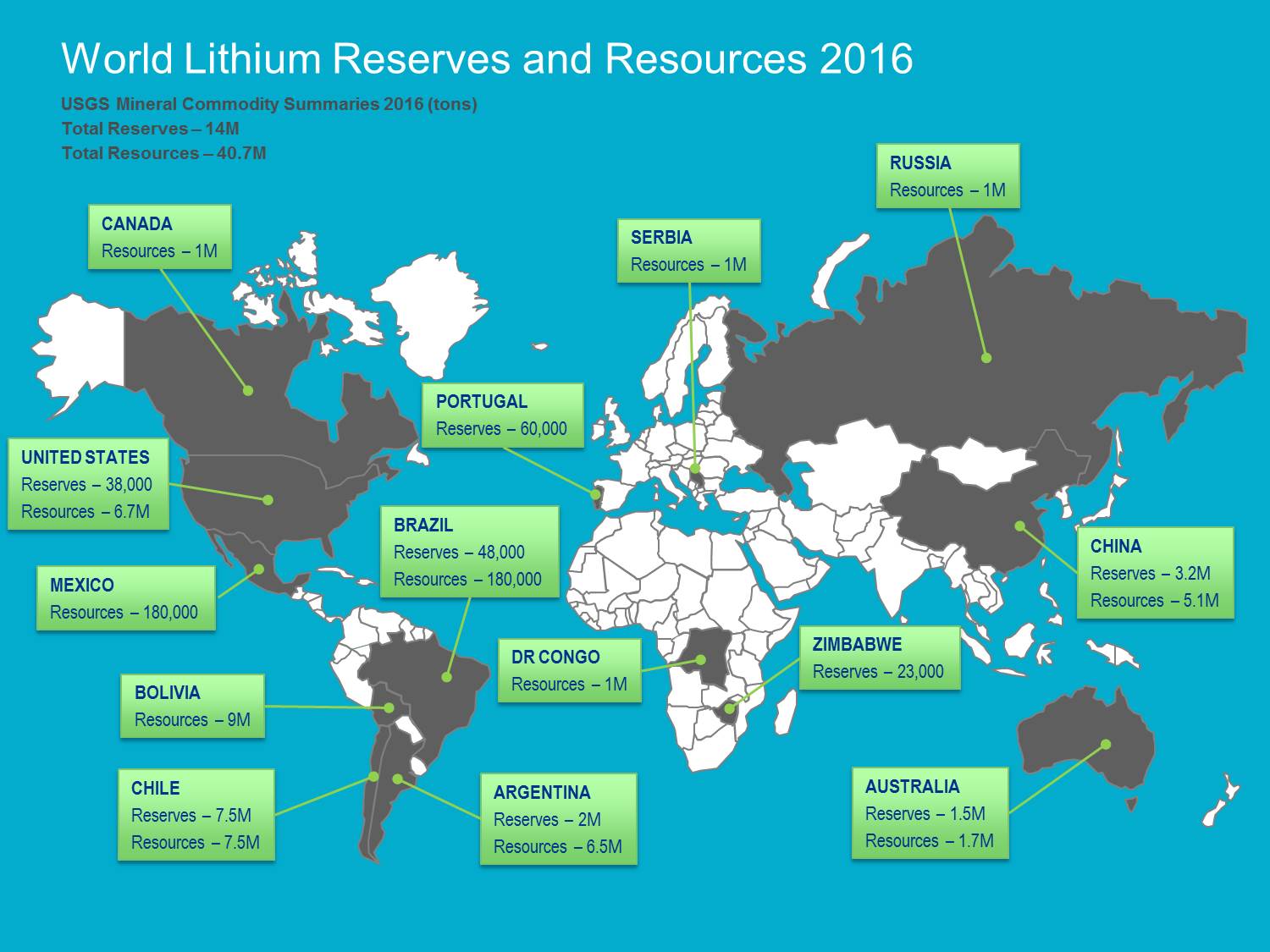
When Morales was President, one of his most important initiatives was to control the exploitation of Bolivia’s considerable lithium reserves, an element that has become incredibly important in the production of batteries for electric automobiles. That policy triggered widespread speculation that outside powers engineered a coup against Morales in order to protect their access to Lithium:
“Bolivia’s tumultuous past year also features a powdery white subplot with worldwide implications. Not long after being forced out of the country, Morales and many of his supporters argued that he was ousted in part as a response to his attempts to nationalize the country’s lithium—a mineral used in batteries that power various clean energy technologies, including electric cars. “My crime, my sin, is to be an Indian,” he told American journalist Glenn Greenwald in an interview, “and to have nationalized our natural resources, removed the transnational corporations from the hydrocarbon sector and mining.” Morales had hoped that state-owned Yacimientos de Litio Boliviano, or YLB, would be able not just to mine lithium but refine it into lithium hydroxide and other compounds used in battery manufacturing. Tesla executive Elon Musk—whose renewables empire sources lithium mostly from Australia, not Bolivia—added to theories about a potential lithium coup this summer by tweeting, “We will coup whoever we want! Deal with it.”
Morales will likely return to Bolivia, but MAS seems determined to govern without his return to power. We should keep a close eye on how Bolivia decides to extract its reserves of Lithium. One would expect that Bolivia will seek to have the help of either Russia or China to extract the element and Western companies may be shut out of the process.
“Young protesters first took the streets almost two weeks ago after a video showing a brutal police shooting went viral. They demanded the abolition of a notorious and corrupt anti-robbery police squad known as SARS, and days into the protest, Buhari ordered the unit disbanded. But protesters, who had heard similar promises before, said they wanted prosecutions and an end to corruption.
“So, the protests instead grew into the largest Nigeria has seen since the 1980s, when people took the streets to denounce military rule. On some recent days, Lagos, a metropolis of 14 million people, came to standstill.”
“‘We’ve entered a really new chapter. We are seeing a rapid unravelling of the average Nigerian’s respect for the state and government. The protests are about police brutality but that’s just the tip of the iceberg,’ said Matthew Page, an expert on Nigeria at the London-based thinktank Chatham House.
“The causes for discontent are diverse: a stagnating authority, soaring unemployment, inadequate infrastructure, deep inequality – and a widespread sense that nothing is likely to change. One slogan seen at the protests has been: ‘Stop killing the leaders of tomorrow’.
“Nigeria has some of Africa’s biggest and most globalised cities, and a population with a median age of 18. As elsewhere on the continent, protesters have been drawn predominantly from a young, urban demographic, with popular icons from the worlds of music and film playing high-profile roles.”
The protests have been met with force and there are reports that many protesters have been killed. Nigerian President Muhammadu Buhari is viewed with suspicion by many Nigerians in the south of the country and it is not likely that he will be able to address many of the concerns raised by the protests. But Nigeria is one of the most important countries in the world and it would be a serious mistake for the world to ignore these protests.
The German magazine, Spiegel, has run an article that truly surprised me. It details the concerns that many European governments have regarding the outcome of the US national election on 3 November. The fear among some of those governments is that President Trump may prematurely declare victory on the basis of incomplete returns that give him a lead after the polls close. We tend to think of the politics of deciding an election is a purely internal matter, but the Spiegel article suggests ways that foreign governments may interfere with the domestic vote-counting.
“One could imagine a scenario in which Brazilian President Jair Bolsonaro rushes to congratulate the ‘re-elected’ U.S. president on election night, followed by Saudi crown prince Mohammed bin Salman, North Korean dictator Kim Jong Un and maybe even Russian President Vladimir Putin. Soon, though, the first congratulations from Europe might find their way to the White House, from Hungarian Prime Minister Viktor Orbán, for example, or his Polish counterpart Mateusz Morawiecki.
“Should a constitutional crisis in fact develop in the United States following the election, there are widespread concerns in Europe that the EU could once again be deeply divided.”
What I had neglected to remember is that international recognition makes a real difference in the legalities associated with the legitimacy of a government. Generally speaking, states grant international recognition on the basis of an assessment on whether a government effectively controls the population within its established borders. But there are many examples of states granting recognition to governments that fail this essential test. One need only remember the long period between 1949 and 1971 when the US insisted that Taiwan was the legitimate government of China despite the overwhelming evidence that the Communist Party in Beijing was actually the government in control of the population of China. We need to remember that in international law elections constitute only partial evidence that a government should be recognized. There are many dictatorships and monarchies in the world in which elections play no role whatsoever.
“The Supreme Court effectively handed the presidential election to George W. Bush tonight, overturning the Florida Supreme Court and ruling by a vote of 5 to 4 that there could be no further counting of Florida’s disputed presidential votes.
“The ruling came after a long and tense day of waiting at 10 p.m., just two hours before the Dec. 12 ‘safe harbor’ for immunizing a state’s electors from challenge in Congress was to come to an end. The unsigned majority opinion said it was the immediacy of this deadline that made it impossible to come up with a way of counting the votes that could both meet ‘minimal constitutional standards’ and be accomplished within the deadline.
“The five members of the majority were Chief Justice William H. Rehnquist and Justices Sandra Day O’Connor, Antonin Scalia, Anthony M. Kennedy and Clarence Thomas.
“Among the four dissenters, two justices, Stephen G. Breyer and David H. Souter, agreed with the majority that the varying standards in different Florida counties for counting the punch-card ballots presented problems of both due process and equal protection. But unlike the majority, these justices said the answer should be not to shut the recount down, but to extend it until the Dec. 18 date for the meeting of the Electoral College.”
The pressures from international governments who might prematurely recognize President Trump as the victor would only complicate the process of sorting out all the ambiguities of a contested election. And I have no doubts that some leaders, such as Russian President Putin, would hesitate to do everything possible to make the outcome as messy and ambiguous as possible.
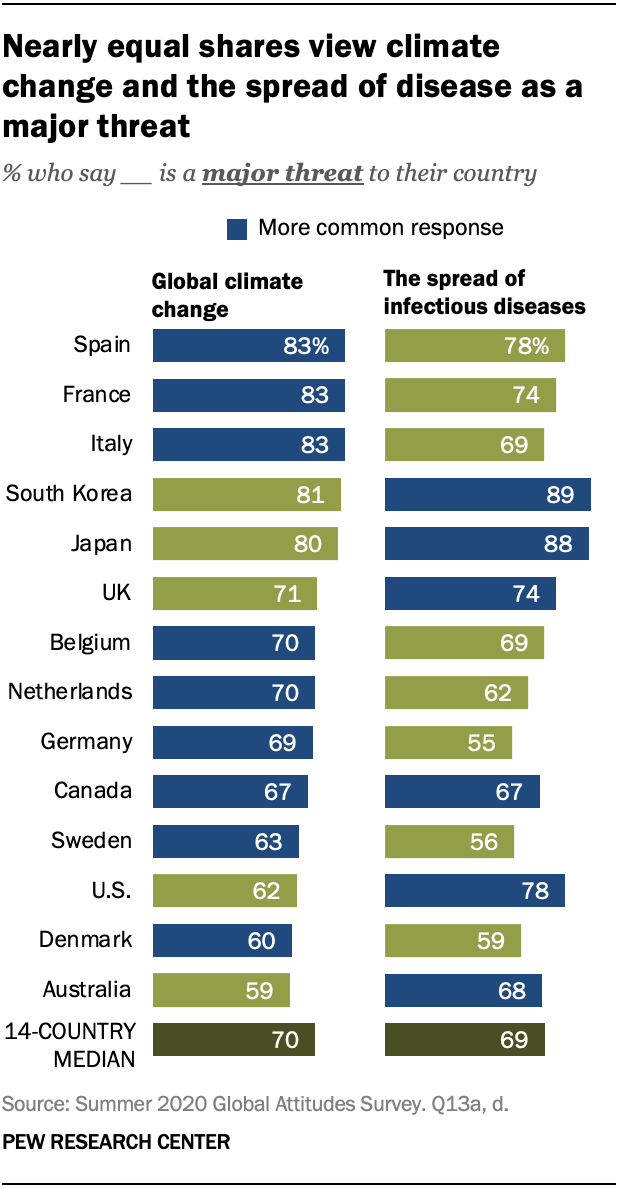
Unfortunately, climate change has not emerged as a major issue in the media coverage of the US national election even though former Vice-President Biden has tried to make it one. But it seems clear that even though it is not a major topic for the talking heads, the US public considers it almost as important as the problem of the COVID-19 pandemic. The Pew Research Center conducted a poll in several major countries and found that the issue is considered important in every one.
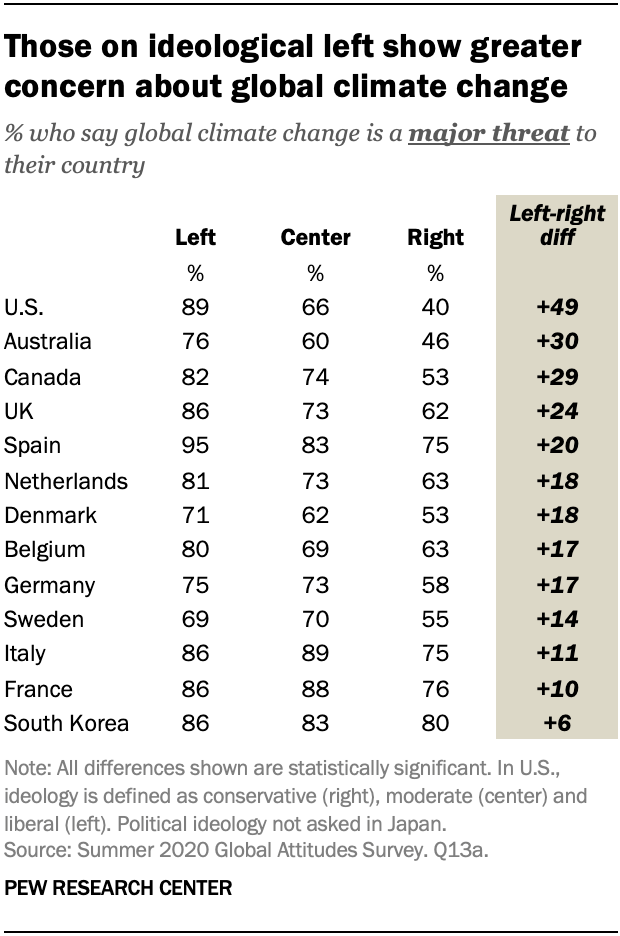
Interestingly, the US public is ideologically divided on the issue to a degree shared by few other countries.
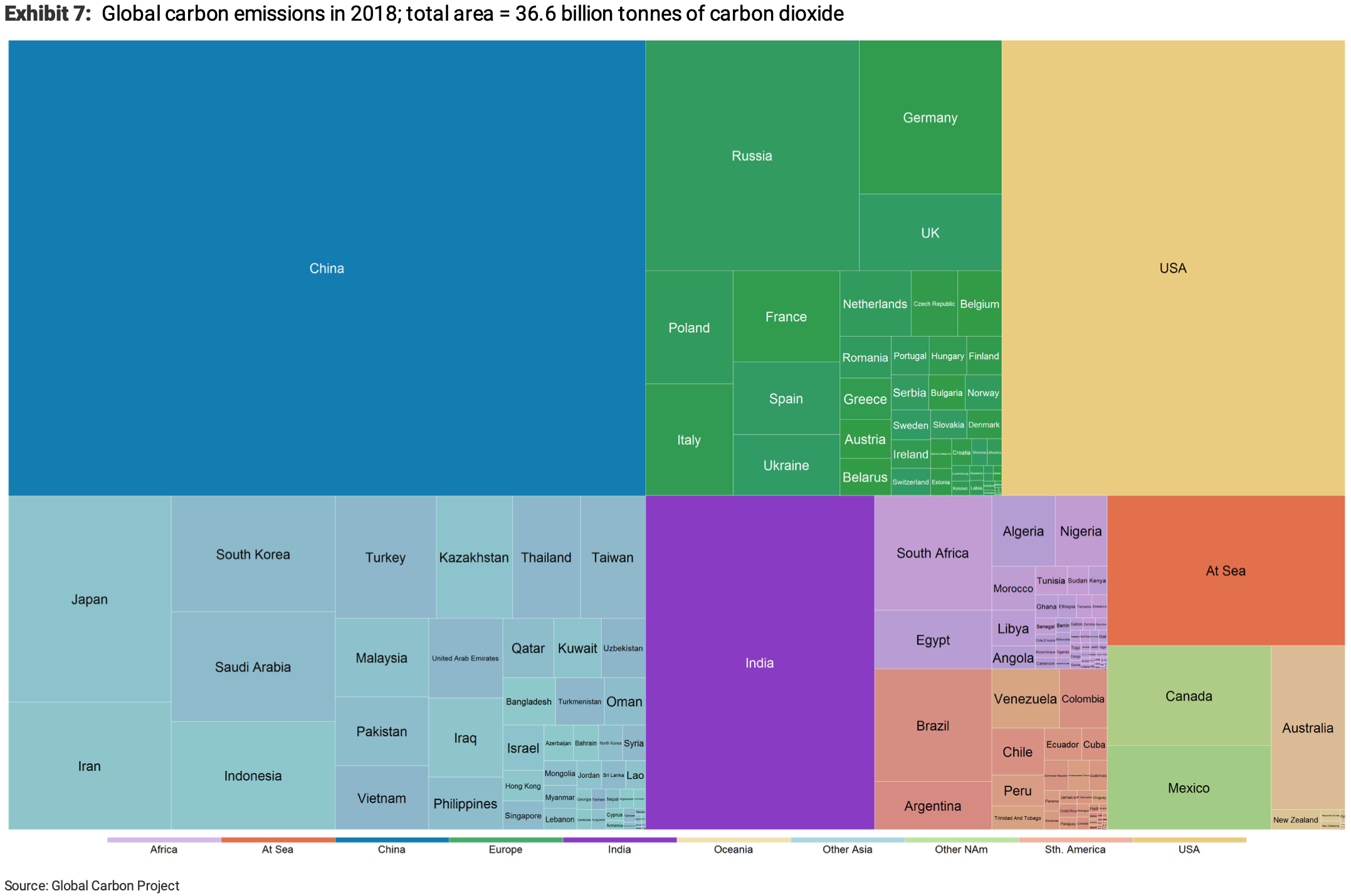
The last four years have not seen major international efforts to reduce carbon emissions although there has been steady progress in the development of renewable sources of energy. During this time, we have become more aware of the future dynamics of climate change–the shift to the contribution of poorer countries to the problem. There is little question that the rich countries were responsible for the bulk of carbon emission in the 20th century.
But the future of climate change rests more on the developing countries who are beginning to experience more rapid economic growth.
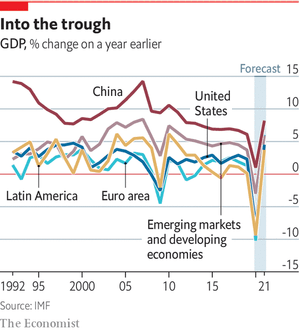
Graham Allison has written an essay for The National Interest on the recent news that China has displaced the US as the largest economy in the world. The news should not be especially surprising given that the population of China is 4 times larger than the US and also given that China has historically been a dominant power, despite its travails in the 20th Century. The change from the 2nd to the 1st largest economy was based on a shift from measuring the economy in terms of market exchange rates (simply measuring yuans to dollars) to purchasing power parity (actually measuring what a yuan and a dollar actually buys). Allison describes the difference:
“In sum, while the yardstick most Americans are accustomed to still shows that the Chinese economy is one-third smaller than the U.S., when one recognizes the fact that $1 buys nearly twice as much in China than in the U.S., the Chinese economy today is one-sixth larger than the U.S. economy.”
The COVID-19 pandemic will only amplify the differences between the two economies. The Economist explains:
“The variation is the result of differences between countries. Most important is the spread of the disease. China has all but stopped it while Europe, and perhaps soon America, is battling a costly second wave. Over the past week Paris has closed its bars and Madrid has gone into partial lockdown. In China, meanwhile, you can now down sambuca shots in nightclubs. Another difference is the pre-existing structure of economies. It is far easier to operate factories under social distancing than it is to run service-sector businesses that rely on face-to-face contact. Manufacturing makes up a bigger share of the economy in China than in any other big country. A third factor is the policy response. This is partly about size: America has injected more stimulus than Europe, including spending worth 12% of GDP and a 1.5 percentage point cut in short-term interest rates. But policy also includes how governments respond to the structural changes and creative destruction the pandemic is causing.”
There is not much significance to this change. It would be hard for the US, with only 4% of the world’s population, to retain the spot of the world’s largest economy. Moreover, one should keep in mind that the Chinese have many people to satisfy economically–not an easy task with climate change altering the patterns of viable economic activity. But the important lesson of the pandemic is that globalization is not a seamless process and figuring out how to satisfy economic interests which require a high degree of interdependence with political interests which seem to be tilting in favor of narrow national interests will be a very difficult task.
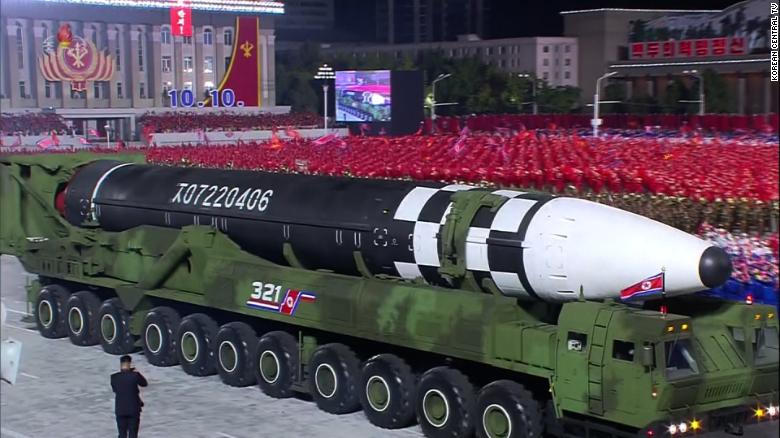
Last Saturday, North Korea held a military parade it which it showcased what analysts believe could be a very formidable intercontinental ballistic missile. It has not test-launched the missile, although North Korea did in fact test the engines for the rockets last December at its vertical test facility. We do not know, therefore, if it actually works. But it is the largest liquid-fueled missile ever seen and could easily host multiple warheads if it were so equipped. CNN quotes several analysts about the significance of the missile:
“Analysts said the new missile is not known to have been tested, but a bigger weapon would allow North Korea to put multiple warheads on it, increasing the threat it would pose to any targeted foe.
“‘Largest *road-mobile* liquid-fueled missile anywhere, to be clear,’ tweeted Ankit Panda, senior fellow in the Nuclear Policy Program at the Carnegie Endowment for International Peace.
“‘Liquid fuel, Huuuuge, capable of carrying MIRV nuclear warheads,’ tweeted Melissa Hanham, deputy director of Open Nuclear Network at Stanford University.
“‘What North Korea has shown us, what appears to be a new liquid-fueled ICBM that seems to be a derivative of what was tested back in late 2017, known as the Hwasong-15, is much bigger and clearly more powerful than anything in the DPRK’s arsenal,’ said Harry Kazianis, senior director of Korean studies at the Washington DC-based Center for the National Interest.”
The fact that the missile is liquid-fueled is important because, unlike solid-fueled missiles, liquid-fueled missiles take several hours before they can be launched which gives an adversary with satellite capabilities enough time to target the missile before it is launched. But the missile, if it is indeed operational, represents a major violation of the understanding that North Korean leader Kim reached with US President Trump in Singapore three years ago. At that meeting, North Korea promised not to test any missiles that had the capability of hitting the US mainland in return for US recognition of North Korea’s status as a nuclear-armed state. While North Korea has technically kept its promise not to test such a missile, its display of such a missile represents as serious threat to American promises to defend South Korea and Japan from a nuclear attack from North Korea. It is unlikely that the US would use nuclear weapons to defend either of the two allies if such action might lead to the deaths of millions of Americans.
“North Korea’s display of new, dangerous weapons on Saturday made one thing perfectly clear: Over the last four years, President Donald Trump has failed to curb the nuclear threat from Pyongyang….
“Which means North Korea now has a greater ability to threaten America and its regional allies today than it did when Trump entered office. Trump is by no means the first president to fall short of reversing Pyongyang’s nuclear progress, but he’s now the latest.
“According to a source familiar with his comments, Trump has been telling White House aides he’s ‘really angry about [North Korea’s] missile parade’ and ‘really disappointed’ in Kim personally. But that same person, who spoke on the condition of anonymity to talk candidly about internal discussions, noted Trump is unlikely to change his stance toward North Korea unless it tests a new ICBM or a nuclear device.”
The Trump strategy has essentially led to a dead-end and it is not clear that there is anything now that can be done to persuade North Korea to relinquish its nuclear weapons. Robert Kelly writes in the National Interest:
“There is no big bang deal to be had with North Korea at a price Washington would find acceptable. The U.S. is not going to retrench from South Korea or Japan to end the North Korean nuclear program completely. That no one is even discussing concessions on that scale tells you that the U.S. would rather live with North Korea’s nuclear weapons than make the concessions necessary to end it. So either we simply live with it, or we start searching for smaller deals. There is no other alternative.”
I guess that means that Mr. Trump will not be receiving the Nobel Peace Prize for his North Korean diplomacy.
Photograph of North Korea’s Newest Ballistic Missile
The COVID-19 pandemic continues to amplify the growing wealth inequality in the US. The process seems to be fairly clear: low income earners have seen their jobs and their hours disappear while high income earners have enjoyed record gains in the value of their sticks. According to Bloomberg:
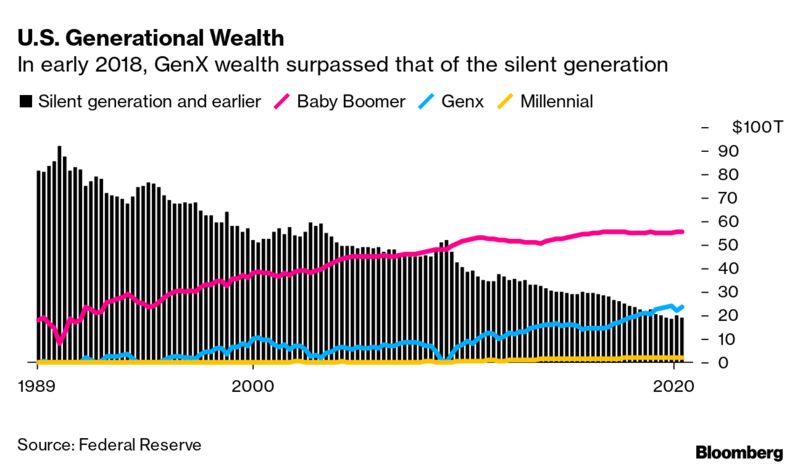
“The Fed estimates the top 10% of U.S. households hold 69% of the country’s wealth, or $77.3 trillion, up from 60.9% share at the end of the 1980s. The very richest Americans are almost entirely responsible for that gain. The top 1% held 30.5% of U.S. wealth in June, up from 23.7% in late 1989. The bottom half’s share, meanwhile, has fallen from 3.6% to 1.9%.”
The Huffington Post provides more detail:
“The rich got richer this year despite the COVID-19 pandemic — while people struggling financially found themselves in even more dire straits. COVID-19, which has killed more than 210,000 Americans, has disproportionally hurt people of color, older people, women and workers in low-paying jobs.
“The poorest 50% of Americans — about 165 million people — hold just $2.08 trillion of net worth, or 1.9% of all household wealth, according to Federal Reserve statistics.
“The wealthy and corporations were already sailing along thanks to a massive tax cut from the administration of President Donald Trump in 2017. As a result, the nation racked up a record deficit, which hit an all-time high of $3 trillion in the first 11 months of the current budget year.
The inequality has had a dramatic effect on the different generations in American society with the youngest cohort, the Millennials, facing the worst distribution of wealth in American history.
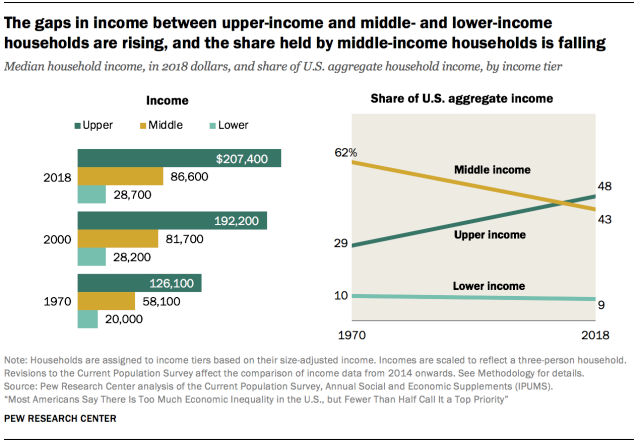
The implications of this divergence for the political system are ominous. The US Middle Class was the bedrock of what has been called the American Dream”–a metaphor for all in the world who aspired to a better life. Sadly, as the graph below from the Pew Research Center, the American Middle Class seems to be disappearing.

 World Politics News