The Intergovernmental Panel on Climate Change (IPCC) was created by the United Nations in 1988 and it was charged with the task of preparing reports every five years on the state of the Earth’s climate. Its reports since 1990 have become increasingly dire and a draft of the report due in 2022 was leaked and The Guardian was able to examine the draft. The newspaper reports:
“A draft of the IPCC report apparently from early this year was leaked to Agence France-Presse, which reported on its findings on Thursday. The draft warns of a series of thresholds beyond which recovery from climate breakdown may become impossible. It warns: ‘Life on Earth can recover from a drastic climate shift by evolving into new species and creating new ecosystems … humans cannot.’
“Tipping points are triggered when temperatures reach a certain level, whereby one impact rapidly leads to a series of cascading events with vast repercussions. For instance, as rising temperatures lead to the melting of Arctic permafrost, the unfreezing soil releases methane, a powerful greenhouse gas that in turn causes more heating.
France 24 identified four major points in the draft: 1) With 1.1 degrees Celsius of warming clocked so far, the climate is already changing; 2) “Current levels of adaptation will be inadequate to respond to future climate risks”; 3) The danger of compound and cascading impacts, along with point-of-no-return thresholds in the climate system known as tipping points, which scientists have barely begun to measure and understand; and 4) Much can be done to avoid worst-case scenarios and prepare for impacts that can no longer be averted. The seriousness of the problem was emphasized by France 24:
“A decade ago, scientists believed that limiting global warming to two degrees Celsius above mid-19th century levels would be enough to safeguard our future.
“That goal is enshrined in the 2015 Paris Agreement, adopted by nearly 200 nations who vowed to collectively cap warming at ‘well below’ two degrees Celsius — and 1.5 degrees if possible.
“On current trends, we’re heading for three degrees Celsius at best.
“Earlier models predicted we were not likely to see Earth-altering climate change before 2100.
“But the UN draft report says that prolonged warming even beyond 1.5 degrees Celsius could produce ‘progressively serious, centuries’ long and, in some cases, irreversible consequences’.
“Last month, the World Meteorological Organization projected a 40 percent chance that Earth will cross the 1.5-degree threshold for at least one year by 2026.”
The US government has finally made Juneteenth a national holiday. Many Americans know little about the date and I will confess that the only thing I thought I knew about it was that slaves in Texas were finally informed about the Emancipation Proclamation long after the Civil War had ended. It turns out that my limited knowledge was wrong.
Henry Louis Gates, Jr. had written previously about Juneteenth and his narrative is well worth reading. News about the Emancipation Proclamation had in fact arrived in Texas when it was issued in September 1862 and Confederate General Lee had surrendered in April 1865. So no one was “uninformed”–it was the reluctance of authorities to comply with the terms of the surrender:
“Since the capture of New Orleans in 1862, slave owners in Mississippi, Louisiana and other points east had been migrating to Texas to escape the Union Army’s reach. In a hurried re-enactment of the original Middle Passage, more than 150,000 slaves had made the trek west, according to historian Leon Litwack in his book Been in the Storm So Long: The Aftermath of Slavery. As one former slave he quotes recalled, ” ‘It looked like everybody in the world was going to Texas.’ ”
“When Texas fell and Granger dispatched his now famous order No. 3, it wasn’t exactly instant magic for most of the Lone Star State’s 250,000 slaves. On plantations, masters had to decide when and how to announce the news — or wait for a government agent to arrive — and it was not uncommon for them to delay until after the harvest. Even in Galveston city, the ex-Confederate mayor flouted the Army by forcing the freed people back to work, as historian Elizabeth Hayes Turner details in her comprehensive essay, “Juneteenth: Emancipation and Memory,” in Lone Star Pasts: Memory and History in Texas.
“Those who acted on the news did so at their peril. As quoted in Litwack’s book, former slave Susan Merritt recalled, ” ‘You could see lots of niggers hangin’ to trees in Sabine bottom right after freedom, ’cause they cotch ’em swimmin’ ‘cross Sabine River and shoot ’em.’ ” In one extreme case, according to Hayes Turner, a former slave named Katie Darling continued working for her mistress another six years (She ” ‘whip me after the war jist like she did ‘fore,’ ” Darling said).”
I hope that recognition and further study of Juneteenth will serve to correct the self-serving myths about slavery that persist to this day. The need to address the still very active consequences of slavery is well documented by a study by the McKinsey Global Institute entitled “The economic state of Black America: What is and what could be”. Some of the conclusions of the highlight the persistence of the crime:
“Today the median annual wage for Black workers is approximately 30 percent, or $10,000, lower than that of white workers—a figure with enormous implications for household economic security, consumption, and the ability to build wealth. Black workers make up 12.9 percent of the US labor force today but earn only 9.6 percent of total US wages.
“We estimate a $220 billion annual disparity between Black wages today and what they would be in a scenario of full parity, with Black representation matching the Black share of the population across occupations and the elimination of racial pay gaps within occupational categories. Achieving this scenario would boost total Black wages by 30 percent and draw approximately one million additional Black workers into employment.”
I look forward to how we as a people will decide to celebrate this historic holiday.
Naftali Bennett is the new Israeli Prime Minister, ending Benjamin Netanyahu’s tenure as Israel’s longest serving Prime Minister. Prime Minister Bennett was confirmed in that role by a vote of 60-59 in the Israeli Knesset. Bennett’s political party, Yamina, holds only a small number of seats in the Knesset in his governing coalition. He owes his position to the willingness of Yair Lapid, head of Yesh Atid, to join the coalition even though Bennett and Lapid are miles apart in their political stances. Bennett has often advocated for the almost complete annexation of the West Bank by Israel while Lapid, a former journalist, has tried to emphasize secular politics in Israel.
Bennett’s coalition also includes, for the first time in modern Israeli history, an Arab Islamist political party. The party, Ra’am, is led by Mansour Abbas and it represents a significant change in Israeli politics–prior to this coalition all the major political parties had refused to include any of the Israeli Arab parties. It is also safe to say that many Israeli Arabs are not sure that cooperating with the Israeli government is a wise move. But Abbas was able to elevate Ra’am’s visibility in the new government: “Abbas called the participation of Ra’am in the coalition a “courageous move” that won his party the leadership of two Knesset committees — the interior committee and the committee on Arab community affairs. The party also received the role of deputy chairman of the Knesset and deputy minister at the prime minister’s office, together with quite a few economic plans and budgets for the Arab community. No doubt Abbas succeeded in the mission he was on to influence the political game in Israel in order to improve the situation of the Arab community.”
Bennett’s coalition was united only on one issue: to oust Benjamin Netanyahu. There is no common agenda to move forward, so it is unlikely that we will witness significant changes in Israeli domestic or foreign policy. I suspect that attention will focus on the Israeli domestic economy which, like most economies in the world, suffered because of the effects of the COVID pandemic. Bennett was once a close ally of Netanyahu and shares many of Netanyahu’s positions, especially on the Iranian nuclear deal. But Bennett will be constrained by the need to keep the coalition intact and will not have a great deal of freedom to follow his preferences on West Bank annexation. But Israel learned new lessons after the recent conflict with Hamas. First, the Israeli Arab population can no longer be taken out of the security equation. The protests by Israeli Arabs against the military actions in the Gaza Strip posed serious problems for Israeli security forces. Second, the strong objections by some members of the US Democratic Party to the Israeli military actions indicates that the almost automatic support for Israel can no longer be taken for granted.
Netanyahu also remains a threat. He chose to not go “gently into the night” after the Knesset vote and said on Sunday: “If it is destined for us to be in the opposition, we will do it with our backs straight until we topple this dangerous government and return to lead the country.” Axios quoted a senior Israeli diplomat as saying “He [Netanyahu] decided to damage the U.S.-Israel relationship for his own personal interests and is trying to leave scorched earth for the incoming government.” As long as Netanyahu remains a threat, the members of the coalition will know that any disagreement with the government may bring about Netanyahu’s return. So the very fragility of the governing coalition will impose discipline on its disparate parts.
Video of the Turmoil in the Knesset as Netanyahu is Ousted.
ProPublica is a highly regarded lefty think tank that does serious investigative reporting. It has published a report entitled “The Secret IRS Files: Trove of Never-Before-Seen Records Reveal How the Wealthiest Avoid Income Tax“. It is a remarkable analysis in that ProPublica has had access to “a vast trove of Internal Revenue Service data on the tax returns of thousands of the nation’s wealthiest people, covering more than 15 years. The data provides an unprecedented look inside the financial lives of America’s titans, including Warren Buffett, Bill Gates, Rupert Murdoch and Mark Zuckerberg. It shows not just their income and taxes, but also their investments, stock trades, gambling winnings and even the results of audits.”
The report does a good job of establishing a base line for average Americans: “In recent years, the median American household earned about $70,000 annually and paid 14% in federal taxes. The highest income tax rate, 37%, kicked in this year, for couples, on earnings above $628,300.” But the analysis of the tax returns of 25 rich people indicates that the rich pay significantly less than that average case. The report attempts to establish a “true” tax rate for those people and the results are devastating:
“The results are stark. According to Forbes, those 25 people saw their worth rise a collective $401 billion from 2014 to 2018. They paid a total of $13.6 billion in federal income taxes in those five years, the IRS data shows. That’s a staggering sum, but it amounts to a true tax rate of only 3.4%.
“It’s a completely different picture for middle-class Americans, for example, wage earners in their early 40s who have amassed a typical amount of wealth for people their age. From 2014 to 2018, such households saw their net worth expand by about $65,000 after taxes on average, mostly due to the rise in value of their homes. But because the vast bulk of their earnings were salaries, their tax bills were almost as much, nearly $62,000, over that five-year period.”
The difference in tax rates is explained by the difference between “income” and “wealth”. The US Federal tax code only taxes income. The distinction between wealth and income is important and in 1920 the US Supreme Court “….ruled that income derived only from proceeds. A person needed to sell an asset — stock, bond or building — and reap some money before it could be taxed.
“Since then, the concept that income comes only from proceeds — when gains are ‘realized’ — has been the bedrock of the U.S. tax system. Wages are taxed. Cash dividends are taxed. Gains from selling assets are taxed. But if a taxpayer hasn’t sold anything, there is no income and therefore no tax.”
The US tax system favors the accumulation of capital and the logic behind that bias is that capital is the source of investment and therefore should be favored for economic activity. The low taxes paid by these 25 rich individuals is therefore legal and not necessarily a defect of the Federal income tax, although the report also identifies various loopholes in the income tax system which favor the rich.
“About 100,000 Americans — or, fewer than 1 in 1,000 families — would be subject to a wealth tax in 2023, according to Emmanuel Saez and Gabriel Zucman, economists at the University of California, Berkeley.
“The policy would raise at least $3 trillion over a decade, they found.”
Such a tax is unlikely to pass the US Congress, but we need to think more seriously about genuine alternatives to taxing just income. The deliberate decision to avoid taxing wealth makes the US tax system highly unfair and deprives civil society of the necessary revenues to maintain a robust infrastructure. It is unfortunate that this discussion is so arcane because the consequences of ignoring wealth is cruel and brutal.
“Our analysis of tax data for the 25 richest Americans quantifies just how unfair the system has become.
“By the end of 2018, the 25 were worth $1.1 trillion.
“For comparison, it would take 14.3 million ordinary American wage earners put together to equal that same amount of wealth.
“The personal federal tax bill for the top 25 in 2018: $1.9 billion.
Lawrence Jones is one of the singers in this performance of Blessings & Benediction: Four Bach Cantatas at the Virtual 113th Bethlehem Bach Festival, 18 May 2021. Lawrence is the son of one of my colleagues, Stephen Jones, and he is blessed with a brilliant voice.
One hundred years ago, the US experienced what was arguably the worst race massacre in its history in Tulsa, Oklahoma. African-Americans had gone to Tulsa after the Civil War because Oklahoma was regarded as a safe space for Blacks and the African-Americans established a thriving neighborhood known as Greenwood which was also called the “Black Wall Street”. The Tulsa massacre followed a number of race riots instigated by whites against blacks in 1919. Those riots were meant to put African-Americans back into “their place” after many blacks assumed that they would be honored for their service in World War I. The Guardian describes the massacre:
“….on 31 May and 1 June 1921, a white mob had attacked Tulsa’s Black Wall Street, killing an estimated 300 people and wounding 800 more while robbing and burning businesses, homes and churches. Planes dropped explosives on the area, razing it to the ground. It remains one of the worst acts of racial violence in American history.”
The violence was also described by Viola Fletcher, who was seven years old when the massacre occurred and who testified to Congress about it at the age of 107:
“‘I still see Black men being shot, Black bodies lying in the street, I still smell smoke and see fire. I still see Black businesses being burned. I still hear airplanes flying overhead. I hear the screams,’ said Fletcher, one of the last three known survivors of what is known as the Tulsa race massacre.
“’I have lived through the massacre every day,’ the 107 year old told a United States congressional subcommittee earlier this month. ‘Our country may forget this history, but I cannot. I will not, and other survivors do not – and our descendants do not…..’
“‘I think about the terror and horror inflicted upon Black people in this country every day,’ Fletcher said. ‘I’m asking that my country acknowledge what has happened to me – the traumas and the pain and the loss.'”
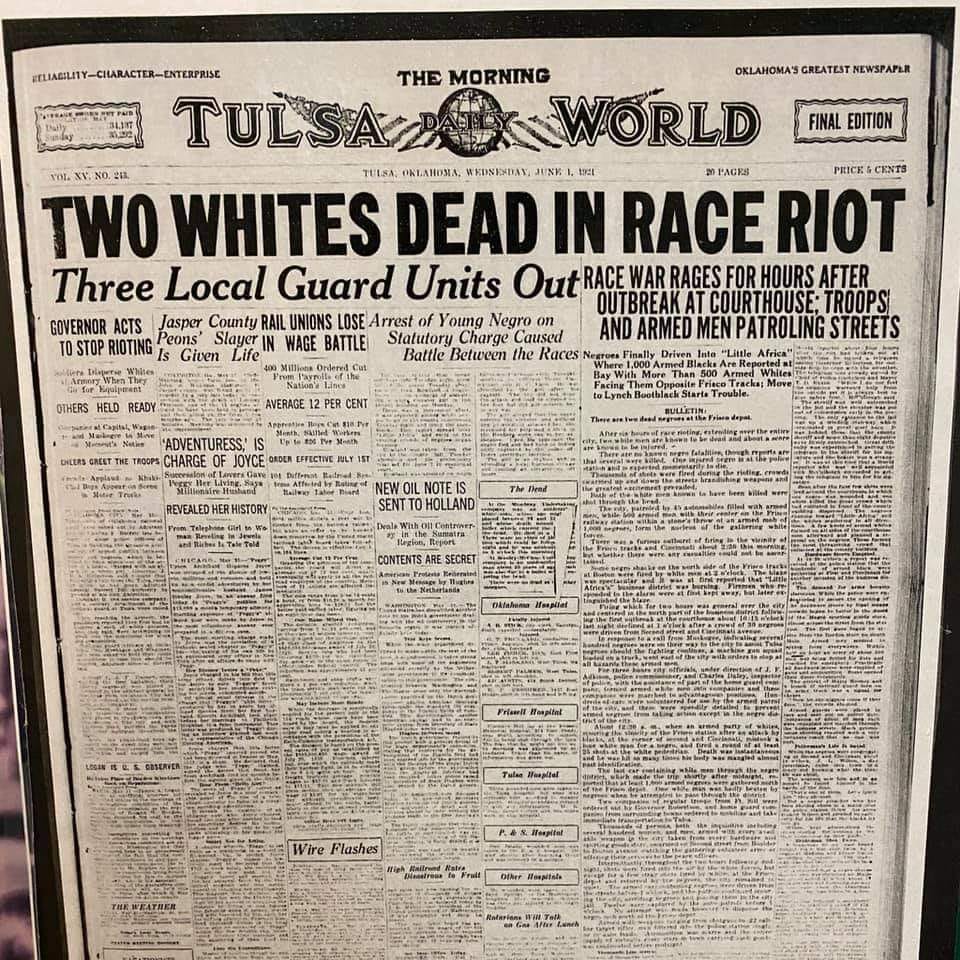
The Tulsa massacre was itself extraordinary, but the deliberate forgetting of the massacre was also unbelievable. Here is an image of the Tulsa newspaper the day after:
As the US engages in a senseless debate about “critical race theory”, we should first remind ourselves that learning basic history is a necessary first step to understanding the race question in the US. If all Americans knew how African-Americans have been treated throughout the history of the US, first as colonies of European powers and second as an independent republic, then perhaps having a theory to explain the atrocities would not be necessary.
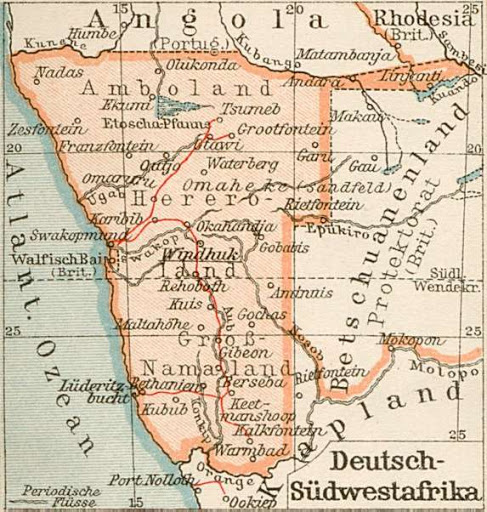
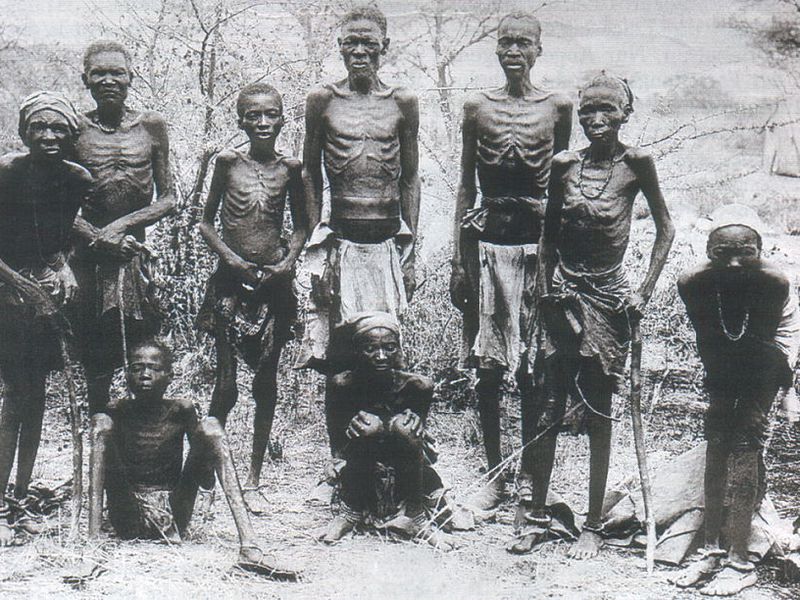
The Germans exploited the diamonds, gold, platinum, and copper resources of the territory and forced the indigenous peoples to work as slaves to mine the mineral resources. Moreover, the Germans seized the land of the locals in order to settle Germans on the land as part of an official policy in 1901 called Lebensraum which ultimately was brutally implemented in Europe by the Nazis. The treatment of the local population was horrific:
“Between 1893 and 1894, Hottentot Uprising’ of the Nama led by Hendrik Witbooi occurred. The following years saw many other local uprisings against the Germans. Remote farms were attacked and around 150 German settlers were killed. However, an additional 14,000 troops sent from Germany crushed the rebellion in Battle of Waterberg.
“Earlier, the German Lieutenant Von Trotha issued an ultimatum to Herero people. The ultimatum denied them the right of being German subjects and actually ordered the Herero people to leave the country or be killed.
“In 1904, Nama entered the struggles against the colonial rule. This uprising was finally stopped between 1907 and 1908. This resulted in between 25,000 and 100,000 Herero, 10,000 Nama, and 1,749 Germans deaths. After the conflict ended, the remaining natives who were released from detention were subject to a policy of deportation, deposition, forced labor, racial segregation and discrimination.”
The German confession of genocide comes after 6 years of negotiation. The Germans have refused to pay reparations to the Herero and Nama peoples, but have agreed to give Namibia $1.3 billion in development assistance. The offer was considered inadequate by the Namibians:
“As news of an agreement trickled out over the past two weeks, Herero and Nama leaders issued a joint statement rejecting the deal and condemning its lack of direct reparations.
“’The so-called ‘compensation’ to finance ‘social projects’ is nothing but a coverup for continued German funding of Namibian Government projects,’ said the statement from the Ovaherero Traditional Authority and the Nama Traditional Leaders Association. ‘Germany must pay reparations for the genocide.’
“The German Foreign Ministry’s statement said the roughly $1.3 billion in development aid would serve as a ‘gesture of recognition for immeasurable suffering.’”
The German decision has received mixed reactions and there is probably no effective redress for such horrific actions. But the willingness of the German government to admit to the crime is a necessary first step to finding a more effective response.
The recent conflict between Israel and Palestinians has revealed a small but distinct movement among some members of the US Democratic Party toward greater sympathy to the Palestinian people. Since the founding of Israel in 1948, members of both US political parties have been strong supporters of Israel. But recent polls suggest that the support is becoming less strong because the policies of the Netanyahu government have sharply circumscribed the possibilities for a viable Palestinian state next to Israel.
In many respects, this shift is a generational change. There is a large cohort of Americans who have never known any Israeli leader other than Netanyahu who has been Prime Minister since 2009. Additionally, that cohort has also witnessed the growth of the Black Lives Movement in the US which has exposed the reality of Black lives in the US which has never been witnessed before in US history (the cameras in smartphones has been a very important technological change for most Americans who very often know very little about how Blacks are treated in the US). Most Americans have never fully comprehended the reality of how Palestinians are forced to live under occupation.
It is also important to remember that there is no monolithic Jewish position on the occupation. The Pew Research Center has polling data which reveals the diversity of opinion among American Jews about the state of Israel. The polling has some interesting conclusions:
“Israel, the world’s only Jewish-majority country, is a subject of special concern to many Jews in the United States. Caring about Israel is ‘essential’ to what being Jewish means to 45% of U.S. Jewish adults, and an additional 37% say it is ‘important, but not essential’; according to a new Pew Research Center survey that was fielded from Nov. 19, 2019, to June 3, 2020 – well before the latest surge of violence in the region. Just 16% of U.S. Jewish adults say that caring about Israel is ‘not important’ to their Jewish identity.
“However, the survey found that Jewish Americans – much like the U.S. public overall – also hold widely differing views on Israel and its political leadership.
“Most Jewish Americans identify as Democrats or lean toward the Democratic Party, and more than half gave negative ratings at the time of the survey both to Israeli Prime Minister Benjamin Netanyahu and to then-President Donald Trump’s handling of U.S. policy toward Israel. But Orthodox Jews – 75% of whom are Republican or lean Republican – generally rated both Netanyahu and Trump positively.
“Orthodox Jews were also more likely than Jews in other denominations to say that the Israeli government was making a sincere effort to reach a peace settlement with the Palestinians and that God gave the land that is now Israel to the Jewish people. By contrast, most Jewish Americans said they did not think that either the Israeli government or Palestinian leaders were sincerely seeking peace. And most Jewish adults took the position that God ‘did not literally give’ the land of Israel to the Jewish people (42%) or said they do not believe in God or a higher power at all (24%)…
“More than half of all U.S. Jews belong to the two long-dominant branches of American Judaism: 37% identify as Reform and 17% as Conservative. Roughly one-in-ten (9%) describe themselves as Orthodox. Other branches, such as the Reconstructionist movement and Humanistic Judaism, total about 4%, and due to small sample sizes cannot be analyzed separately. One-third of Jewish adults (32%) do not identify with any particular stream or institutional branch of Judaism.”
“The situation, in short, is fluid, agitated, and reminiscent of the atmosphere after the 1973 war, when, in spite of a putative Israeli victory, the idea that military force was all the foreign policy Israel needed—and that the Palestinian question would wait—was suddenly revealed to Israelis as delusional and arrogant. Before that war, the government spoke not of deterrence but of “security borders,” which neighboring Arab states, it claimed, wouldn’t dare attack. They did. Now, as then, there is a growing sense that Israel cannot come out of this crisis the same country it was when it went into it. On the right, there is more bravado: calls to disarm Gaza, and to suppress Israeli Arabs as a fifth column. On the left, which has found renewed energy, there are calls for reëngagement with the Palestinian question, and, correspondingly, for democratic norms that are vital enough to resist theocracy and to lessen anti-Arab discrimination.”
President Biden preferred to stay out of the Israeli-Palestinian conflict–most Administrations have failed to make any substantive progress towards advancing peace. But I suspect that Biden will be forced to pay closer attention to the conflict during his Administration. It is time for new ideas.
QUESTION: Let’s turn to the current situation in the Middle East, the deadly violence between Israel and the Palestinians. In the past few days we’ve seen multiple civilian casualties on both sides, but mostly in Gaza. You’re Jewish yourself. Do you think that the Israeli response, their defense, is justified and proportional?
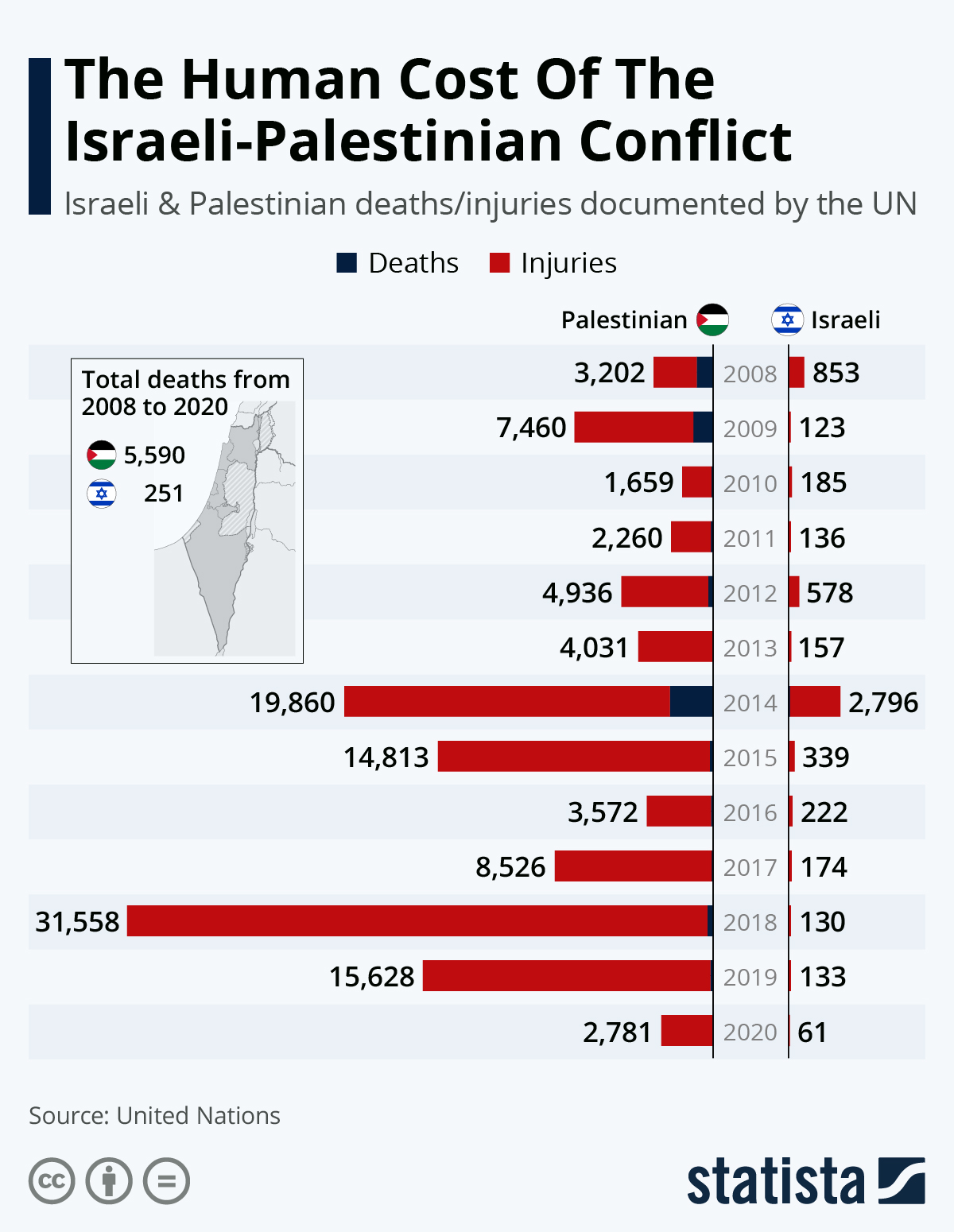
SECRETARY BLINKEN: Well, first, we believe strongly that Israel has a right to defend itself. And this false equivalence between a terrorist group – Hamas – that is indiscriminately launching rockets at civilians and Israel, which is responding to those attacks, I think we have to be very, very wary of. That’s – it’s a false equivalence. And again, I’ll give you another concrete example. Israel has, I think by last count, launched about 2,000 attacks on terrorist targets in Gaza. There were more than 3,000 rockets launched by Hamas from Gaza into Israel.
Having said that, I think Israel has an extra burden as a democracy to do everything possible to avoid civilian casualties, especially to look out for children, and of course to make sure that journalists, medical personnel, are not harmed. And so that’s vital.
And we also want to see this de-escalate. We want to see the violence stop. And we want to see the possibility of focusing on improving lives and improving Palestinian lives in a material way. People have to have hope for a better future, and we all need to work on that.
QUESTION: And you’re also going to help the Palestinians getting a better life?
SECRETARY BLINKEN: Yes, absolutely. This is – I think this is critical. It is very, very difficult if you see no positive prospects. And I think we all have an obligation, a responsibility to do that.
I am not sure what Secretary Blinken means by “false equivalence” but there is no equivalence whatsoever between the violence used by Hamas and that used by the Israeli state.
Israel has one of the most powerful militaries in the world and possesses some of the most advanced weaponry of any state in the international system. It has used that military to defend its interests vis-à-vis the Palestinians since its founding in 1948. But the interests of Israel slowly changed from legitimate self-defense to territorial expansion after the war of 1967 and the change has been most apparent during the continued rule of the Netanyahu government since 2009.
It is morally impossible to defend the rocket attacks by Hamas in response to Israeli military action. They are rockets, not missiles, and cannot discriminate between combatant and non-combatant targets. But to suggest that the rocket attacks are comparable in any way to the military power of Israel is delusional. Military superiority has not brought peace to Israel nor does it seem as if peace is any more likely now than at any time since the Oslo Accords of 1993 as described by the Public Broadcasting System:
“Oslo sketched out a peace process with a two-phase timetable. During a five-year interim period, Oslo envisioned a series of step-by-step measures to build trust and partnership. Palestinians would police the territories they controlled, cooperate with Israel in the fight against terrorism, and amend those sections of the Palestine Liberation Organization (PLO) charter that called for Israel’s destruction. Israel would withdraw almost entirely from Gaza, and in stages from parts of the West Bank. An elected Palestinian Authority would take over governance of the territories from which Israel withdrew.
“After this five-year interim period, negotiators then would determine a final peace agreement to resolve the thorniest issues: final borders (see map), security arrangements, Jerusalem, whether the Palestinians would have an independent state, Jewish settlements in the West Bank and Gaza, and Palestinian refugees’ claims to land and property left behind when they fled Israel.”
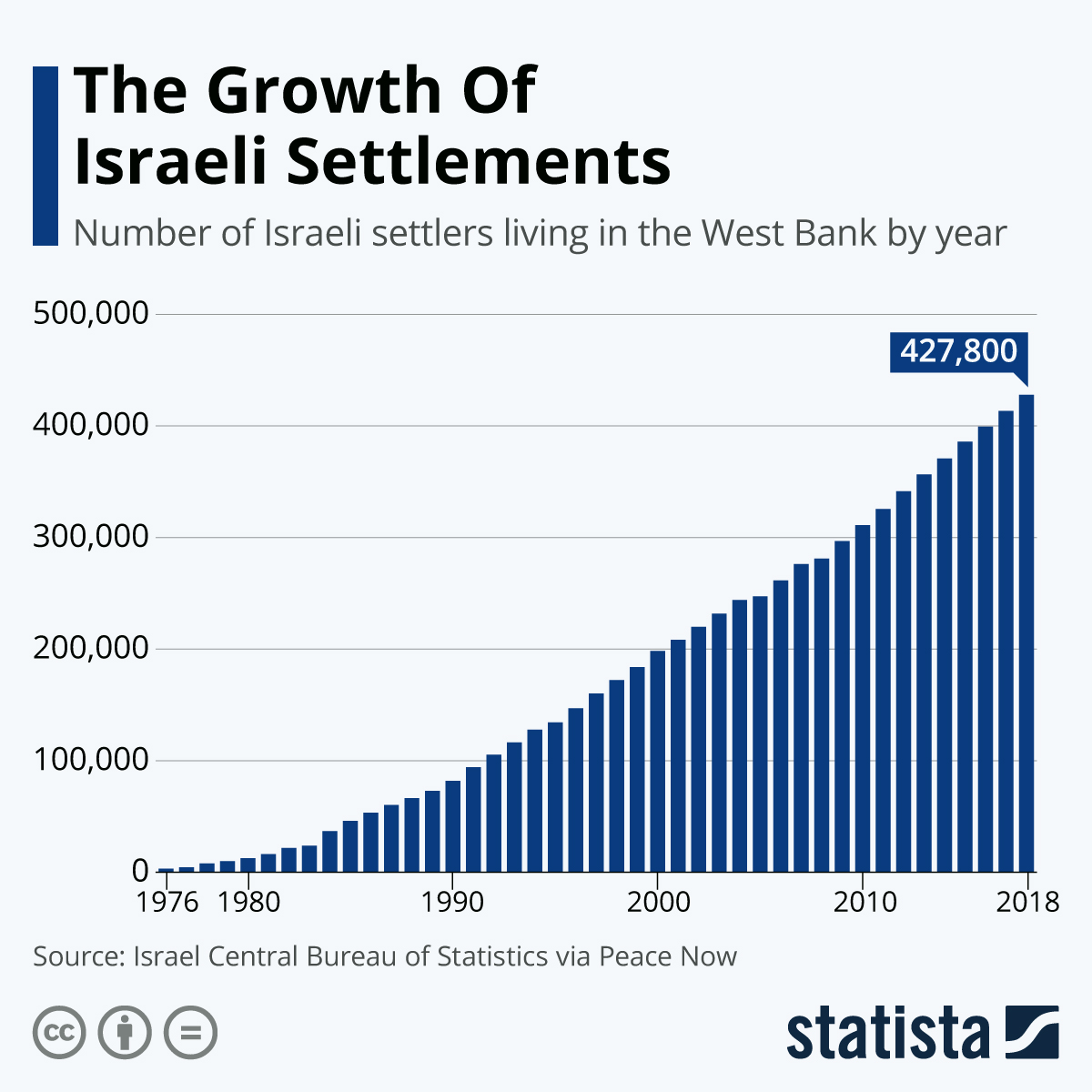
The official policy of the US been to support the Oslo idea of a two-state solution and one would think that as one of Israel’s most important allies it should have been able to move the process forward: “This year America is supplying Israel with $3.9bn in aid, almost all of it military assistance; Israel is the largest cumulative recipient of American aid, at $146bn, since the second world war.” Additionally, the Biden Administration approved $735 million in precision-guided weapons to Israel on 5 May. All that assistance, however, does not seem to have any effect on Israeli policy toward the Occupied Territories. The Israeli government continues to support an active settler movement on the very land it was supposed to return to the Palestinian Authority.
It is long past time for the US to reassess its relationship to Israel. Israel is a sovereign state that can pursue whatever foreign policy it believes serves its interests. But the foreign policy of the Netanyahu government is in no way consistent with the interests of the US (one can also demonstrate that discrepancy in the attitudes toward the reinstatement of the nuclear agreement with Iran which the US supports and Israel opposes). The foreign policy of the Netanyahu government appears to be the full colonization of the West Bank and the complete submission of the Gaza Strip to Israeli military control. Those outcomes are not in the interests of the US nor are they in the interests of a democratic Israel. The US should end all economic and military assistance to Israel until it makes a serious and credible effort to implement a viable two-state solution.
Right now, the US is refusing to demand a cease-fire in the conflict. Instead, it merely suggests that Israel and Hamas should support a cease-fire. Its self-imposed impotence in the face of this humanitarian crisis is pathetic.


 World Politics News